eventSeminar
Alaa Eldin Abdelaal | Human Skill Augmentation in Robot-Assisted Surgery
Visiting scholars share their research with the HAI community.
Get the latest news, advances in research, policy work, and education program updates from HAI in your inbox weekly.
Sign Up For Latest News
Visiting scholars share their research with the HAI community.
Clinical Mind AI is a Stanford-developed, international collaborative platform designed to strengthen clinical reasoning education through AI-simulated patient encounters across health professions.
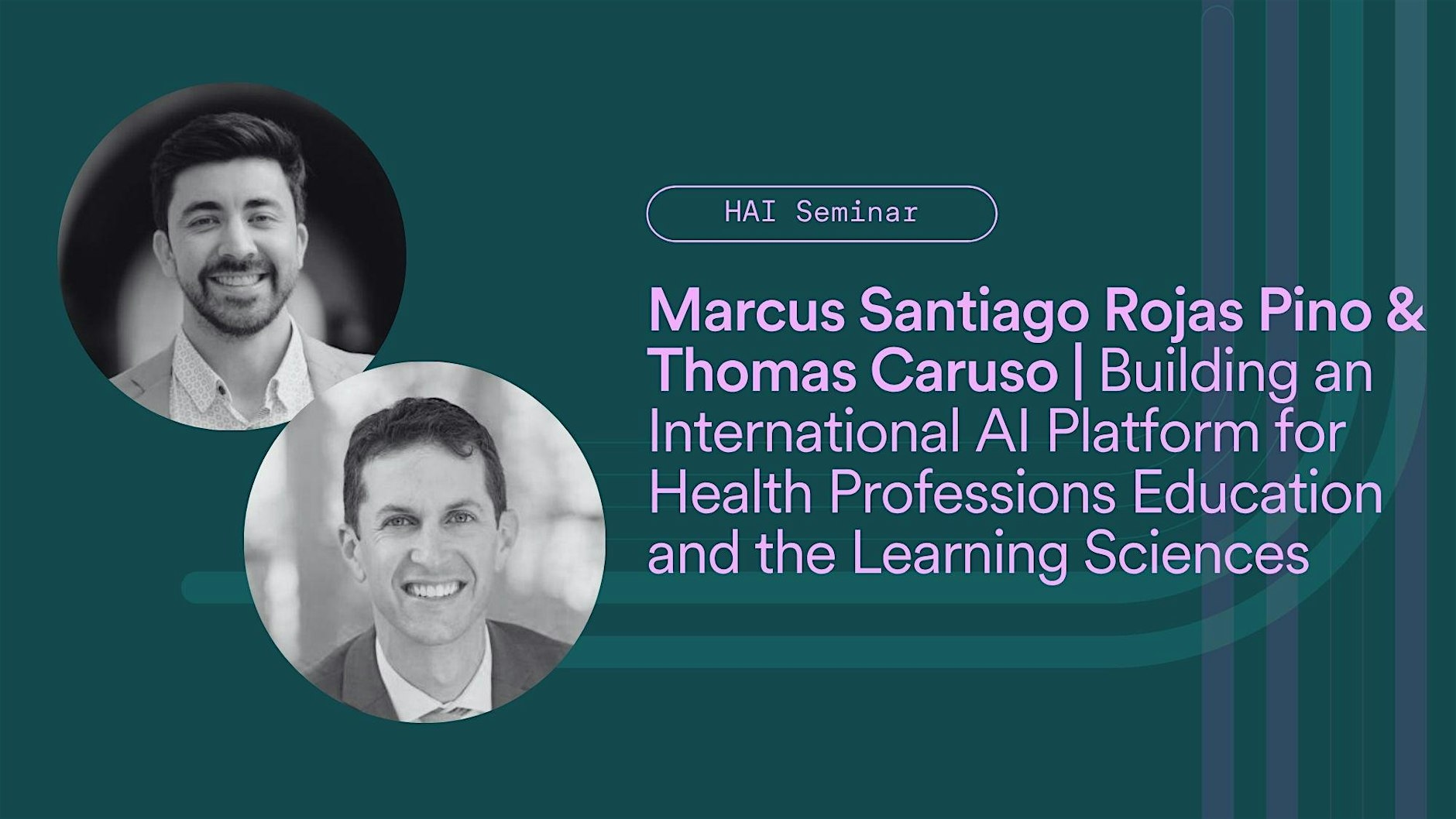
Clinical Mind AI is a Stanford-developed, international collaborative platform designed to strengthen clinical reasoning education through AI-simulated patient encounters across health professions.
A eureka moment is a two-step process: discovering something new and surprising, and establishing that it is correct. Drawing on her work at Axiom, Carina will discuss the transition from solving mathematical benchmarks to contributing to research, and from proving individual theorems to formalizing mathematical theories in Lean.
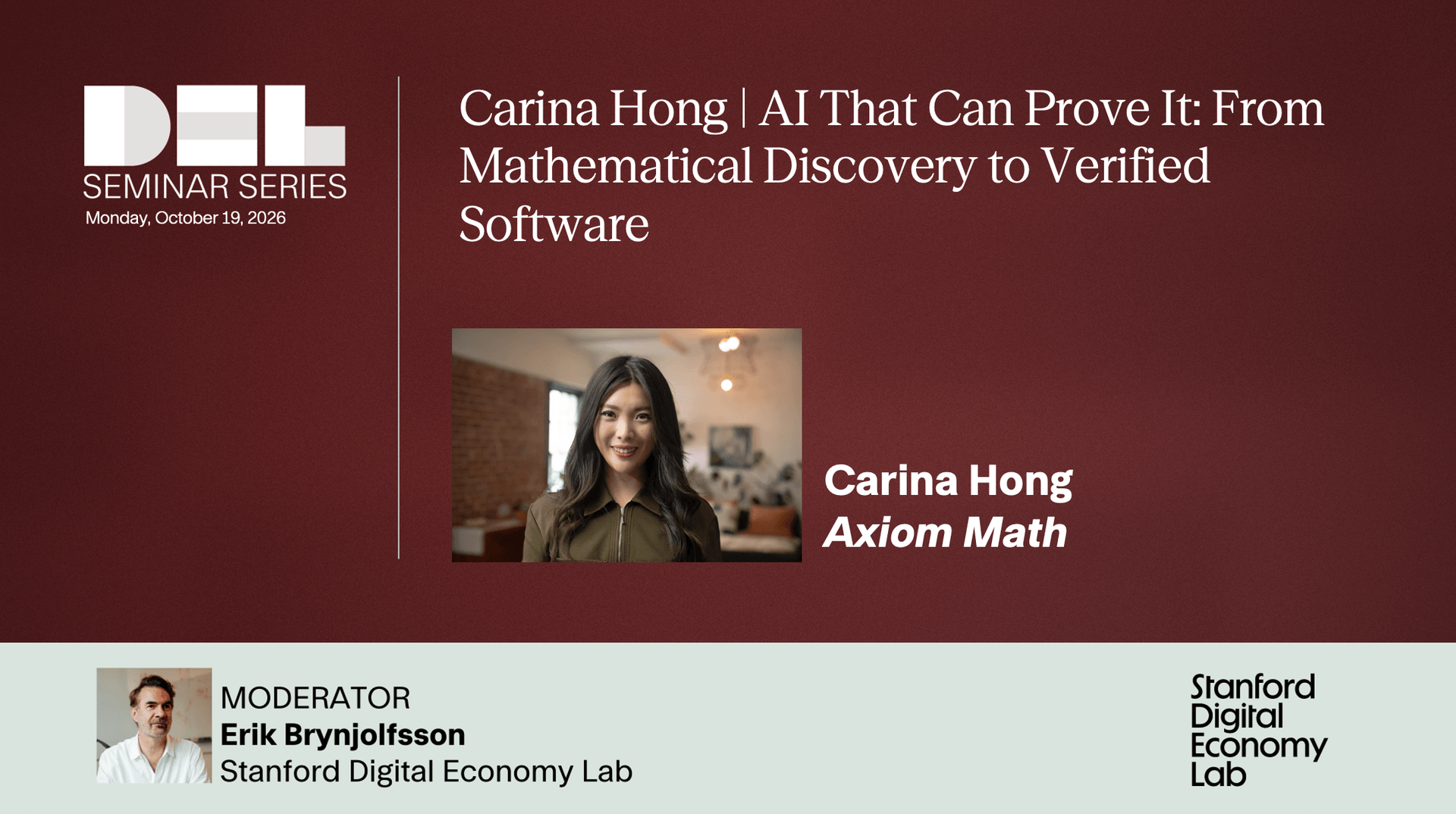
A eureka moment is a two-step process: discovering something new and surprising, and establishing that it is correct. Drawing on her work at Axiom, Carina will discuss the transition from solving mathematical benchmarks to contributing to research, and from proving individual theorems to formalizing mathematical theories in Lean.
Robot-assisted surgery (RAS) has gained momentum over the last two decades with more than 2,500,000 RAS procedures performed in 2024 alone using the da Vinci Surgical System, the most widely used surgical robotics platform. RAS enables surgical approaches that reduce patient recovery time and make minimally invasive surgery more accessible and comfortable for physicians. Yet for all the advances it has brought, RAS basically replicates open surgery, through smaller incisions, ignoring many of the robot’s unique capabilities. For example, robots can have more than one pair of “eyes,” they can have more than two arms, and they can operate in two or more different locations at the same time. In this talk, Dr. Abdelaal will present examples of how leveraging these unique capabilities can augment humans’ skills as they use these systems, towards achieving superhuman performance.