Stanford
University
  • Stanford Home
  • Maps & Directions
  • Search Stanford
  • Emergency Info
  • Terms of Use
  • Privacy
  • Copyright
  • Trademarks
  • Non-Discrimination
  • Accessibility
© Stanford University.  Stanford, California 94305.
Blaise Agüera y Arcas | Artificial Intelligence Is Human, Not Artificial | Stanford HAI
Skip to content
  • About

    • About
    • People
    • Get Involved with HAI
    • Support HAI
    • Subscribe to Email
  • Research

    • Research
    • Fellowship Programs
    • Grants
    • Student Affinity Groups
    • Centers & Labs
    • Research Publications
    • Research Partners
  • Education

    • Education
    • Executive and Professional Education
    • Government and Policymakers
    • K-12
    • Stanford Students
  • Policy

    • Policy
    • Policy Publications
    • Policymaker Education
    • Student Opportunities
  • AI Index

    • AI Index
    • AI Index Report
    • Global Vibrancy Tool
    • People
  • News
  • Events
  • Industry
  • Centers & Labs
Navigate
  • About
  • Events
  • Careers
  • Search
Participate
  • Get Involved
  • Support HAI
  • Contact Us

Stay Up To Date

Get the latest news, advances in research, policy work, and education program updates from HAI in your inbox weekly.

Sign Up For Latest News

Your browser does not support the video tag.
eventSeminar

Blaise Agüera y Arcas | Artificial Intelligence Is Human, Not Artificial

Status
Past
Date
Wednesday, October 29, 2025 12:00 PM - 1:00 PM PST/PDT
Location
Gates Computer Science Building Room 119 | 353 Serra Mall Stanford, CA 94305
Topics
Sciences (Social, Health, Biological, Physical)
Machine Learning
Overview
Watch Event Recording
Overview
Watch Event Recording
Share
Link copied to clipboard!
Event Contact
Stanford HAI
stanford-hai@stanford.edu

Related Events

AI+Science: Accelerating Discovery
ConferenceMay 05, 20268:30 AM - 5:00 PM
May
05
2026

AI+Science: Accelerating Discovery is an interdisciplinary conference bringing together researchers across physics, mathematics, chemistry, biology, neuroscience, and more to examine how AI is reshaping scientific discovery. Experts will separate hype from reality, spotlighting where AI is already enabling genuine breakthroughs and where its limits and risks remain.

Conference

AI+Science: Accelerating Discovery

May 05, 20268:30 AM - 5:00 PM

AI+Science: Accelerating Discovery is an interdisciplinary conference bringing together researchers across physics, mathematics, chemistry, biology, neuroscience, and more to examine how AI is reshaping scientific discovery. Experts will separate hype from reality, spotlighting where AI is already enabling genuine breakthroughs and where its limits and risks remain.

Wolfgang Lehrach | Code World Models for General Game Playing
SeminarMay 13, 202612:00 PM - 1:15 PM
May
13
2026

While Large Language Models (LLMs) show promise in many domains, relying on them for direct policy generation in games often results in illegal moves and poor strategic play.

Seminar

Wolfgang Lehrach | Code World Models for General Game Playing

May 13, 202612:00 PM - 1:15 PM

While Large Language Models (LLMs) show promise in many domains, relying on them for direct policy generation in games often results in illegal moves and poor strategic play.

Caroline Meinhardt, Thomas Mullaney, Juan N. Pava, and Diyi Yang | How Can AI Support Language Digitization and Digital Inclusion?
SeminarApr 15, 202612:00 PM - 1:15 PM
April
15
2026

What does digital inclusion look like in the age of AI? Over 6,000 of the world’s 7,000-plus living languages remain digitally disadvantaged.

Seminar

Caroline Meinhardt, Thomas Mullaney, Juan N. Pava, and Diyi Yang | How Can AI Support Language Digitization and Digital Inclusion?

Apr 15, 202612:00 PM - 1:15 PM

What does digital inclusion look like in the age of AI? Over 6,000 of the world’s 7,000-plus living languages remain digitally disadvantaged.

Much of the discourse around AI frames it as an alien and inscrutable intelligence. But in fact our success at creating "real" AI with general capabilities in the 2020s has come not only by taking many pages from computational neuroscience, but by performing large-scale modeling on human language-- the "DNA" of our collective intelligence. Intelligence does not equate with or arise from optimal performance at any particular task; neither does it arise in isolation, or against the background of a static game-like environment. Rather, it arises through the social modeling of interactions with other intelligent entities.

This talk will explore the deep (and largely positive) implications of reframing intelligence in terms of social modeling, intersubjectivity, and symbiosis. These include new perspectives on life and evolution, the relationship between humans and technology, and even the nature of free will and consciousness.

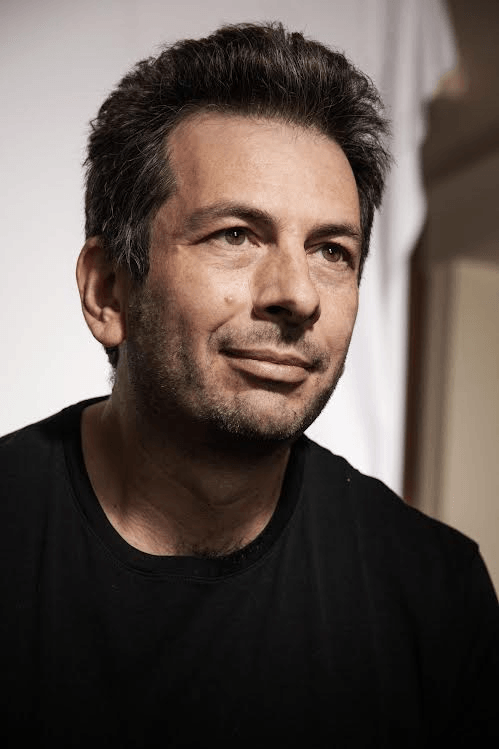
Blaise Agüera y Arcas
Author, AI Researcher and Vice President / Fellow at Google