Privacy, Safety, Security
As AI use grows, how can we safeguard privacy, security, and data protection for individuals and organizations?

Benchmarks — the standardized tests that rank AI models on safety, bias, and reasoning — drive markets and shape regulation. New Stanford research finds they often don't measure what they claim to.

Benchmarks — the standardized tests that rank AI models on safety, bias, and reasoning — drive markets and shape regulation. New Stanford research finds they often don't measure what they claim to.
A key promise of machine learning is the ability to assist users with personal tasks.
A key promise of machine learning is the ability to assist users with personal tasks.
Implementing the Transparency in Frontier AI Act Report for the California Department of Technology Multistakeholder Workshops
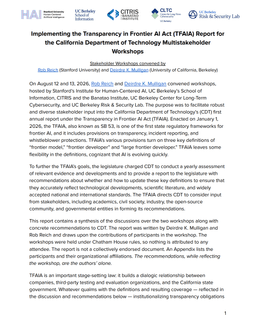
In this paper, HAI Associate Director and Senior Fellow Rob Reich and UC Berkeley School of Information Professor Deirdre K. Mulligan provide concrete recommendations to the California Department of Technology on the implementation of its frontier AI transparency requirements.
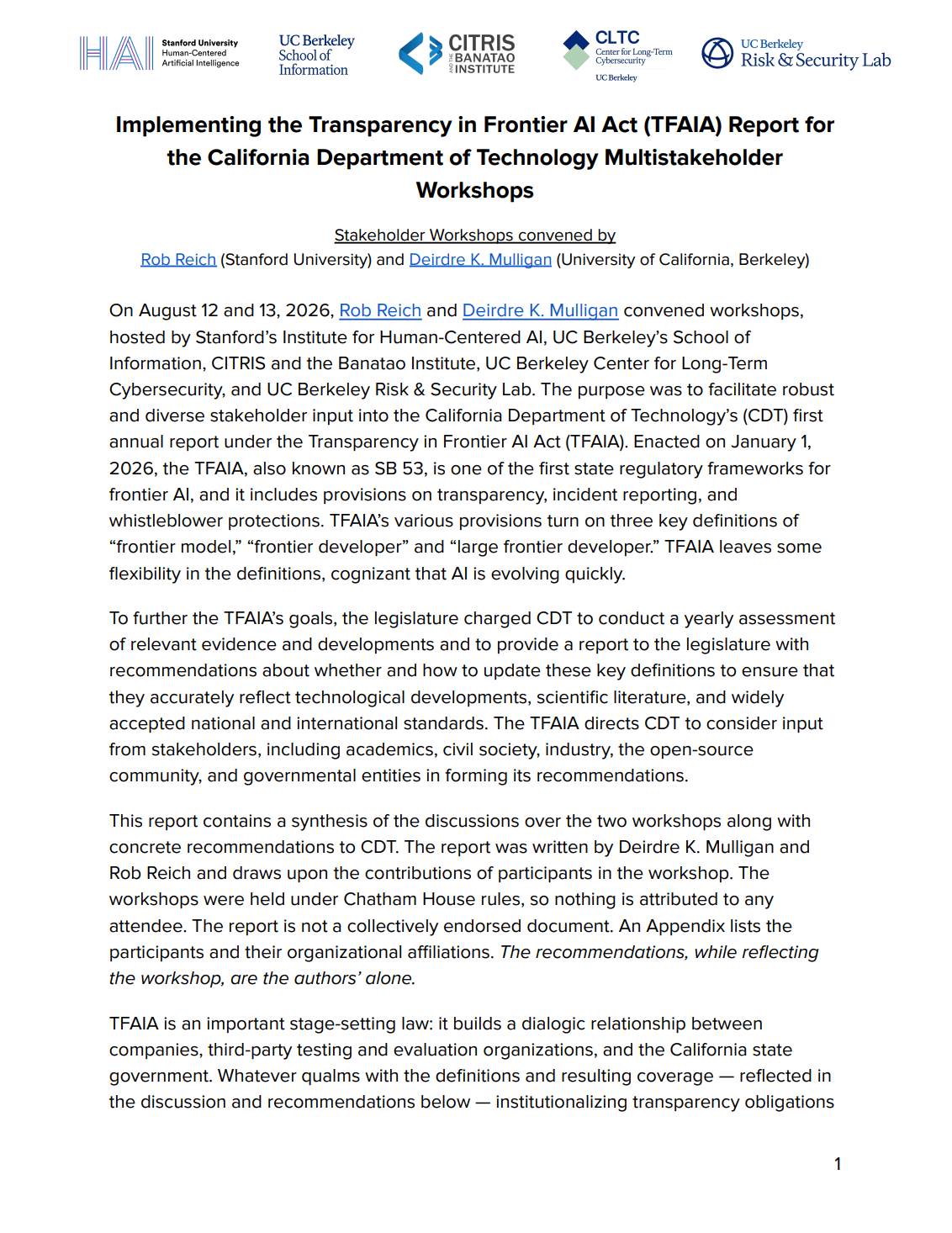
In this paper, HAI Associate Director and Senior Fellow Rob Reich and UC Berkeley School of Information Professor Deirdre K. Mulligan provide concrete recommendations to the California Department of Technology on the implementation of its frontier AI transparency requirements.


In a new series called Prompt Response, Stanford’s Surya Ganguli, Diyi Yang and Rob Reich examined emergent agent behavior, recursive self-improvement, independent evaluation and whether a kill switch can make advanced AI safer.

In a new series called Prompt Response, Stanford’s Surya Ganguli, Diyi Yang and Rob Reich examined emergent agent behavior, recursive self-improvement, independent evaluation and whether a kill switch can make advanced AI safer.
Designing Loyalty: AI Agents and Conflicts of Interest
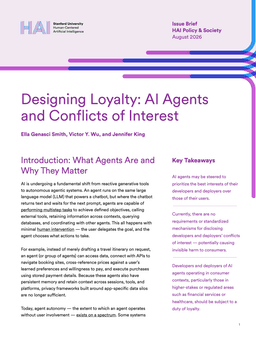
This brief examines the conflict-of-interest risks posed by AI agents and calls for imposing a duty of loyalty on developers and deployers.
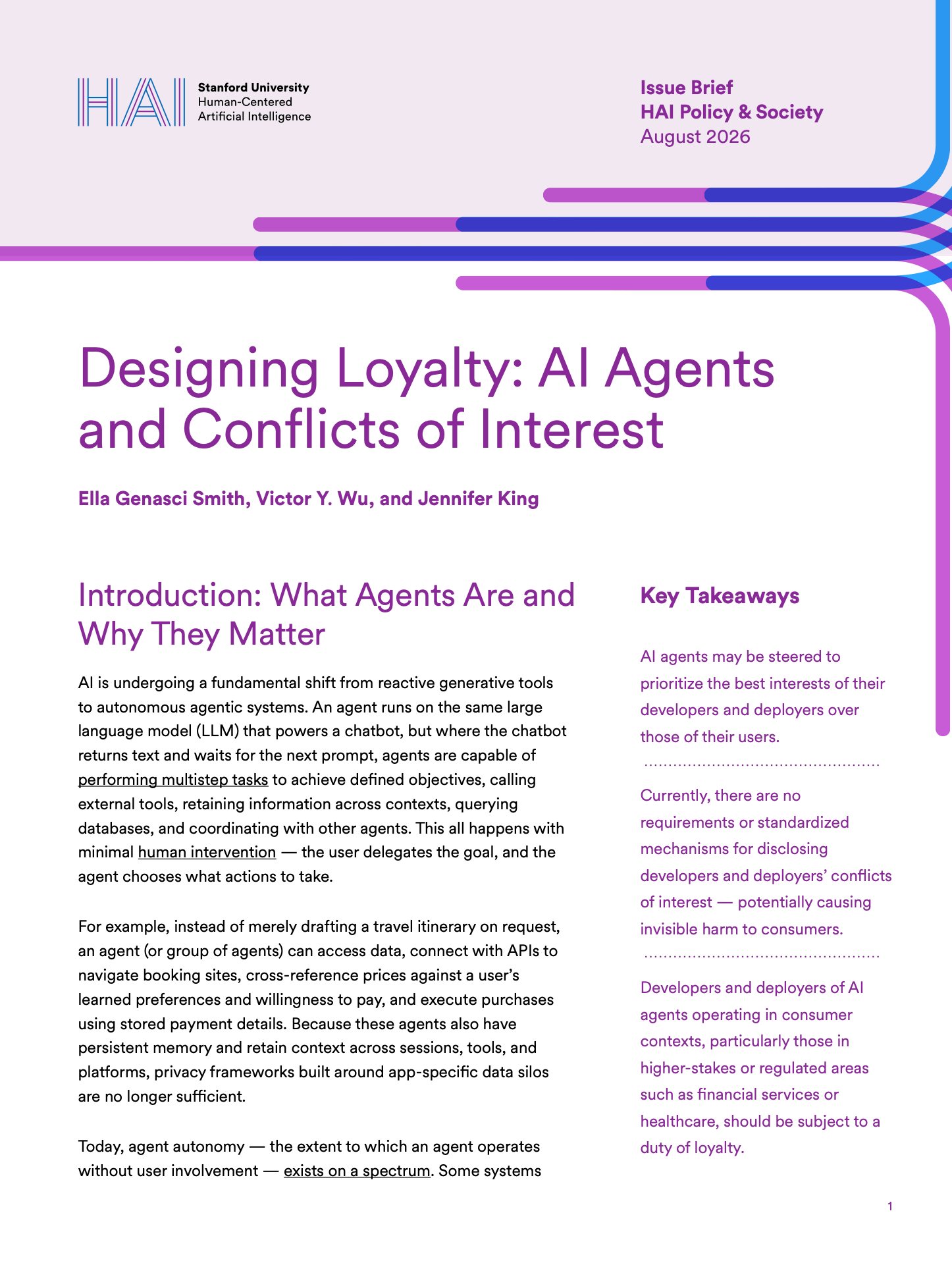
This brief examines the conflict-of-interest risks posed by AI agents and calls for imposing a duty of loyalty on developers and deployers.
All Work Published on Privacy, Safety, Security
HAI Policy Fellow Jennifer King advises caution surrounding one's person security when using AI, citing her research on AI privacy and insights on users’ tendency to disclose personal information to chatbots due to their conversational nature, the lack of transparency in how companies use chatbot conversations for training, and the evolving legal landscape around this data.
HAI Policy Fellow Jennifer King advises caution surrounding one's person security when using AI, citing her research on AI privacy and insights on users’ tendency to disclose personal information to chatbots due to their conversational nature, the lack of transparency in how companies use chatbot conversations for training, and the evolving legal landscape around this data.
Regulating Data Brokers in the Age of AI: A California Case Study
This brief assesses data broker compliance with California privacy laws and calls for more stringent consumer protections.
This brief assesses data broker compliance with California privacy laws and calls for more stringent consumer protections.
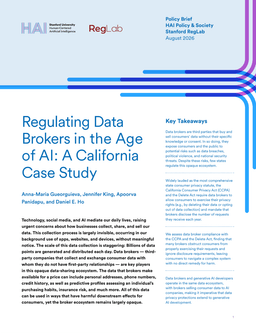
Amy Zegart

HAI Policy Fellow Jennifer King discusses privacy issues with AI chatbots, saying, “Unless you are having a chat with a service that has a temporary chat or, basically, an incognito version ... [and] you’re also having it within a browser that’s not tracking you, the answer is no. You can’t be sure that it’ll be totally private."
HAI Policy Fellow Jennifer King discusses privacy issues with AI chatbots, saying, “Unless you are having a chat with a service that has a temporary chat or, basically, an incognito version ... [and] you’re also having it within a browser that’s not tracking you, the answer is no. You can’t be sure that it’ll be totally private."
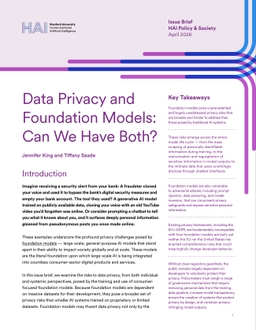
Data Privacy and Foundation Models: Can We Have Both?
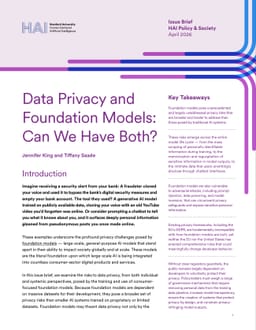
This brief examines the privacy risks foundation models pose to individuals and society, and governance mechanisms needed to address them.
This brief examines the privacy risks foundation models pose to individuals and society, and governance mechanisms needed to address them.
The state's Delete Act was supposed to give Californians a one-stop-shop to request their online information be deleted. But only a minority of registered data brokers are abiding by those laws, says Jennifer King, privacy and data policy fellow at the Stanford University Institute for Human-Centered AI.
The state's Delete Act was supposed to give Californians a one-stop-shop to request their online information be deleted. But only a minority of registered data brokers are abiding by those laws, says Jennifer King, privacy and data policy fellow at the Stanford University Institute for Human-Centered AI.