HAI Weekly Seminar with Daniel E. Ho, Jennifer King, Russell Wald, and Chris Wan | Stanford HAI
Stanford
University
  • Stanford Home
  • Maps & Directions
  • Search Stanford
  • Emergency Info
  • Terms of Use
  • Privacy
  • Copyright
  • Trademarks
  • Non-Discrimination
  • Accessibility
© Stanford University.  Stanford, California 94305.
Skip to content
  • About

    • About
    • People
    • Get Involved with HAI
    • Support HAI
    • Subscribe to Email
  • Research

    • Research
    • Fellowship Programs
    • Grants
    • Student Affinity Groups
    • Centers & Labs
    • Research Publications
    • Research Partners
  • Education

    • Education
    • Executive and Professional Education
    • Government and Policymakers
    • K-12
    • Stanford Students
  • Policy

    • Policy
    • Policy Publications
    • Policymaker Education
    • Student Opportunities
  • AI Index

    • AI Index
    • AI Index Report
    • Global Vibrancy Tool
    • People
  • News
  • Events
  • Industry
  • Centers & Labs
Navigate
  • About
  • Events
  • AI Glossary
  • Careers
  • Search
Participate
  • Get Involved
  • Support HAI
  • Contact Us

Stay Up To Date

Get the latest news, advances in research, policy work, and education program updates from HAI in your inbox weekly.

Sign Up For Latest News

Your browser does not support the video tag.
eventSeminar

HAI Weekly Seminar with Daniel E. Ho, Jennifer King, Russell Wald, and Chris Wan

Status
Past
Date
Wednesday, October 06, 2021 10:00 AM - 11:00 AM PST/PDT
Location
Virtual
Topics
Regulation, Policy, Governance
Overview
Watch Event Recording

A Blueprint for a National Research Cloud

The productive interplay between the federal government, research universities, and private enterprise has given rise to an American innovation engine that is the envy of the world. But with respect to artificial intelligence (AI), there are challenges to this innovation ecosystem. AI research is dependent on intensive compute power and large-scale datasets, which are increasingly out of reach for academic and noncommercial researchers. Heeding a call by Stanford’s Institute for Human-Centered Artificial Intelligence (HAI), Congress enacted the National AI Research Resource Task Force Act in January 2020, to recommend a “National Research Cloud” for greater access to high-end computational resources and large-scale government-held datasets for academic researchers.

In this seminar, the authors of HAI’s recent report “Building a National AI Research Resource: A Blueprint for the National Research Cloud” will dive into the complexities of designing, implementing, and maintaining a NRC, from the compute resources needed to the complexity of sharing government data.
Read the full white paper here

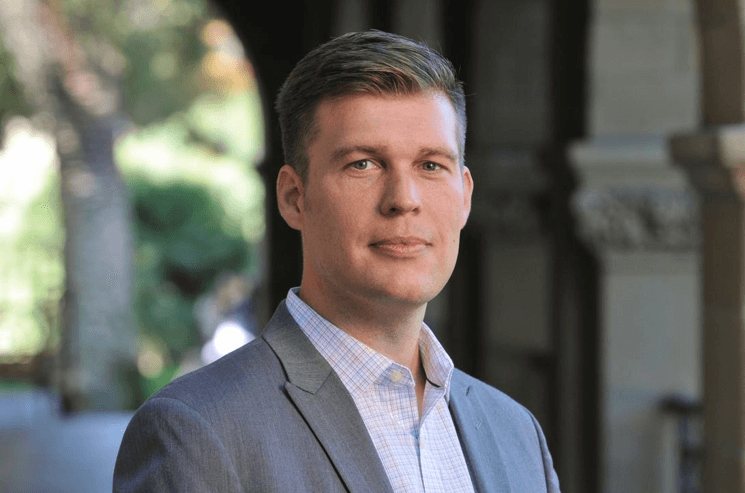
Dan Ho headshot
Daniel E. Ho
William Benjamin Scott and Luna M. Scott Professor of Law | Professor of Political Science | Professor of Computer Science (by courtesy) | Senior Fellow, Stanford HAI | Senior Fellow, Stanford Institute for Economic and Policy Research | Director of the Regulation, Evaluation, and Governance Lab (RegLab)
Jennifer King
Jennifer King
Privacy and Data Policy Fellow, Stanford HAI
Russell Wald headshot
Russell Wald
Executive Director
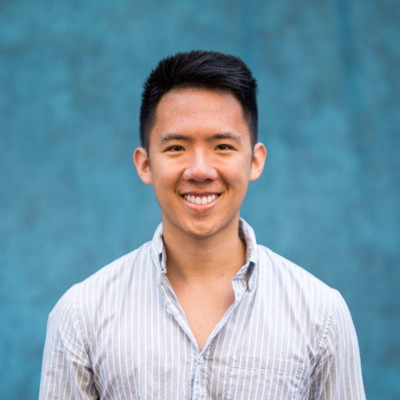
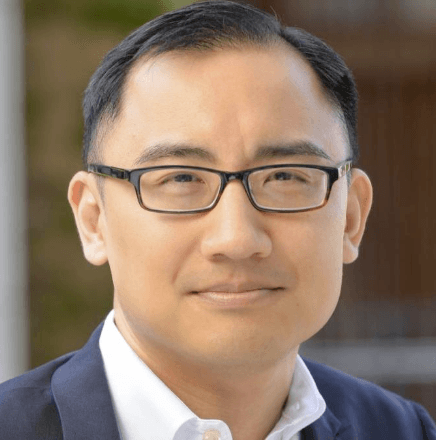
Christopher Wan
Research Assistant, Stanford Institute for Human-Centered Artificial Intelligence
Overview
Watch Event Recording
Share
Link copied to clipboard!
Event Contact
Kaci Peel
kpeel@stanford.edu
Related
  • Daniel E. Ho
    William Benjamin Scott and Luna M. Scott Professor of Law | Professor of Political Science | Professor of Computer Science (by courtesy) | Senior Fellow, Stanford HAI | Senior Fellow, Stanford Institute for Economic and Policy Research | Director of the Regulation, Evaluation, and Governance Lab (RegLab)
    Dan Ho headshot

Related Events

Inside the 2026 AI Index Report | Stanford HAI
SeminarMay 20, 202612:00 PM - 1:15 PM
May
20
2026

The AI Index, currently in its ninth year, tracks, collates, distills, and visualizes data relating to artificial intelligence.

Seminar

Inside the 2026 AI Index Report | Stanford HAI

May 20, 202612:00 PM - 1:15 PM

The AI Index, currently in its ninth year, tracks, collates, distills, and visualizes data relating to artificial intelligence.

Ashesh Rambachan | From Next-Token Prediction to Automatic Induction of Automata
Apr 13, 202612:00 PM - 1:00 PM
April
13
2026

Sequence data is ubiquitous in economics — job histories in labor economics, diagnosis and treatment sequences in health economics, strategic interactions in game theory. Generative sequence models can learn to predict these sequences well, but their complexity makes it hard to extract interpretable economic insights from their predictions.

Event

Ashesh Rambachan | From Next-Token Prediction to Automatic Induction of Automata

Apr 13, 202612:00 PM - 1:00 PM

Sequence data is ubiquitous in economics — job histories in labor economics, diagnosis and treatment sequences in health economics, strategic interactions in game theory. Generative sequence models can learn to predict these sequences well, but their complexity makes it hard to extract interpretable economic insights from their predictions.

Caroline Meinhardt, Thomas Mullaney, Juan N. Pava, and Diyi Yang | How Can AI Support Language Digitization and Digital Inclusion?
SeminarApr 15, 202612:00 PM - 1:15 PM
April
15
2026

What does digital inclusion look like in the age of AI? Over 6,000 of the world’s 7,000-plus living languages remain digitally disadvantaged.

Seminar

Caroline Meinhardt, Thomas Mullaney, Juan N. Pava, and Diyi Yang | How Can AI Support Language Digitization and Digital Inclusion?

Apr 15, 202612:00 PM - 1:15 PM

What does digital inclusion look like in the age of AI? Over 6,000 of the world’s 7,000-plus living languages remain digitally disadvantaged.