HAI Weekly Seminar with Sabelosethu Mhlambi | Stanford HAI
Stanford
University
  • Stanford Home
  • Maps & Directions
  • Search Stanford
  • Emergency Info
  • Terms of Use
  • Privacy
  • Copyright
  • Trademarks
  • Non-Discrimination
  • Accessibility
© Stanford University.  Stanford, California 94305.
Skip to content
  • About

    • About
    • People
    • Get Involved with HAI
    • Support HAI
    • Subscribe to Email
  • Research

    • Research
    • Fellowship Programs
    • Grants
    • Student Affinity Groups
    • Centers & Labs
    • Research Publications
    • Research Partners
  • Education

    • Education
    • Executive and Professional Education
    • Government and Policymakers
    • K-12
    • Stanford Students
  • Policy

    • Policy
    • Policy Publications
    • Policymaker Education
    • Student Opportunities
  • AI Index

    • AI Index
    • AI Index Report
    • Global Vibrancy Tool
    • People
  • News
  • Events
  • Industry
  • Centers & Labs
Navigate
  • About
  • Events
  • AI Glossary
  • Careers
  • Search
Participate
  • Get Involved
  • Support HAI
  • Contact Us

Stay Up To Date

Get the latest news, advances in research, policy work, and education program updates from HAI in your inbox weekly.

Sign Up For Latest News

Your browser does not support the video tag.
eventSeminar

HAI Weekly Seminar with Sabelosethu Mhlambi

Status
Past
Date
Wednesday, January 26, 2022 10:00 AM - 11:00 AM PST/PDT
Location
Virtual
Share
Link copied to clipboard!
Event Contact
Kaci Peel
kpeel@stanford.edu

Related Events

Arvind Narayanan | Adapting to the Transformation of Knowledge Work
May 18, 202612:00 PM - 1:00 PM
May
18
2026

The possibility that AI will automate most cognitive labor is worth taking seriously. How should we adapt to this transformation? I start from the perspective, articulated in the essay “AI as normal technology”, that the true bottlenecks lie downstream of capabilities and that AI’s impacts will unfold gradually over decades. If this is true, there are major gaps in our current evidence infrastructure, because it over-emphasizes the capability layer.

Event

Arvind Narayanan | Adapting to the Transformation of Knowledge Work

May 18, 202612:00 PM - 1:00 PM

The possibility that AI will automate most cognitive labor is worth taking seriously. How should we adapt to this transformation? I start from the perspective, articulated in the essay “AI as normal technology”, that the true bottlenecks lie downstream of capabilities and that AI’s impacts will unfold gradually over decades. If this is true, there are major gaps in our current evidence infrastructure, because it over-emphasizes the capability layer.

Inside the 2026 AI Index Report | Stanford HAI
SeminarMay 20, 202612:00 PM - 1:15 PM
May
20
2026

The AI Index, currently in its ninth year, tracks, collates, distills, and visualizes data relating to artificial intelligence.

Seminar

Inside the 2026 AI Index Report | Stanford HAI

May 20, 202612:00 PM - 1:15 PM

The AI Index, currently in its ninth year, tracks, collates, distills, and visualizes data relating to artificial intelligence.

Eyck Freymann | AI and Strategic Stability: A Framework for U.S.–China Technology Competition
SeminarMay 27, 202612:00 PM - 1:15 PM
May
27
2026

Strategic stability exists when neither side thinks it can improve its strategic outcome by striking first.

Seminar

Eyck Freymann | AI and Strategic Stability: A Framework for U.S.–China Technology Competition

May 27, 202612:00 PM - 1:15 PM

Strategic stability exists when neither side thinks it can improve its strategic outcome by striking first.

Decolonizing AI

Read Sabelo's Paper "From Rationality to Relationality"

Read the AI Decolonial Manyfesto referenced in Sabelo's talk

"Decolonizing AI" is a critique and an emerging movement both in the West and Non-Western world amongst AI researchers, activists, and practitioners. While its proponents have identified parallels between historical colonialism and the colonial-like scale and extractive nature of AI-related technologies developed by big tech companies, can a decolonial framing address broader socio-economic issues of power and agency within the creation and use of AI? This talk will explore the varying views on "decolonizing" AI and will build upon work from the “AI Decolonial Manyfesto” collaborative effort (https://manyfesto.ai).
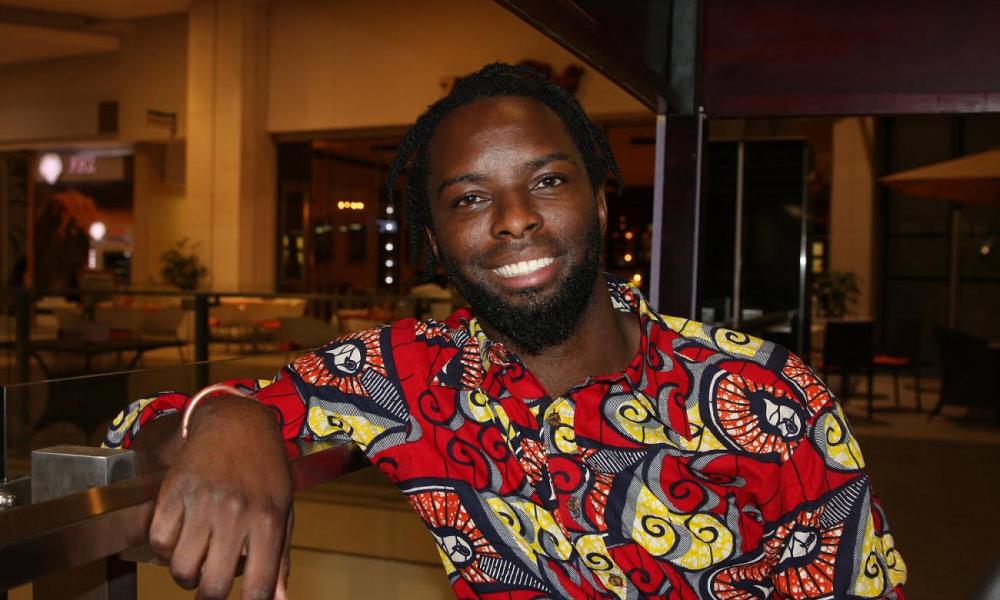
SABELOSabelo Mhlambi

Founder, Bhala; Researcher and Fellow, Berkman-Klein Center for Internet & Society, Technology and Human Rights Fellow, Carr Center for Human Rights Policy, Harvard University; Fellow, Stanford’s Digital Civil Society Lab, Stanford University

No tweets available.