Stanford
University
  • Stanford Home
  • Maps & Directions
  • Search Stanford
  • Emergency Info
  • Terms of Use
  • Privacy
  • Copyright
  • Trademarks
  • Non-Discrimination
  • Accessibility
© Stanford University.  Stanford, California 94305.
Intersectional Biases in Generative Language Models and Their Psychosocial Impacts | Stanford HAI
Skip to content
  • About

    • About
    • People
    • Get Involved with HAI
    • Support HAI
    • Subscribe to Email
  • Research

    • Research
    • Fellowship Programs
    • Grants
    • Student Affinity Groups
    • Centers & Labs
    • Research Publications
    • Research Partners
  • Education

    • Education
    • Executive and Professional Education
    • Government and Policymakers
    • K-12
    • Stanford Students
  • Policy

    • Policy
    • Policy Publications
    • Policymaker Education
    • Student Opportunities
  • AI Index

    • AI Index
    • AI Index Report
    • Global Vibrancy Tool
    • People
  • News
  • Events
  • Industry
  • Centers & Labs
Navigate
  • About
  • Events
  • Careers
  • Search
Participate
  • Get Involved
  • Support HAI
  • Contact Us

Stay Up To Date

Get the latest news, advances in research, policy work, and education program updates from HAI in your inbox weekly.

Sign Up For Latest News

eventSeminar

Intersectional Biases in Generative Language Models and Their Psychosocial Impacts

Status
Past
Date
Wednesday, October 16, 2024 12:00 PM - 1:15 PM PST/PDT
Location
Hybrid
Topics
Ethics, Equity, Inclusion
Attend Virtually
Overview
Event Recording

HAI Seminar with Faye-Marie Vassel & Evan Shieh

Overview
Event Recording
Share
Link copied to clipboard!
Event Contact
HAI Events Team
stanford-hai@stanford.edu
123456789

Related Events

Caroline Meinhardt, Thomas Mullaney, Juan N. Pava, and Diyi Yang | How Can AI Support Language Digitization and Digital Inclusion?
SeminarApr 15, 202612:00 PM - 1:15 PM
April
15
2026

What does digital inclusion look like in the age of AI? Over 6,000 of the world’s 7,000-plus living languages remain digitally disadvantaged.

Seminar

Caroline Meinhardt, Thomas Mullaney, Juan N. Pava, and Diyi Yang | How Can AI Support Language Digitization and Digital Inclusion?

Apr 15, 202612:00 PM - 1:15 PM

What does digital inclusion look like in the age of AI? Over 6,000 of the world’s 7,000-plus living languages remain digitally disadvantaged.

Juan Sebastián Gómez-Cañón | Challenges And Opportunities For Human-Centered Music Emotion Recognition
SeminarJun 03, 202612:00 PM - 1:15 PM
June
03
2026

Music is intertwined with human emotion, memory, and identity, making it a powerful medium for affective experience and regulation.

Seminar

Juan Sebastián Gómez-Cañón | Challenges And Opportunities For Human-Centered Music Emotion Recognition

Jun 03, 202612:00 PM - 1:15 PM

Music is intertwined with human emotion, memory, and identity, making it a powerful medium for affective experience and regulation.

Abstract: 

The rapid emergence of generative AI technologies has been shaped by a wave of early excitement and hope for a broad range of use cases. Yet, the impacts of the latest models on historically marginalized communities is still relatively understudied, including the potential for sociotechnical harm.

In this session, the speakers present a line of research uncovering intersectional biases in generative language models when they are used for open-ended writing, drawing connections between their synthetic text outputs and known linguistic patterns that have psychosocial impacts for diverse learners in educational settings.
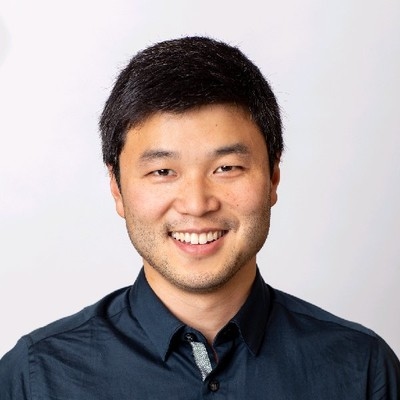

Speakers
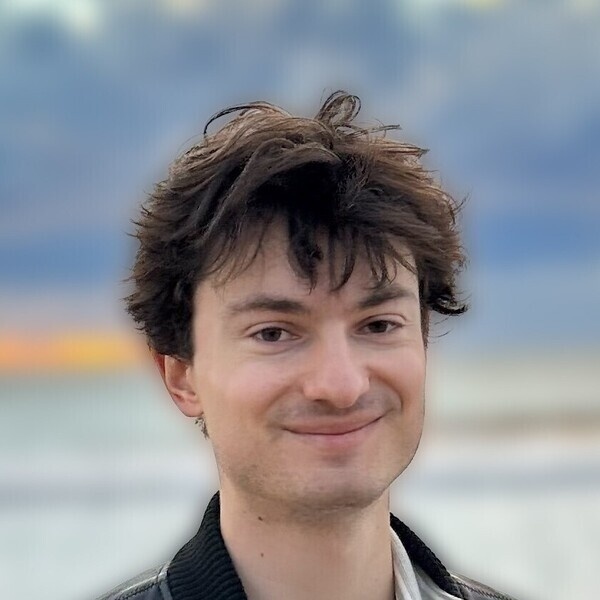
Evan Shieh
Executive Director and AI Researcher, Young Data Scientists League
Faye-Marie Vassel
STEM Education, Equity, and Inclusion Postdoctoral Fellow