Get the latest news, advances in research, policy work, and education program updates from HAI in your inbox weekly.
Sign Up For Latest News
Despite the rapid adoption of LLM chatbots, little is known about how they are used. We approach this question theoretically and empirically, modeling a user who chooses whether to complete a task herself, ask the chatbot for information that reduces decision noise, or delegate execution to the chatbot...
.png&w=1920&q=100)
Despite the rapid adoption of LLM chatbots, little is known about how they are used. We approach this question theoretically and empirically, modeling a user who chooses whether to complete a task herself, ask the chatbot for information that reduces decision noise, or delegate execution to the chatbot...
AI coding agents now complete multi-hour coding benchmarks with roughly 50% reliability, yet a randomized trial found experienced open-source developers took about 19% longer when allowed frontier AI tools than when tools were disallowed...
.png&w=1920&q=100)
AI coding agents now complete multi-hour coding benchmarks with roughly 50% reliability, yet a randomized trial found experienced open-source developers took about 19% longer when allowed frontier AI tools than when tools were disallowed...
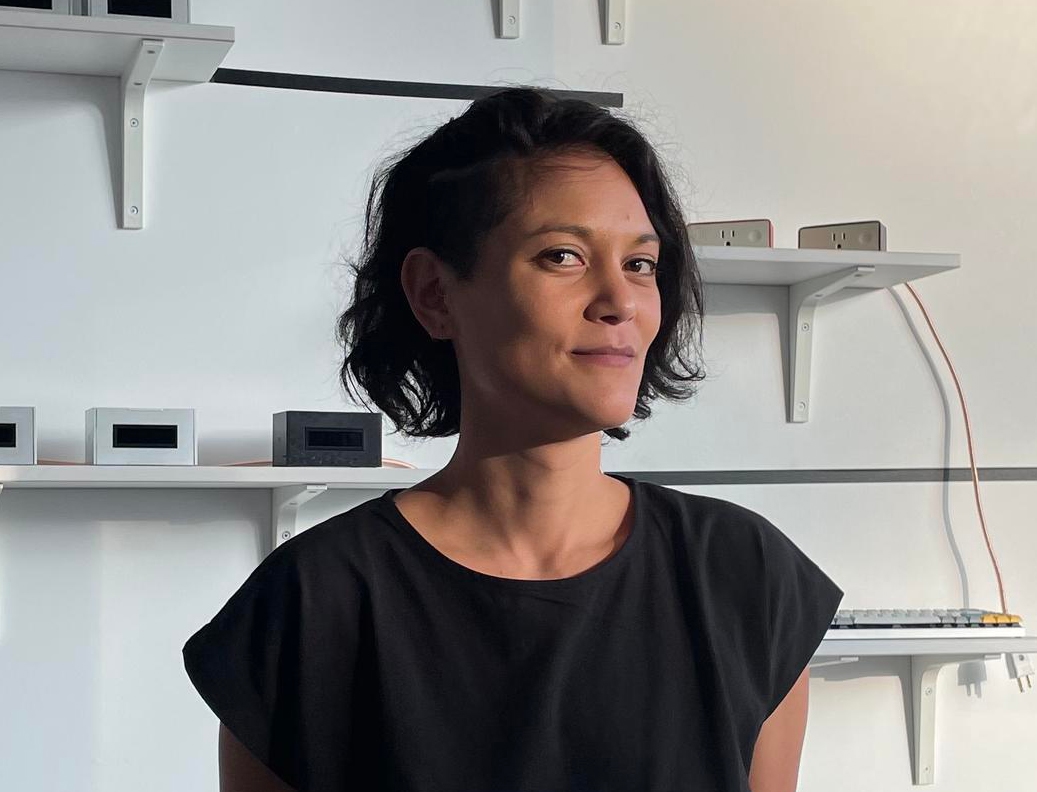
I am captivated by the ways we are taught to interact with algorithms, and how this shapes the way we interact with each other. Central to my work is a critique of the simultaneous technological and social systems we’re building around ourselves. What are the rules, what happens when we introduce glitches? I invite participants. To remote control my dates. To be followed. To welcome me in as their human smart home. To attend a party hosted by artificial intelligence. In these interactions, there is a reciprocal risk taking and vulnerability, as performer and audience are both challenged to relinquish control, both implicated. We must formulate our own opinions about the systems that govern our lives. We begin to notice their effects play out on our identity, relationships, and society. Each work feels like an attempt to hack my way out of myself and into closeness with others. I am embodying machines, trying to understand that distance between the algorithm and myself, the distance between others and me. There’s humor in the breakdown, and also moments of clarity. Who builds these artificial systems, what values do they embody? Who is prioritized and who is targeted as race, gender, disability, and class are programmatically encoded? Where are the boundaries around our intimate spaces? In the midst of always on networked interfaces, what does it mean to be truly present?