Stanford
University
  • Stanford Home
  • Maps & Directions
  • Search Stanford
  • Emergency Info
  • Terms of Use
  • Privacy
  • Copyright
  • Trademarks
  • Non-Discrimination
  • Accessibility
© Stanford University.  Stanford, California 94305.
Lindsey Felt: Art, AI, and Disability Futures | Stanford HAI

Stay Up To Date

Get the latest news, advances in research, policy work, and education program updates from HAI in your inbox weekly.

Sign Up For Latest News

Navigate
  • About
  • Events
  • Careers
  • Search
Participate
  • Get Involved
  • Support HAI
  • Contact Us
Skip to content
  • About

    • About
    • People
    • Get Involved with HAI
    • Support HAI
  • Research

    • Research
    • Fellowship Programs
    • Grants
    • Student Affinity Groups
    • Centers & Labs
    • Research Publications
    • Research Partners
  • Education

    • Education
    • Executive and Professional Education
    • Government and Policymakers
    • K-12
    • Stanford Students
  • Policy

    • Policy
    • Policy Publications
    • Policymaker Education
    • Student Opportunities
  • AI Index

    • AI Index
    • AI Index Report
    • Global Vibrancy Tool
    • People
  • News
  • Events
  • Industry
  • Centers & Labs
eventSeminar

Lindsey Felt: Art, AI, and Disability Futures

Status
Past
Date
Wednesday, November 30, 2022 10:00 AM - 11:00 AM PST/PDT
Location
Hybrid 
Share
Link copied to clipboard!
Event Contact
Madeleine Wright
mwright7@stanford.edu

Related Events

Lakshmi Balasubramanian, Utkarsh Contractor, & Chris Lemons | Kai: Harnessing AI to Enhance Reading Comprehension & Learning Outcomes for Students with Disabilities
SeminarNov 12, 202512:00 PM - 1:15 PM
November
12
2025

Learn about findings from a randomized controlled trial evaluating the impact of an AI-based tool on reading comprehension among middle and high school students with intellectual and developmental disabilities.

Seminar

Lakshmi Balasubramanian, Utkarsh Contractor, & Chris Lemons | Kai: Harnessing AI to Enhance Reading Comprehension & Learning Outcomes for Students with Disabilities

Nov 12, 202512:00 PM - 1:15 PM

Learn about findings from a randomized controlled trial evaluating the impact of an AI-based tool on reading comprehension among middle and high school students with intellectual and developmental disabilities.

Shared Wisdom: A Conversation with Sandy Pentland and Cade Metz
SeminarDec 02, 20253:00 PM - 4:30 PM
December
02
2025

On December 2, 2025, the Lab is thrilled to host a conversation with Sandy Pentland, Stanford Digital Economy Lab Faculty Lead and Stanford HAI Center Fellow, about his new book, Shared Wisdom: Cultural Evolution in the Age of AI.

Seminar

Shared Wisdom: A Conversation with Sandy Pentland and Cade Metz

Dec 02, 20253:00 PM - 4:30 PM

On December 2, 2025, the Lab is thrilled to host a conversation with Sandy Pentland, Stanford Digital Economy Lab Faculty Lead and Stanford HAI Center Fellow, about his new book, Shared Wisdom: Cultural Evolution in the Age of AI.

Riana Pfefferkorn | Student Misuse of AI-Powered “Undress” Apps
SeminarDec 03, 202512:00 PM - 1:15 PM
December
03
2025

AI-generated child sexual abuse material (AI CSAM) carries unique harms. Schools have a chance to proactively prepare their AI CSAM prevention and response strategies.


Seminar

Riana Pfefferkorn | Student Misuse of AI-Powered “Undress” Apps

Dec 03, 202512:00 PM - 1:15 PM

AI-generated child sexual abuse material (AI CSAM) carries unique harms. Schools have a chance to proactively prepare their AI CSAM prevention and response strategies.


HAI Weekly Seminar

Art, AI, and Disability Futures

In this talk, Lindsey D. Felt introduces a framework that locates disability innovation, artistry, and crip politics as central to the development of AI and technology. From M Eifler’s Prosthetic Memory to Paola Prestini’s Sensorium Ex, these examples of AI art highlight the erasures of disability from training data and refuse AI’s optimization against disability. Historically, technologies have been designed to diagnose, rehabilitate, normalize, and even cure disabilities. Though this approach has arguably improved the quality of life for many disabled people, it codes disability as an “undesirable” and “outlier” trait, operating on the false premise of a “norm” that is not reflective of the human condition’s heterogeneity. Researchers have demonstrated how machine learning tools are mirroring this trajectory, from autonomous vehicles that don’t recognize wheelchair users, to Natural Language Processing models that classify texts mentioning disability as more “toxic.” These biases are equally important to consider alongside racial and gender inequities for their wide-ranging social implications.

In conversation with artist-technologist M Eifler, Felt discusses approaches to human-centered AI art that are designed for self-care, mutual aid, and social justice-informed world-building. Felt and Eifler consider Prosthetic Memory, a digital memory bank created by Eifler that uses machine learning to retrieve self-recorded videos for the artist to navigate their memory dysregulation. Sensorium Ex, an experimental AI opera that introduces a new composite voice from an algorithm trained on non-normative speech patterns, similarly models the possibilities for a non-ableist AI. These works reflect the yearning for what scholar Alison Kafer calls “crip futurity,” a future where disabled people’s experiences, practices, stories, and ways of knowing are valued.

Slides for this Presentation

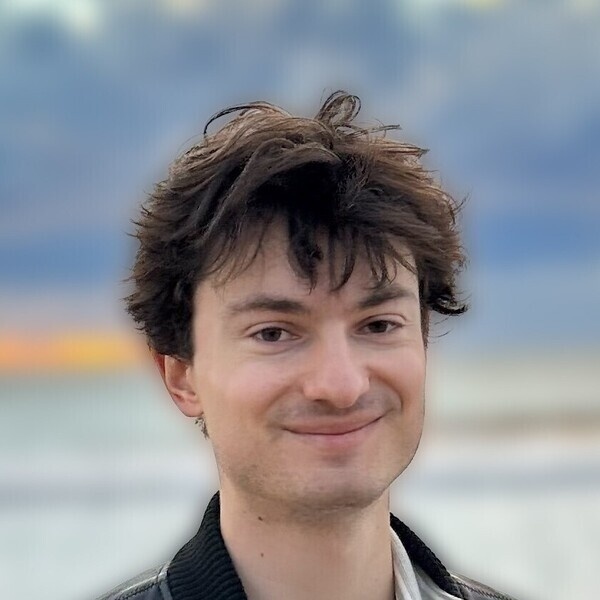
Lindsey FeltLindsey Felt

Leonardo CripTech Incubator Co-founder and Co-director; Lecturer in Program in Writing and Rhetoric, Stanford University

No tweets available.