Russell Wald | Expanding Academia's Role in Public Sector AI | Stanford HAI
Stanford
University
  • Stanford Home
  • Maps & Directions
  • Search Stanford
  • Emergency Info
  • Terms of Use
  • Privacy
  • Copyright
  • Trademarks
  • Non-Discrimination
  • Accessibility
© Stanford University.  Stanford, California 94305.
Skip to content
  • About

    • About
    • People
    • Get Involved with HAI
    • Support HAI
    • Subscribe to Email
  • Research

    • Research
    • Fellowship Programs
    • Grants
    • Student Affinity Groups
    • Centers & Labs
    • Research Publications
    • Research Partners
  • Education

    • Education
    • Executive and Professional Education
    • Government and Policymakers
    • K-12
    • Stanford Students
  • Policy

    • Policy
    • Policy Publications
    • Policymaker Education
    • Student Opportunities
  • AI Index

    • AI Index
    • AI Index Report
    • Global Vibrancy Tool
    • People
  • News
  • Events
  • Industry
  • Centers & Labs
Navigate
  • About
  • Events
  • AI Glossary
  • Careers
  • Search
Participate
  • Get Involved
  • Support HAI
  • Contact Us

Stay Up To Date

Get the latest news, advances in research, policy work, and education program updates from HAI in your inbox weekly.

Sign Up For Latest News

Your browser does not support the video tag.
eventSeminar

Russell Wald | Expanding Academia's Role in Public Sector AI

Status
Past
Date
Wednesday, January 15, 2025 12:00 PM - 1:15 PM PST/PDT
Location
Gates Computer Science Building Room 119
Topics
Education, Skills
Attend Virtually

This seminar will discuss how governments must boost investment in public sector AI research and propose policies to balance industry dominance with significant academic contributions.
Expanding Academia's Role in Public Sector AI

AI has captured public attention and become a focal point for policymakers. Concerns about AI have evolved from niche academic discussions to widespread public discourse, influencing legislative actions worldwide. Currently, the focus is mainly on industry-driven AI products, sidelining the broader AI ecosystem and societal impacts. This industry-centric approach marginalizes academia and civil society, potentially skewing AI governance toward industry interests rather than public good. To address this, diverse stakeholder involvement is essential in AI development. Robust academic research is crucial for human-centered AI, driving scientific curiosity, training future AI leaders, and providing policymakers with an objective understanding of AI. This seminar will discuss how governments must boost investment in public sector AI research and propose policies to balance industry dominance with significant academic contributions.

Speakers
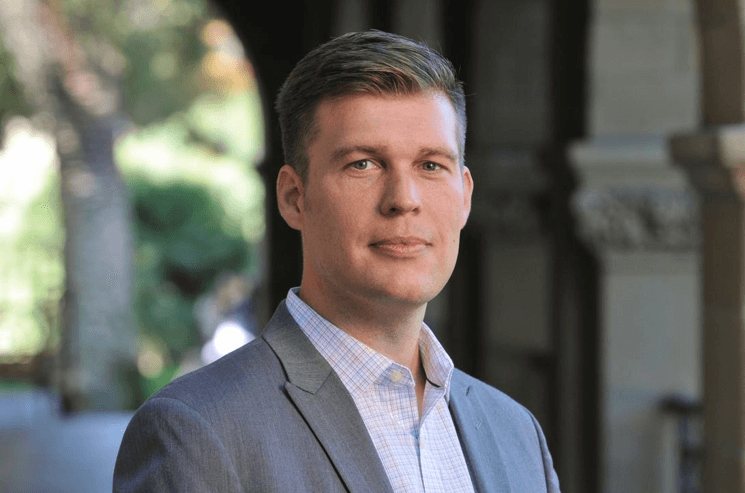
Russell Wald headshot
Russell Wald
Executive Director

If you need a disability-related accommodation, please contact: Annie Benisch, Events Planner. Requests should be made at least a week before the event. 

Share
Link copied to clipboard!
Event Contact
Annie Benisch
abenisch@stanford.edu
More from HAI and SDS seminars
  • Inside the 2026 AI Index Report | Stanford HAI
    SeminarMay 20, 202612:00 PM - 1:15 PM
    May
    20
    2026

    The AI Index, currently in its ninth year, tracks, collates, distills, and visualizes data relating to artificial intelligence.

Related
  • 5 Questions for Russell Wald (Politico)
    Mohar Chatterjee
    Mar 24
    media mention

    Stanford HAI Managing Director for Policy and Society Russell Wald discusses the correct balance between corporate AI research versus academic AI research, how synthetic media is eroding public trust, and how he’s helping educate policymakers as AI goes mainstream.

  • Russell Wald
    Executive Director
    Russell Wald headshot
  • A Plan To Democratize Access To Powerful AI Tools Gets A Last-Ditch Push In Congress
    Semafor
    Nov 22
    media mention

    HAI Executive Director Russell Wald speaks about the importance of passing the CREATE AI Act, born from Stanford HAI's National AI Research Resource. 

  • Warning Signs That AI Foundational Research And AI Human Talent Could Be Slipping Through Academia’s Fingers
    Forbes
    Jan 17
    media mention

    HAI Executive Director Russell Wald discusses the importance of academia's role in public sector AI. 

Related Events

Ashesh Rambachan | From Next-Token Prediction to Automatic Induction of Automata
Apr 13, 202612:00 PM - 1:00 PM
April
13
2026

Sequence data is ubiquitous in economics — job histories in labor economics, diagnosis and treatment sequences in health economics, strategic interactions in game theory. Generative sequence models can learn to predict these sequences well, but their complexity makes it hard to extract interpretable economic insights from their predictions.

Event

Ashesh Rambachan | From Next-Token Prediction to Automatic Induction of Automata

Apr 13, 202612:00 PM - 1:00 PM

Sequence data is ubiquitous in economics — job histories in labor economics, diagnosis and treatment sequences in health economics, strategic interactions in game theory. Generative sequence models can learn to predict these sequences well, but their complexity makes it hard to extract interpretable economic insights from their predictions.

Caroline Meinhardt, Thomas Mullaney, Juan N. Pava, and Diyi Yang | How Can AI Support Language Digitization and Digital Inclusion?
SeminarApr 15, 202612:00 PM - 1:15 PM
April
15
2026

What does digital inclusion look like in the age of AI? Over 6,000 of the world’s 7,000-plus living languages remain digitally disadvantaged.

Seminar

Caroline Meinhardt, Thomas Mullaney, Juan N. Pava, and Diyi Yang | How Can AI Support Language Digitization and Digital Inclusion?

Apr 15, 202612:00 PM - 1:15 PM

What does digital inclusion look like in the age of AI? Over 6,000 of the world’s 7,000-plus living languages remain digitally disadvantaged.

Matt Beane | Precision Proactivity: Measuring Cognitive Load in Real-World AI-Assisted Work
Apr 20, 202612:00 PM - 1:00 PM
April
20
2026

Systems like ChatGPT and Claude assist billions through proactive dialogue—offering unsolicited, task-relevant information. Drawing on Cognitive Load Theory, we study how cognitive load shapes performance in AI assisted knowledge work.

Event

Matt Beane | Precision Proactivity: Measuring Cognitive Load in Real-World AI-Assisted Work

Apr 20, 202612:00 PM - 1:00 PM

Systems like ChatGPT and Claude assist billions through proactive dialogue—offering unsolicited, task-relevant information. Drawing on Cognitive Load Theory, we study how cognitive load shapes performance in AI assisted knowledge work.