Shared Wisdom: A Conversation with Sandy Pentland and Cade Metz | Stanford HAI
Stanford
University
  • Stanford Home
  • Maps & Directions
  • Search Stanford
  • Emergency Info
  • Terms of Use
  • Privacy
  • Copyright
  • Trademarks
  • Non-Discrimination
  • Accessibility
© Stanford University.  Stanford, California 94305.
Skip to content
  • About

    • About
    • People
    • Get Involved with HAI
    • Support HAI
    • Subscribe to Email
  • Research

    • Research
    • Fellowship Programs
    • Grants
    • Student Affinity Groups
    • Centers & Labs
    • Research Publications
    • Research Partners
  • Education

    • Education
    • Executive and Professional Education
    • Government and Policymakers
    • K-12
    • Stanford Students
  • Policy

    • Policy
    • Policy Publications
    • Policymaker Education
    • Student Opportunities
  • AI Index

    • AI Index
    • AI Index Report
    • Global Vibrancy Tool
    • People
  • News
  • Events
  • Industry
  • Centers & Labs
Navigate
  • About
  • Events
  • AI Glossary
  • Careers
  • Search
Participate
  • Get Involved
  • Support HAI
  • Contact Us

Stay Up To Date

Get the latest news, advances in research, policy work, and education program updates from HAI in your inbox weekly.

Sign Up For Latest News

Your browser does not support the video tag.
eventSeminar

Shared Wisdom: A Conversation with Sandy Pentland and Cade Metz

Status
Past
Date
Tuesday, December 02, 2025 3:00 PM - 4:30 PM PST/PDT
Location
353 Jane Stanford Way, Room 119, Stanford, CA 94305
Topics
Economy, Markets
Machine Learning
Workforce, Labor
Industry, Innovation
Attend Virtually

On December 2, 2025, the Lab is thrilled to host a conversation with Sandy Pentland, Stanford Digital Economy Lab Faculty Lead and Stanford HAI Center Fellow, about his new book, Shared Wisdom: Cultural Evolution in the Age of AI.

In Shared Wisdom: Cultural Evolution in the Age of AI, Alex Pentland delves into the history of innovation, emphasizing the importance of understanding how technologies and cultural inventions impact human society. Humanity’s great leaps forward—the rise of civilizations, the Enlightenment, and the Scientific Revolution—were all propelled by cultural inventions that accelerated our rate of innovation and built collective wisdom. Solving current global challenges such as climate change, pandemics, and failing social institutions will require similarly fundamental inventions.

Shared Wisdom provides a unique perspective on human society and offers insights into how we can use technologies like digital media and AI to aid, rather than replace, our human capacity for deliberation. Drawing on his expertise in both social science and technology, the author bridges the gap between these two disciplines and offers a holistic view of the challenges and opportunities we face in the age of AI. By looking deep into our history, Pentland argues that the better we understand the key factors that accelerate cultural evolution, the greater our chances of surmounting our current problems.


Visit the Digital Economy Lab website for more information.

Author, Speaker
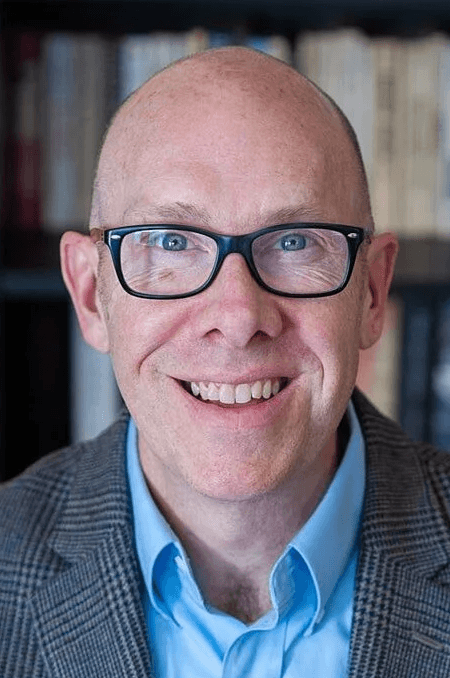
Sandy Pentland
Center Fellow, Stanford HAI; Toshiba Professor of Media Arts & Science, Professor, Information Technology
Moderator
Cade Metz
Reporter at The New York Times
Share
Link copied to clipboard!
Event Contact
Elsa Conde
econde@stanford.edu
Related
  • Sandy Pentland: AI Should Nurture Communities
    Dylan Walsh
    Nov 17
    news

    In his new book, Shared Wisdom, the scholar outlines the limits of today’s political and social structures, which he considers caught in historical ruts, and discusses how AI might help to rebuild a flourishing community.

  • Sandy Pentland
    Center Fellow, Stanford HAI; Toshiba Professor of Media Arts & Science, Professor, Information Technology

Related Events

Ashesh Rambachan | From Next-Token Prediction to Automatic Induction of Automata
Apr 13, 202612:00 PM - 1:00 PM
April
13
2026

Sequence data is ubiquitous in economics — job histories in labor economics, diagnosis and treatment sequences in health economics, strategic interactions in game theory. Generative sequence models can learn to predict these sequences well, but their complexity makes it hard to extract interpretable economic insights from their predictions.

Event

Ashesh Rambachan | From Next-Token Prediction to Automatic Induction of Automata

Apr 13, 202612:00 PM - 1:00 PM

Sequence data is ubiquitous in economics — job histories in labor economics, diagnosis and treatment sequences in health economics, strategic interactions in game theory. Generative sequence models can learn to predict these sequences well, but their complexity makes it hard to extract interpretable economic insights from their predictions.

Matt Beane | Precision Proactivity: Measuring Cognitive Load in Real-World AI-Assisted Work
Apr 20, 202612:00 PM - 1:00 PM
April
20
2026

Systems like ChatGPT and Claude assist billions through proactive dialogue—offering unsolicited, task-relevant information. Drawing on Cognitive Load Theory, we study how cognitive load shapes performance in AI assisted knowledge work.

Event

Matt Beane | Precision Proactivity: Measuring Cognitive Load in Real-World AI-Assisted Work

Apr 20, 202612:00 PM - 1:00 PM

Systems like ChatGPT and Claude assist billions through proactive dialogue—offering unsolicited, task-relevant information. Drawing on Cognitive Load Theory, we study how cognitive load shapes performance in AI assisted knowledge work.

Wolfgang Lehrach | Code World Models for General Game Playing
SeminarMay 13, 202612:00 PM - 1:15 PM
May
13
2026

While Large Language Models (LLMs) show promise in many domains, relying on them for direct policy generation in games often results in illegal moves and poor strategic play.

Seminar

Wolfgang Lehrach | Code World Models for General Game Playing

May 13, 202612:00 PM - 1:15 PM

While Large Language Models (LLMs) show promise in many domains, relying on them for direct policy generation in games often results in illegal moves and poor strategic play.