Stanford
University
  • Stanford Home
  • Maps & Directions
  • Search Stanford
  • Emergency Info
  • Terms of Use
  • Privacy
  • Copyright
  • Trademarks
  • Non-Discrimination
  • Accessibility
© Stanford University.  Stanford, California 94305.
Sheng Wang | Generative AI for Multimodal Biomedicine | Stanford HAI
Skip to content
  • About

    • About
    • People
    • Get Involved with HAI
    • Support HAI
    • Subscribe to Email
  • Research

    • Research
    • Fellowship Programs
    • Grants
    • Student Affinity Groups
    • Centers & Labs
    • Research Publications
    • Research Partners
  • Education

    • Education
    • Executive and Professional Education
    • Government and Policymakers
    • K-12
    • Stanford Students
  • Policy

    • Policy
    • Policy Publications
    • Policymaker Education
    • Student Opportunities
  • AI Index

    • AI Index
    • AI Index Report
    • Global Vibrancy Tool
    • People
  • News
  • Events
  • Industry
  • Centers & Labs
Navigate
  • About
  • Events
  • Careers
  • Search
Participate
  • Get Involved
  • Support HAI
  • Contact Us

Stay Up To Date

Get the latest news, advances in research, policy work, and education program updates from HAI in your inbox weekly.

Sign Up For Latest News

eventSeminar

Sheng Wang | Generative AI for Multimodal Biomedicine

Status
Past
Date
Wednesday, November 06, 2024 12:00 PM - 1:15 PM PST/PDT
Location
Hybrid
Topics
Healthcare
Overview
Event Recording

HAI Seminar with Sheng Wang

Abstract:

Biomedicine is inherently multimodal, including imaging modalities such as pathology, CT, MRI, X-ray and ultrasounds, as well as omics modality such as genomics, epigenomics and transcriptomics. General domain multimodal approaches are not applicable to biomedicine because biomedical images are very different from general domain images, thus necessitating the development of modality-specific approaches. In this talk, Sheng will introduce three recent works towards building multimodal biomedicine foundation models. 

First,  Sheng will introduce GigaPath, the first whole-slide pathology foundation model that can handle gigapixel-level pathology images. GigaPath exploits a novel vision transformer architecture and achieves the state-of-the-art results on 23 out of 26 cancer tasks, including subtyping and biomarker prediction. Next, he will introduce OCTCube, the first 3D OCT retinal imaging foundation model. OCTCube significantly outperformed 2D models on 27 out of 29 tasks, including retinal disease prediction, cross-modality analysis, cross-device generalization and systemic disease prediction. Finally, Sheng will introduce BiomedParse, a multi-modal foundation model that integrates 9 major biomedical imaging modalities by projecting all of them into the text space, resulting in superior performance on segmentation, detection, and recognition, paving the path for large-scale image-based biomedical discovery. I will conclude this task with discussion on how multi-modal generative AI can advance future medical applications through multi-agent framework and integration with multi-omics datasets.
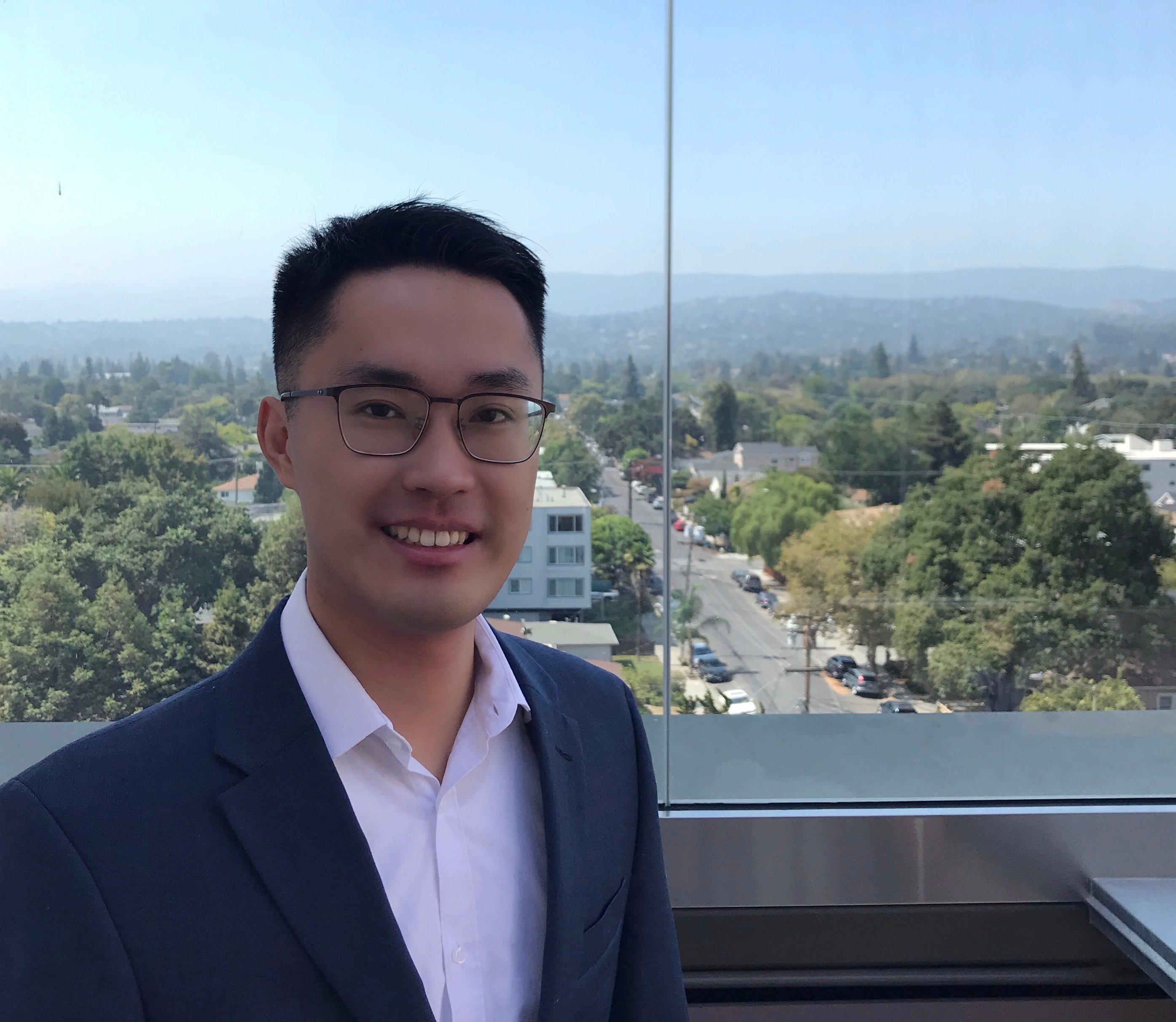
Speaker
Sheng Wang
Assistant Professor in the School of Computer Science and Engineering at the University of Washington Seattle
Overview
Event Recording
Share
Link copied to clipboard!
Event Contact
Annie Benisch
abenisch@stanford.edu
Related
  • Sheng Wang
    Assistant Professor in the School of Computer Science and Engineering at the University of Washington Seattle

Related Events

Zoë Hitzig | How People Use ChatGPT
Mar 09, 202612:00 PM - 1:00 PM
March
09
2026

Despite the rapid adoption of LLM chatbots, little is known about how they are used. We approach this question theoretically and empirically, modeling a user who chooses whether to complete a task herself, ask the chatbot for information that reduces decision noise, or delegate execution to the chatbot...

Event

Zoë Hitzig | How People Use ChatGPT

Mar 09, 202612:00 PM - 1:00 PM

Despite the rapid adoption of LLM chatbots, little is known about how they are used. We approach this question theoretically and empirically, modeling a user who chooses whether to complete a task herself, ask the chatbot for information that reduces decision noise, or delegate execution to the chatbot...

Hari Subramonyam | Learning by Creating: A Human-Centered Vision for AI in Education
SeminarMar 11, 202612:00 PM - 1:15 PM
March
11
2026
Seminar

Hari Subramonyam | Learning by Creating: A Human-Centered Vision for AI in Education

Mar 11, 202612:00 PM - 1:15 PM
Joel Becker | Reconciling Impressive AI Benchmark Performance with Limited Developer Productivity Impacts
Mar 16, 202612:00 PM - 1:00 PM
March
16
2026

AI coding agents now complete multi-hour coding benchmarks with roughly 50% reliability, yet a randomized trial found experienced open-source developers took about 19% longer when allowed frontier AI tools than when tools were disallowed...

Event

Joel Becker | Reconciling Impressive AI Benchmark Performance with Limited Developer Productivity Impacts

Mar 16, 202612:00 PM - 1:00 PM

AI coding agents now complete multi-hour coding benchmarks with roughly 50% reliability, yet a randomized trial found experienced open-source developers took about 19% longer when allowed frontier AI tools than when tools were disallowed...