Stanford
University
  • Stanford Home
  • Maps & Directions
  • Search Stanford
  • Emergency Info
  • Terms of Use
  • Privacy
  • Copyright
  • Trademarks
  • Non-Discrimination
  • Accessibility
© Stanford University.  Stanford, California 94305.
Spring Symposium | Creativity in the Age of AI: AI Impacting Arts, Arts Impacting AI | Stanford HAI
Skip to content
  • About

    • About
    • People
    • Get Involved with HAI
    • Support HAI
    • Subscribe to Email
  • Research

    • Research
    • Fellowship Programs
    • Grants
    • Student Affinity Groups
    • Centers & Labs
    • Research Publications
    • Research Partners
  • Education

    • Education
    • Executive and Professional Education
    • Government and Policymakers
    • K-12
    • Stanford Students
  • Policy

    • Policy
    • Policy Publications
    • Policymaker Education
    • Student Opportunities
  • AI Index

    • AI Index
    • AI Index Report
    • Global Vibrancy Tool
    • People
  • News
  • Events
  • Industry
  • Centers & Labs
Navigate
  • About
  • Events
  • Careers
  • Search
Participate
  • Get Involved
  • Support HAI
  • Contact Us

Stay Up To Date

Get the latest news, advances in research, policy work, and education program updates from HAI in your inbox weekly.

Sign Up For Latest News

eventConference

Spring Symposium | Creativity in the Age of AI: AI Impacting Arts, Arts Impacting AI

Status
Past
Date
Wednesday, May 24, 2023 9:00 AM PST/PDT
Location
Gates Computer Science Building
Topics
Arts, Humanities
Overview
Agenda
Meet the Speakers
Resources

How is AI impacting the arts, and how are the arts impacting AI? Join us for our Spring Symposium for a conversation among technologists, scholars, and creatives – including both commercial and non-commercial sectors – about creativity in the age of AI from aesthetic, technical, social, ethical and legal perspectives.

Watch the Event Recording

AI and other transformative technologies that seem to tap creativity also tap into our most cherished ideas and deepest anxieties about what makes us human. Historically, creative expression—poetry, painting, novels, theater, music—has always been considered a distinguishing feature of humanity and the pinnacle of human achievement.

Generative AI begs answers to thorny questions about authenticity, valuation, provenance, creator compensation, artist copyright, and, by putatively automating creativity, insists we question tacit assumptions about the very nature of creativity and the creative process.

On the one hand, AI-generated and augmented art and language have upended the traditional professional art world, urgently renewing perennial questions about foundational aesthetic norms and valuation: What do we identify as ‘art’? What counts as ‘good’ art? Is artistry defined by ‘agency’ or automation? Just who or what can make art? And who decides?

But the arts are not simply reacting to the latest technology; arts ways of thinking and doing often provocatively challenge technological status quos, questioning – and offering alternatives to – some of the value systems, cultural ideals, and world models tacitly or explicitly informing AI technologies.

At this symposium, hear from artists and technologists about the ways their fields are changing each other.

Co-sponsors include Stanford HAI and Office of the VP of the Arts.
Funding, in part, is provided by the Doris Duke Foundation.

Event Organizers
Michele Elam headshot
Michele Elam
Senior Associate Vice Provost for Undergraduate Education (portfolio: AI and Higher Education) | William Robertson Coe Professor in the Humanities | Senior Fellow, Stanford HAI | Dept of English & Director of Undergraduate Studies, Dept of African & African-American Studies (courtesy), Stanford University
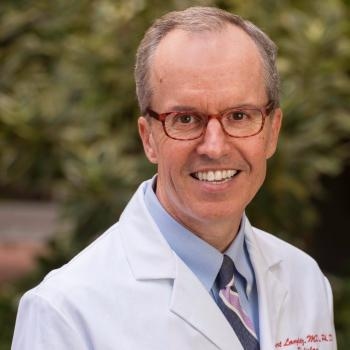
James Landay
Denning Co-Director, Stanford HAI | Anand Rajaraman and Venky Harinarayan Professor of Computer Science, Stanford University
Vanessa Parli
Managing Director of Programs and External Engagement
Overview
Agenda
Meet the Speakers
Resources
Share
Link copied to clipboard!
Event Contact
HAI Events Team
stanford-hai@stanford.edu
Related
  • Michele Elam
    Senior Associate Vice Provost for Undergraduate Education (portfolio: AI and Higher Education) | William Robertson Coe Professor in the Humanities | Senior Fellow, Stanford HAI | Dept of English & Director of Undergraduate Studies, Dept of African & African-American Studies (courtesy), Stanford University
    Michele Elam headshot

Related Events

Zoë Hitzig | How People Use ChatGPT
Mar 09, 202612:00 PM - 1:00 PM
March
09
2026

Despite the rapid adoption of LLM chatbots, little is known about how they are used. We approach this question theoretically and empirically, modeling a user who chooses whether to complete a task herself, ask the chatbot for information that reduces decision noise, or delegate execution to the chatbot...

Event

Zoë Hitzig | How People Use ChatGPT

Mar 09, 202612:00 PM - 1:00 PM

Despite the rapid adoption of LLM chatbots, little is known about how they are used. We approach this question theoretically and empirically, modeling a user who chooses whether to complete a task herself, ask the chatbot for information that reduces decision noise, or delegate execution to the chatbot...

Hari Subramonyam | Learning by Creating: A Human-Centered Vision for AI in Education
SeminarMar 11, 202612:00 PM - 1:15 PM
March
11
2026
Seminar

Hari Subramonyam | Learning by Creating: A Human-Centered Vision for AI in Education

Mar 11, 202612:00 PM - 1:15 PM
Joel Becker | Reconciling Impressive AI Benchmark Performance with Limited Developer Productivity Impacts
Mar 16, 202612:00 PM - 1:00 PM
March
16
2026

AI coding agents now complete multi-hour coding benchmarks with roughly 50% reliability, yet a randomized trial found experienced open-source developers took about 19% longer when allowed frontier AI tools than when tools were disallowed...

Event

Joel Becker | Reconciling Impressive AI Benchmark Performance with Limited Developer Productivity Impacts

Mar 16, 202612:00 PM - 1:00 PM

AI coding agents now complete multi-hour coding benchmarks with roughly 50% reliability, yet a randomized trial found experienced open-source developers took about 19% longer when allowed frontier AI tools than when tools were disallowed...