HAI Co-Director Fei-Fei Li Joins UN Secretary-General’s Scientific Advisory Board
Stanford Institute for Human-Centered AI Co-Director and Sequoia Professor in the Computer Science Department Fei-Fei Li has joined a new scientific advisory board created by United Nations Secretary-General Antonio Guterres that will advise UN leaders on the breakthroughs in science and technology and how to harness the benefits of these advances while mitigating potential risks.
The board will provide independent insights on trends at the intersection of science, technology, ethics, governance, and sustainable development. Through their collaborative efforts, the board and its network will support UN leaders in anticipating, adapting to, and leveraging the latest scientific advances in their work for people, planet and prosperity.
“I’m thrilled to support the United Nations in ensuring its programs are built on scientific evidence and a deep understanding of the profound impact of rapid technological progress,” said Li. “Artificial intelligence has the potential to impact every aspect of society, and we must center humans at every stage of its development and use.”
“Scientific and technological progress can support efforts to achieve the sustainable development goals, but they also give rise to ethical, legal, and political concerns that require multilateral solutions,” said Guterres. “My scientific advisory board will strengthen the role of the United Nations as a reliable source of data and evidence, and provide advice to me and my senior management team.”
The board comprises seven eminent scholars alongside the chief scientists of the UN, the Secretary-General’s Envoy on Technology, and the Rector of the United Nations University. With its formation, the UN will be able to better bridge science and policy. The board will bolster the UN’s capacity to address the intricate challenges and opportunities at the forefront of science and technology, fostering a path toward a more equitable and prosperous future for all.
As the co-director of Stanford HAI, Li works to advance AI research, education, policy and practice to improve the human condition. Her research includes cognitively inspired AI, machine learning, deep learning, computer vision and AI+healthcare, especially ambient intelligent systems for healthcare delivery. In addition to her technical contributions, she is a leading voice for advocating for diversity in STEM and AI and works with policymakers to ensure the responsible use of technologies.
Learn more from the United Nations' media release.
Related News

How managers introduce and support AI determines whether workers engage with or resist the technology.

How managers introduce and support AI determines whether workers engage with or resist the technology.

The two-year fellowship supports PhD researchers across law, medicine, physics, statistics, education, and engineering.
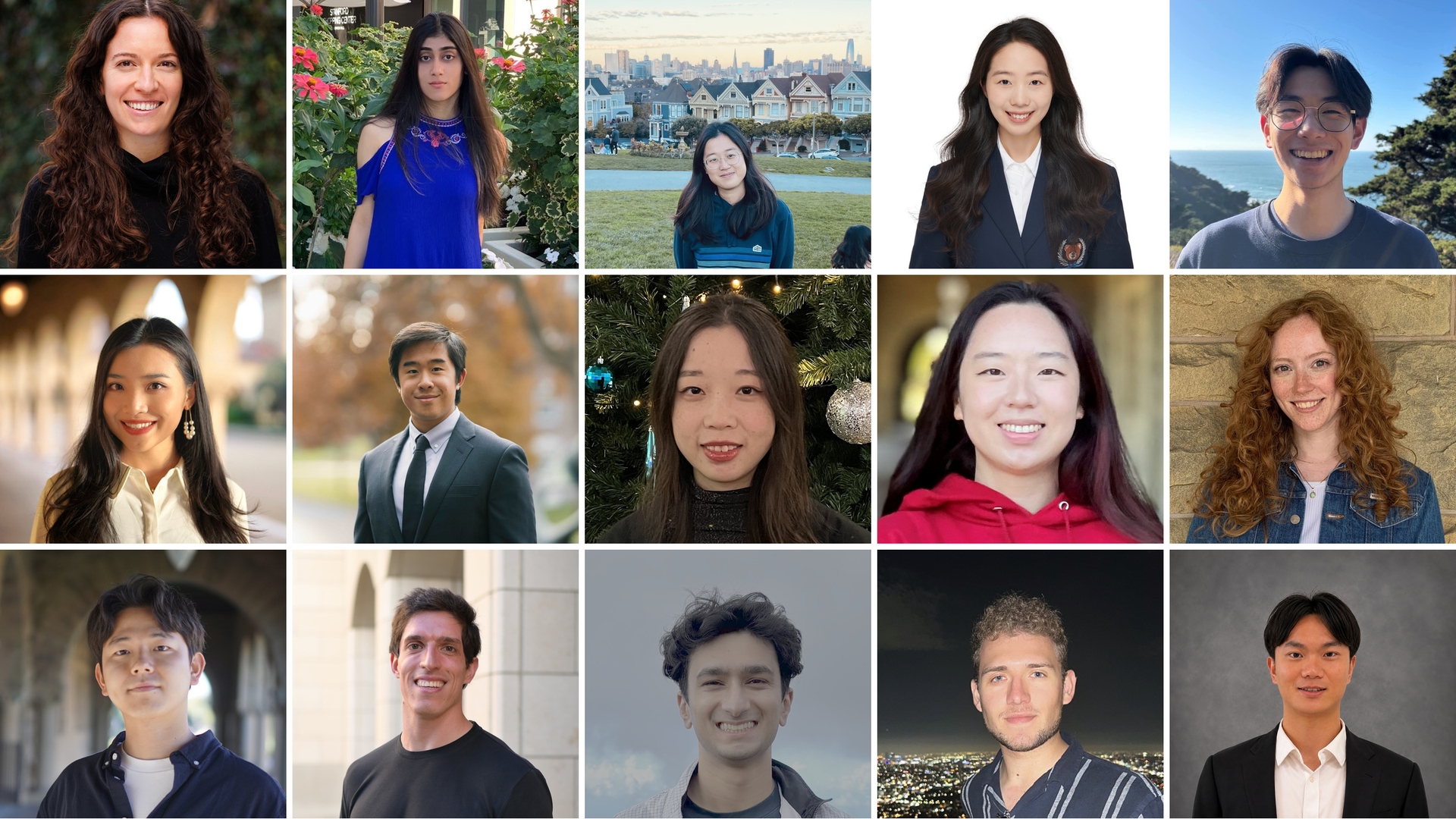
The two-year fellowship supports PhD researchers across law, medicine, physics, statistics, education, and engineering.

Benchmarks — the standardized tests that rank AI models on safety, bias, and reasoning — drive markets and shape regulation. New Stanford research finds they often don't measure what they claim to.

Benchmarks — the standardized tests that rank AI models on safety, bias, and reasoning — drive markets and shape regulation. New Stanford research finds they often don't measure what they claim to.