Stanford
University
  • Stanford Home
  • Maps & Directions
  • Search Stanford
  • Emergency Info
  • Terms of Use
  • Privacy
  • Copyright
  • Trademarks
  • Non-Discrimination
  • Accessibility
© Stanford University.  Stanford, California 94305.
How Do You Build a Better Robot? By Understanding People. | Stanford HAI
Skip to content
  • About

    • About
    • People
    • Get Involved with HAI
    • Support HAI
    • Subscribe to Email
  • Research

    • Research
    • Fellowship Programs
    • Grants
    • Student Affinity Groups
    • Centers & Labs
    • Research Publications
    • Research Partners
  • Education

    • Education
    • Executive and Professional Education
    • Government and Policymakers
    • K-12
    • Stanford Students
  • Policy

    • Policy
    • Policy Publications
    • Policymaker Education
    • Student Opportunities
  • AI Index

    • AI Index
    • AI Index Report
    • Global Vibrancy Tool
    • People
  • News
  • Events
  • Industry
  • Centers & Labs
Navigate
  • About
  • Events
  • Careers
  • Search
Participate
  • Get Involved
  • Support HAI
  • Contact Us

Stay Up To Date

Get the latest news, advances in research, policy work, and education program updates from HAI in your inbox weekly.

Sign Up For Latest News

news

How Do You Build a Better Robot? By Understanding People.
Date
February 11, 2022

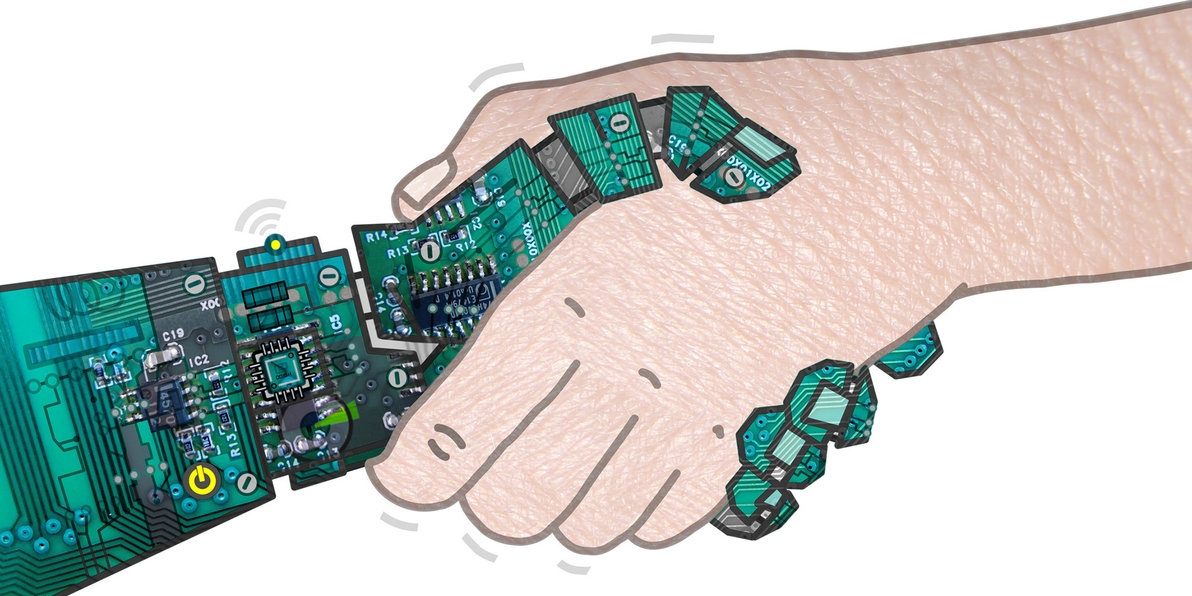
Computer scientist Dorsa Sadigh discusses the growing field of human-robot interaction.

Whether it’s autonomous vehicles or assistive technology in healthcare that can do things like help the elderly do core tasks like feeding themselves, some of the most challenging problems in the field of robotics involve how robots interact with humans, with all of our many complexities.

Drawing from fields as varied as cognitive neuroscience, psychology, and behavioral economics, Stanford computer scientist Dorsa Sadigh is exploring how to train robots to better understand humans – and how to give humans the skills to more seamlessly work with robots.

She discusses these challenges with Stanford Engineering’s The Future of Everything host Professor Russ Altman, a Stanford HAI associate director, in this latest episode.


Stanford HAI's mission is to advance AI research, education, policy and practice to improve the human condition. Learn more. 

Share
Link copied to clipboard!
Contributor(s)
Stanford Engineering Staff

Related News

AI Challenges Core Assumptions in Education
Shana Lynch
Feb 19, 2026
News

We need to rethink student assessment, AI literacy, and technology’s usefulness, according to experts at the recent AI+Education Summit.

News

AI Challenges Core Assumptions in Education

Shana Lynch
Education, SkillsGenerative AIPrivacy, Safety, SecurityFeb 19

We need to rethink student assessment, AI literacy, and technology’s usefulness, according to experts at the recent AI+Education Summit.

AI Sovereignty’s Definitional Dilemma
Juan Pava, Caroline Meinhardt, Elena Cryst, James Landay
Feb 17, 2026
News
illustration showing world and digital lines and binary code

Governments worldwide are racing to control their AI futures, but unclear definitions hinder real policy progress.

News
illustration showing world and digital lines and binary code

AI Sovereignty’s Definitional Dilemma

Juan Pava, Caroline Meinhardt, Elena Cryst, James Landay
Government, Public AdministrationRegulation, Policy, GovernanceInternational Affairs, International Security, International DevelopmentFeb 17

Governments worldwide are racing to control their AI futures, but unclear definitions hinder real policy progress.

America's 250 Greatest Innovators: Celebrating The American Dream
Forbes
Feb 11, 2026
Media Mention

HAI Co-Director Fei-Fei Li named one of America's top 250 greatest innovators, alongside fellow Stanford affiliates Rodney Brooks, Carolyn Bertozzi, Daphne Koller, and Andrew Ng.

Media Mention
Your browser does not support the video tag.

America's 250 Greatest Innovators: Celebrating The American Dream

Forbes
Computer VisionGenerative AIFoundation ModelsEnergy, EnvironmentEthics, Equity, InclusionFeb 11

HAI Co-Director Fei-Fei Li named one of America's top 250 greatest innovators, alongside fellow Stanford affiliates Rodney Brooks, Carolyn Bertozzi, Daphne Koller, and Andrew Ng.