Stanford
University
  • Stanford Home
  • Maps & Directions
  • Search Stanford
  • Emergency Info
  • Terms of Use
  • Privacy
  • Copyright
  • Trademarks
  • Non-Discrimination
  • Accessibility
© Stanford University.  Stanford, California 94305.
Introducing HAI Student Affinity Groups | Stanford HAI
Skip to content
  • About

    • About
    • People
    • Get Involved with HAI
    • Support HAI
    • Subscribe to Email
  • Research

    • Research
    • Fellowship Programs
    • Grants
    • Student Affinity Groups
    • Centers & Labs
    • Research Publications
    • Research Partners
  • Education

    • Education
    • Executive and Professional Education
    • Government and Policymakers
    • K-12
    • Stanford Students
  • Policy

    • Policy
    • Policy Publications
    • Policymaker Education
    • Student Opportunities
  • AI Index

    • AI Index
    • AI Index Report
    • Global Vibrancy Tool
    • People
  • News
  • Events
  • Industry
  • Centers & Labs
Navigate
  • About
  • Events
  • Careers
  • Search
Participate
  • Get Involved
  • Support HAI
  • Contact Us

Stay Up To Date

Get the latest news, advances in research, policy work, and education program updates from HAI in your inbox weekly.

Sign Up For Latest News

newsAnnouncement

Introducing HAI Student Affinity Groups

Date
September 23, 2022
Your browser does not support the video tag.

The student groups will explore AI to improve the human condition from a multidisciplinary perspective.

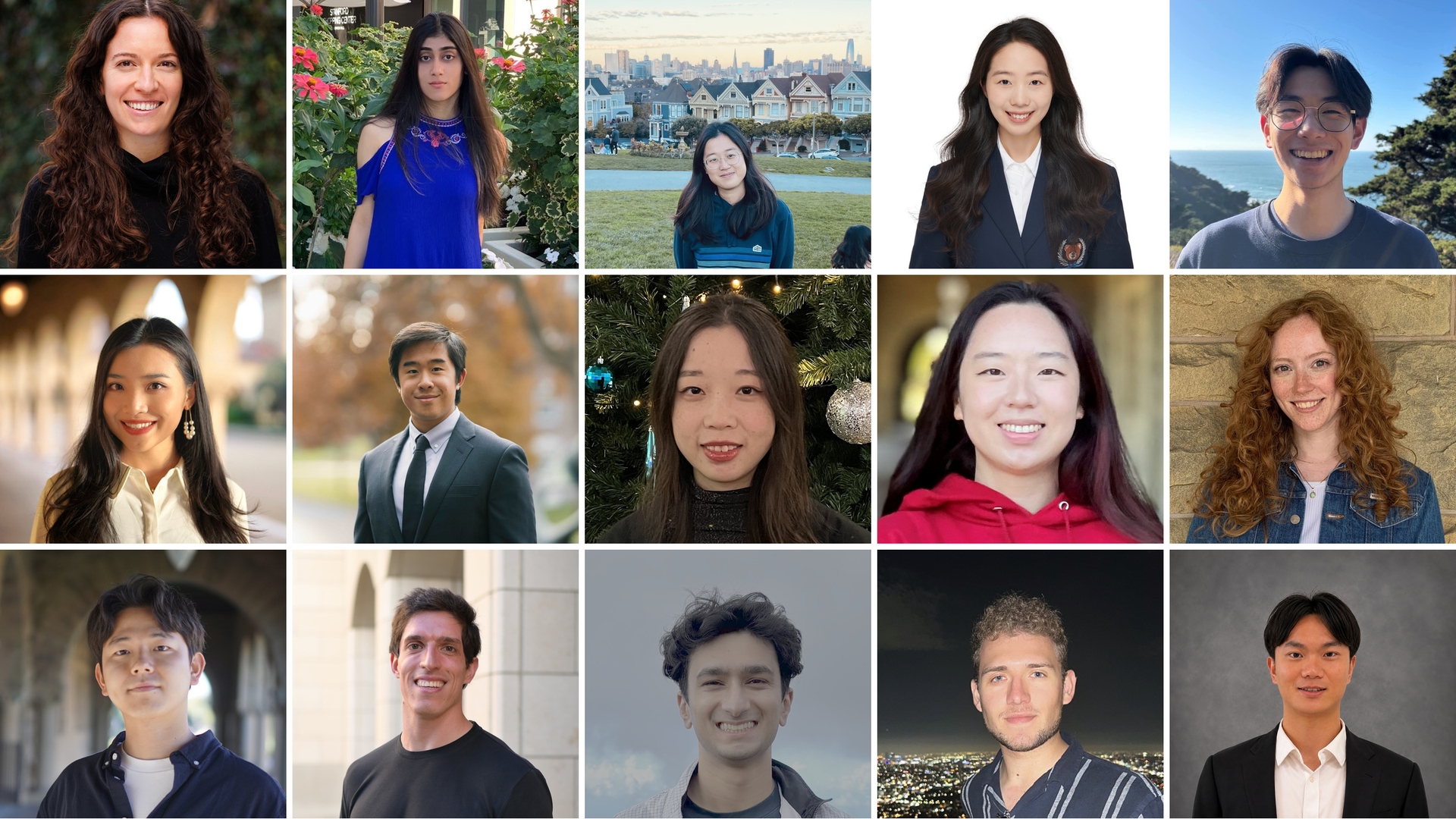
Stanford HAI has launched a new program for Stanford students that will allow them to work across disciplines to build ideas and community around AI that benefits humanity.

The HAI Student Affinity Groups will comprise students from all Stanford schools who share an interest in a topic related to human-centered AI. Groups may form around issues ranging from removing bias from data to rethinking the role of people in developing machine intelligence, considering the global societal impact of AI technologies for the greater good, or studying AI technologies that augment human capabilities rather than replace them, to name a few.

Stanford HAI will provide up to $500 in funding per term for each group for activities such as biweekly gatherings, space for meetings, and access to the institute’s community of researchers and fellows. 

“Part of Stanford HAI's mission is to develop the next leaders of artificial intelligence,” says Vanessa Parli, HAI associate director of research programs. “Our goal through these affinity groups is to create a space for students to share ideas and develop a mindset where they question the human impact of building or using technology from the start.”

Applications are due Nov. 11, 2022. The first groups will be announced in mid-December and kick off during Winter quarter. 

Learn more about the program and apply on the HAI Research page.

Share
Link copied to clipboard!

Related News

From Privacy to ‘Glass Box’ AI, Stanford Students Are Targeting Real-World Problems
Nikki Goth Itoi
Feb 27, 2026
News

An Amazon-backed fellowship will support 10 Stanford PhD students whose work explores everything from how we communicate to understanding disease and protecting our data.

News

From Privacy to ‘Glass Box’ AI, Stanford Students Are Targeting Real-World Problems

Nikki Goth Itoi
Generative AIHealthcarePrivacy, Safety, SecurityComputer VisionSciences (Social, Health, Biological, Physical)Feb 27

An Amazon-backed fellowship will support 10 Stanford PhD students whose work explores everything from how we communicate to understanding disease and protecting our data.

AI Challenges Core Assumptions in Education
Shana Lynch
Feb 19, 2026
News

We need to rethink student assessment, AI literacy, and technology’s usefulness, according to experts at the recent AI+Education Summit.

News

AI Challenges Core Assumptions in Education

Shana Lynch
Education, SkillsGenerative AIPrivacy, Safety, SecurityFeb 19

We need to rethink student assessment, AI literacy, and technology’s usefulness, according to experts at the recent AI+Education Summit.

AI Sovereignty’s Definitional Dilemma
Juan Pava, Caroline Meinhardt, Elena Cryst, James Landay
Feb 17, 2026
News
illustration showing world and digital lines and binary code

Governments worldwide are racing to control their AI futures, but unclear definitions hinder real policy progress.

News
illustration showing world and digital lines and binary code

AI Sovereignty’s Definitional Dilemma

Juan Pava, Caroline Meinhardt, Elena Cryst, James Landay
Government, Public AdministrationRegulation, Policy, GovernanceInternational Affairs, International Security, International DevelopmentFeb 17

Governments worldwide are racing to control their AI futures, but unclear definitions hinder real policy progress.