Advancing the principles of Open Science by equipping researchers with the tools, training, and community needed to embed transparency and reproducibility into every stage of the research lifecycle.
Our flagship gathering that brings together researchers, methodologists, and leaders to share advances in open and reproducible science, highlight best practices, and shape the future of data-driven research.
The university's hub for advancing open source software in research. Through programs, workshops, practical resources, and a university-wide project registry, we support researchers in building, sharing, and sustaining open source software. By promoting best practices and lowering barriers to adoption, we help make research more transparent, reproducible, and collaborative—accelerating scientific discovery across disciplines.

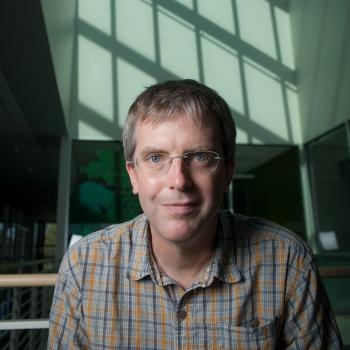
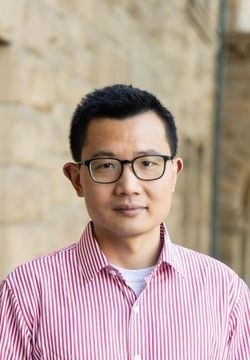
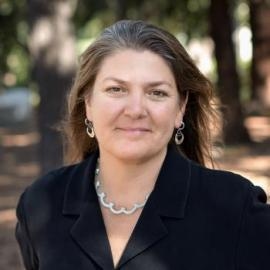
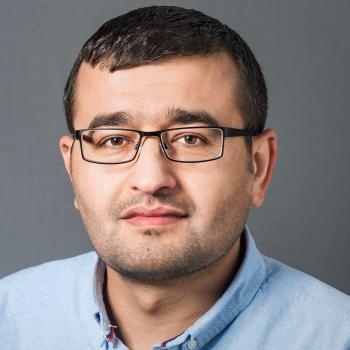
Highlights included keynotes by Yiqing Xu, Ludwig Schmidt, and Steffen Bollman, and a panel on AI Trustworthiness featuring Sanmi Koyejo, Rob Reich, and Risa Wechsler, along with lightning talks showcasing ongoing work from Stanford scholars. Winners of several prizes for Open Science, Open Source Software, and Data Sharing were announced.
Watch Event Recordings
2025: Connecting Open Science and Open Education
2024: Reproducibility in Machine Learning | Recap
2023: Open Science: Historically Underrepresented Groups
2022: Data Sharing
The Center bestows awards each year to recognize accomplishments in the community, in 4 categories:
The Open Science Champion Prize seeks to recognize established faculty members who have led or significantly contributed to their field’s movement towards transparent and reproducible research practices. Recipients will have a demonstrated commitment to furthering the adoption of these practices, as well as a commitment to an open and inclusive research community.
The Open Science Innovator Prize is awarded to research trainees who have demonstrated a commitment to furthering transparent and reproducible science practices. This could include, for example: sharing research objects, nurturing an open and inclusive research community, or developing open science software.
The Stanford Open Source Software Prize is awarded by our OSPO, OpenSource@Stanford, to project teams that make noteworthy contributions to the advancement of open source software development as scholarly work, demonstrate expertise and significant impact on research in its field, and act as an exemplary model of open source best practices. (New in 2024)
The Stanford University Libraries Data Sharing Prizes (awarded by SUL) recognize outstanding examples of impactful data sharing. Eligible recipients will have demonstrated consideration of reproducibility and reuse when sharing data in appropriate online data repositories, including the Stanford Digital Repository. Please nominate your own datasets or datasets shared by other Stanford researchers that exemplify good data sharing.
Open Science Champions | Open Science Innovators | Stanford Open Source Software Prize | OpenSource@Stanford Community Prize | Stanford Libraries Data Sharing Prize | |
|---|---|---|---|---|---|
2026 | |||||
2025 | |||||
2024 | |||||
2023 | |||||
2022 | |||||
2021 |
We welcome the opportunity to feature your work on open access for open science. Contact us to learn more.
Open to Stanford community members only.
Describing the forces that govern genetic variation including mutation, drift, recombination and selection, as well as what genetics teaches us about human history, and the role of genetic variation in human phenotypes and diseases. When complete, the book will combine the three pillars of human population genetics - population genetics, population history, and trait genetics - under a single umbrella, with a focus on examples and applications in human genetics.
Full text
This book provides an introduction to the workflow of the experimental researcher in the psychological sciences. The organization is sequential, from the planning stages of the research process through design, data collection, analysis, and reporting.
Full text
The goal of this book is to the tell the story of statistics as it is used today by researchers around the world. It’s a different story than the one told in most introductory statistics books, which focus on teaching how to use a set of tools to achieve very specific goals. This book focuses on understanding the basic ideas of statistical thinking — a systematic way of thinking about how we describe the world and use data make decisions and predictions, all in the context of the inherent uncertainty that exists in the real world.
Full text
If you are a biologist and want to get the best out of the powerful methods of modern computational statistics, this is your book. You can visualize and analyze your own data, apply unsupervised and supervised learning, integrate datasets, apply hypothesis testing, and make publication-quality figures using the power of R/Bioconductor and ggplot2.
Full text





.png&w=3840&q=100)









Our Mission
To promote the use of data science and other methods for making research more rigorous through the practice of reproducible research.
Our Goals
The Stanford Data Science Center for Open and Reproducible Science (CORES) advances transparency and reproducibility in data collection, analysis, and dissemination across scientific fields. Its work centers on two goals:
Developing resources and support to expand the adoption of open science practices at Stanford and beyond.
Driving methodological innovations that strengthen the impact and effectiveness of those practices.
Our Values
Transparency and openness: the products of scientific research (including data, code, and publications) should be shared as openly as possible.
Reproducibility: Scientific practices should prioritize rigor and reproducibility, even when they conflict with other considerations or incentives.
Diversity and inclusion: The scientific process should be open to all, and diversity within the scientific community should be both pursued and celebrated.
Community-mindedness: Scientists should coordinate and cooperate rather than compete.
Nearly every domain of intellectual pursuit is being revolutionized by the availability of large datasets, powerful computational algorithms, and enormous computing power, spanning from the physical, biomedical, social sciences to the arts and humanities. As these resources are increasingly used to influence public policy and medical practice, it is essential that the field of data science stands at the forefront of the ongoing movement towards increased transparency and reproducibility in scientific research, known widely under the umbrella of “Open Science”. Open Science practices have emerged at different rates across different scientific communities, but at present remain largely within the domain of innovators and early adopters. In order to have a broad impact on the transparency and reproducibility of science, we will engage the “early majority” to disseminate these practices into the everyday lives of researchers across the university and ultimately across the world.
The Center for Open and Reproducible Science (CORES) builds on the existing engagement of many Stanford scholars on topics related to our core issues at the heart of the integrity and public credibility of science.
To achieve our objectives, the Center works with faculty, students, postdocs, and staff across the Stanford community to develop and implement a strategy to engage and train researchers in open science practices. To do this, we host events including lectures, workshops, office hours, and hackathons. In parallel, we will generate a practical guide to implementing open science practices. To broaden our reach beyond Stanford, we work closely with leaders in the global open science movement to integrate and align our activities, building on our existing engagement in this community.
The ultimate goal of the Center is to develop a strategy for Openness By Design at Stanford that can become a “gold standard” that can be emulated by institutions around the world.
The Center's 2025 key milestones and initiatives included:
The fifth annual CORES Symposium, held on May 20, 2025, convened an impressive group of exceptional educators, innovators, and thought leaders who explored the transformative potential of this year’s focus on “Connecting Open Science and Open Education.” The Symposium effectively launched our “Living Textbooks” initiative in collaboration with MIT Press to bring innovations from Stanford classrooms and share them openly with the public under Creative Commons licenses. Matthew Rascoff’s remarks speak to our intended impact with Living Textbooks, modeled on open source software communities.
The Annual Open Science Awards: Recognized and elevated individuals and teams exemplifying excellence in transparent, reproducible research, amplifying high-impact open science projects, and reinforcing a culture of rigor, transparency, and collaboration across campus and beyond. CORES awards prizes for senior faculty (Open Science Champions) as well as grad students and trainees (Open Science Innovators), who represent the future of these scientific fields. Building on the success of our open science prizes, we offered the Stanford Open Source Software Prize for the second year, honoring both breakthroughs and veteran projects that have been underrepresented in their impact.
OpenSource@Stanford, the Open Source Projects Office (OSPO) for the university, delivered year-round workshops, technical talks, and meetups, accelerating adoption of open-source tools and reproducible workflows while building a sustained, interdisciplinary community committed to implementing open science practices. The OSPO has emerged as a highly regarded and sought-after center of excellence by Stanford researchers looking to release their work as open source, and we have delivered numerous consultations, including developing new guidance on funding, governance, project sustainability, and open source business models.
Taking the Pulse of the Planet initiative: Taking the Pulse of the Planet aims to build an international network of sensors, sensor data, and people to create world-leading data models for our environment to inform better stewardship and a sustainable future, beginning with freshwater in California but inclusive of other research in oceans, hazards, and carbon fluxes. CORES crafted the open science strategy for this initiative and works closely with PI Rosemary Knight and the impressive community of researchers she has convened. This is not just a research project; it is a platform for many future projects, and CORES has established best practices for data sharing in an open data enclave that allows for radically open collaboration, reproducibility, and public engagement beyond Stanford.
HELIOS Open: CORES provides direct staffing support to the Higher Education Leadership Initiative for Open Scholarship, a consortium of 100+ colleges and universities dedicated to realizing a more open, trustworthy, and reproducible research ecosystem. HELIOS Open is one of the only organizations well-positioned to tackle the incentivization challenges that have limited open science adoption by leading change through its membership and collective action.
Get the latest news, advances in research, policy work, and education program updates from HAI in your inbox weekly.
Sign Up For Latest News
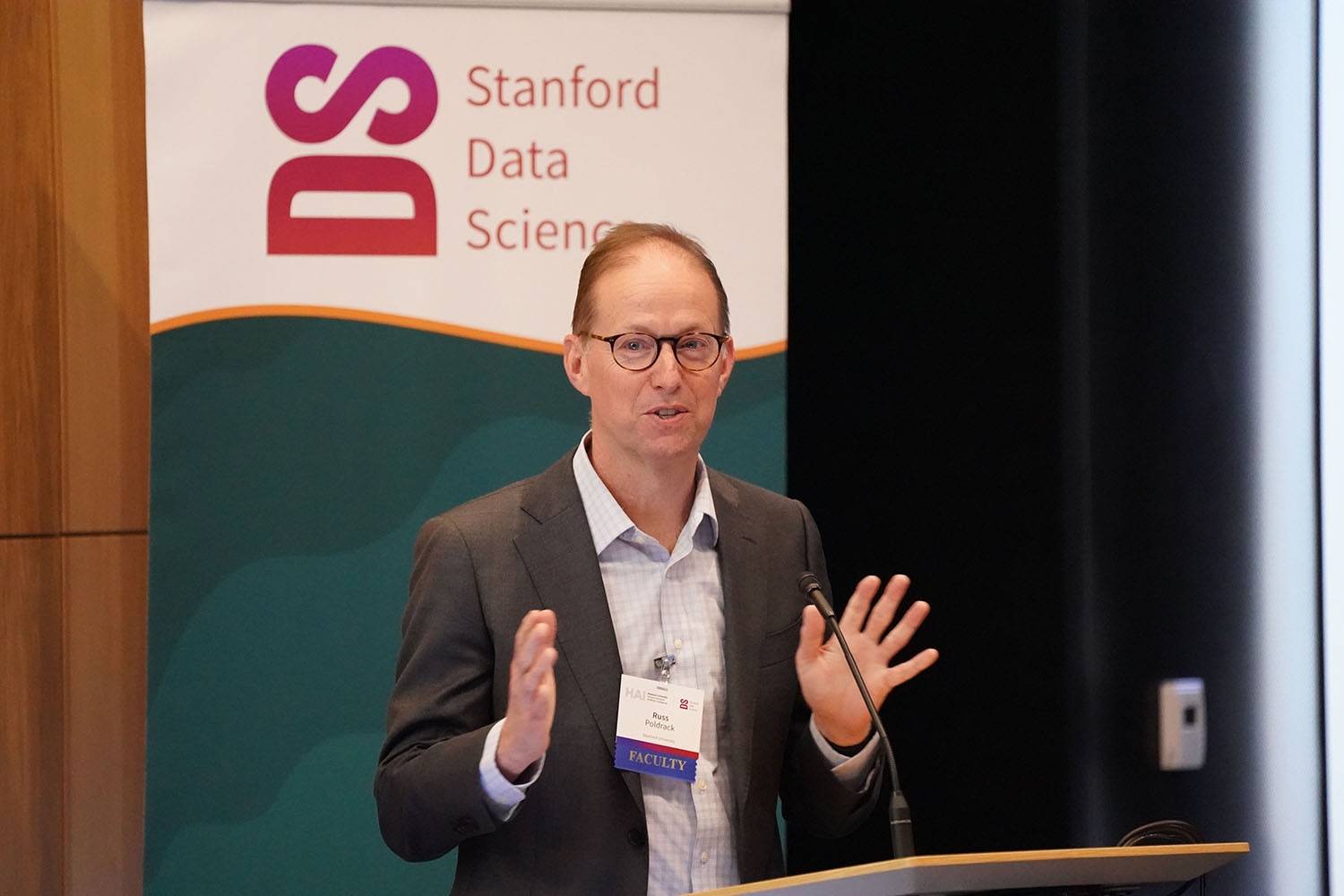
SPORR works narrowly and deeply inside Stanford Medicine. CORES works broadly across the university. Together, they extend a long Stanford lineage of reliable science.