eventSeminar
HAI Weekly Seminar with Akshay Chaudhari
Beyond Image Interpretation in Radiology: Data-Efficient AI for Accelerating MRI Acquisition
Get the latest news, advances in research, policy work, and education program updates from HAI in your inbox weekly.
Sign Up For Latest News
Beyond Image Interpretation in Radiology: Data-Efficient AI for Accelerating MRI Acquisition
Clinical Mind AI is a Stanford-developed, international collaborative platform designed to strengthen clinical reasoning education through AI-simulated patient encounters across health professions.
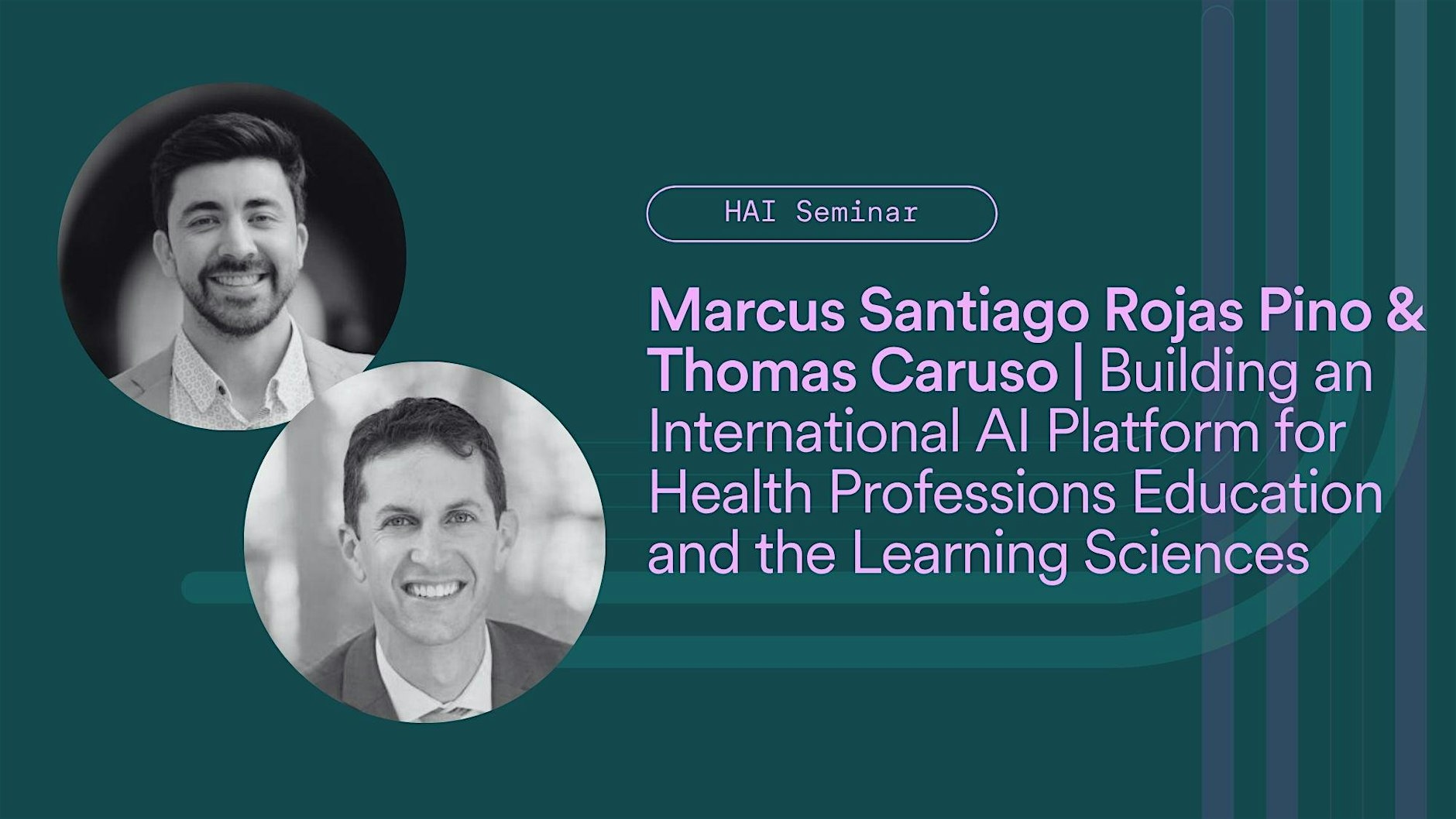
Clinical Mind AI is a Stanford-developed, international collaborative platform designed to strengthen clinical reasoning education through AI-simulated patient encounters across health professions.
Scientific progress is a key driver of economic growth and prosperity. There is great excitement- but also concerns- about the impacts of AI on science, but so far little data. We provide early insights on this from three data sources: a sample of 15 million Gemini interactions, an inventory of over 2,600 specialized AI models across disciplines, and a survey of over 600 scientists.
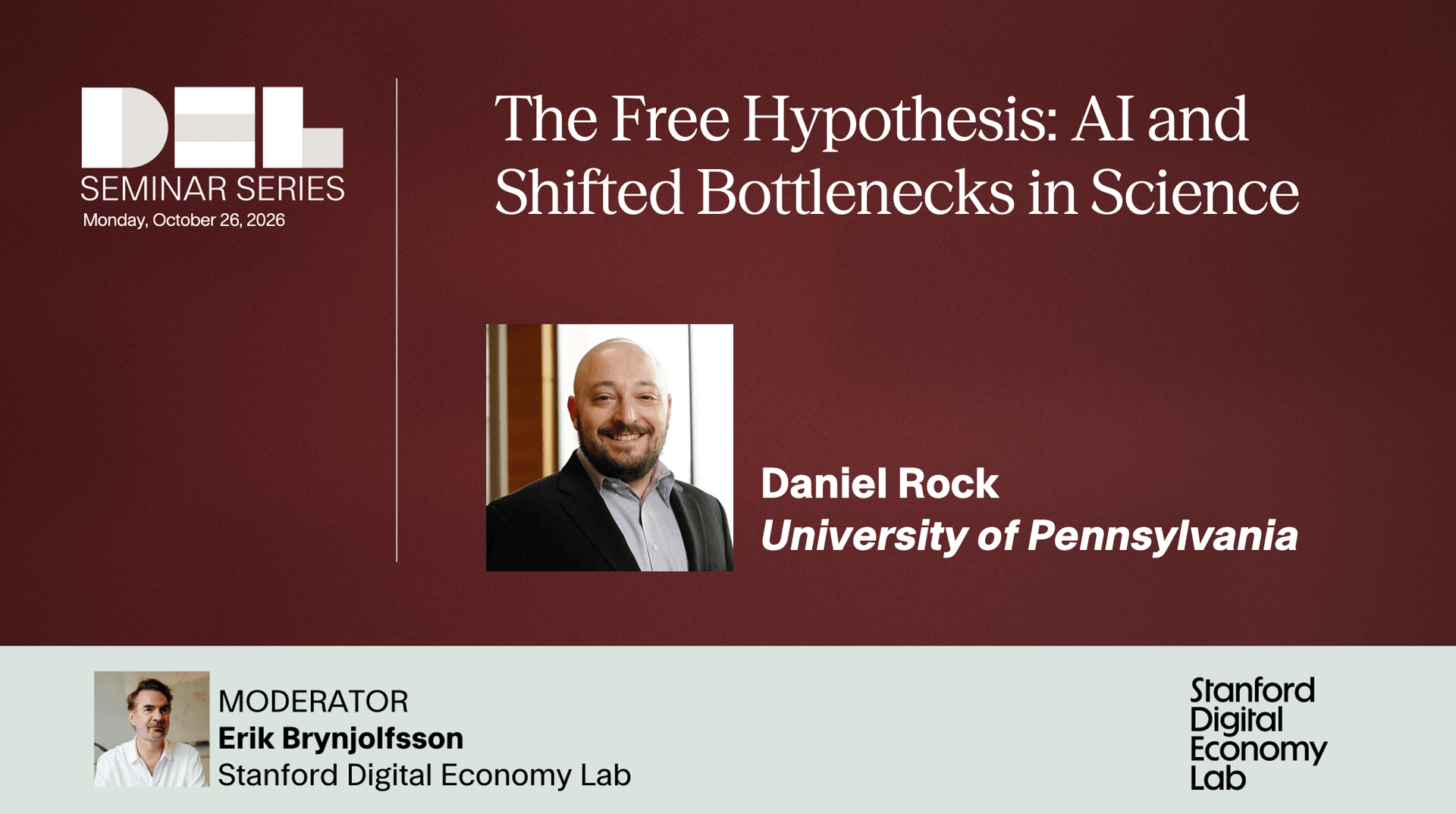
Scientific progress is a key driver of economic growth and prosperity. There is great excitement- but also concerns- about the impacts of AI on science, but so far little data. We provide early insights on this from three data sources: a sample of 15 million Gemini interactions, an inventory of over 2,600 specialized AI models across disciplines, and a survey of over 600 scientists.
The rapid acceleration of AI comes with a profound wave of anxiety. Across every sector of society, people are facing unsettling questions about their worth and their place in a shifting world.
The rapid acceleration of AI comes with a profound wave of anxiety. Across every sector of society, people are facing unsettling questions about their worth and their place in a shifting world.
Recent applications of artificial intelligence (AI) in radiology have focused on image interpretation tasks such as image classification, segmentation, or detection. However, a fundamental challenge in radiology is to acquire these medical images in a safe and efficient manner. New AI techniques have been proposed to solve the inverse problem of image reconstruction wherein only a limited set of measurements are used to reconstruct medical images with high diagnostic quality. Specifically, in this talk, I will describe how physics-guided AI is currently being used to improve the speed of magnetic resonance imaging (MRI). I will further describe how we may eschew requiring large extents of paired datasets required for supervised model training by using novel unsupervised and semi-supervised approaches for accelerated MRI. Beyond data efficiency, these approaches can help mitigate the challenge of distribution shifts for trained models. I will conclude by describing a 1.5TB dataset that we have made publicly available to help evaluate MRI reconstructions with clinically-relevant metrics.