Upcoming Events
Confronting Our AI Future: Hope, Fear, and the Choices Ahead
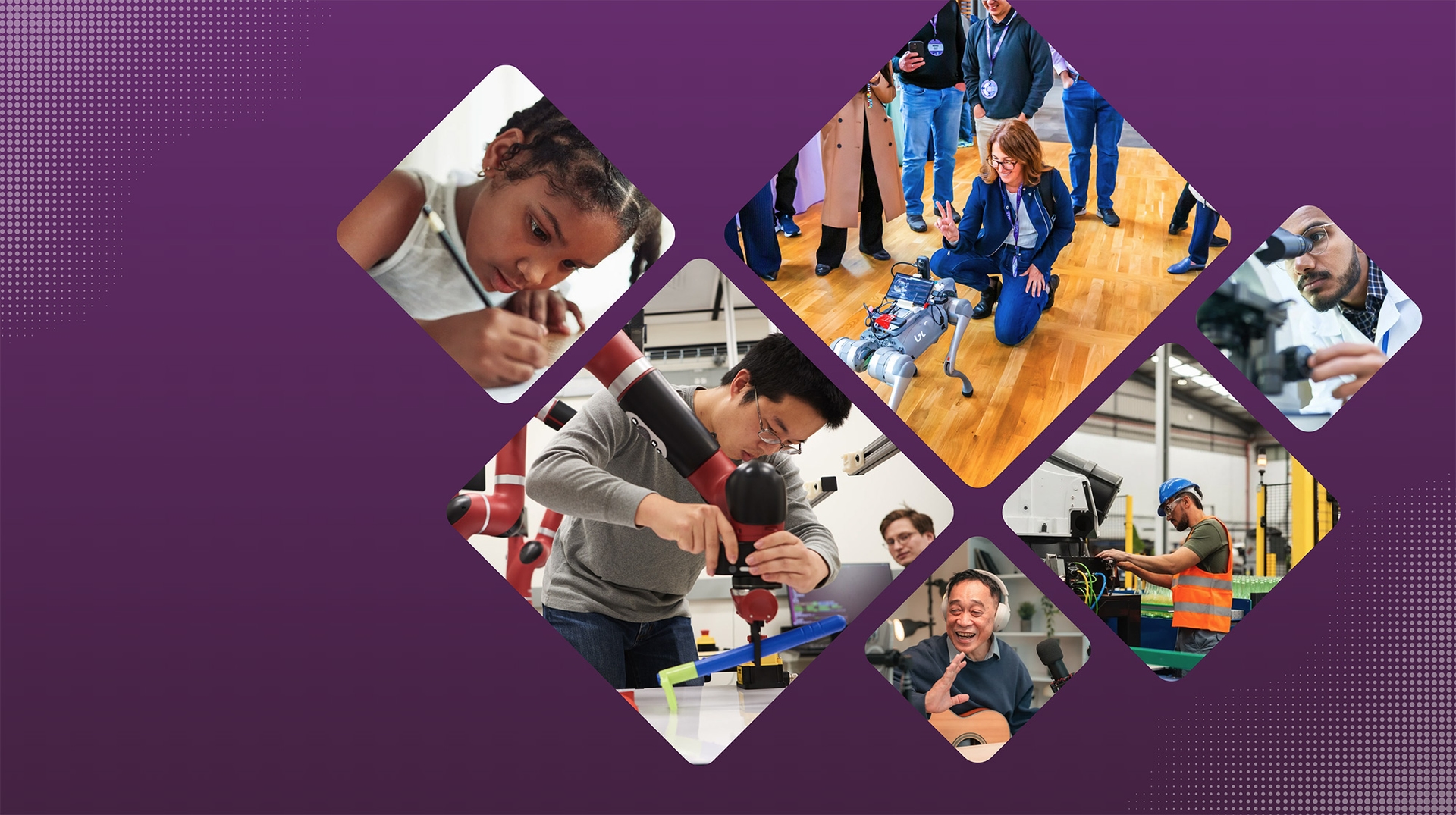
The rapid acceleration of AI comes with a profound wave of anxiety. Across every sector of society, people are facing unsettling questions about their worth and their place in a shifting world.
Confronting Our AI Future: Hope, Fear, and the Choices Ahead
The rapid acceleration of AI comes with a profound wave of anxiety. Across every sector of society, people are facing unsettling questions about their worth and their place in a shifting world.
Featured Videos
Hear from speakers and attendees at recent Stanford HAI events across research, policy, and education.
Previous Events at HAI
Collective and Augmented Intelligence Against COVID-19 (CAIAC)
A virtual event hosted by the Stanford Institute for Human-Centered Artificial Intelligence (HAI) and the AI Initiative at The Future Society to officially announce a global alliance on the COVID-19 pandemic response.
Collective and Augmented Intelligence Against COVID-19 (CAIAC)
A virtual event hosted by the Stanford Institute for Human-Centered Artificial Intelligence (HAI) and the AI Initiative at The Future Society to officially announce a global alliance on the COVID-19 pandemic response.
2019 Fall Conference: AI Ethics, Policy, and Governance
HAI's October 28-29 conference on AI Ethics, Policy, and Governance at Stanford University will convene experts and leaders from academia, industry, civil society, and government to explore critical and emerging issues related to understanding and guiding AI's human and societal impact. Through plenary discussions, breakout sessions, and workshops we will explore the latest research, delve into case studies, illuminate best practices, and build a global community of research, policy, and practice committed to ensuring that AI benefits humanity.
HAI's October 28-29 conference on AI Ethics, Policy, and Governance at Stanford University will convene experts and leaders from academia, industry, civil society, and government to explore critical and emerging issues related to understanding and guiding AI's human and societal impact. Through plenary discussions, breakout sessions, and workshops we will explore the latest research, delve into case studies, illuminate best practices, and build a global community of research, policy, and practice committed to ensuring that AI benefits humanity.
2019 HAI Symposium
Artificial intelligence will be the most consequential technology of the 21st century—augmenting human capabilities, transforming industries and economies, and reshaping societies. Stanford HAI was established to advance AI technology and applications, and to provide leadership in understanding and influencing its impact on the world. It will conduct high-impact research; convene stakeholders from industry, government, academia, and civil society to address critical technical and societal challenges; and educate leaders across all sectors.
Three fundamental beliefs guide HAI: AI technology should be inspired by human intelligence; the development of AI must be guided by its human impact; and applications of AI should enhance and augment humans, not replace them. HAI will permeate and access the entire university, bringing Stanford’s vast array of disciplines and capabilities to bear in an interdisciplinary manner across the basic sciences, engineering, psychology, medicine, business, law, education, and the social sciences.
2019 HAI Symposium
Artificial intelligence will be the most consequential technology of the 21st century—augmenting human capabilities, transforming industries and economies, and reshaping societies. Stanford HAI was established to advance AI technology and applications, and to provide leadership in understanding and influencing its impact on the world. It will conduct high-impact research; convene stakeholders from industry, government, academia, and civil society to address critical technical and societal challenges; and educate leaders across all sectors.
Three fundamental beliefs guide HAI: AI technology should be inspired by human intelligence; the development of AI must be guided by its human impact; and applications of AI should enhance and augment humans, not replace them. HAI will permeate and access the entire university, bringing Stanford’s vast array of disciplines and capabilities to bear in an interdisciplinary manner across the basic sciences, engineering, psychology, medicine, business, law, education, and the social sciences.