Stanford HAI’s AI Index Welcomes Six New Steering Committee Members
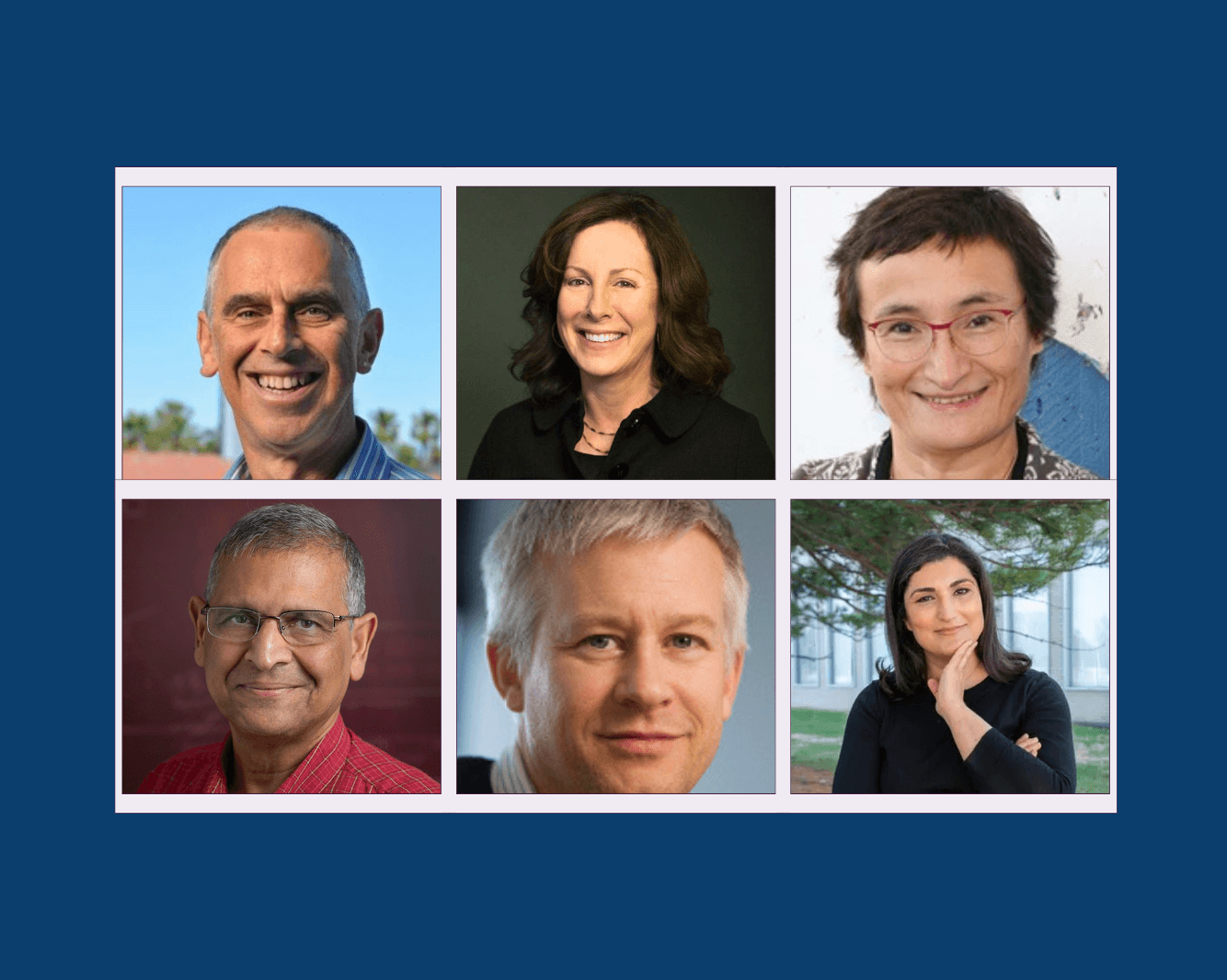
HAI welcomes six new steering committee members to the AI Index.
Renowned leaders in AI, medicine, and ethics join interdisciplinary committee guiding the world’s leading resource on AI trends.
The Stanford Institute for Human-Centered AI (HAI) today announced the addition of six members to its AI Index Steering Committee, an interdisciplinary group of experts from across academia and industry that leads its annual AI Index Report. Produced annually by Stanford HAI, the AI Index Report offers one of the most comprehensive, data-driven views of artificial intelligence.
The new members of the AI Index Steering Committee include:
Russ Altman - Kenneth Fong Professor of Bioengineering, of Genetics, of Medicine, of Biomedical Data Science at Stanford University; Associate Director and Senior Fellow at Stanford HAI; and Professor, by courtesy, of Computer Science
Altman’s research applies AI, data science, and informatics to medicine, focusing on how human genetic variation impacts drug response and on computational methods for understanding drug action.
Carla Brodley – Professor and Dean of Inclusive Computing, Northeastern University; Founding Executive Director, Center for Inclusive Computing
Brodley’s machine learning research spans computer science, medicine, and neuroscience, with broad interdisciplinary applications. She also leads efforts to broaden participation in computing and advance inclusive computing education.
Virginia Dignum – Professor of Responsible Artificial Intelligence and Director, AI Policy Lab, Umeå University; Member, UN High Level Advisory Body on AI
Dignum’s work explores responsible AI, ethics in autonomous systems, and human-agent teamwork, focusing on how technology interacts with social and organizational contexts.
Vipin Kumar – Regents Professor and William Norris Land Grant Chair in Large-Scale Computing; Director, Data Science Initiative, University of Minnesota
Kumar’s research spans data mining and high-performance computing, developing scalable algorithms and applying big data and AI to climate, ecosystems, and healthcare.
Elham Tabassi – Director, Brookings Artificial Intelligence and Emerging Technology (AIET) Initiative; Senior Fellow, Global Economy and Development Program, Brookings Institution
Tabassi’s research centers on preparing people and society for an AI-driven future, and she previously served as Chief AI Advisor and led the AI Innovation Lab at the National Institute for Standards and Technology.
Dan Weld – Professor Emeritus, Paul G. Allen School of Computer Science & Engineering, University of Washington; Chief Scientist, Semantic Scholar, Allen Institute for AI
Weld leads research on human-AI interaction, explainable machine learning, and team architectures, advancing understanding and control of AI systems.
The AI Index Steering Committee is co-chaired by:
Yolanda Gil and Ray Perrault.
Continuing members include:
Erik Brynjolfsson, Jack Clark, James Landay, Terah Lyons, James Manyika, Juan Carlos Niebles, Vanessa Parli, Yoav Shoham, Russell Wald, and Toby Walsh.
The AI Index also thanks departing members Katrina Ligett and John Etchemendy for their valuable contributions and leadership in advancing the Index’s mission.
“We are thrilled to welcome these exceptional leaders to the AI Index Steering Committee,” said Russell Wald, Executive Director of Stanford HAI. “Their collective expertise — spanning biomedical informatics, computer science, ethics, and large-scale data systems — will enrich the AI Index’s mission to deliver data-driven insights on how AI is reshaping society and the global economy.”
The AI Index report is recognized as a trusted resource by global media, governments, and leading companies. It equips policymakers, business leaders, and the public with rigorous, objective insights into AI’s technical progress, economic influence, and societal impact.
About the AI Index
The AI Index report tracks, collates, distills, and visualizes data related to artificial intelligence (AI). Our mission is to provide unbiased, rigorously vetted, and broadly sourced data so policymakers, researchers, executives, journalists, and the general public can develop a more thorough and nuanced understanding of the complex field of AI. The AI Index is recognized globally as one of the most credible and authoritative sources for data and insights on artificial intelligence.
About the Stanford Institute for Human-Centered AI (HAI)
The Stanford Institute for Human-Centered AI (HAI) is an interdisciplinary institute established in 2019 to advance AI research, education, policy, and practice. Stanford HAI brings together thought leaders from academia, industry, government, and civil society to shape the development and responsible deployment of AI. Stanford HAI’s mission is to advance AI research, education, policy, and practice to improve the human condition. We believe AI should be guided by its human impact, inspired by human intelligence, and designed to augment, not replace, people. Our interdisciplinary faculty conducts research focused on guiding the development of AI technologies intended to enhance human capabilities while ensuring their ethical, fair, and transparent use.
Related News

It's one of AI policy's hardest unsolved problems. Expert Deb Raji joins Stanford HAI to find answers that move beyond principles and into practice.

It's one of AI policy's hardest unsolved problems. Expert Deb Raji joins Stanford HAI to find answers that move beyond principles and into practice.
Analyzing thousands of human-AI conversations, a new study shows that people are turning to chatbots for increasingly critical tasks – and that productive outcomes depend on how the collaboration unfolds.
Analyzing thousands of human-AI conversations, a new study shows that people are turning to chatbots for increasingly critical tasks – and that productive outcomes depend on how the collaboration unfolds.

How managers introduce and support AI determines whether workers engage with or resist the technology.

How managers introduce and support AI determines whether workers engage with or resist the technology.