Stanford’s Daniel Ho Appointed as Advisor to Biden Administration’s National Artificial Intelligence Advisory Committee
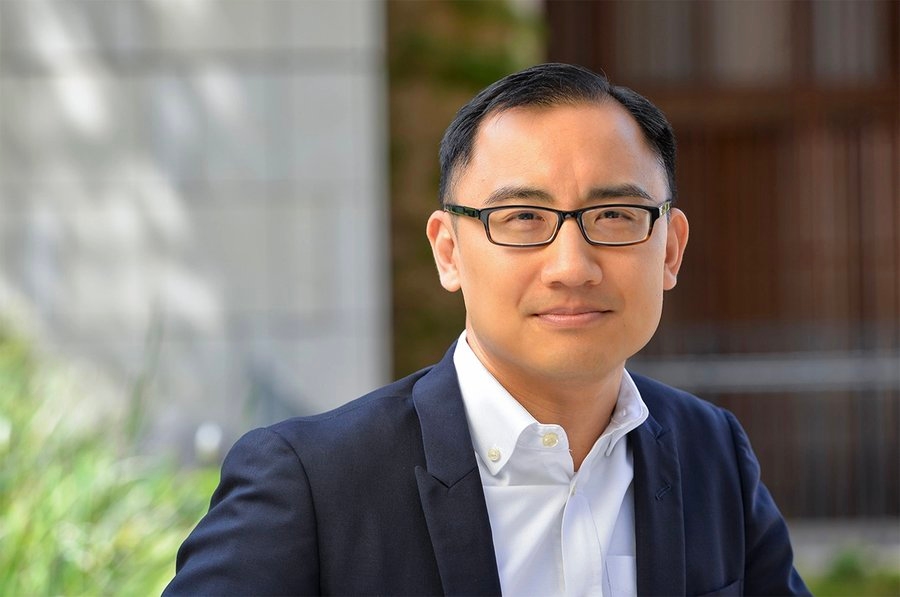
In this role, Ho will advise on national AI policy, from competitiveness to workforce implications and societal impacts.
Daniel Ho, William Benjamin Scott and Luna M. Scott Professor of Law and Associate Director of the Stanford Institute for Human-Centered Artificial Intelligence (HAI), has been appointed by Secretary of Commerce Gina M. Raimondo to serve as a member of the National Artificial Intelligence Advisory Committee (NAIAC). The NAIAC advises the U.S. President and the National AI Initiative Office and consists of expert leaders from an interdisciplinary range of AI-relevant disciplines from across academia, industry, non-profit organizations and civil society, and federal laboratories. NAIAC members serve three-year terms.
“Dan is a prominent scholar and one of the world’s foremost experts in the regulation of artificial intelligence,” said Jenny Martinez, the Richard E. Lang Professor of Law and dean of Stanford Law School. “An advisory position like this will provide our government with access to Dan’s deep knowledge of all things AI and his strong commitment to understanding the impact of this new technology on our society.
“It’s a great honor that Stanford HAI Associate Director Dan Ho will have the opportunity to advise the President of the United States on AI through the National Artificial Intelligence Advisory Committee,” said Fei-Fei Li, Co-Director of the Stanford Institute for Human-Centered Artificial Intelligence.” This prestigious appointment is a reflection of Dan’s deep expertise in AI and leadership in policy. The future of AI governance in the U.S. will be better off with Dan’s counsel.”
Enacted by the U.S. Congress in 2021, the NAIAC will provide recommendations on all aspects pertaining to national AI policy, including competitiveness, scientific progress, workforce implications, government operations, funding, societal impacts, international cooperation, oversight of AI systems, and enhancing opportunities for diverse geographic regions. Congress has directed the NAIAC to submit a report to the President and Congress after the first year, and then again every three years, that provides their findings and recommendations on the initiative.
“I am humbled and honored to serve on the NAIAC, along with such an esteemed group, to help our nation grapple with the critical questions, opportunities, and challenges that AI poses to our society,” said Ho. “Rapid advances in AI are poised to reshape many aspects of the world and we have a responsibility to think critically about policies, laws, and oversight to ensure that AI improves the quality of life for all.”
Ho is also a professor of Political Science at Stanford; a senior fellow at the Stanford Institute for Economic Policy Research; the director of the Regulation, Evaluation, and Governance Lab (RegLab) at Stanford; and a faculty fellow at the Center for Advanced Study in the Behavioral Sciences.
Ho’s research has been at the forefront of examining public sector AI, bias and discrimination, and regulatory policy. He co-authored a White Paper on the National Research Cloud, spelling out the considerations for creating the a research resource of cloud computing and federal data, as well as a 122-page report on the use of AI by federal government agencies for the Administrative Conference of the United States (ACUS), where he is a Public Member. With the Stanford RegLab, his work has developed demonstration projects of AI and data science in partnership with a range of government agencies, including the Internal Revenue Service, the Environmental Protection Agency, the Department of Labor, and the Santa Clara County Public Health Department.
Before joining Stanford Law, Ho clerked for Judge Stephen F. Williams on the U.S. Court of Appeals, District of Columbia Circuit. He received his J.D. from Yale Law School and his Ph.D. in political science from Harvard University.
About Stanford HAI
The mission of Stanford University’s Institute for Human-Centered Artificial Intelligence (HAI) is to advance AI research, education, policy and practice to improve the human condition. Led by faculty from multiple departments across Stanford, research focuses on developing AI technologies inspired by human intelligence; studying, forecasting and guiding the human and societal impact of AI; and designing and creating AI applications that augment human capabilities. Through the education work of the institute, students and leaders at all stages gain a range of AI fundamentals and perspectives. At the same time, the policy work of HAI fosters national and international discussions that lead to direct legislative impact.
About Stanford Law School
Stanford Law School is one of the nation’s leading institutions for legal scholarship and education. Its alumni are among the most influential decision makers in law, politics, business, and high technology. Faculty members argue before the Supreme Court, testify before Congress, produce outstanding legal scholarship and empirical analysis, and contribute regularly to the nation’s press as legal and policy experts. Stanford Law School has established a model for legal education that provides rigorous interdisciplinary training, hands-on experience, global perspective, and focus on public service, spearheading a movement for change.
Related News

It's one of AI policy's hardest unsolved problems. Expert Deb Raji joins Stanford HAI to find answers that move beyond principles and into practice.

It's one of AI policy's hardest unsolved problems. Expert Deb Raji joins Stanford HAI to find answers that move beyond principles and into practice.
Analyzing thousands of human-AI conversations, a new study shows that people are turning to chatbots for increasingly critical tasks – and that productive outcomes depend on how the collaboration unfolds.
Analyzing thousands of human-AI conversations, a new study shows that people are turning to chatbots for increasingly critical tasks – and that productive outcomes depend on how the collaboration unfolds.

How managers introduce and support AI determines whether workers engage with or resist the technology.

How managers introduce and support AI determines whether workers engage with or resist the technology.