Why Robots and AI May Not Herald a Job Apocalypse
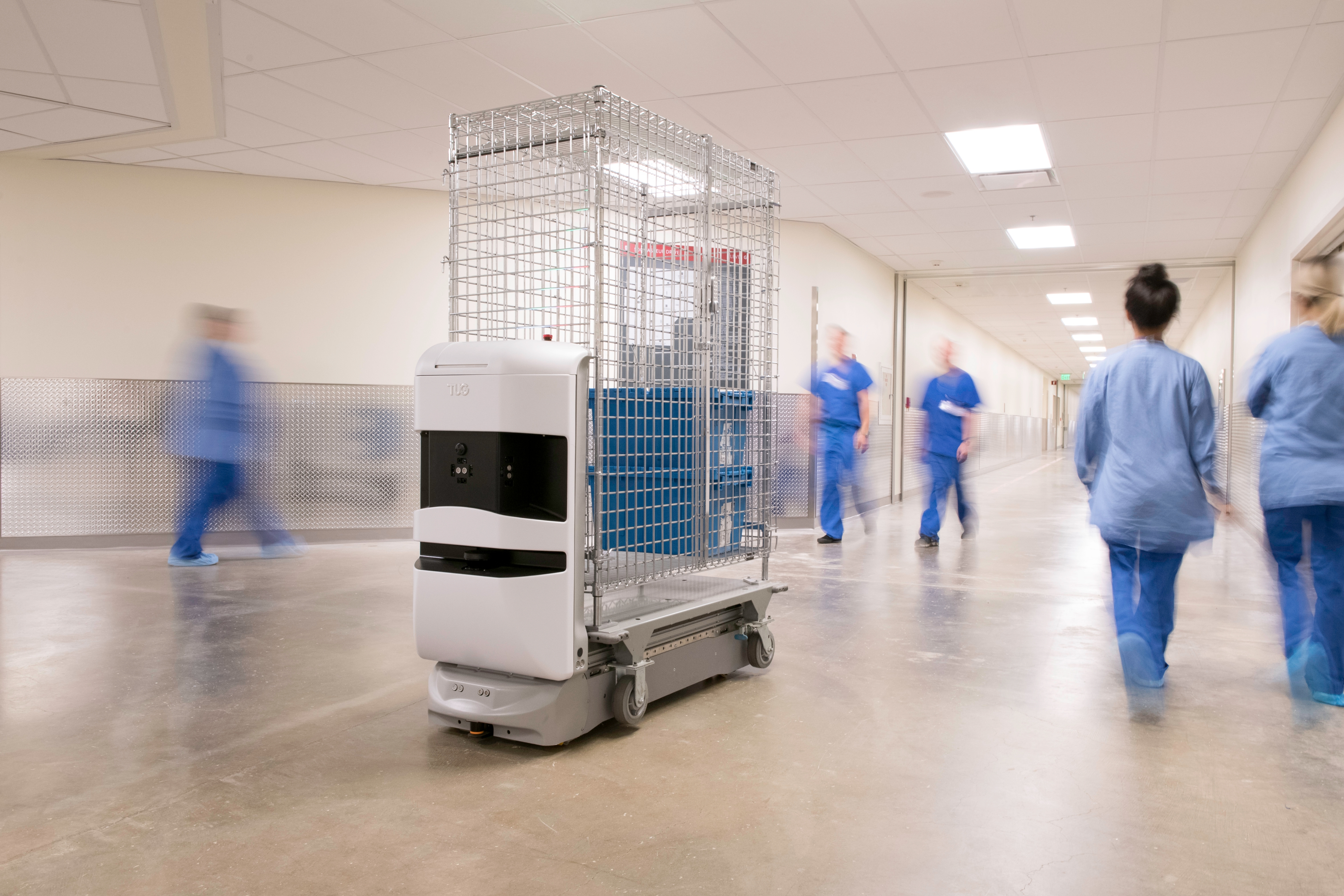
Data from three robot-adopting industries shows that human jobs change but don’t disappear.
If you worry that robots and artificial intelligence will cause mass unemployment, new studies of three different industries offer hope that the end of work isn’t yet at hand.
Stanford scholar Yong Suk Lee examined impact of AI and robotics on three sectors: manufacturing, retail banking, and nursing homes. He found, in some, the introduction of robots and AI initially replaced human workers, but often those industries generated new jobs that at least partially offset the losses. In other cases, he saw automation appear to spur a small increase in total jobs.
Driving this change? Overall increases in productivity due to AI adoption may allow businesses to grow.
“I wouldn’t say these technologies ultimately add jobs, but the impact of robots often evolves over time from replacing human workers to augmenting them,” says Lee, a center fellow at Stanford’s Freeman Spogli Institute for International Studies. “There are also productivity gains that create opportunities for existing and new occupations,” adds Lee, who co-authored all three pre-peer reviewed papers and spoke recently about his findings at a Stanford Institute for Human-Centered Artificial Intelligence (HAI) workshop.
Examining Manufacturing
Automobile and electronics manufacturing have accounted for about 90 percent of the industrial robots purchased in the United States. Lee teamed with Jong Hyun Chung, a recent graduate of Stanford who is now an assistant economics professor at Auburn University, to see how the adoption of robots changed employment in U.S. localities. Drawing on data about annual robot shipments broken down by industry as well as Census Bureau data on the industrial make-up of localities nationwide, the researchers examined the impact of an area’s robot exposure on local job trends.
Sure enough, they found that robots did initially replace a significant number of manufacturing workers. From 2005 to 2010, they estimated, the addition of one robot per 1,000 workers led to a decline in the local employment-to-working-age population ratio by 3.06 percent and in wages by 6.8 percent. In those first five years, this amounted to one additional robot replacing about 45 factory jobs.
But that grim relationship later reversed direction. From 2011 to 2016, each additional robot appears to have spurred a gain of 13 to 14 jobs — most of them in manufacturing but also in “spillover” areas like the service sector. In those later years, an additional one robot per 1,000 workers correlated with an increase in the local employment-to-working-age population ratio by 0.78 percentage points.
Why would robots be bad for jobs in the early years but good for jobs later on?
Lee thinks there are several possible reasons. For one thing, it takes time for robots to actually deliver higher productivity, which in turn can allow a company to expand. Equally important, Lee says, companies are increasingly using robots to augment human workers. Car companies, for example, are experimenting with collaborative robots, or “co-bots,” which take on physically demanding tasks while humans focus on detail work, such as customization.
Bank AI
Banks have been among the most active adopters of artificial intelligence, using it in loan underwriting, fraud detection, customer support, and many other areas. To measure AI’s impact on banking jobs, Lee teamed up on a second study of job postings at regional banks that had ramped up their use of AI to keep up with nationwide rivals.
That study, co-authored with Stanford Graduate School of Business assistant professor Jung Hoi Choi and economics graduate student Yeji Kee, found that heavy recruitment in AI was indeed tied to a drop in demand for lower-skilled jobs like bank tellers. However, the researchers also saw an increase in other higher-skilled jobs, such as financial analysts and managers that more than made up for the loss. In fact, their initial results find that a 1 percent increase in a bank’s AI job postings was tied to a small .36 percent net gain in its total employment.
Here too, Lee says, the increase in jobs was probably spurred by higher productivity. On average, the researchers found, the regional banks that embraced AI expanded their geographic reach and took on a wider variety of borrowers. They took on slightly higher risks, but they increased their net interest income. However, Lee notes that this study is still in its preliminary stages and that the team is further probing into AI’s impact on the demand for skill.
Nursing Home Robots
Faced with an aging population and a low unemployment rate, Japanese nursing homes have scrambled to retain enough skilled workers and in some cases have turned to technology to fill the gaps. Japanese nursing homes use both stand-alone and wearable robots to help caregivers move patients. They also use robots to monitor residents’ vital signs and remind them to take medications. Some use friendly humanoids to provide comfort and conversation to patients with dementia.
Lee, with Stanford FSI senior fellow Karen Eggleston and economics professor Toshiaki Iizuka of the University of Tokyo, teamed to study how these robots impacted overall staffing.
Because many Japanese municipalities subsidize robot purchases by nursing homes, the researchers used subsidies as a proxy for robot usage and then correlated that data with survey data on about 1,000 Japanese institutions. The robots had no significant impact on nursing homes’ head count but potentially increased demand for non-regular caregivers on more flexible contracts.
To be sure, Lee says, nursing homes in Japan may be an unusual case. In other sectors in other nations, such as logistics and warehousing in the United States, robots could lead to permanent job reductions. But that probably won’t be the end of the story.
“What will ultimately matter is whether there will be entirely new occupations, what economists call the ‘reinstatement effect,’” he says. “When the automobile was invented, we suddenly had a new demand for drivers. Now we’ll have to see if autonomous cars, which are a real likelihood, will create demand for other new occupations. We just don’t know yet.”
Stanford HAI's mission is to advance AI research, education, policy and practice to improve the human condition. Learn more.
Related News
HAI Director James Landay discusses historical technological impacts on productivity growth.
HAI Director James Landay discusses historical technological impacts on productivity growth.
Director of the Stanford Digital Economy Lab and Senior Fellow at Stanford HAI Erik Brynjolfsson discusses the fallacy of thinking "the only way that you get productivity from A.I. is by removing labor costs,” arguing that business can return larger gains through AI use for employees' productivity, rather than replacing workers.
Director of the Stanford Digital Economy Lab and Senior Fellow at Stanford HAI Erik Brynjolfsson discusses the fallacy of thinking "the only way that you get productivity from A.I. is by removing labor costs,” arguing that business can return larger gains through AI use for employees' productivity, rather than replacing workers.

The annual report reveals a field hitting breakthrough capabilities while raising urgent questions about environmental costs, transparency, and who benefits from the technology.

The annual report reveals a field hitting breakthrough capabilities while raising urgent questions about environmental costs, transparency, and who benefits from the technology.