All Work Published on Healthcare

HAI Associate Director Russ Altman discusses how artificial intelligence improves patient care and expands research capacity, as reported by the AI Index from the Institute for Human-Centered Artificial Intelligence.
HAI Associate Director Russ Altman discusses how artificial intelligence improves patient care and expands research capacity, as reported by the AI Index from the Institute for Human-Centered Artificial Intelligence.


Five projects received a RAISE Health seed grant to support research and educational initiatives that advance responsible AI in biomedicine.
Five projects received a RAISE Health seed grant to support research and educational initiatives that advance responsible AI in biomedicine.

Holistic Evaluation of Large Language Models for Medical Applications

Medical and AI experts build a benchmark for evaluation of LLMs grounded in real-world healthcare needs.
Medical and AI experts build a benchmark for evaluation of LLMs grounded in real-world healthcare needs.

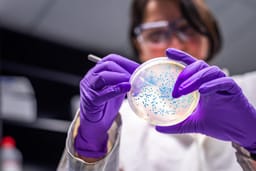
How researchers are working to ensure AI accelerates medical breakthroughs without unintended harm.
How researchers are working to ensure AI accelerates medical breakthroughs without unintended harm.
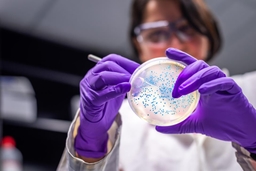
Advancing Responsible Healthcare AI with Longitudinal EHR Datasets

Current evaluations of AI models in healthcare rely on limited datasets like MIMIC, lacking complete patient trajectories. New benchmark datasets offer an alternative.
Current evaluations of AI models in healthcare rely on limited datasets like MIMIC, lacking complete patient trajectories. New benchmark datasets offer an alternative.


The MUSK model combines clinical notes and images to predict prognosis and immunotherapy response.
The MUSK model combines clinical notes and images to predict prognosis and immunotherapy response.