Stanford
University
  • Stanford Home
  • Maps & Directions
  • Search Stanford
  • Emergency Info
  • Terms of Use
  • Privacy
  • Copyright
  • Trademarks
  • Non-Discrimination
  • Accessibility
© Stanford University.  Stanford, California 94305.
Stanford HAI 2025 Congressional Boot Camp on Artificial Intelligence | Stanford HAI

Stay Up To Date

Get the latest news, advances in research, policy work, and education program updates from HAI in your inbox weekly.

Sign Up For Latest News

Navigate
  • About
  • Events
  • Careers
  • Search
Participate
  • Get Involved
  • Support HAI
  • Contact Us
Skip to content
  • About

    • About
    • People
    • Get Involved with HAI
    • Support HAI
    • Subscribe to Email
  • Research

    • Research
    • Fellowship Programs
    • Grants
    • Student Affinity Groups
    • Centers & Labs
    • Research Publications
    • Research Partners
  • Education

    • Education
    • Executive and Professional Education
    • Government and Policymakers
    • K-12
    • Stanford Students
  • Policy

    • Policy
    • Policy Publications
    • Policymaker Education
    • Student Opportunities
  • AI Index

    • AI Index
    • AI Index Report
    • Global Vibrancy Tool
    • People
  • News
  • Events
  • Industry
  • Centers & Labs
eventConference

Stanford HAI 2025 Congressional Boot Camp on Artificial Intelligence

Status
Past
Date
Monday, August 11, 2025 - Wednesday, August 13, 2025
Location
Gates Computer Science Building 353 Jane Stanford Wy Room 119 Stanford, CA, 94035
Topics
Regulation, Policy, Governance
Industry, Innovation
Government, Public Administration
About the Congressional Boot Camp on AI
Day 1 Agenda
Day 2 Agenda
Day 3 Agenda
Watch Event Recordings
About the Congressional Boot Camp on AI
Day 1 Agenda
Day 2 Agenda
Day 3 Agenda
Watch Event Recordings
Share
Link copied to clipboard!
Event Contact
Stanford HAI
stanford-hai@stanford.edu

Related Events

AI+Education Summit 2026
ConferenceFeb 11, 20268:00 AM - 5:00 PM
February
11
2026

The AI Inflection Point: What, How, and Why We Learn

Conference

AI+Education Summit 2026

Feb 11, 20268:00 AM - 5:00 PM

The AI Inflection Point: What, How, and Why We Learn

Tom Mitchell | The History of Machine Learning
Feb 23, 202612:00 PM - 1:00 PM
February
23
2026

How did we get to today’s technology which now supports a trillion dollar AI industry? What were the key scientific breakthroughs? What were the surprises and dead-ends along the way...

Event

Tom Mitchell | The History of Machine Learning

Feb 23, 202612:00 PM - 1:00 PM

How did we get to today’s technology which now supports a trillion dollar AI industry? What were the key scientific breakthroughs? What were the surprises and dead-ends along the way...

Gaidi Faraj, Lofred Madzou | Nurturing Africa’s AI Leaders through Math Olympiad
SeminarFeb 25, 202612:00 PM - 1:15 PM
February
25
2026

The African Olympiad Academy is a world-class high school dedicated to training Africa’s most promising students in mathematics, science, and artificial intelligence through olympiad-based pedagogy.

Seminar

Gaidi Faraj, Lofred Madzou | Nurturing Africa’s AI Leaders through Math Olympiad

Feb 25, 202612:00 PM - 1:15 PM

The African Olympiad Academy is a world-class high school dedicated to training Africa’s most promising students in mathematics, science, and artificial intelligence through olympiad-based pedagogy.

Day 1 Agenda


11:10-11:15 am


11:15-11:45 am


11:45-12:30 pm


12:30-1:30 pm


1:30-1:45 pm
Break

1:45-2:45 pm


2:45-3:45 pm


3:45-4:00 pm
Break

4:00-5:00 pm


5:00-7:30 pm

Welcome & Introduction

Stanford HAI staff will welcome congressional staffers to campus and provide an overview of why the boot camp was created and what Stanford HAI hopes for participants to gain through the educational program.

Speakers
headshot
Elena Cryst
Director of Policy and Society, Stanford HAI
Session 1: 
A Call for Human-Centered AI

User-centered design integrates techniques that consider the needs and abilities of end users, while also improving designs through iterative user testing. Community-centered design engages communities in the early stages of design through participatory techniques. Societally-centered design forecasts and mediates potential impacts on a societal level throughout a project. Successful Human-Centered AI requires the early engagement of multidisciplinary teams beyond technologists, including experts in design, the social sciences and humanities, and domains of interest such as medicine or law, as well as community members.

Speaker
James Landay
Denning Co-Director, Stanford HAI | Anand Rajaraman and Venky Harinarayan Professor of Computer Science, Stanford University
Session 2:
Mapping the AI Landscape

This session will cover the basic concepts of AI, including compute power, neural networks, narrow vs. general AI, gradient descent, and more. It will also provide a bird’s-eye view of the AI landscape, covering different AI techniques such as deep learning, computer vision, natural language processing, and supervised and unsupervised learning. Participants will walk away with a greater understanding of the primary aspects of AI and be better prepared for the boot camp.

Speakers
Peter Norvig
Distinguished Education Fellow, Stanford HAI
Session 3:
The Fuel of AI: Data (and Its Perils)

Contemporary AI technologies run on data, but AI developers face significant obstacles in acquiring and cleaning data. In addition, developers must do their best to ensure data’s inherent biases (and their non-obvious proxies) are accounted for in their AI systems. Moreover, different social values around privacy, data ownership, and data creation impact what AI technologies are possible. This session will dive into how the data policies developed today will shape the technologies of tomorrow.

Speakers
Jennifer King
Jennifer King
Privacy and Data Policy Fellow, Stanford HAI
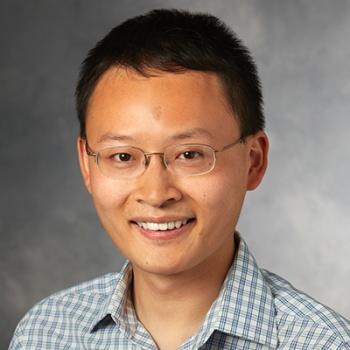
James Zou
Assistant Professor of Biomedical Data Science and, by courtesy, of Computer Science and of Electrical Engineering
Moderator
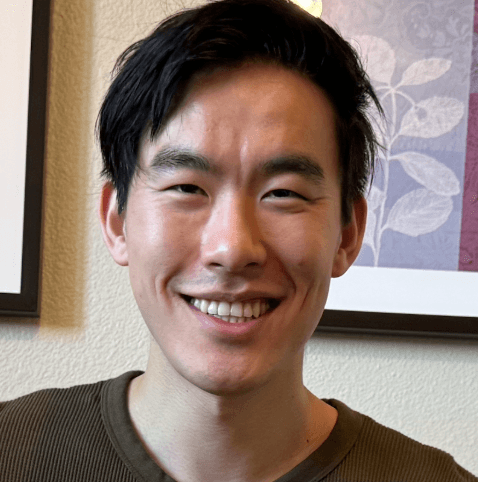
Judy Shen
PhD Candidate in Computer Science, Stanford University
Session 4:
The Role of Compute and Chips

This session highlights how computational power directly influences the capabilities and efficiency of AI systems, impacting everything from machine learning model training times to the sophistication of AI applications. Policymakers are introduced to key concepts such as the high-performance computing chips, trade-offs between computational demands and energy consumption, and the strategic importance of compute in national competitiveness in AI.

Speaker
Azalia Mirhoseini
Assistant Professor of Computer Science, Stanford University
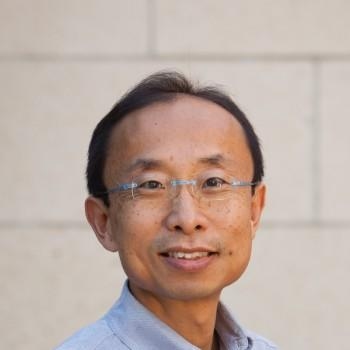
H.-S. Philip Wong
Willard R. and Inez Kerr Bell Professor in the School of Engineering, Stanford University
Moderator
drew spence
Drew Spence
Policy Program Manager
Session 5:
Mitigating Risk: Implementing Safe & Robust AI

The consequences of deploying robust AI and decision-making technologies in safety-critical systems such as driverless vehicles and autonomous aircraft are enormous. Challenges for AI developers range from biased inputs, constantly evolving conditions, and explainability issues, among others. This session will discuss the obstacles developers face as well as the difficult—and often politically fraught—decisions they make around operational efficiency and how they define acceptable risk parameters.

Speakers
Mykel Kochenderfer
Associate Professor of Aeronautics and Astronautics, Stanford University | Senior Fellow, Stanford HAI | Director, Stanford Intelligent Systems Laboratory (SISL)
Anika Reuel
Ph.D. Candidate in Computer Science, Stanford University
Moderator
headshot
Elena Cryst
Director of Policy and Society, Stanford HAI
Session 6:
Agents on the Rise: Exploring Agentic AI

What if AI could act on our behalf to make our travel arrangements, order our prescription refills, or take care of a variety of other tedious daily tasks? AI agents represent the promise of AI to enhance productivity and reduce friction in our daily routines. Yet, this emerging capability also raises concerns around labor disruption, security vulnerabilities, and delegation of control. This session will examine how agentic AI works, how rapidly the technology is evolving, and what it might mean for the economy, the workforce, and society at large.

Speakers
Sandy Pentland
Center Fellow, Stanford HAI; Toshiba Professor of Media Arts & Science, Professor, Information Technology
Diyi Yang
Assistant Professor, Computer Science Department, Stanford University
Moderator
Andy Zhang
Graduate Student Fellow, Stanford Regulation, Evaluation, and Governance Lab, Stanford University
Fireside Chat
AI, Automation, and the Future of Work

AI and automation will have a rippling effect on today’s workforce and the future of work. Mainstream narratives forecast AI will displace workers and funnel profits up to a select few. Alternatively, AI has the potential to augment and supercharge labor, ensuring the benefits of AI are spread and enjoyed widely. This session dives into deeper detail regarding what exactly we should expect as AI and automation integrate into the economy and the subsequent consequences for the workforce. The speakers will also discuss how policies can reshape and guide what the future holds.

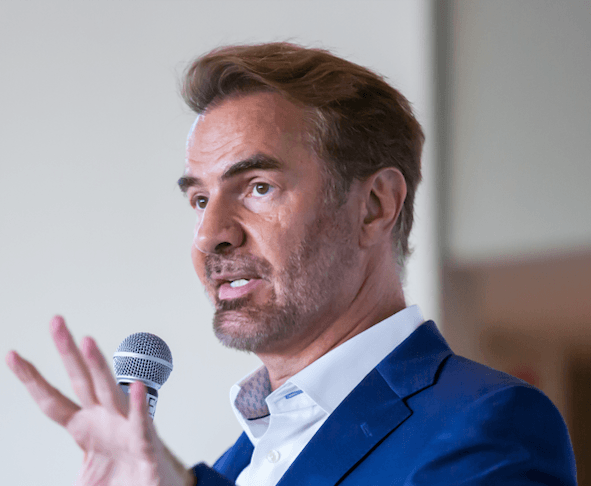
Erik Brynjolfsson
Jerry Yang and Akiko Yamazaki Professor | Senior Fellow, Stanford HAI | Senior Fellow, SIEPR | Professor, by courtesy, of Economics; of Operations, Information & Technology; and of Economics at the Stanford Graduate School of Business
Ramin Toloui
Distinguished Policy Fellow and Tad and Dianne Taube Policy Fellow, Stanford Institute for Economic Policy Research