Stanford
University
  • Stanford Home
  • Maps & Directions
  • Search Stanford
  • Emergency Info
  • Terms of Use
  • Privacy
  • Copyright
  • Trademarks
  • Non-Discrimination
  • Accessibility
© Stanford University.  Stanford, California 94305.
Stanford HAI 2025 Congressional Boot Camp on Artificial Intelligence | Stanford HAI

Stay Up To Date

Get the latest news, advances in research, policy work, and education program updates from HAI in your inbox weekly.

Sign Up For Latest News

Navigate
  • About
  • Events
  • Careers
  • Search
Participate
  • Get Involved
  • Support HAI
  • Contact Us
Skip to content
  • About

    • About
    • People
    • Get Involved with HAI
    • Support HAI
    • Subscribe to Email
  • Research

    • Research
    • Fellowship Programs
    • Grants
    • Student Affinity Groups
    • Centers & Labs
    • Research Publications
    • Research Partners
  • Education

    • Education
    • Executive and Professional Education
    • Government and Policymakers
    • K-12
    • Stanford Students
  • Policy

    • Policy
    • Policy Publications
    • Policymaker Education
    • Student Opportunities
  • AI Index

    • AI Index
    • AI Index Report
    • Global Vibrancy Tool
    • People
  • News
  • Events
  • Industry
  • Centers & Labs
eventConference

Stanford HAI 2025 Congressional Boot Camp on Artificial Intelligence

Status
Past
Date
Monday, August 11, 2025 - Wednesday, August 13, 2025
Location
Gates Computer Science Building 353 Jane Stanford Wy Room 119 Stanford, CA, 94035
Topics
Regulation, Policy, Governance
Industry, Innovation
Government, Public Administration
About the Congressional Boot Camp on AI
Day 1 Agenda
Day 2 Agenda
Day 3 Agenda
Watch Event Recordings
About the Congressional Boot Camp on AI
Day 1 Agenda
Day 2 Agenda
Day 3 Agenda
Watch Event Recordings
Share
Link copied to clipboard!
Event Contact
Stanford HAI
stanford-hai@stanford.edu

Related Events

AI+Education Summit 2026
ConferenceFeb 11, 20268:00 AM - 5:00 PM
February
11
2026

The AI Inflection Point: What, How, and Why We Learn

Conference

AI+Education Summit 2026

Feb 11, 20268:00 AM - 5:00 PM

The AI Inflection Point: What, How, and Why We Learn

Tom Mitchell | The History of Machine Learning
Feb 23, 202612:00 PM - 1:00 PM
February
23
2026

How did we get to today’s technology which now supports a trillion dollar AI industry? What were the key scientific breakthroughs? What were the surprises and dead-ends along the way...

Event

Tom Mitchell | The History of Machine Learning

Feb 23, 202612:00 PM - 1:00 PM

How did we get to today’s technology which now supports a trillion dollar AI industry? What were the key scientific breakthroughs? What were the surprises and dead-ends along the way...

Gaidi Faraj, Lofred Madzou | Nurturing Africa’s AI Leaders through Math Olympiad
SeminarFeb 25, 202612:00 PM - 1:15 PM
February
25
2026

The African Olympiad Academy is a world-class high school dedicated to training Africa’s most promising students in mathematics, science, and artificial intelligence through olympiad-based pedagogy.

Seminar

Gaidi Faraj, Lofred Madzou | Nurturing Africa’s AI Leaders through Math Olympiad

Feb 25, 202612:00 PM - 1:15 PM

The African Olympiad Academy is a world-class high school dedicated to training Africa’s most promising students in mathematics, science, and artificial intelligence through olympiad-based pedagogy.

Day 3 Agenda


8:45-9:00 am


9:00-10:30 am


11:00 am -12:00 pm


12:00 - 12:15 pm

Lunch


12:30 -1:15 pm


1:15 - 1:45 pm

Shuttle to Gates


1:45 pm - 2:45 pm


2:45 pm - 3:45 pm


3:45  - 4:00 pm

Break


4:00 - 5:00 pm


5:15 - 7:30 pm

Breakfast/Debrief

Stanford HAI staff will lead a discussion debriefing the key concepts that staffers learned in earlier sessions. They will also offer a preview of Day 2 and leave ample time for questions. 

Session 1:
AI and National Security: Strategic Competition Lessons for the U.S. 

AI is introducing new opportunities to strengthen U.S. intelligence and national security capabilities. However, it is crucial for policymakers to grasp the inner workings of both the U.S. national security framework and AI technologies to leverage these advancements effectively. Modern espionage, for example, is more pervasive yet less understood than ever, leading to misinformation and policy missteps. This session will separate fact from fiction as panelists discuss the past, present, and future of American espionage and how AI is creating an adapt-or-fail moment for international security and U.S. intelligence.

Speakers
Amy Zegart headshot
Amy Zegart
Morris Arnold and Nona Jean Cox Senior Fellow at the Hoover Institution | Senior Fellow, Freeman Spogli Institute for International Studies | Associate Director and Senior Fellow, Stanford HAI | Professor, by courtesy, of Political Science, Stanford
Colin Kahl
Senior Fellow, Stanford Freeman Spogli Institute for International Studies; Professor, by courtesy, of Political Science, Stanford University
Chris Manning headshot
Christopher Manning
Thomas M. Siebel Professor of Machine Learning in the Departments of Linguistics and Computer Science | Associate Director and Senior Fellow, Stanford HAI
Moderator
Andrew Grotto
Research Scholar at the Cyber Policy Center; Director, Program on Geopolitics, Technology and Governance
SLAC National Accelerator Laboratory Visit

This session provides participants with a hands-on opportunity to see how researchers at a premier national laboratory on the Stanford campus are using technology to further scientific discovery. The visit will include stops at multiple key SLAC facilities where materials and methods are being developed to make advances across physics, chemistry, biology, and medicine. 

Session 2:
Unlocking Scientific Discovery: AI’s Potential to Accelerate Breakthroughs

AI is poised to fundamentally reshape the way scientific research is conducted—from predicting protein structures and modeling climate systems to uncovering new materials and advancing quantum research. Building on the SLAC facility tour, this session will highlight how AI is being applied across disciplines such as physics, chemistry, biology, and cosmology. Speakers will explore how these tools are accelerating the pace of discovery, enabling more precise experimentation, and opening new frontiers in our understanding of the natural world. Participants will gain insight into the transformative potential of AI to fuel the next era of scientific breakthroughs.

Speakers
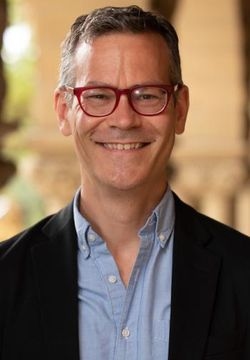
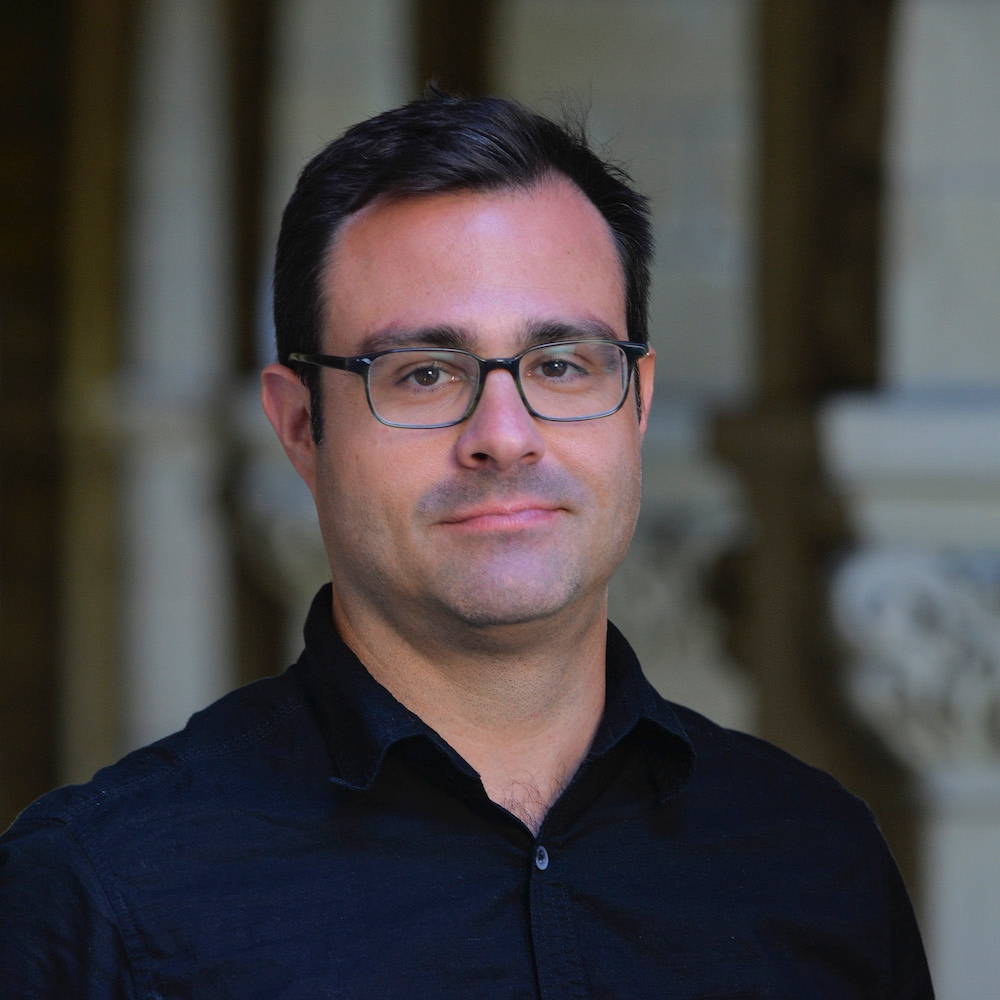
Adam S. Bolton
Senior Staff Scientist, Vera Rubin Observatory, SLAC National Accelerator Laboratory
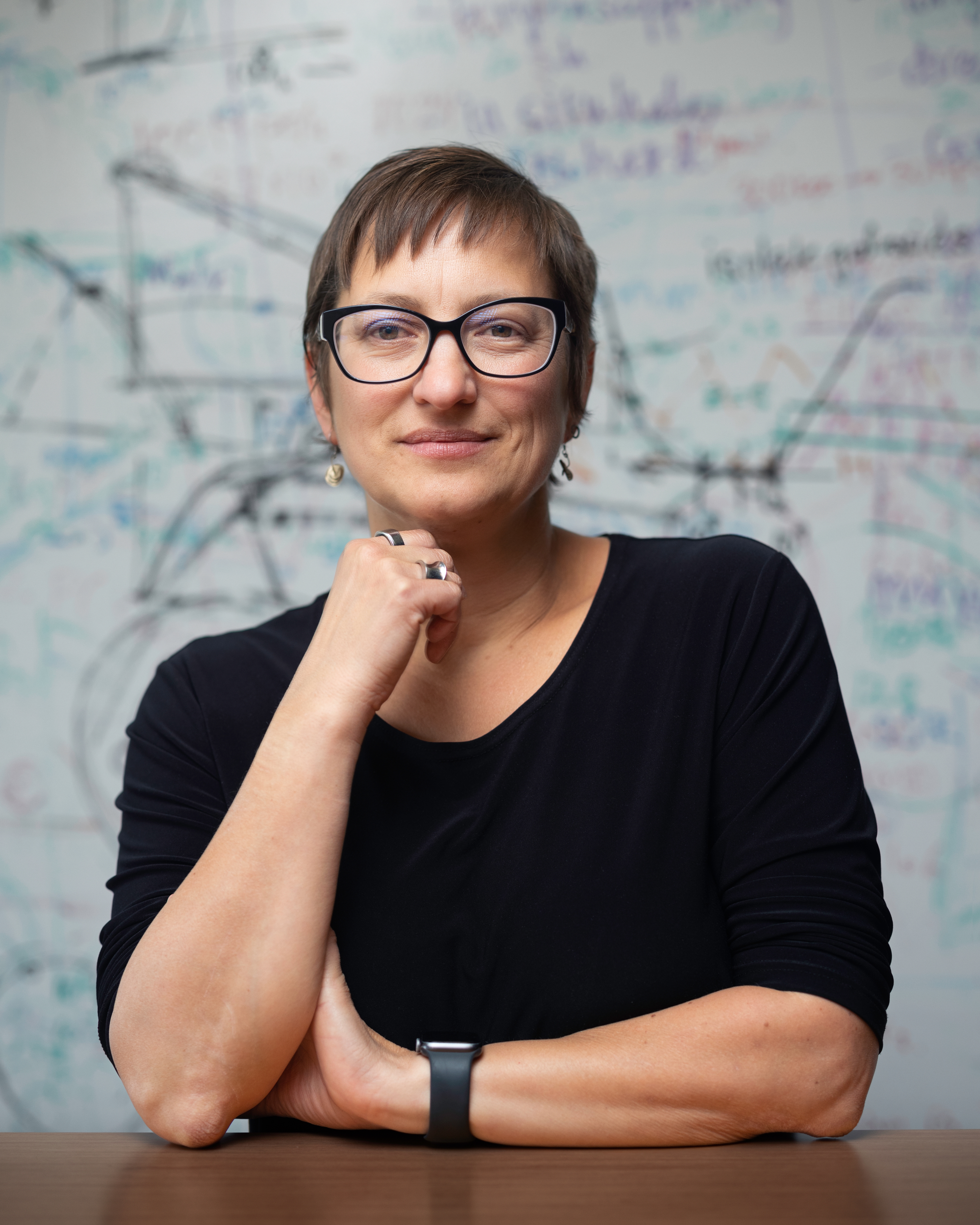
Jana B. Thayer
Division Director, Linac Coherent Light Source, SLAC National Accelerator Laboratory
Risa Wechsler
Professor of Physics and of Particle Physics and Astrophysics, Stanford University; Director, Kavli Institute for Particle Astrophysics and Cosmology, SLAC National Accelerator Laboratory; Associate Director, Stanford Data Science Initiative
Moderator
drew spence
Drew Spence
Policy Program Manager
Session 3: 
Powering AI: Meeting the Energy Demands Needed for Frontier AI

AI continues to increasingly rely on compute power which is an incredibly energy-intensive resource. There is mounting concern around AI’s environmental impact, drawing attention to the cost-benefit analysis of AI advancements. However, could it be possible for us to find ways to power AI research more efficiently? Could technological advances in energy storage and transmission help reduce the intense energy demands that frontier research currently requires? This session will unpack the realities of AI’s energy needs and how we can develop technology more responsibly in the future. 

Speaker
Ram Rajagopal
Associate Professor of Civil and Environmental Engineering, Senior Fellow at the Precourt Institute for Energy and Professor, by courtesy, of Electrical Engineering, Stanford University
Sally M. Benson
Precourt Family Professor, Professor of Energy Science Engineering, Stanford University; Senior Fellow, Woods Institute for the Environment and the Precourt Institute for Energy
Moderator
Liang Min
Managing Director, Bitts & Watts Initiative, Precourt Institute for Energy
Session 4:
Deciphering Synthetic Media: Tools for Navigating AI-Generated Content 

The advent of generative AI has proliferated online content of questionable veracity. As policymakers grapple with the societal and political implications of this shift, the question has moved from “what is possible” to “what can be done”. This panel will explore the technological tools and effective and scalable solutions to identify and authenticate AI-generated content, from provenance infrastructure and digital signatures to disclosure standards and media integrity framework. 

Speaker
Riana Pfefferkorn
Riana Pfefferkorn
Policy Fellow, Stanford HAI
Rohith Kuditipudi
PhD candidate in Computer Science, Stanford University
Moderator
Tracy Navichoque
Program Manager for AI and Society
Session 5:
The Governance of AI

Governments around the world are exploring governance initiatives regarding the ethical and responsible deployment of AI. From institutes focused on building-up government capacity to evaluate AI to laws that seek to place guardrails around model development, policymakers are experimenting with different approaches to regulating AI. This session analyzes the evolving landscape of regulations, guidelines, and best practices and provides insights into key considerations for effective governance.

Speakers
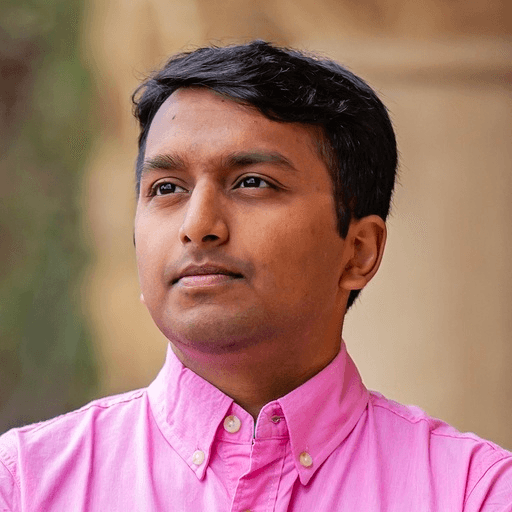
Rishi Bommasani
Senior Research Scholar, Stanford HAI
Angèle Christin
Associate Professor of Communication, and, by courtesy, of Sociology, Stanford University | Senior Fellow, Stanford HAI
Mark A. Lemley
William H. Neukom Professor of Law, Stanford Law School; Director of the Stanford Program in Law, Science and Technology; Senior Fellow, Stanford Institute for Economic Policy Research
Rob Reich
Rob Reich
McGregor-Girand Professor of Social Ethics of Science and Technology | Senior Fellow, Stanford HAI | Professor, by courtesy, of Education and of Philosophy | Senior Fellow, by courtesy, at Freeman Spogli Institute for International Studies
Moderator
Daniel Zhang
Chief of Staff
Closing Fireside Chat
Cutting Edge: AI Developments that are Steering the Future

The rapid advancements in AI in recent years have shocked the world. From models generating realistic images from scratch to ambient technologies that enhance the human condition, the possibilities of what AI can do for humanity are endless. Understanding today’s cutting-edge AI will help steer tomorrow’s innovation. This session will dive into what is on the horizon of AI advancements and how these technologies can be leveraged to benefit society.

Speakers
yejin choi
Yejin Choi
Dieter Schwarz Foundation HAI Professor | Professor of Computer Science | Senior Fellow, Stanford HAI
James Landay
Denning Co-Director, Stanford HAI | Anand Rajaraman and Venky Harinarayan Professor of Computer Science, Stanford University