Get the latest news, advances in research, policy work, and education program updates from HAI in your inbox weekly.
Sign Up For Latest News
This talk will cover key insights from the third AI100 report, AI Goes Mainstream: The Scaling Era and the Rise of Generative AI, set for release in November 2026. The report was commissioned by the AI100 standing committee and led by study panel chair Michael Wooldridge.
This talk will cover key insights from the third AI100 report, AI Goes Mainstream: The Scaling Era and the Rise of Generative AI, set for release in November 2026. The report was commissioned by the AI100 standing committee and led by study panel chair Michael Wooldridge.
Sessions run Wednesdays from 4:30–5:30 PM in CoDa E160. Each session features a different Stanford speaker; talk titles are announced by the organizers.

Sessions run Wednesdays from 4:30–5:30 PM in CoDa E160. Each session features a different Stanford speaker; talk titles are announced by the organizers.
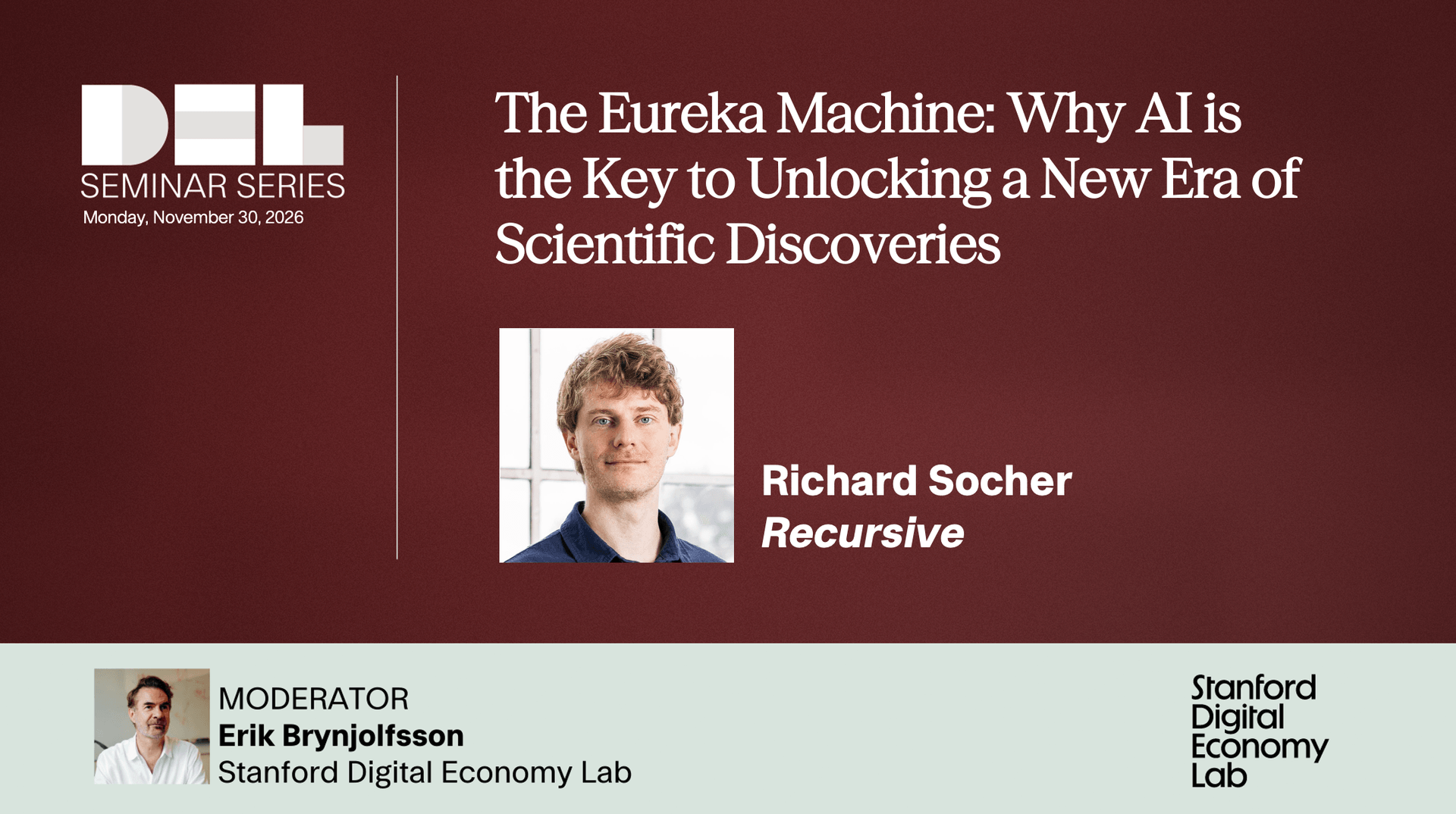
The next, maybe final, frontier of AI research is automating the process of knowledge discovery. By pointing AI first at itself and then at the R&D process of all scientific domains, we can far exceed where human-led research can take us. Richard Socher argues the current pace of scientific discovery has slowed significantly over the past several decades as the fields of science fragment and the number of researchers focused on any one continues to shrink.

The next, maybe final, frontier of AI research is automating the process of knowledge discovery. By pointing AI first at itself and then at the R&D process of all scientific domains, we can far exceed where human-led research can take us. Richard Socher argues the current pace of scientific discovery has slowed significantly over the past several decades as the fields of science fragment and the number of researchers focused on any one continues to shrink.
Teaching Responsible Computing at Buffalo - Courtesy of Atri Rudra
Impossible Project Framework (created by Dalia Muller) - Courtesy of Atri Rudra
Implementation in CSE 199 (First Year Seminar) - Courtesy of Atri Rudra
Fostering Responsible Computing Research - Courtesy of Barbara Grosz
Embedded EthiCS: Origins, Evolutions & Lessons - Courtesy of Barbara Grosz
CS2023: ACM/IEEE-CS/AAAI Computer Science Curricula (see the Society, Ethics, and Professionalism Knowledge area) - Courtesy of Brett Becker
Responsible Computing Assignments & Research - Courtesy of Casey Fiesler
Tech Ethics Class on TikTok - Courtesy of Casey Fiesler
Tech Ethics Curricula: A Collection of Syllabi - Courtesy of Casey Fiesler
Ethical Reflection Modules for CS 1 - Courtesy of Evan M. Peck
Resources and Suggestions from Markkula Center for Applied Ethics at Santa Clara University - Courtesy of Irina Raicu
An Evaluation Schema for the Ethical Use of Autonomous Robotic Systems in Security Applications - Courtesy of John Sullins
Teaching Critical Comparative Data Structures and Algorithms - Courtesy of Kevin Lin
Advancing Antiracism, Diversity, Equity, and Inclusion in STEMM Organizations - Courtesy of Nicki Washington
Duke COMPSCI 240: Race, Gender, Class, & Computing - Courtesy of Nicki Washington
Alliance for Identity-Inclusive Computing Education (AiiCE) - Courtesy of Nicki Washington
Cultural Competence in Computing (3C) Fellows Program - Courtesy of Nicki Washington
Computing Ethics Narratives - Courtesy of Stacy Doore
Kinolab - Courtesy of Stacy Doore
Teaching to Transgress (bell hooks)
Omidyar Network's Ethical OS Toolkit
Treating Ethics as a Design Problem