Upcoming Events
Carina Hong | AI That Can Prove It: From Mathematical Discovery to Verified Software
A eureka moment is a two-step process: discovering something new and surprising, and establishing that it is correct. Drawing on her work at Axiom, Carina will discuss the transition from solving mathematical benchmarks to contributing to research, and from proving individual theorems to formalizing mathematical theories in Lean.
Carina Hong | AI That Can Prove It: From Mathematical Discovery to Verified Software
A eureka moment is a two-step process: discovering something new and surprising, and establishing that it is correct. Drawing on her work at Axiom, Carina will discuss the transition from solving mathematical benchmarks to contributing to research, and from proving individual theorems to formalizing mathematical theories in Lean.
Nicholas Branigan | Non-ergodicity and Simpson’s paradox in neural correlates
A Center for Neural Data Science Seminar Series
Nicholas Branigan | Non-ergodicity and Simpson’s paradox in neural correlates
A Center for Neural Data Science Seminar Series
Bay Area Tech Economics Seminar with Rehan Khan, Snowflake
The Bay Area Tech Economics Seminar is for graduate-trained economists and other quantitative social scientists from academia, policy, or the private sector who are interested in the tech economy and methods for analyzing it, and in making connections with others in this broadly defined space.
Bay Area Tech Economics Seminar with Rehan Khan, Snowflake
The Bay Area Tech Economics Seminar is for graduate-trained economists and other quantitative social scientists from academia, policy, or the private sector who are interested in the tech economy and methods for analyzing it, and in making connections with others in this broadly defined space.
Marlowe | AI + Data for Science with Anshul Kundaje
Sessions run Wednesdays from 4:30–5:30 PM in CoDa E160. Each session features a different Stanford speaker; talk titles are announced by the organizers.
Sessions run Wednesdays from 4:30–5:30 PM in CoDa E160. Each session features a different Stanford speaker; talk titles are announced by the organizers.
Daniel Rock | The Free Hypothesis: AI and Shifted Bottlenecks in Science
Scientific progress is a key driver of economic growth and prosperity. There is great excitement- but also concerns- about the impacts of AI on science, but so far little data. We provide early insights on this from three data sources: a sample of 15 million Gemini interactions, an inventory of over 2,600 specialized AI models across disciplines, and a survey of over 600 scientists.
Daniel Rock | The Free Hypothesis: AI and Shifted Bottlenecks in Science
Scientific progress is a key driver of economic growth and prosperity. There is great excitement- but also concerns- about the impacts of AI on science, but so far little data. We provide early insights on this from three data sources: a sample of 15 million Gemini interactions, an inventory of over 2,600 specialized AI models across disciplines, and a survey of over 600 scientists.
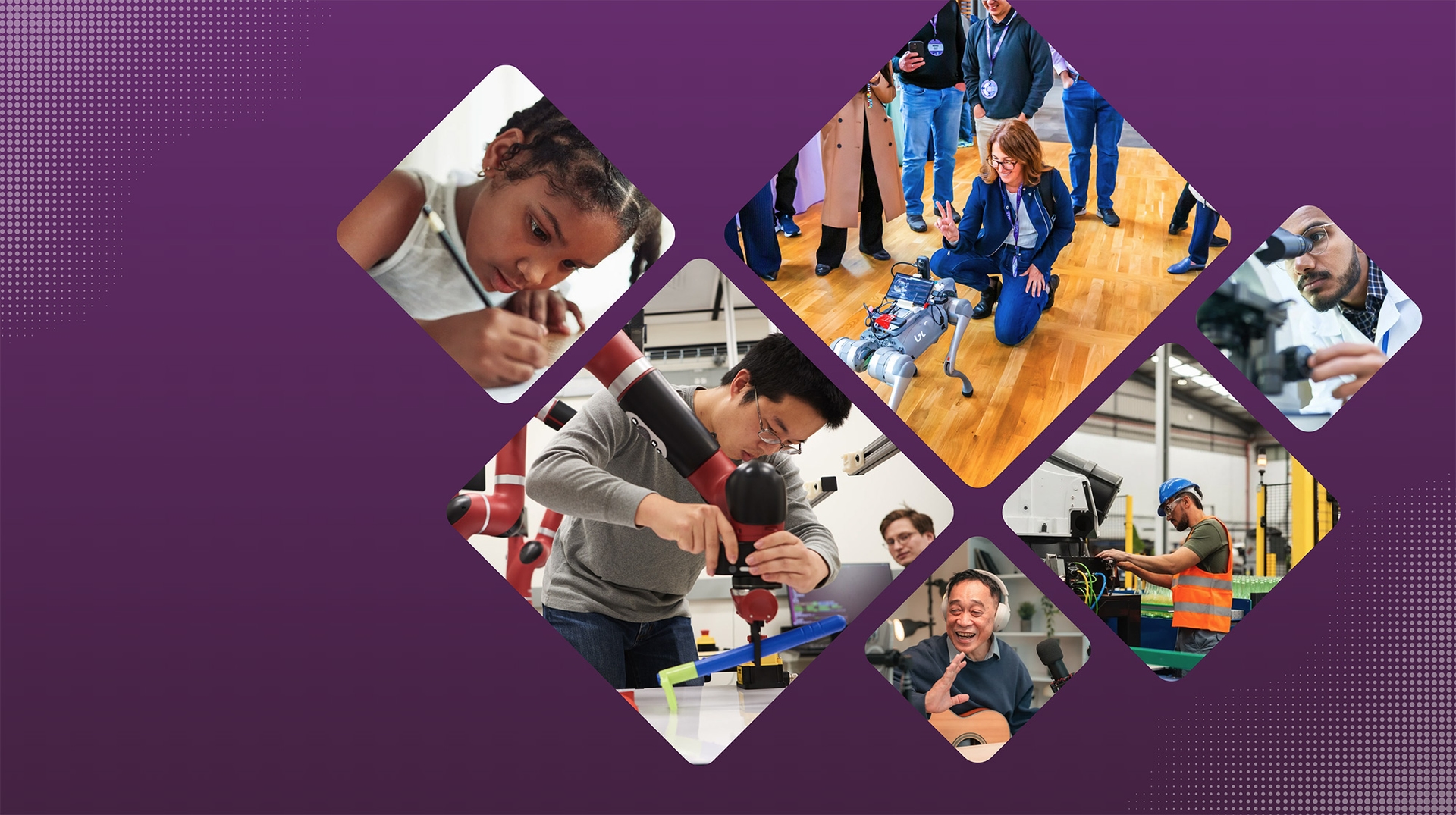
Confronting Our AI Future: Hope, Fear, and the Choices Ahead
The rapid acceleration of AI comes with a profound wave of anxiety. Across every sector of society, people are facing unsettling questions about their worth and their place in a shifting world.
Confronting Our AI Future: Hope, Fear, and the Choices Ahead
The rapid acceleration of AI comes with a profound wave of anxiety. Across every sector of society, people are facing unsettling questions about their worth and their place in a shifting world.
Marlowe | AI + Data for Science with Dan Yamins
Sessions run Wednesdays from 4:30–5:30 PM in CoDa E160. Each session features a different Stanford speaker; talk titles are announced by the organizers.
Marlowe | AI + Data for Science with Dan Yamins
Sessions run Wednesdays from 4:30–5:30 PM in CoDa E160. Each session features a different Stanford speaker; talk titles are announced by the organizers.
Marcos Santiago Rojas Pino & Thomas Caruso | Building an International AI Platform for Health Professions Education and the Learning Sciences
Clinical Mind AI is a Stanford-developed, international collaborative platform designed to strengthen clinical reasoning education through AI-simulated patient encounters across health professions.
Marcos Santiago Rojas Pino & Thomas Caruso | Building an International AI Platform for Health Professions Education and the Learning Sciences
Clinical Mind AI is a Stanford-developed, international collaborative platform designed to strengthen clinical reasoning education through AI-simulated patient encounters across health professions.
Marlowe | AI + Data for Science with Ruijiang Li
Sessions run Wednesdays from 4:30–5:30 PM in CoDa E160. Each session features a different Stanford speaker; talk titles are announced by the organizers.
Marlowe | AI + Data for Science with Ruijiang Li
Sessions run Wednesdays from 4:30–5:30 PM in CoDa E160. Each session features a different Stanford speaker; talk titles are announced by the organizers.
CNDS Seminar - Daniel Wurgaft
A Center for Neural Data Science Seminar Series
CNDS Seminar - Daniel Wurgaft
A Center for Neural Data Science Seminar Series
Marlowe | AI + Data for Science with Mohsen Bayati
Sessions run Wednesdays from 4:30–5:30 PM in CoDa E160. Each session features a different Stanford speaker; talk titles are announced by the organizers.
Sessions run Wednesdays from 4:30–5:30 PM in CoDa E160. Each session features a different Stanford speaker; talk titles are announced by the organizers.
AI100 | AI Goes Mainstream: The Scaling Era and the Rise of Generative AI
This talk will cover key insights from the third AI100 report, AI Goes Mainstream: The Scaling Era and the Rise of Generative AI, set for release in November 2026. The report was commissioned by the AI100 standing committee and led by study panel chair Michael Wooldridge.
AI100 | AI Goes Mainstream: The Scaling Era and the Rise of Generative AI
This talk will cover key insights from the third AI100 report, AI Goes Mainstream: The Scaling Era and the Rise of Generative AI, set for release in November 2026. The report was commissioned by the AI100 standing committee and led by study panel chair Michael Wooldridge.
Marlowe | AI + Data for Science with Andreas Tolias
Sessions run Wednesdays from 4:30–5:30 PM in CoDa E160. Each session features a different Stanford speaker; talk titles are announced by the organizers.
Sessions run Wednesdays from 4:30–5:30 PM in CoDa E160. Each session features a different Stanford speaker; talk titles are announced by the organizers.
Marlowe | AI + Data for Science with Leonidas Guibas
Sessions run Wednesdays from 4:30–5:30 PM in CoDa E160. Each session features a different Stanford speaker; talk titles are announced by the organizers.
Sessions run Wednesdays from 4:30–5:30 PM in CoDa E160. Each session features a different Stanford speaker; talk titles are announced by the organizers.
Angèle Christin & Hannah Zeavin | Gurus, Hucksters, Entertainers: How Influencers Reshaped Social Media
Please join us for an illuminating investigation of the complex work of social media content creators—their lives, conflicts, and controversies.
Angèle Christin & Hannah Zeavin | Gurus, Hucksters, Entertainers: How Influencers Reshaped Social Media
Please join us for an illuminating investigation of the complex work of social media content creators—their lives, conflicts, and controversies.
YoungJu Jo | Data-driven discovery and control of neural computations
A Center for Neural Data Science Seminar Series
YoungJu Jo | Data-driven discovery and control of neural computations
A Center for Neural Data Science Seminar Series
Featured Videos
Hear from speakers and attendees at recent Stanford HAI events across research, policy, and education.
Previous Events at HAI
Brad Myers | Pick, Click, and Flick: Stories About Interaction Techniques
This talk will explain what interaction techniques are, why they are important and difficult to design and implement, and the history and future of a few interesting examples.
Brad Myers | Pick, Click, and Flick: Stories About Interaction Techniques
This talk will explain what interaction techniques are, why they are important and difficult to design and implement, and the history and future of a few interesting examples.
Melissa Valentine and Michael Bernstein | Flash Teams: Leading the Future of AI-Enhanced, On-Demand Work
In Flash Teams, award-winning management scholar Melissa Valentine and computer scientist Michael Bernstein chart the opportunities of flash teams and navigate the challenges that teams and managers will face.
Melissa Valentine and Michael Bernstein | Flash Teams: Leading the Future of AI-Enhanced, On-Demand Work
In Flash Teams, award-winning management scholar Melissa Valentine and computer scientist Michael Bernstein chart the opportunities of flash teams and navigate the challenges that teams and managers will face.
Brian Hie | Genome Modeling & Design Across All Domains of Life
All of life encodes information with DNA. While tools for sequencing, synthesis, and editing of genomic code have transformed biological research, intelligently composing new biological systems would also require a deep understanding of the immense complexity encoded by genomes.
Brian Hie | Genome Modeling & Design Across All Domains of Life
All of life encodes information with DNA. While tools for sequencing, synthesis, and editing of genomic code have transformed biological research, intelligently composing new biological systems would also require a deep understanding of the immense complexity encoded by genomes.
Bharat Chandar and Ruyu Chen: Canaries in the Coal Mine? Six Facts about the Recent Employment Effects of Artificial Intelligence
On September 29, 2025, Bharat Chandar, postdoctoral fellow at the Stanford Digital Economy Lab, and Ruyu Chen, research scientist at the Stanford Digital Economy Lab, will present the findings on their recent paper.
Bharat Chandar and Ruyu Chen: Canaries in the Coal Mine? Six Facts about the Recent Employment Effects of Artificial Intelligence
On September 29, 2025, Bharat Chandar, postdoctoral fellow at the Stanford Digital Economy Lab, and Ruyu Chen, research scientist at the Stanford Digital Economy Lab, will present the findings on their recent paper.
Bay Area Tech Economics Seminar with Mike Bailey, Meta
Seyed M. Hosseini and Guy Lichtinger: Generative AI as Seniority-Biased Technological Change: Evidence from U.S. Résumé and Job Posting Data
On September 22, 2025, Seyed M. Hosseini and Guy Lichtinger of Harvard University will visit our Seminar Series to present their paper.
Seyed M. Hosseini and Guy Lichtinger: Generative AI as Seniority-Biased Technological Change: Evidence from U.S. Résumé and Job Posting Data
On September 22, 2025, Seyed M. Hosseini and Guy Lichtinger of Harvard University will visit our Seminar Series to present their paper.
Karen Hao in Conversation with Patrick Hynes | Empire of AI
The rapid ascent of OpenAI has been central in showcasing the disruptive power of artificial intelligence to the public.
Karen Hao in Conversation with Patrick Hynes | Empire of AI
The rapid ascent of OpenAI has been central in showcasing the disruptive power of artificial intelligence to the public.
Alexander Lipton | Monetary Circuit Model, Cross-Border Payments, and Ouroboros Supply Chain in Times of Uncertainty
The talk starts with a quick exposition of the modern monetary circuit model (MMCT), considered an integral part of the general dynamic input-output model. Then, it analyzes money creation by the banking system and highlights central banks’ role as an anchor that keeps the financial system together. Particular emphasis is placed on interactions among different systems and foreign exchange.
Alexander Lipton | Monetary Circuit Model, Cross-Border Payments, and Ouroboros Supply Chain in Times of Uncertainty
The talk starts with a quick exposition of the modern monetary circuit model (MMCT), considered an integral part of the general dynamic input-output model. Then, it analyzes money creation by the banking system and highlights central banks’ role as an anchor that keeps the financial system together. Particular emphasis is placed on interactions among different systems and foreign exchange.
Andy Konwinski & Dave Patterson | Shaping AI’s Impact on Billions of Lives
Co-author's Dave Patterson and Andy Konwinski discuss themes from "Shaping AI's Impact on Billions of Lives".
Andy Konwinski & Dave Patterson | Shaping AI’s Impact on Billions of Lives
Co-author's Dave Patterson and Andy Konwinski discuss themes from "Shaping AI's Impact on Billions of Lives".
Alex Tamkin | Which Economic Tasks are Performed with AI? Evidence from Millions of Claude Conversations
Despite widespread speculation about artificial intelligence’s impact on the future of work, we lack systematic empirical evidence about how these systems are actually being used for different tasks. Here, we present a novel framework for measuring AI usage patterns across the economy.
Alex Tamkin | Which Economic Tasks are Performed with AI? Evidence from Millions of Claude Conversations
Despite widespread speculation about artificial intelligence’s impact on the future of work, we lack systematic empirical evidence about how these systems are actually being used for different tasks. Here, we present a novel framework for measuring AI usage patterns across the economy.