HAI Student Affinity Groups Take On Society’s Emerging Questions
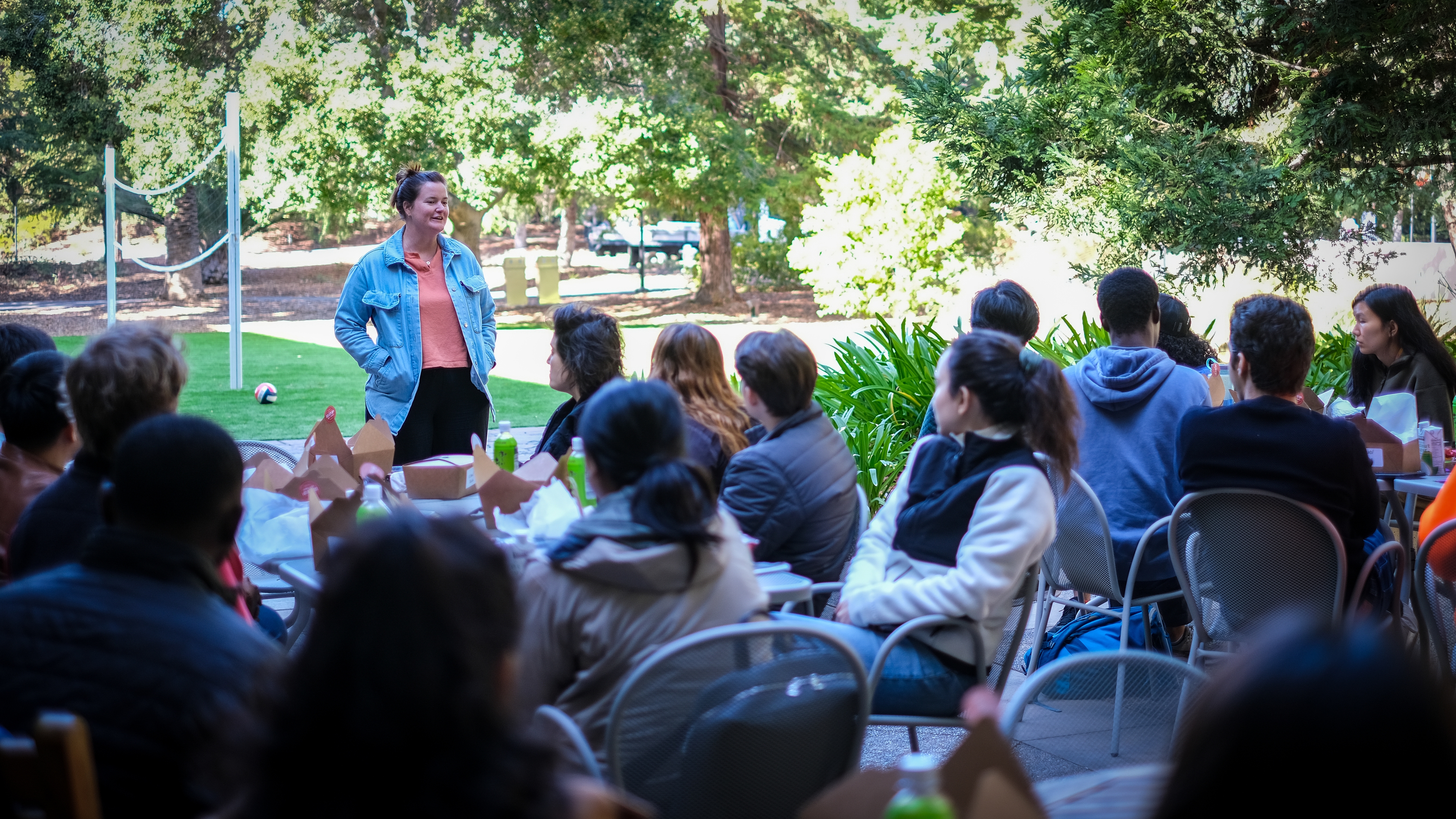
Stanford HAI's Christine Raval, who oversees the student affinity program, presents to students at a recent workshop.
Stanford students across disciplines are teaming up to tackle society’s pressing questions in the age of AI.
As AI moves from labs to living rooms, questions that once belonged primarily to researchers are becoming everyday concerns. How do we protect human autonomy in an era of increasingly personalized AI systems? What are ways to tackle harmful disinformation narratives? And what does AI mean for human creativity? Over the past year, students in HAI’s Student Affinity Groups program set out to explore these questions, bringing together different perspectives to examine what a human-centered future with AI might look like.
The program creates opportunities for students whose coursework would otherwise never have intersected to explore critical issues in AI, challenge each other’s thinking, and develop new approaches to the technology to ensure it benefits all. The 2025-26 cohort included 13 teams across all seven Stanford schools, with a total of 59 participants.
Meet three teams working across disciplines to answer some of the pressing questions around this emerging technology.
How Do We Protect Human Autonomy?
As AI systems become increasingly personalized and brain-computer interfaces (BCI) advance, researchers want to understand: How will people retain their autonomy over their thoughts and decisions? School of Humanities and Sciences PhD candidate Peggy Yin and Stanford Law JD candidate Julie Heng teamed up with students across campus to form the Cognitive Security Task Force to answer that question.
The team investigated how these technologies influence human cognition, what risks they may pose, and what safeguards are needed to protect individual autonomy.
First, they examined ways in which these systems can be weaponized to encourage an individual to engage in harmful beliefs and behaviors, resulting in their paper Position: AI Development Should Prioritize Cognitive Security.
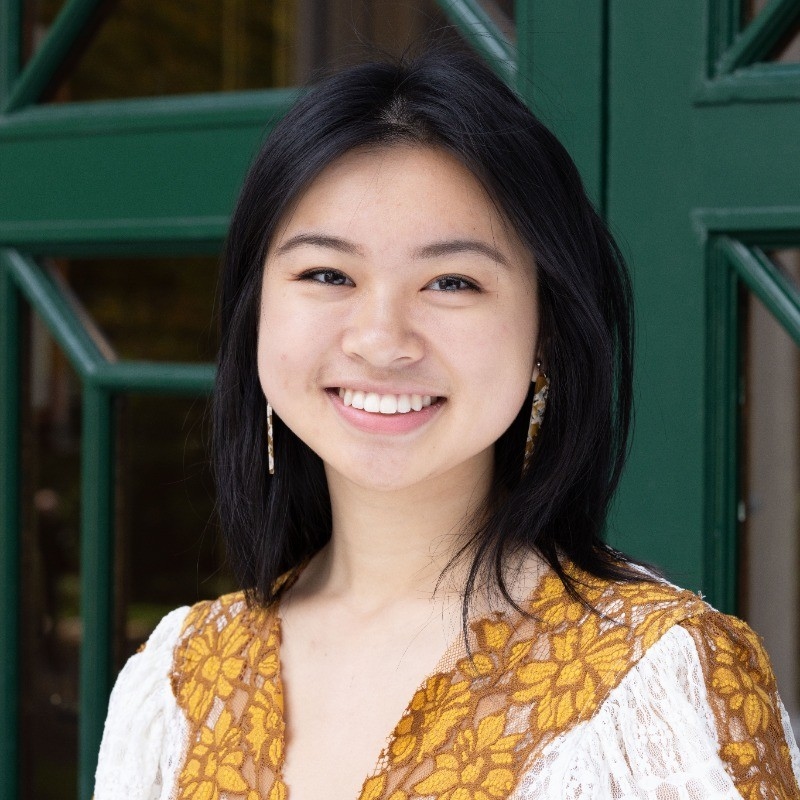
School of Medicine PhD candidate Peggy Yin's project examined the cognitive impact of AI.
“For example, if a system learns that a user really likes eating junk food, they could encourage the user to continue to binge on junk food because they want the user to continue engaging with them,” Yin says. “A more extreme case is AI psychosis, a phenomenon where people outsource their sense of reality to whatever AI says, leading to the inability to make critical choices by themselves.”
The team also recognized that this issue extends beyond the individual user and has implications for compromising social trust.
“By having all of your needs both cognitively and emotionally fulfilled by a tech company and not from an expert or people that you trust, AI can erode trust in your real-life relationships and institutions,” Yin explains.
To understand these challenges, the task force recruited over 20 Stanford students to conduct technical studies, interview education experts, and create policy recommendations. The group presented their research at the Neuroethics Conference, Human + Tech Week, and ICLR conferences in 2026, bringing their work to technologists, educators, and policymakers. They also organized 11 seminars featuring speakers including U.S. Rep. Sam Liccardo, Stanford psychology and computer science Professor Noah Goodman, and NATO cognitive warfare architect Tanna Krewson. In total, these seminars drew over 300 attendees from Stanford and surrounding communities.
While technical safeguards will play an important role in cognitive security, Yin believes that societal participation is key to protection.
“It requires everyone, technical or nontechnical, to step up and see themselves helping secure society against these potential harms and risks,” she says. “Now is really the time to understand where you can make an impact in this.”
Can Disinformation Be Tackled Beyond Fact-Checking?
Advances in generative AI are making it harder to know what is real online. Stanford Graduate School of Business student Alessandro Balzi and Law School student Archit Lohani assembled an interdisciplinary team to explore how AI can help monitor, analyze, and combat online disinformation narratives – strategic storylines designed to maliciously influence public perception – arguing that traditional tactics need an upgrade for an era of persistent AI-generated content.
“Narratives are particularly difficult to tackle for two reasons,” Balzi says. “One is that they have a very strong emotional component to it. And then the other is that narratives are more difficult to fact-check than normal facts.”
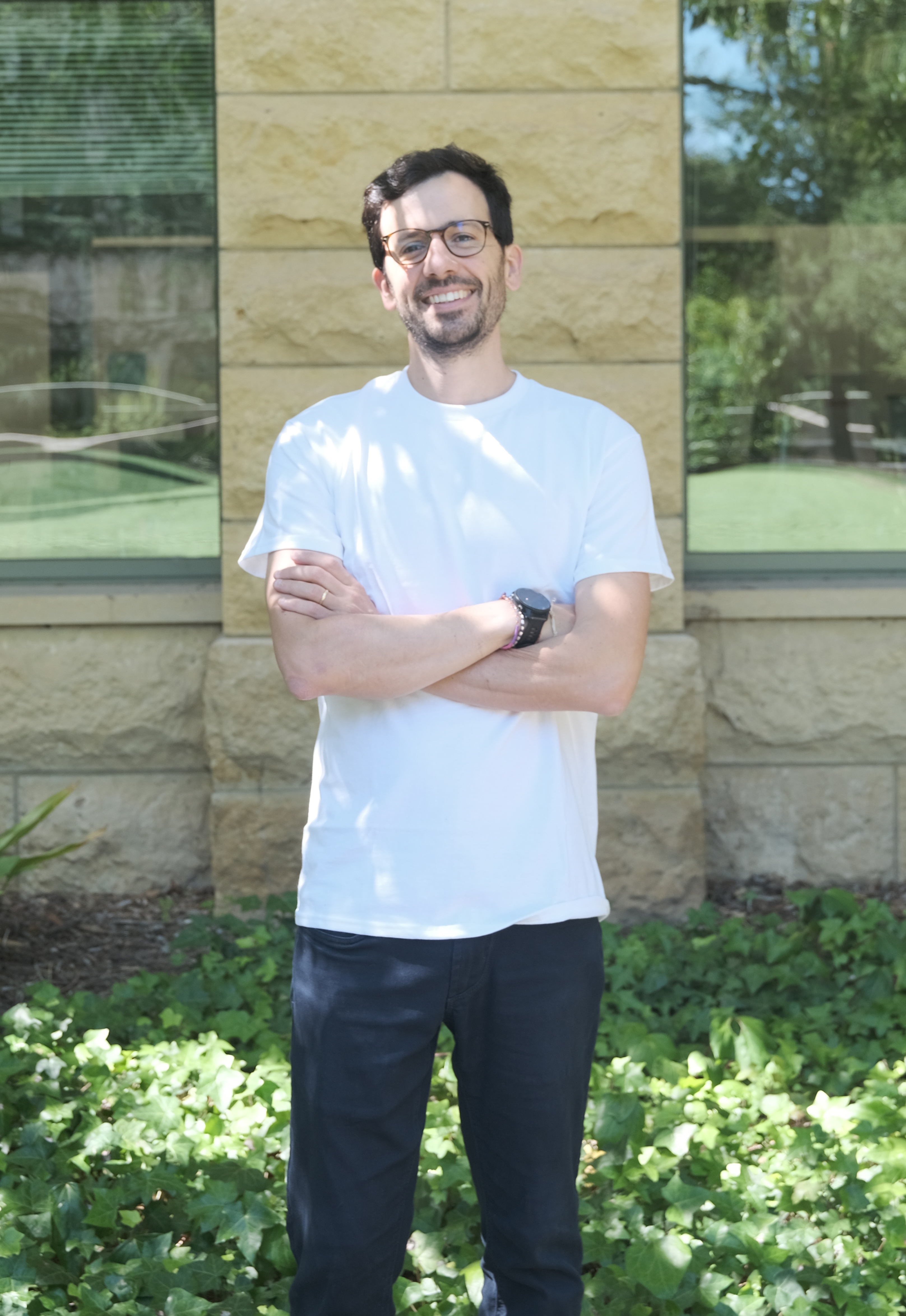
Stanford Graduate School of Business student Alessandro Balzi's team focused on helping people better identify and understand false narratives developed by AI.
Rather than focusing solely on identifying false information, the affinity group Beyond Fact Checking: Understanding Disinformation Narratives with AI helps people better identify and understand false narratives so they can make informed decisions.
“Fact-checking is very important and content moderation is needed in a lot of platforms, but I think it’s clear that these approaches are not enough,” Balzi says.
To that end, the team is building a platform that allows journalists to explore disinformation narratives and track public sentiment on a range of topics, from public health to election information manipulation, surfacing emerging storylines worth investigating. They are also exploring a browser extension for the general public to analyze content for bias, strong emotional sentiment, or misleading narratives, and to direct users to a cluster of additional sources, like the World Health Organization, to learn the fuller context of how the narrative emerged, evolved, and spread. The team will continue to work on the project over the summer.
“Ideally, you can interact directly with a citizen as soon as they process information, because the moment a narrative takes hold, it’s already too late,” Balzi says. “You need to find a way to intervene.”
Where Does AI Belong in the Creative Process?
As generative AI sparks debates on authorship, creative ownership, and the replacement of artists, Christina Ba (BS ’26) and Navya Agarwal (BA ’26), students in computer science and economics, respectively, see an opportunity for a different conversation. They launched the student affinity group Authenticity in Flux: Rethinking Art in the Age of AI to challenge the assumption that AI is a negative addition to the creative process.
“I think that the barrier to entry to so many forms of creation is being reduced by AI,” says Agarwal. “I thought it was really important to create this bidirectional discourse where creativity is informing technology, and technology is informing creativity.”
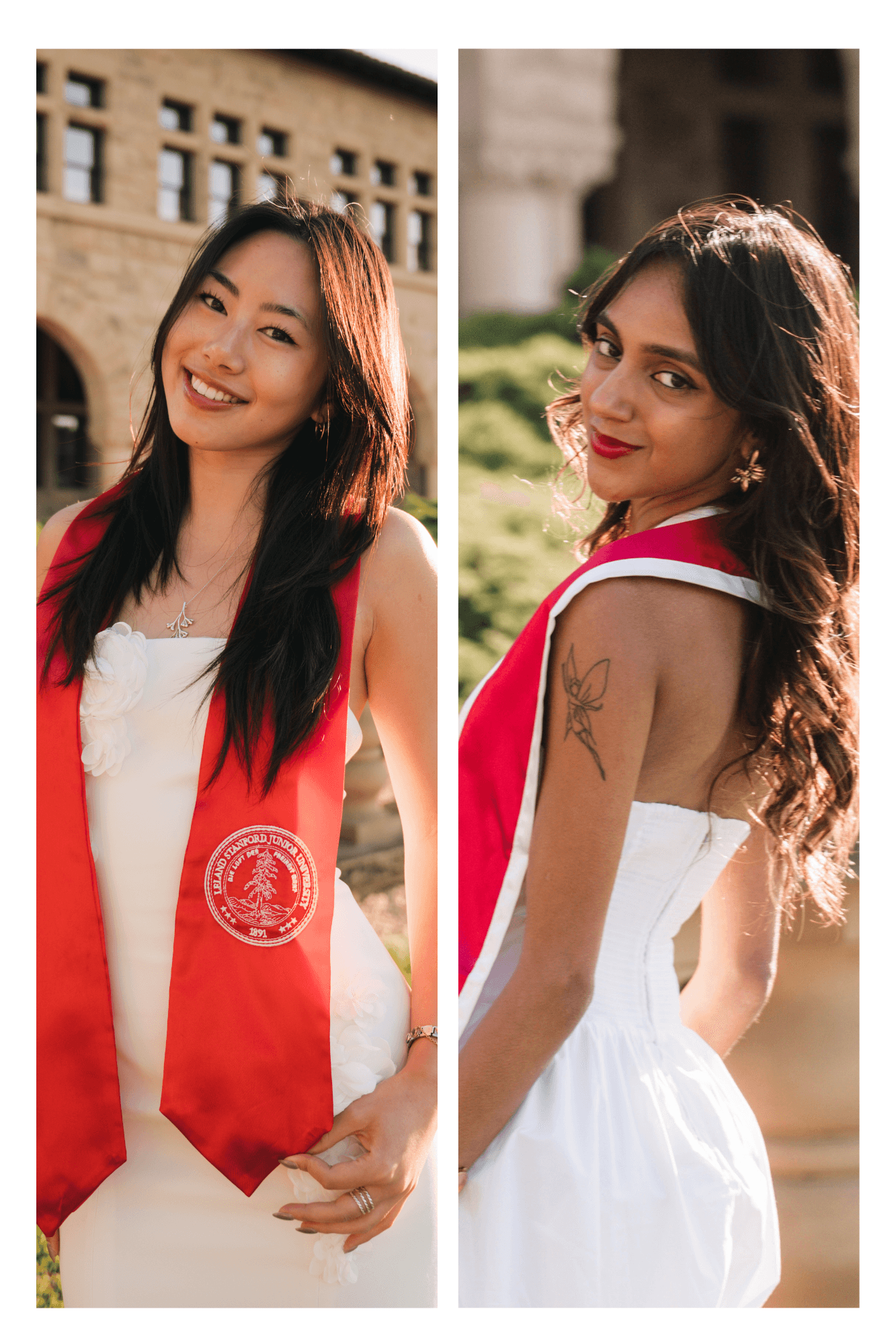
Christina Ba and Navya Agarwal hosted discussions covering how technology is transforming the way artists are defined, lowering barriers to entry for artists, and changing the creative process.
Their goal was to create a space for the public to explore conceptual questions around technology and art, asking what creativity means in the age of AI. These discussions covered how technology is transforming the way artists are defined, how AI is lowering barriers to entry for artists to enter new media, and how AI can be injected into all steps of the creative process.
The team hosted two public seminars, including an interactive event featuring work from three artists – cognitive scientist and artist Anha Girshick, computational artist and engineer Stephen Milborrow, and creative technologist Yvonne Fang – who are embracing AI in their practices. Attendees engaged with artwork and art making, including the Portrait Drawing Machine, a device that draws portraits using pen and paper as a human would, but can also respond in real time to a subject’s changes in expression and position, resulting in a piece that reflects motion and transformation. The event drew 90+ technologists, industry members, and students, many of whom do not have professions relating to creativity and AI.
“I was blown away by how well received the event was,” Ba says. “I didn’t expect so many people across different disciplines at Stanford to share a similar interest in this space, and the amount of engagement that we got was really empowering.”
For Agarwal, one of the project’s key takeaways was AI’s potential to augment the creative process, rather than replace or diminish it.
“I’m hoping that AI will push people to actually be more creative on their own,” she says.
Learn more about the HAI Student Affinity Groups program on the HAI website. Applications for the 2026-27 cohort are open until August 31, 2026.
Related News
Analyzing thousands of human-AI conversations, a new study shows that people are turning to chatbots for increasingly critical tasks – and that productive outcomes depend on how the collaboration unfolds.
Analyzing thousands of human-AI conversations, a new study shows that people are turning to chatbots for increasingly critical tasks – and that productive outcomes depend on how the collaboration unfolds.

How managers introduce and support AI determines whether workers engage with or resist the technology.

How managers introduce and support AI determines whether workers engage with or resist the technology.

Benchmarks — the standardized tests that rank AI models on safety, bias, and reasoning — drive markets and shape regulation. New Stanford research finds they often don't measure what they claim to.

Benchmarks — the standardized tests that rank AI models on safety, bias, and reasoning — drive markets and shape regulation. New Stanford research finds they often don't measure what they claim to.