Stanford
University
  • Stanford Home
  • Maps & Directions
  • Search Stanford
  • Emergency Info
  • Terms of Use
  • Privacy
  • Copyright
  • Trademarks
  • Non-Discrimination
  • Accessibility
© Stanford University.  Stanford, California 94305.
Incivility is Rising on Twitter Among U.S. Politicians (Video) | Stanford HAI

Stay Up To Date

Get the latest news, advances in research, policy work, and education program updates from HAI in your inbox weekly.

Sign Up For Latest News

Navigate
  • About
  • Events
  • Careers
  • Search
Participate
  • Get Involved
  • Support HAI
  • Contact Us
Skip to content
  • About

    • About
    • People
    • Get Involved with HAI
    • Support HAI
    • Subscribe to Email
  • Research

    • Research
    • Fellowship Programs
    • Grants
    • Student Affinity Groups
    • Centers & Labs
    • Research Publications
    • Research Partners
  • Education

    • Education
    • Executive and Professional Education
    • Government and Policymakers
    • K-12
    • Stanford Students
  • Policy

    • Policy
    • Policy Publications
    • Policymaker Education
    • Student Opportunities
  • AI Index

    • AI Index
    • AI Index Report
    • Global Vibrancy Tool
    • People
  • News
  • Events
  • Industry
  • Centers & Labs
news

Incivility is Rising on Twitter Among U.S. Politicians (Video)
Date
August 29, 2022
Topics
Machine Learning
Communications, Media

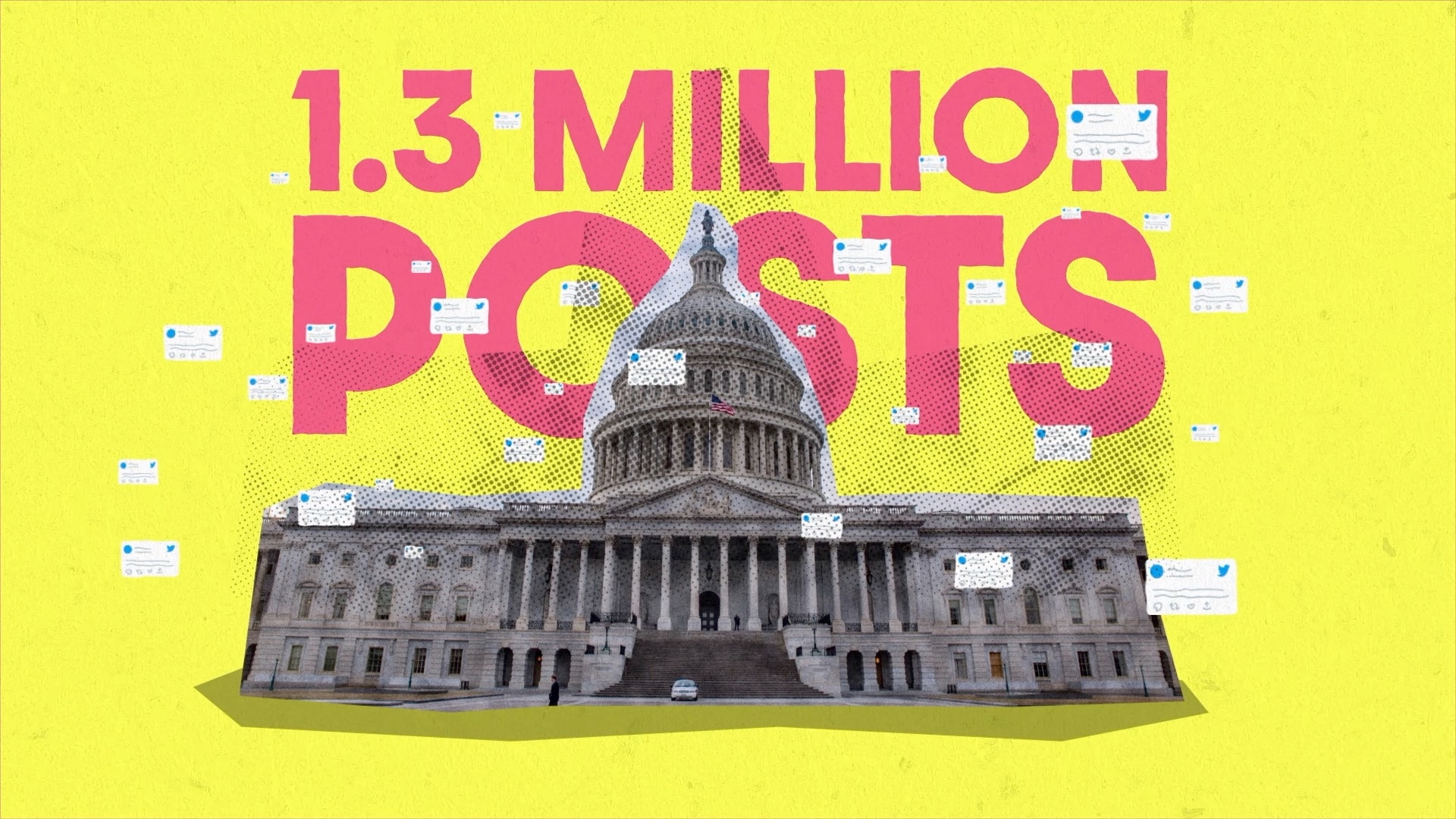
Scholars analyze 1.3 million politicians' tweets to find a 23% increase in incivility over the past decade.

Twitter has become a dominant platform for political communication in the U.S. How has the medium shaped the message? By applying a validated artificial intelligence classifier to all 1.3 million tweets made by members of Congress since 2009, scholars including Stanford sociologist Robb Willer and Stanford HAI junior faculty member Johannes Eichstaedt find that the levels of incivility have risen on Twitter over the past decade. Their analyses suggest that this increase was partly driven by reinforcement learning in which politicians engaged in greater incivility following positive feedback. The more negative their tweets, the more likes and retweets they would receive. But interestingly, the scholars found these mean tweets aren't always as well liked as metrics indicate.

You can read the full study here. 

Share
Link copied to clipboard!

Related News

AI Leaders Discuss How To Foster Responsible Innovation At TIME100 Roundtable In Davos
TIME
Jan 21, 2026
Media Mention

HAI Senior Fellow Yejin Choi discussed responsible AI model training at Davos, asking, “What if there could be an alternative form of intelligence that really learns … morals, human values from the get-go, as opposed to just training LLMs on the entirety of the internet, which actually includes the worst part of humanity, and then we then try to patch things up by doing ‘alignment’?” 

Media Mention
Your browser does not support the video tag.

AI Leaders Discuss How To Foster Responsible Innovation At TIME100 Roundtable In Davos

TIME
Ethics, Equity, InclusionGenerative AIMachine LearningNatural Language ProcessingJan 21

HAI Senior Fellow Yejin Choi discussed responsible AI model training at Davos, asking, “What if there could be an alternative form of intelligence that really learns … morals, human values from the get-go, as opposed to just training LLMs on the entirety of the internet, which actually includes the worst part of humanity, and then we then try to patch things up by doing ‘alignment’?” 

Stanford’s Yejin Choi & Axios’ Ina Fried
Axios
Jan 19, 2026
Media Mention

Axios chief technology correspondent Ina Fried speaks to HAI Senior Fellow Yejin Choi at Axios House in Davos during the World Economic Forum.

Media Mention
Your browser does not support the video tag.

Stanford’s Yejin Choi & Axios’ Ina Fried

Axios
Energy, EnvironmentMachine LearningGenerative AIEthics, Equity, InclusionJan 19

Axios chief technology correspondent Ina Fried speaks to HAI Senior Fellow Yejin Choi at Axios House in Davos during the World Economic Forum.

Stanford Researchers: AI Reality Check Imminent
Forbes
Dec 23, 2025
Media Mention

Shana Lynch, HAI Head of Content and Associate Director of Communications, pointed out the "'era of AI evangelism is giving way to an era of AI evaluation,'" in her AI predictions piece, where she interviewed several Stanford AI experts on their insights for AI impacts in 2026.

Media Mention
Your browser does not support the video tag.

Stanford Researchers: AI Reality Check Imminent

Forbes
Generative AIEconomy, MarketsHealthcareCommunications, MediaDec 23

Shana Lynch, HAI Head of Content and Associate Director of Communications, pointed out the "'era of AI evangelism is giving way to an era of AI evaluation,'" in her AI predictions piece, where she interviewed several Stanford AI experts on their insights for AI impacts in 2026.