Stanford
University
  • Stanford Home
  • Maps & Directions
  • Search Stanford
  • Emergency Info
  • Terms of Use
  • Privacy
  • Copyright
  • Trademarks
  • Non-Discrimination
  • Accessibility
© Stanford University.  Stanford, California 94305.
James Landay Recognized for ACM SIGCHI Lifetime Research Award | Stanford HAI
Skip to content
  • About

    • About
    • People
    • Get Involved with HAI
    • Support HAI
    • Subscribe to Email
  • Research

    • Research
    • Fellowship Programs
    • Grants
    • Student Affinity Groups
    • Centers & Labs
    • Research Publications
    • Research Partners
  • Education

    • Education
    • Executive and Professional Education
    • Government and Policymakers
    • K-12
    • Stanford Students
  • Policy

    • Policy
    • Policy Publications
    • Policymaker Education
    • Student Opportunities
  • AI Index

    • AI Index
    • AI Index Report
    • Global Vibrancy Tool
    • People
  • News
  • Events
  • Industry
  • Centers & Labs
Navigate
  • About
  • Events
  • Careers
  • Search
Participate
  • Get Involved
  • Support HAI
  • Contact Us

Stay Up To Date

Get the latest news, advances in research, policy work, and education program updates from HAI in your inbox weekly.

Sign Up For Latest News

newsAnnouncement

James Landay Recognized for ACM SIGCHI Lifetime Research Award
Date
February 29, 2024

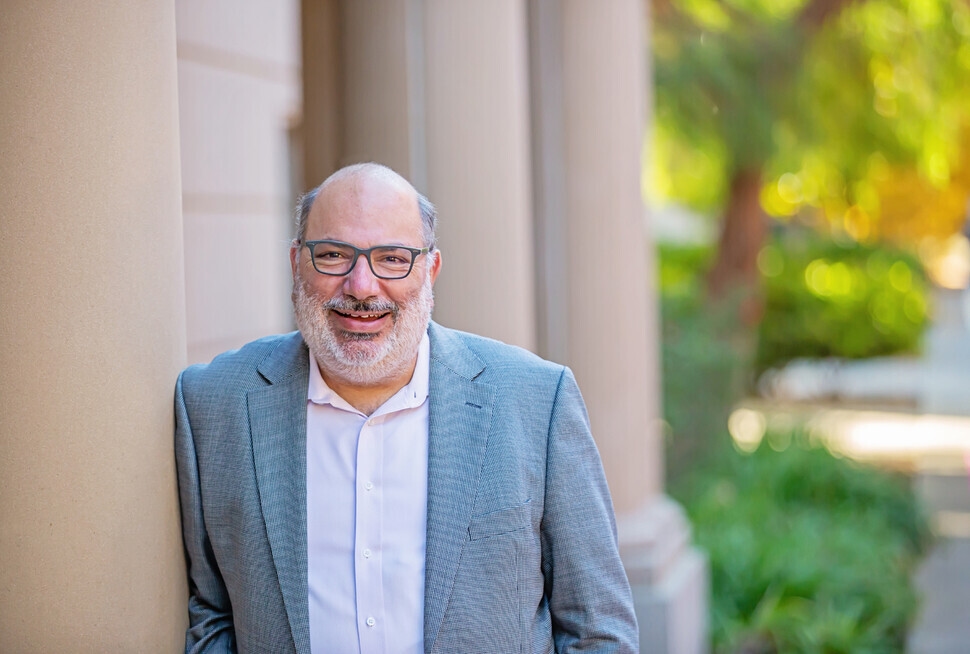
Stanford HAI is pleased to announce that Vice Director James Landay has been acknowledged by the Association for Computing Machinery (ACM) for a SIGCHI Lifetime Research Award.

The SIGCHI (special interest group on computer-human interaction) Awards honor leaders in the field of human-computer interaction. The lifetime research award in particular recognizes the best, more influential research contributions, given to an individual for a lifetime of innovation and leadership.

Landay is a professor of computer science and the Anand Rajaraman and Venky Harinarayan Professor in the School of Engineering at Stanford University. He co-founded Stanford HAI and leads all research efforts at the institute. His contributions to the HCI field include technology to support behavior change, demonstrational interfaces, mobile and ubiquitous computing, and user interface design tools. Landay is well known for founding and building vibrant HCI and human-centered AI research communities at Berkeley, Washington, and Stanford. 

The awardees will be formally recognized at the upcoming ACM CHI 2024 conference in May.

Share
Link copied to clipboard!
Related
  • James Landay
    Denning Co-Director, Stanford HAI | Anand Rajaraman and Venky Harinarayan Professor of Computer Science, Stanford University

Related News

Stanford Scholars Train Generative AI To Be Better Creative Collaborators
Nikki Goth Itoi
Mar 10, 2026
News
Skilled comic artist creating comic book on computer

The team is building a shared “conceptual grounding” so that artists can steer models with precision.

News
Skilled comic artist creating comic book on computer

Stanford Scholars Train Generative AI To Be Better Creative Collaborators

Nikki Goth Itoi
Mar 10

The team is building a shared “conceptual grounding” so that artists can steer models with precision.

What Your Phone Knows Could Help Scientists Understand Your Health
Katharine Miller
Mar 04, 2026
News
Woman using social media microblogging app on her smart phone

Stanford scientists have released an open-source platform that lets health researchers study the “screenome” – the digital traces of our daily lives – while protecting participants’ privacy.

News
Woman using social media microblogging app on her smart phone

What Your Phone Knows Could Help Scientists Understand Your Health

Katharine Miller
HealthcareMar 04

Stanford scientists have released an open-source platform that lets health researchers study the “screenome” – the digital traces of our daily lives – while protecting participants’ privacy.

How a HAI Seed Grant Helped Launch a Disease-Fighting AI Platform
Dylan Walsh
Mar 03, 2026
News

Stanford scientists in Senegal hunting for schistosomiasis—a parasitic disease infecting 200+ million people worldwide—used AI to transform local field work into satellite-powered disease mapping.

News

How a HAI Seed Grant Helped Launch a Disease-Fighting AI Platform

Dylan Walsh
Computer VisionHealthcareSciences (Social, Health, Biological, Physical)Machine LearningMar 03

Stanford scientists in Senegal hunting for schistosomiasis—a parasitic disease infecting 200+ million people worldwide—used AI to transform local field work into satellite-powered disease mapping.