The Link Between Artificial Intelligence Jobs and Well-Being
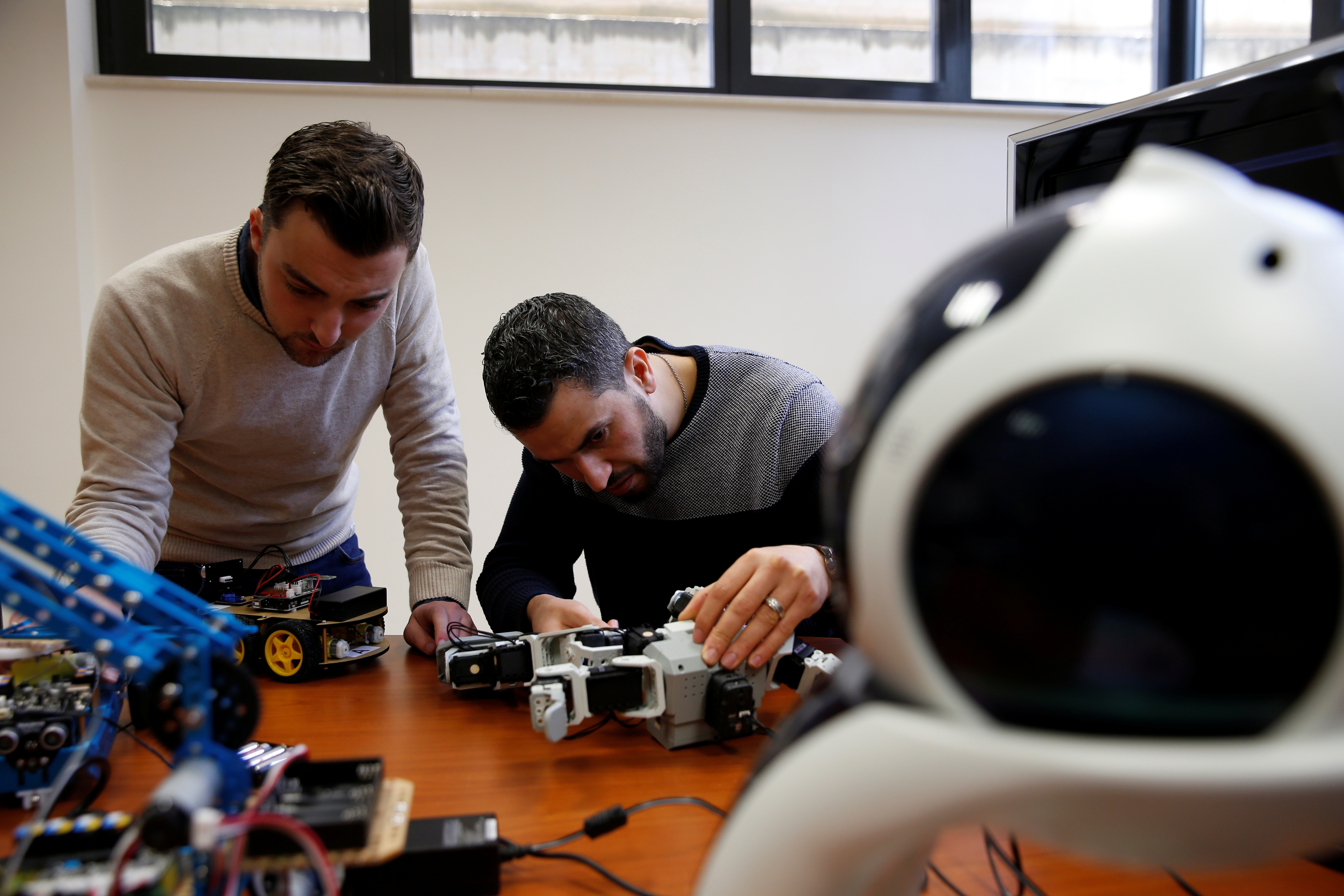
A recent study shows AI-related job growth correlates to improved social welfare through economic growth.
Artificial intelligence carries the promise of making industry more efficient and our lives easier. With that promise, however, also comes the fear of job replacement, hollowing out of the middle class, increased income inequality, and overall dissatisfaction. According to the quarterly CNBC/SurveyMonkey Workplace Happiness survey from October last year, 37% of workers between the ages of 18 and 24 are worried about AI eliminating their jobs.
But a recent study from two researchers affiliated with the Stanford Institute for Human-Centered Artificial Intelligence (HAI) challenged this public perception about AI’s impact on social welfare. The study found a relationship between AI-related jobs and increases in economic growth, which in return improved the well-being of the society.
Demand for AI-related jobs has been growing constantly in recent years, but this growth has been widely variable between cities and industry. Arizona State University assistant professor Christos Makridis and Saurabh Mishra, HAI AI Index manager and researcher, wanted to understand the effects of AI on society independent of these variables.
For this, they examined the number of AI-related job listings by city in the U.S. using Stanford HAI’s AI Index, an open source project that tracks and visualizes data on AI. They found that, between 2014 and 2018, cities with greater increases in AI-related job postings exhibited greater economic growth. This relationship was dependent on a city’s ability to leverage its inherent capabilities in industry and education to create AI-based employment opportunities. This meant that only cities with certain infrastructure – such as high-tech services and more educated workers – benefited from this growth.
Next, the researchers studied how this growth translated to well-being at a macro level using data from Gallup’s U.S. Daily Poll, which surveys 1,000 different people each day on five components of well-being: physical, social, career, community, and financial. The researchers studied the correlation between the number of AI jobs and the poll results, controlling for many factors, such as demographic characteristics of a population and presence of universities in a given city. They found that AI-related job growth – mediated by economic growth – was positively associated with improved state of being, especially for physical, social, and financial components.
This was a surprising finding given the public’s concern over AI’s potentially adverse effects on quality of life and overall happiness.
The researchers believe that their study is the first quantitative investigation of the relationship between AI and social well-being. While their findings are intriguing, they are also correlative. The study can’t conclude whether AI is the cause of the observed improvement in well-being.
Nevertheless, the study makes an important and unique contribution to understanding the impact of AI on society. “The fact that we found this robust, positive association, even after we control for things like education, age, and other measures of industrial composition, I think is all very positive,” Makridis says.
Their findings also offer a course of action to policymakers. The researchers suggest that city leaders introduce smart industrial policies, such as the Endless Frontier Act, to support scientific and technological innovation through increased funding and investments targeted for AI-based research and discovery. These policies – along with ones that promote higher education – can help balance the economic inequality between cities by providing them with opportunities to grow.
“Given that [cities] have an educated population set, a good internet connection, and residents with programming skills, they can drive economic growth,” Mishra says. “Supporting the AI-based industry can improve the economic growth of any city, and thus the well-being of its residents.”
Stanford HAI's mission is to advance AI research, education, policy and practice to improve the human condition. Learn more.
Related News
HAI Director James Landay discusses historical technological impacts on productivity growth.
HAI Director James Landay discusses historical technological impacts on productivity growth.
Director of the Stanford Digital Economy Lab and Senior Fellow at Stanford HAI Erik Brynjolfsson discusses the fallacy of thinking "the only way that you get productivity from A.I. is by removing labor costs,” arguing that business can return larger gains through AI use for employees' productivity, rather than replacing workers.
Director of the Stanford Digital Economy Lab and Senior Fellow at Stanford HAI Erik Brynjolfsson discusses the fallacy of thinking "the only way that you get productivity from A.I. is by removing labor costs,” arguing that business can return larger gains through AI use for employees' productivity, rather than replacing workers.

The annual report reveals a field hitting breakthrough capabilities while raising urgent questions about environmental costs, transparency, and who benefits from the technology.

The annual report reveals a field hitting breakthrough capabilities while raising urgent questions about environmental costs, transparency, and who benefits from the technology.