Stanford HAI, UC Berkeley, and Gov. Newsom To Host Symposium on California’s AI Future
The Stanford Institute for Human-Centered AI (HAI) has teamed with the University of California, Berkeley, College of Computing, Data Science, and Society, and the Office of the Governor of California, Gavin Newsom, to launch a symposium on how the state can influence AI nationwide and globally and better understand its limitations, risks, and potentials.
The event is part of a new executive order on generative AI, which lays out how California will cement its role as a first-mover in shaping responsible artificial intelligence. In addition to the symposium, the executive order includes developing guidelines to analyze the impact of AI on vulnerable communities, inventorying state agencies’ and departments’ current use of AI, analyzing its potential threat to infrastructure, and understanding its potential use in the work of the state government.
“This is a potentially transformative technology – comparable to the advent of the internet – and we’re only scratching the surface of understanding what GenAI is capable of,” said Gov. Newsom. “We recognize both the potential benefits and risks these tools enable. We’re neither frozen by the fears nor hypnotized by the upside. We’re taking a clear-eyed, humble approach to this world-changing technology.”
“California is the fifth-largest economy in the world, and has the ability to impact the future of AI,” said Stanford HAI Denning Co-director Fei-Fei Li. “For HAI, this is a prestigious honor from the state of California that recognizes HAI’s leadership in this space and ability to work broadly with stakeholders like government leaders.”
Stanford HAI is a multidisciplinary institute that aims to advance AI research, education, policy and practice to improve the human condition. HAI plays a leading role not only in producing critical scholarship on AI governance and appropriate uses, but by also serving as a convener of national and global AI discussions.
Learn more about Gov. Newsom’s executive order.
Learn more about Stanford HAI’s policy efforts, or sign up for the Policy newsletter to find more details on this upcoming symposium and other news and events.
Related News
The two-year fellowship supports PhD researchers across law, medicine, physics, statistics, education, and engineering.
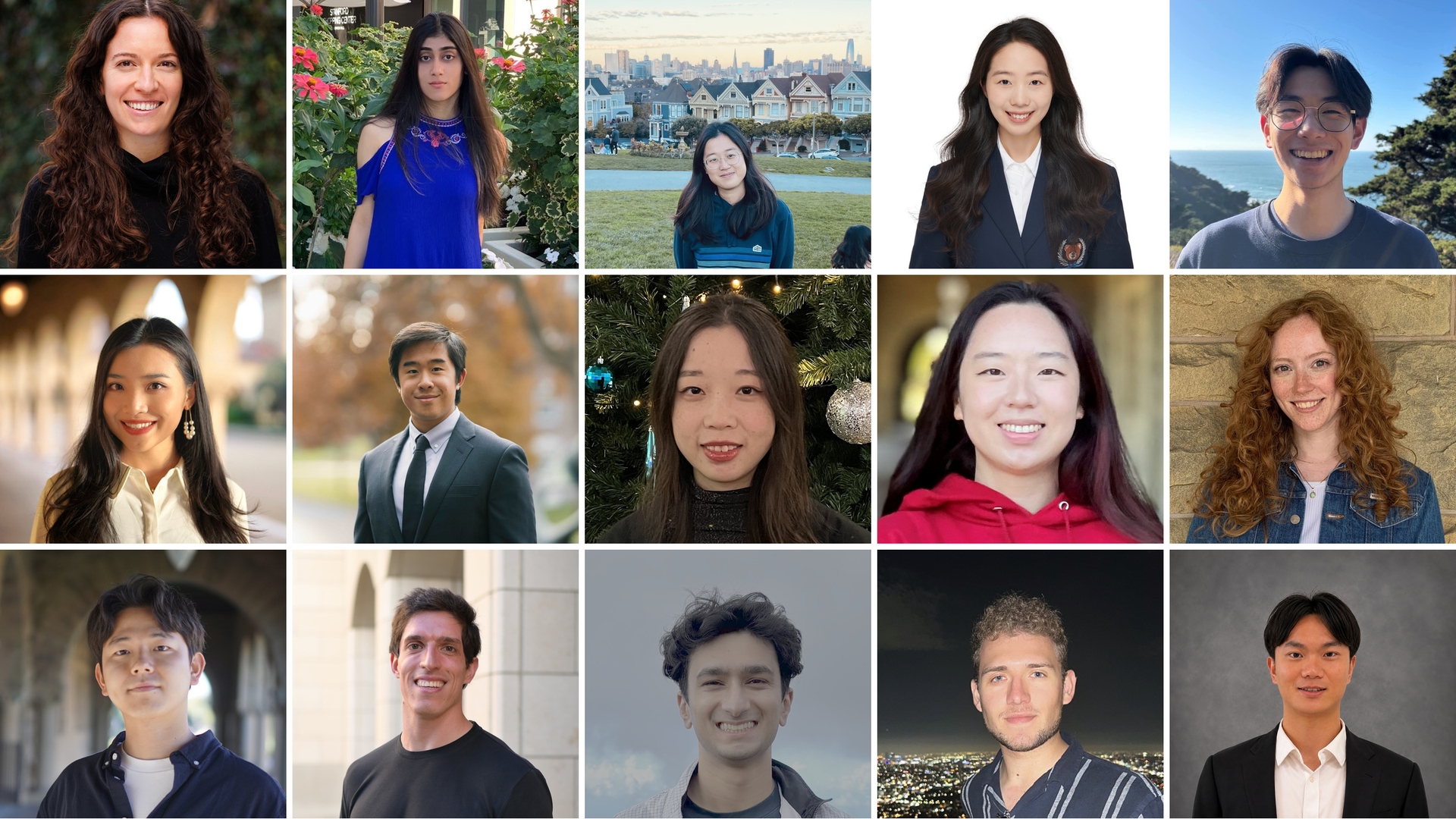
The two-year fellowship supports PhD researchers across law, medicine, physics, statistics, education, and engineering.

Benchmarks — the standardized tests that rank AI models on safety, bias, and reasoning — drive markets and shape regulation. New Stanford research finds they often don't measure what they claim to.

Benchmarks — the standardized tests that rank AI models on safety, bias, and reasoning — drive markets and shape regulation. New Stanford research finds they often don't measure what they claim to.

In a new series called Prompt Response, Stanford’s Surya Ganguli, Diyi Yang and Rob Reich examined emergent agent behavior, recursive self-improvement, independent evaluation and whether a kill switch can make advanced AI safer.

In a new series called Prompt Response, Stanford’s Surya Ganguli, Diyi Yang and Rob Reich examined emergent agent behavior, recursive self-improvement, independent evaluation and whether a kill switch can make advanced AI safer.