Stanford Scientists Build an AI Lab Partner
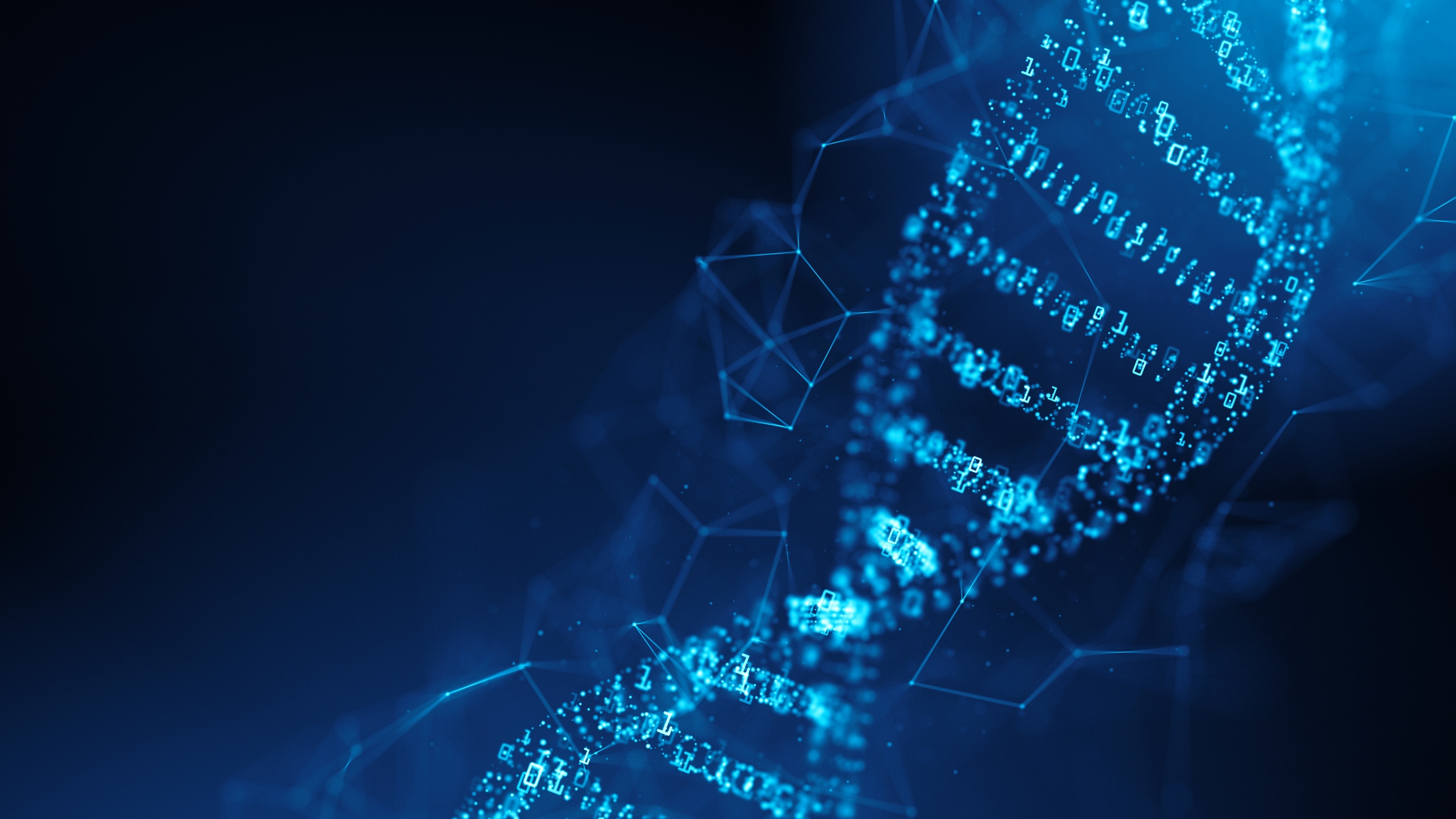
Biomni can analyze mountains of medical data, spot patterns humans might miss, and even design experiments—helping researchers make discoveries faster in the race to cure disease.
For many scientists who study biology and medicine, breakthroughs depend on complex lab experiments, massive datasets, and a growing number of specialized software tools. This work often involves repetitive tasks and fragmented procedures that slow progress.
A team of Stanford scholars saw a way to accelerate biomedical discovery by creating a virtual AI biologist that operates alongside human scientists. Funded in part by a Stanford HAI Hoffman-Yee Research Grant, the team built Biomni, a general-purpose biomedical AI agent that can execute a wide range of biomedical research tasks.
The open-source project incorporates expertise from the Stanford departments of Computer Science, Genetics, Pathology, Medicine, and Pediatrics – as well as contributions from Genentech, Arc Institute, the University of Washington, and the University of California, San Francisco.
“Today, we have abundant biomedical data, but we don’t have enough human researchers to analyze it all,” says Kexin Huang, a former Stanford PhD candidate and one of the co-creators of Biomni. “While human biologists are limited by specialized expertise, AI can integrate across disciplines and manage thousands of concurrent tasks.”
A Superpower for Human Scientists
Biomni is a cloud-based platform that consists of two main components: a virtual work environment, where all actions related to a research task are handled, and an agentic architecture that enables the AI biologist to perform new tasks that it hasn’t encountered before without additional training. The platform combines large language models with more than 150 specialized bioinformatics tools; 59 curated databases containing protein structures, genomic variants, and literature repositories; and more than 100 software packages for molecular modeling, single-cell analysis, and the like.
To collaborate with Biomni, the scientist enters a query into the agent’s chat window. For example, the user might begin with an open-ended request, such as: “Analyze the attached Perturb-seq data and generate a meaningful hypothesis.” The agent begins by finding the most relevant tools needed to complete the task. Next, it applies LLM-based reasoning and its understanding of the biomedical field to formulate a plan. The scientist can review the plan and monitor Biomni’s activity each step of the way, as it analyzes data or runs an experiment, intervening at any time to course-correct.
“Biomni is a real partner in biomedical research,” says Jure Leskovec, professor of computer science at Stanford and Biomni co-creator. “You give the agent a task, and it writes Python code to use the advanced models and tools. From there, the assignment becomes a digital conversation that’s fully documented and auditable. Scientists no longer have to worry about losing the history of their work in notebooks and Excel spreadsheets.”
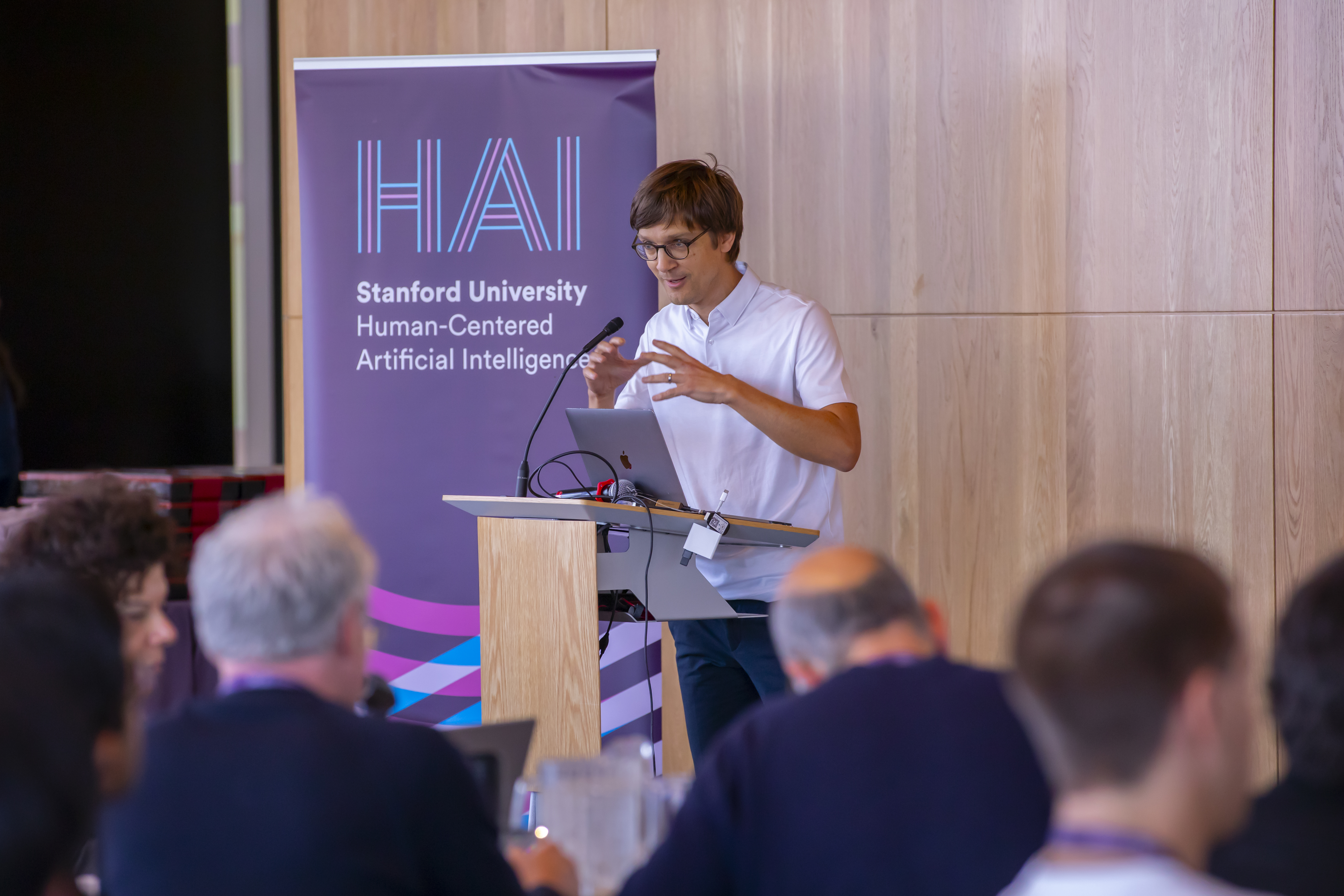 Jure Leskovec, Biomni co-creator and a Stanford professor of computer scientist.
High Performance Across Complex Tasks
In Biomni’s first nine months as an open-source Stanford project, more than 15,000 scientists asked the AI research assistant to automate 100,000 different scientific workflows, such as formulating testable hypotheses, performing complex bioinformatics analyses, and designing rigorous experimental protocols.
In its initial testing, Biomni excelled on established Q&A benchmarks for biomedical knowledge and reasoning. It also performed well on eight challenging, realistic scenarios never encountered during development, indicating it can generalize across domains without task-specific training.
Biomni’s creators highlight several case studies to demonstrate its potential. In the first situation, a researcher instructed Biomni to analyze 458 Excel files containing data from 30 participants who wore continuous glucose monitors for several months. The researcher then posed an open-ended question: “Can we uncover biologically meaningful thermogenic patterns?” Biomni autonomously generated and executed a 10-step analysis plan. It inferred meal events from glucose spikes and extracted pre- and post-meal body temperature readings, presenting the results in a structured, readable report that detailed individual data and teased out population-level trends.
In other case studies, Biomni rapidly analyzed massive raw datasets containing genomic sequences to generate novel insights and designed laboratory protocols to assist wet-lab researchers.
“Across each of these use cases, Biomni accelerated the path from messy real-world data to testable hypotheses, and supported applications in domains as diverse as metabolic research and precision health,” Huang says.
Although Biomni approaches human-level performance in some tasks, such as database querying, sequence analysis, and molecular cloning, the scholars note it still struggles in areas that require nuanced clinical judgment, novel experimental reasons, or deep biological thinking and synthesis. It also doesn’t cover every field.
Even so, Biomni has set the stage for an era when virtual AI biologists will work alongside human researchers to accelerate biomedical discovery. In September 2025, the team spun Biomni out of the Stanford AI Lab and into the commercial world, with a seed round of venture funding. Huang now leads the startup, called Phylo, while Leskovec remains involved as scientific co-founder. The original public platform has migrated to the new entity as Biomni Lab, with an Academic Lab Program available to universities. The codebase remains fully open source.
“With Biomni, we envision a future where virtual AI biologists operate alongside and augment human scientists to dramatically enhance research productivity, clinical insight, and healthcare,” says Leskovec. “It’s an exciting time for scientific discovery.”
Read more:
Benchmarking AI scientists for omics data–driven biological discovery
The Integrated Biology Environment: A New Way Biologists Work
Leskovec is the inaugural Alfred and Rebecca Lin Professor in the School of Engineering.
Related News

New AI tools generate hypotheses, design experiments, and find patterns in data—transforming how scientists make discoveries across every field.

New AI tools generate hypotheses, design experiments, and find patterns in data—transforming how scientists make discoveries across every field.
PsychAdapter lets researchers dial in on personality traits, age, and mental health characteristics to generate text that sounds like real individuals, opening the door to training simulations and personalized content.
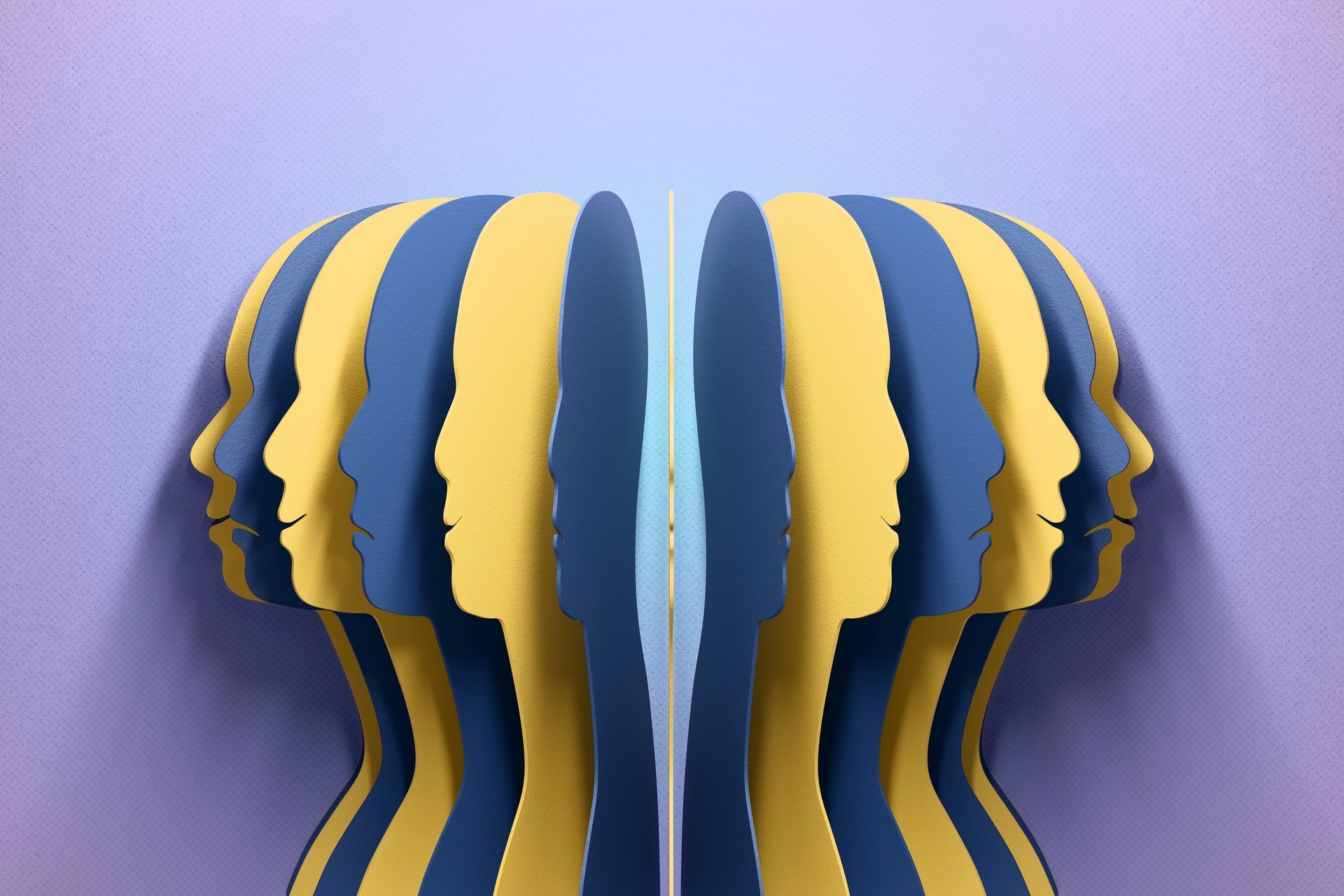
PsychAdapter lets researchers dial in on personality traits, age, and mental health characteristics to generate text that sounds like real individuals, opening the door to training simulations and personalized content.

From designing new antibodies to simulating 1,000 years of climate in a day, AI is transforming what's possible—but humans remain the ones deciding what matters.
From designing new antibodies to simulating 1,000 years of climate in a day, AI is transforming what's possible—but humans remain the ones deciding what matters.