The MUSK model combines clinical notes and images to predict prognosis and immunotherapy response.

The MUSK model combines clinical notes and images to predict prognosis and immunotherapy response.

The prevailing public mindset that AI is only a labor-saving tool betrays a lack of understanding of why people create and a lack of imagination of this technology's potential.

The prevailing public mindset that AI is only a labor-saving tool betrays a lack of understanding of why people create and a lack of imagination of this technology's potential.
AI Agents Simulate 1,052 Individuals’ Personalities with Impressive Accuracy

Scholars hope these generative agents based on real-life interviews can solve society’s toughest problems.
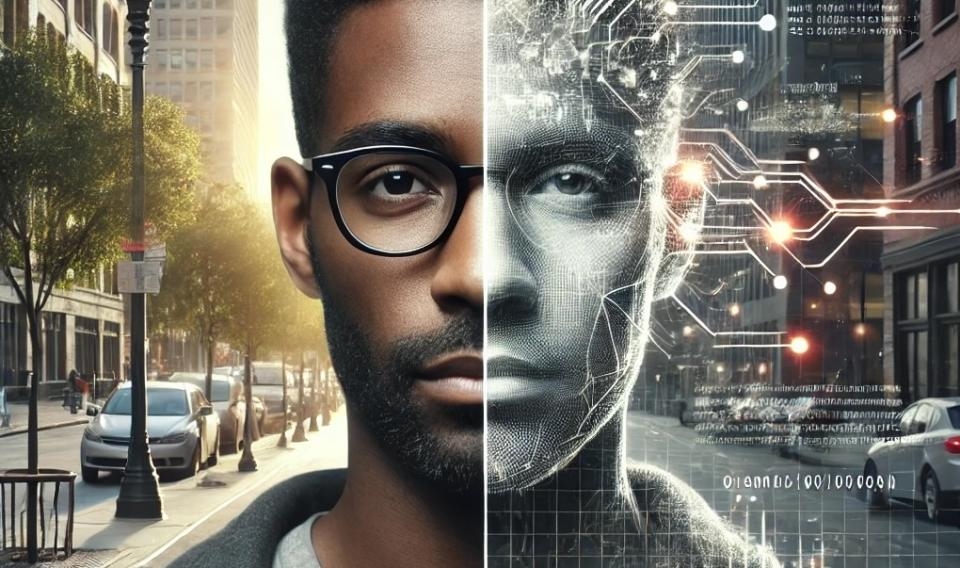
Scholars hope these generative agents based on real-life interviews can solve society’s toughest problems.
NVIDIA’s Yejin Choi Joins Stanford HAI
The MacArthur Fellow and leader in common sense AI will continue her groundbreaking research at Stanford HAI.
The MacArthur Fellow and leader in common sense AI will continue her groundbreaking research at Stanford HAI.

Stanford HAI’s new Senior Fellow will study common sense AI and moving from large language models to small language models.

Stanford HAI’s new Senior Fellow will study common sense AI and moving from large language models to small language models.
Empowering Policymakers: Stanford HAI Trains Public Sector at Every Level

Stanford HAI has built a major portfolio of education opportunities for state, federal, and international policy leaders to strengthen AI governance.

Stanford HAI has built a major portfolio of education opportunities for state, federal, and international policy leaders to strengthen AI governance.
Large Language Models Just Want To Be Liked
-as-a-glowing-digital-entity-on-a-computer-screen.-the-llm-is-surrounded-by-a-few-heart-copy.jpg&w=256&q=80)
When LLMs take surveys on personality traits, they, like people, exhibit a desire to appear likable.
-as-a-glowing-digital-entity-on-a-computer-screen.-the-llm-is-surrounded-by-a-few-heart-copy.jpg&w=1920&q=100)
When LLMs take surveys on personality traits, they, like people, exhibit a desire to appear likable.
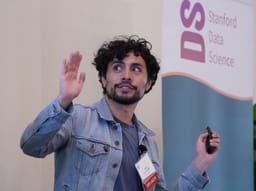

Stanford's Michael Rau combines human creativity and artificial intelligence to add new dimensions to storytelling and stagecraft.

Stanford's Michael Rau combines human creativity and artificial intelligence to add new dimensions to storytelling and stagecraft.

Leading Stanford faculty offer their expectations for artificial intelligence in the new year.

Leading Stanford faculty offer their expectations for artificial intelligence in the new year.
Update from the Co-Leads of the Joint California Policy Working Group on AI Frontier Models

Stanford’s Vocal Sandbox brings us closer to robots that can adapt, learn, and assist in real time.

Stanford’s Vocal Sandbox brings us closer to robots that can adapt, learn, and assist in real time.

Our scholars’ research examined AI in healthcare, law, and mental health, and highlighted the need for better oversight and regulation.

Our scholars’ research examined AI in healthcare, law, and mental health, and highlighted the need for better oversight and regulation.


Making AI Work for Health Care: Stanford’s Framework Evaluates Impact

As hospitals rapidly adopt artificial intelligence technologies, open-source guardrails can help better determine whether a tool is ethical, useful, and realistic for their systems.

As hospitals rapidly adopt artificial intelligence technologies, open-source guardrails can help better determine whether a tool is ethical, useful, and realistic for their systems.

From patents to private funding, Stanford’s Global Vibrancy Tool aggregates 42 indicators to reveal which countries lead in AI – and why the U.S. holds a significant edge over other nations.

From patents to private funding, Stanford’s Global Vibrancy Tool aggregates 42 indicators to reveal which countries lead in AI – and why the U.S. holds a significant edge over other nations.