Michelle M. Mello's Testimony Before the U.S. House Committee on Energy and Commerce Health Subcommittee
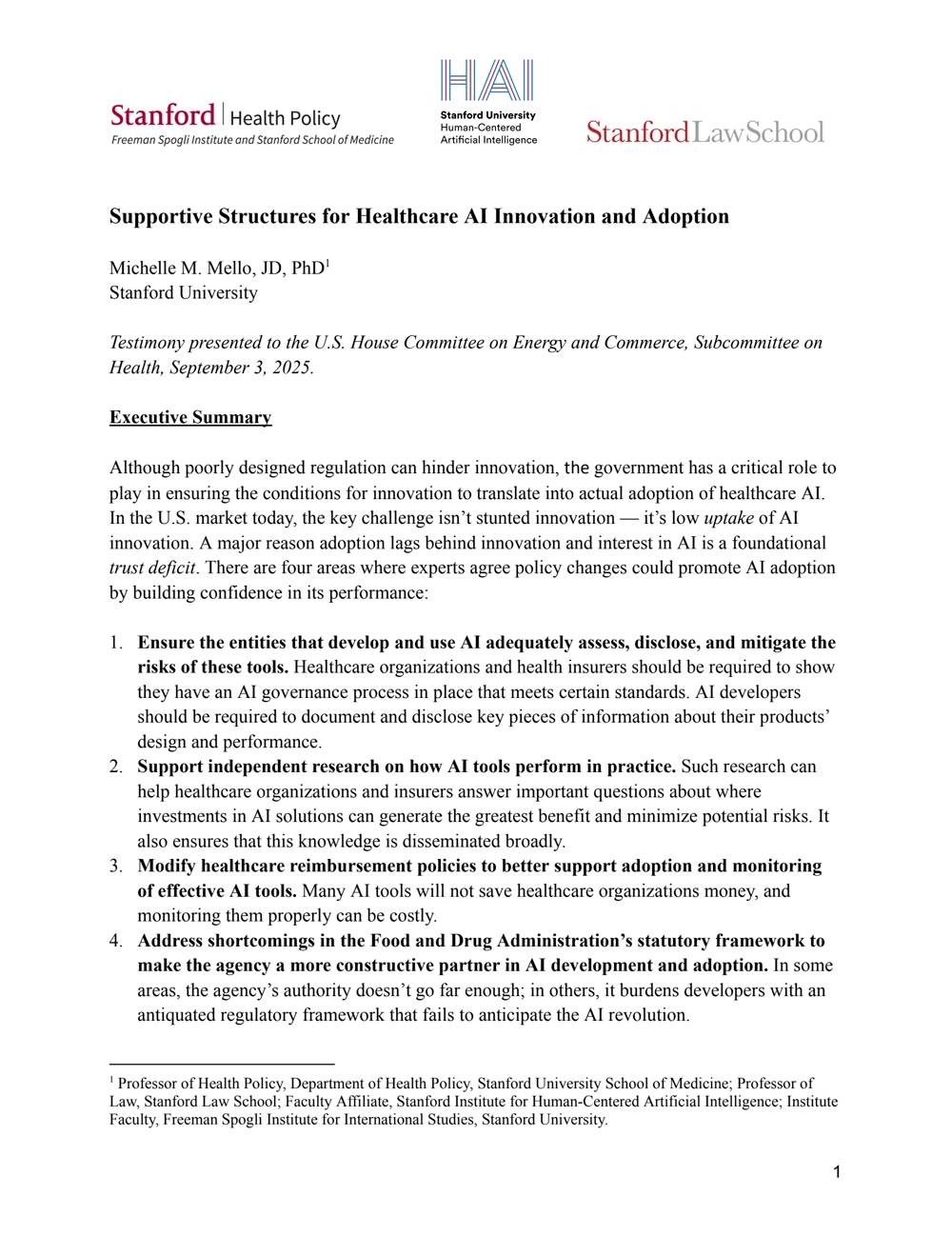
In this testimony presented to the U.S. House Committee on Energy and Commerce’s Subcommittee on Health hearing titled “Examining Opportunities to Advance American Health Care through the Use of Artificial Intelligence Technologies,” Michelle M. Mello calls for policy changes that will promote effective integration of AI tools into healthcare by strengthening trust.
In collaboration with


Executive Summary
Although poorly designed regulation can hinder innovation, the government has a critical role to play in ensuring the conditions for innovation to translate into actual adoption of healthcare AI. In the U.S. market today, the key challenge isn’t stunted innovation — it’s low uptake of AI innovation. A major reason adoption lags behind innovation and interest in AI is a foundational trust deficit. There are four areas where experts agree policy changes could promote AI adoption by building confidence in its performance:
Ensure the entities that develop and use AI adequately assess, disclose, and mitigate the risks of these tools. Healthcare organizations and health insurers should be required to show they have an AI governance process in place that meets certain standards. AI developers should be required to document and disclose key pieces of information about their products’ design and performance.
Support independent research on how AI tools perform in practice. Such research can help healthcare organizations and insurers answer important questions about where investments in AI solutions can generate the greatest benefit and minimize potential risks. It also ensures that this knowledge is disseminated broadly.
Modify healthcare reimbursement policies to better support adoption and monitoring of effective AI tools. Many AI tools will not save healthcare organizations money, and monitoring them properly can be costly.
Address shortcomings in the Food and Drug Administration’s statutory framework to make the agency a more constructive partner in AI development and adoption. In some areas, the agency’s authority doesn’t go far enough; in others, it burdens developers with an antiquated regulatory framework that fails to anticipate the AI revolution.
A recording of Michelle M. Mello's testimony and the full committee hearing is available on YouTube.
Related Publications
Response to FDA’s Request for Feedback on Considerations for the Regulation of GenAI-Enabled Medical Devices
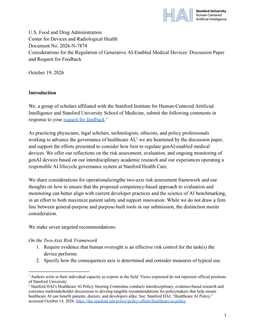
Stanford scholars respond to a federal request for feedback, offering policy recommendations for the regulation of generative AI-enabled medical devices.
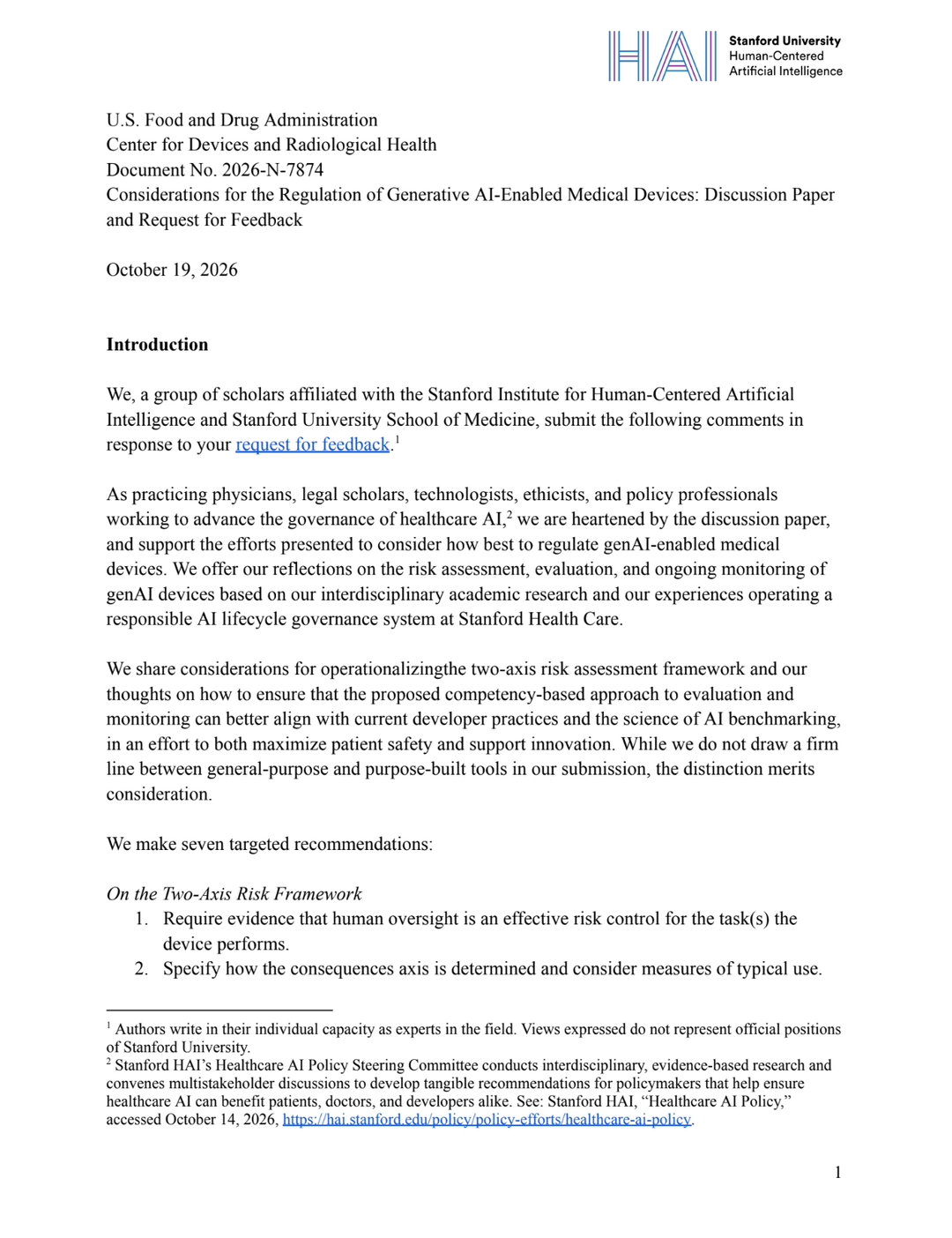
Stanford scholars respond to a federal request for feedback, offering policy recommendations for the regulation of generative AI-enabled medical devices.
Implementing the Transparency in Frontier AI Act Report for the California Department of Technology Multistakeholder Workshops
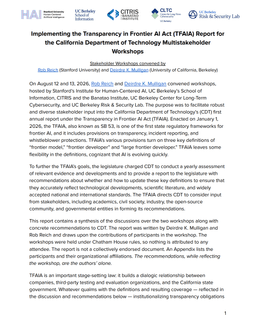
In this paper, HAI Associate Director and Senior Fellow Rob Reich and UC Berkeley School of Information Professor Deirdre K. Mulligan provide concrete recommendations to the California Department of Technology on the implementation of its frontier AI transparency requirements.
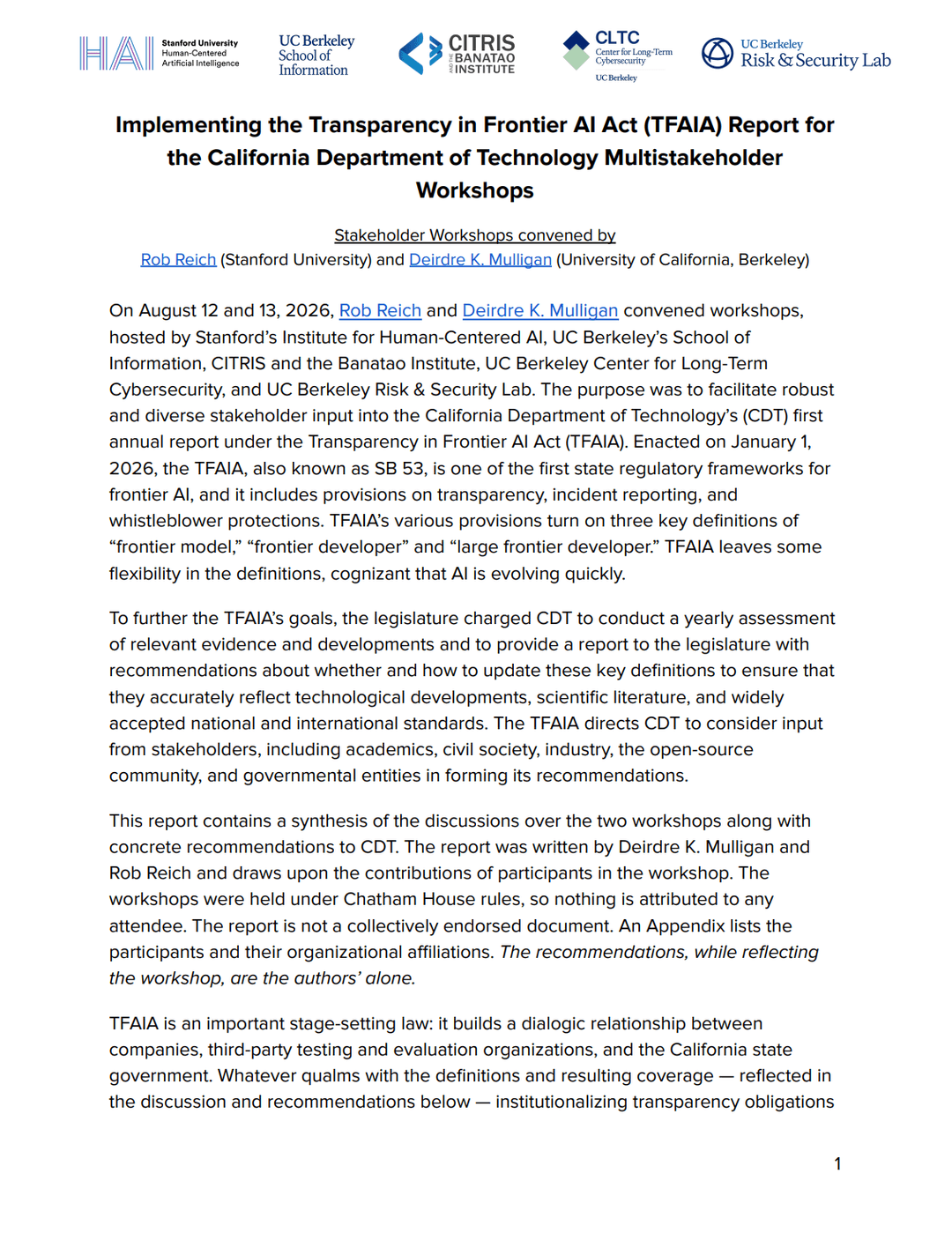
In this paper, HAI Associate Director and Senior Fellow Rob Reich and UC Berkeley School of Information Professor Deirdre K. Mulligan provide concrete recommendations to the California Department of Technology on the implementation of its frontier AI transparency requirements.
Designing Loyalty: AI Agents and Conflicts of Interest
This brief examines the conflict-of-interest risks posed by AI agents and calls for imposing a duty of loyalty on developers and deployers.
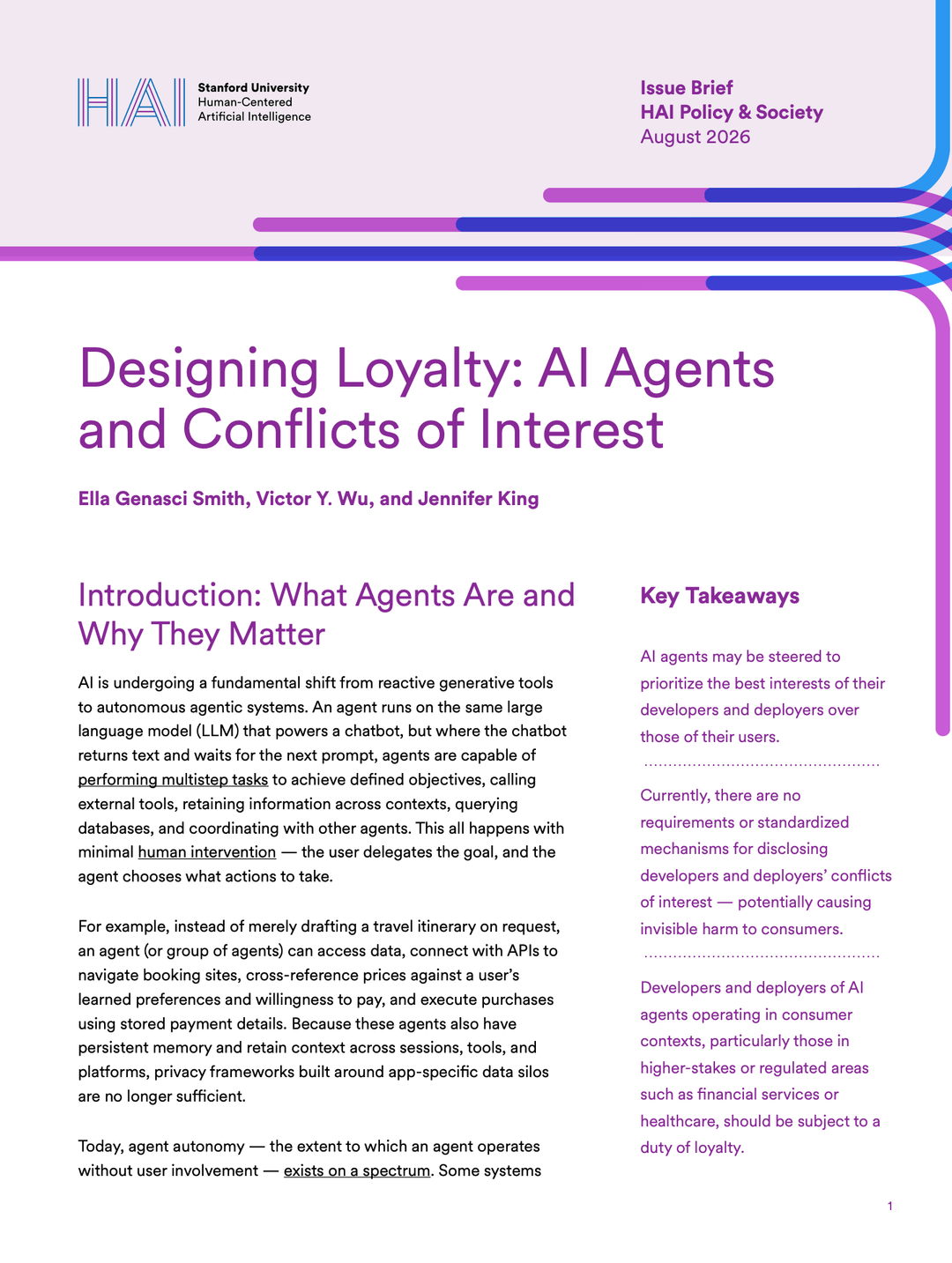
This brief examines the conflict-of-interest risks posed by AI agents and calls for imposing a duty of loyalty on developers and deployers.
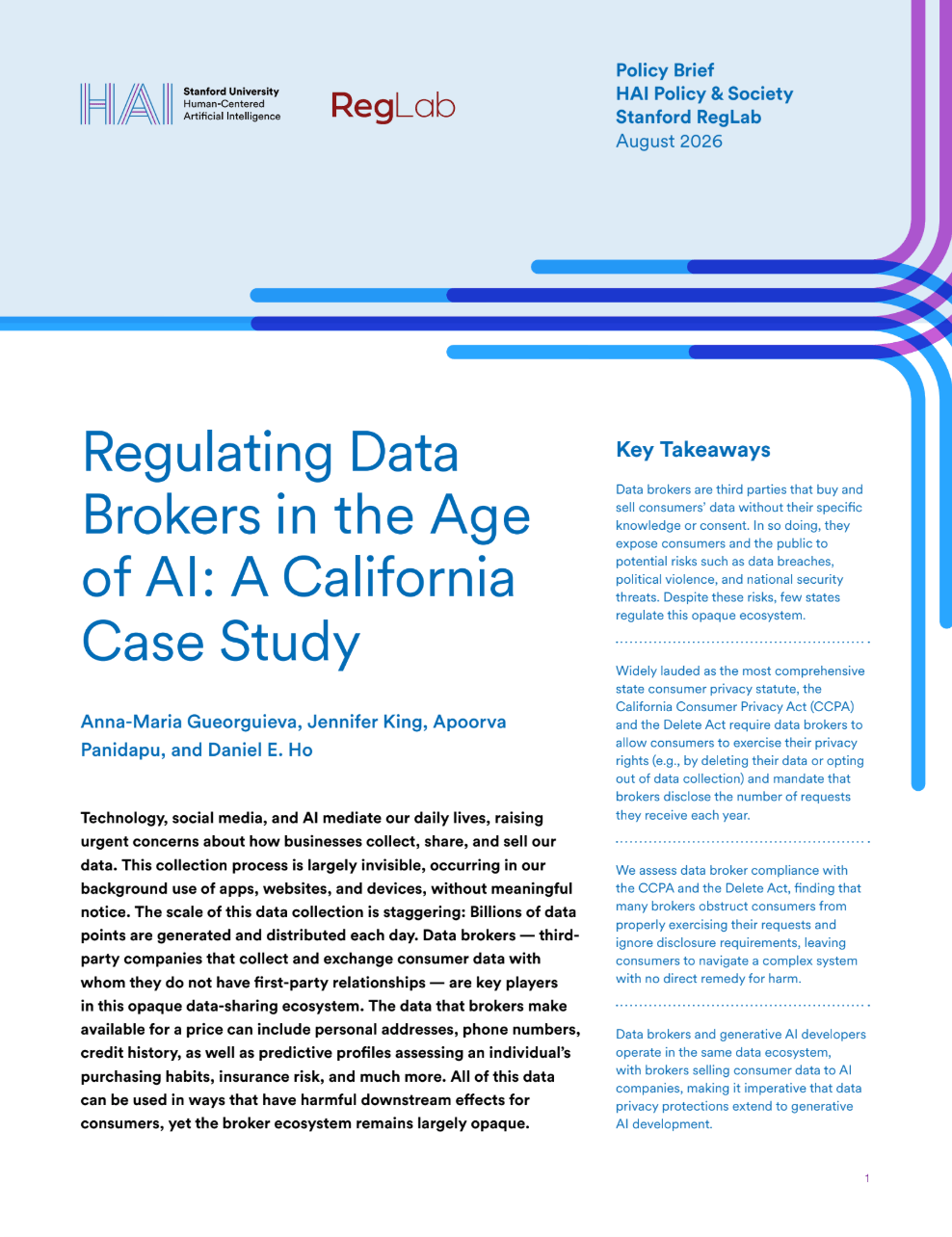
Regulating Data Brokers in the Age of AI: A California Case Study
This brief assesses data broker compliance with California privacy laws and calls for more stringent consumer protections.
This brief assesses data broker compliance with California privacy laws and calls for more stringent consumer protections.