Russ Altman’s Testimony Before the U.S. Senate Committee on Health, Education, Labor, and Pensions
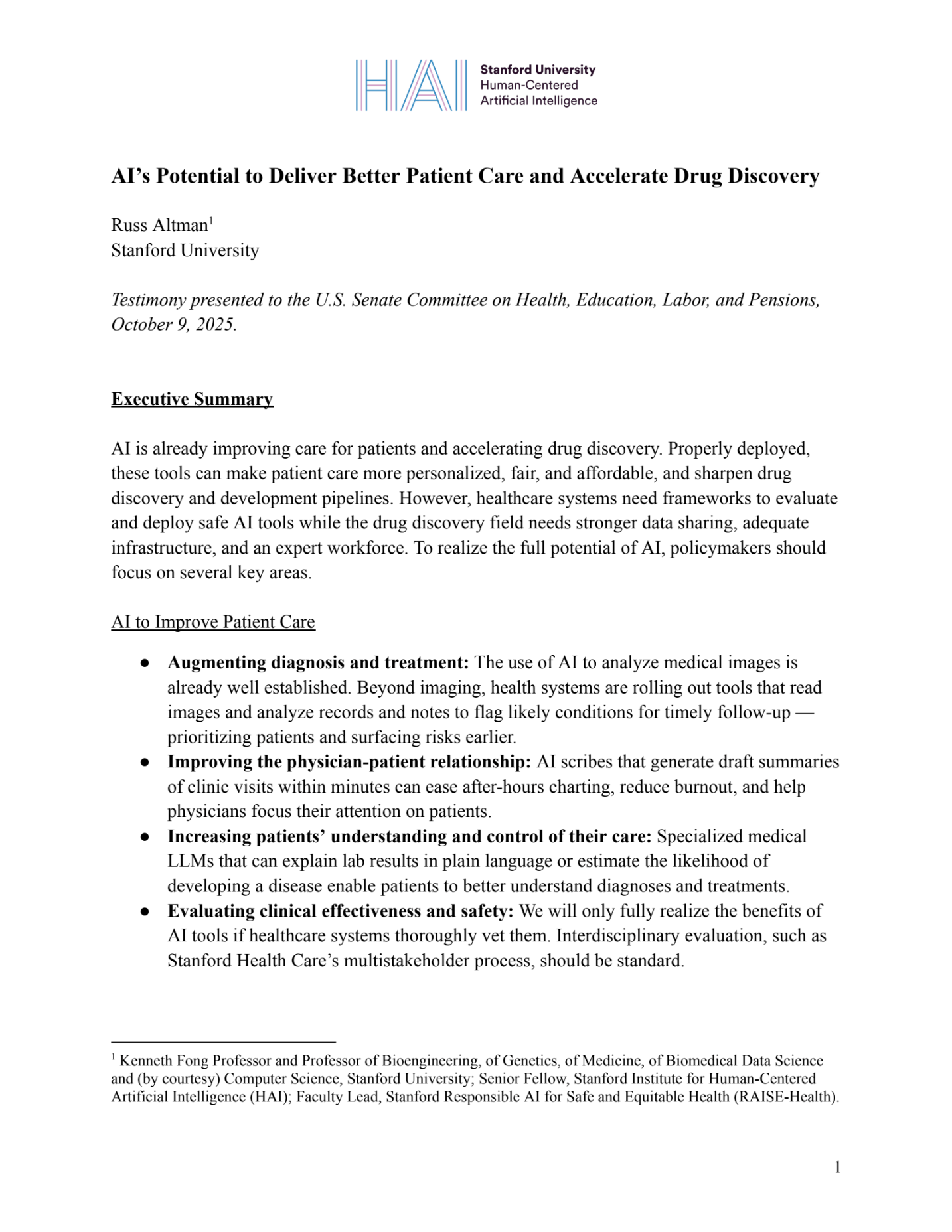
In this testimony presented to the U.S. Senate Committee on Health, Education, Labor, and Pensions hearing titled “AI’s Potential to Support Patients, Workers, Children, and Families,” Russ Altman highlights opportunities for congressional support to make AI applications for patient care and drug discovery stronger, safer, and human-centered.
Executive Summary
AI is already improving care for patients and accelerating drug discovery. Properly deployed, these tools can make patient care more personalized, fair, and affordable, and sharpen drug discovery and development pipelines. However, healthcare systems need frameworks to evaluate and deploy safe AI tools while the drug discovery field needs stronger data sharing, adequate infrastructure, and an expert workforce. To realize the full potential of AI, policymakers should focus on several key areas.
AI to Improve Patient Care
Augmenting diagnosis and treatment: The use of AI to analyze medical images is already well established. Beyond imaging, health systems are rolling out tools that read images and analyze records and notes to flag likely conditions for timely follow-up — prioritizing patients and surfacing risks earlier.
Improving the physician-patient relationship: AI scribes that generate draft summaries of clinic visits within minutes can ease after-hours charting, reduce burnout, and help physicians focus their attention on patients.
Increasing patients’ understanding and control of their care: Specialized medical LLMs that can explain lab results in plain language or estimate the likelihood of developing a disease enable patients to better understand diagnoses and treatments.
Evaluating clinical effectiveness and safety: We will only fully realize the benefits of AI tools if healthcare systems thoroughly vet them. Interdisciplinary evaluation, such as Stanford Health Care’s multistakeholder process, should be standard.
AI to Accelerate Drug Discovery
Improving privacy-preserving data collection and sharing: Incentivizing hospitals nationwide to contribute secure, de-identified datasets would improve generalizability while protecting patients.
Investing in public computational infrastructure and research capacity: Ensuring that government and academic scientists have adequate resources to build biomedical AI tools and pursue curiosity-driven research is critical to maintaining America’s leadership in life-saving therapeutic innovation.
Strengthening regulatory evaluation capacity: The FDA needs expertise to assess the novel ways drugs are developed with AI assistance. Academic partnerships offer one way for the FDA to obtain this specialized knowledge and expertise.
Developing an interdisciplinary workforce: Training programs for biologists, clinicians, and computer scientists to validate and audit AI-generated predictions will be crucial to ensuring that AI augments human expertise rather than replaces it.
Related Publications
Response to FDA’s Request for Feedback on Considerations for the Regulation of GenAI-Enabled Medical Devices
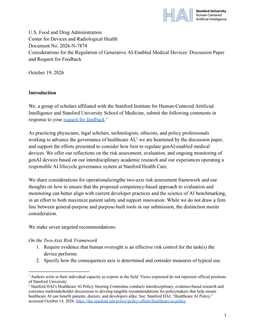
Stanford scholars respond to a federal request for feedback, offering policy recommendations for the regulation of generative AI-enabled medical devices.
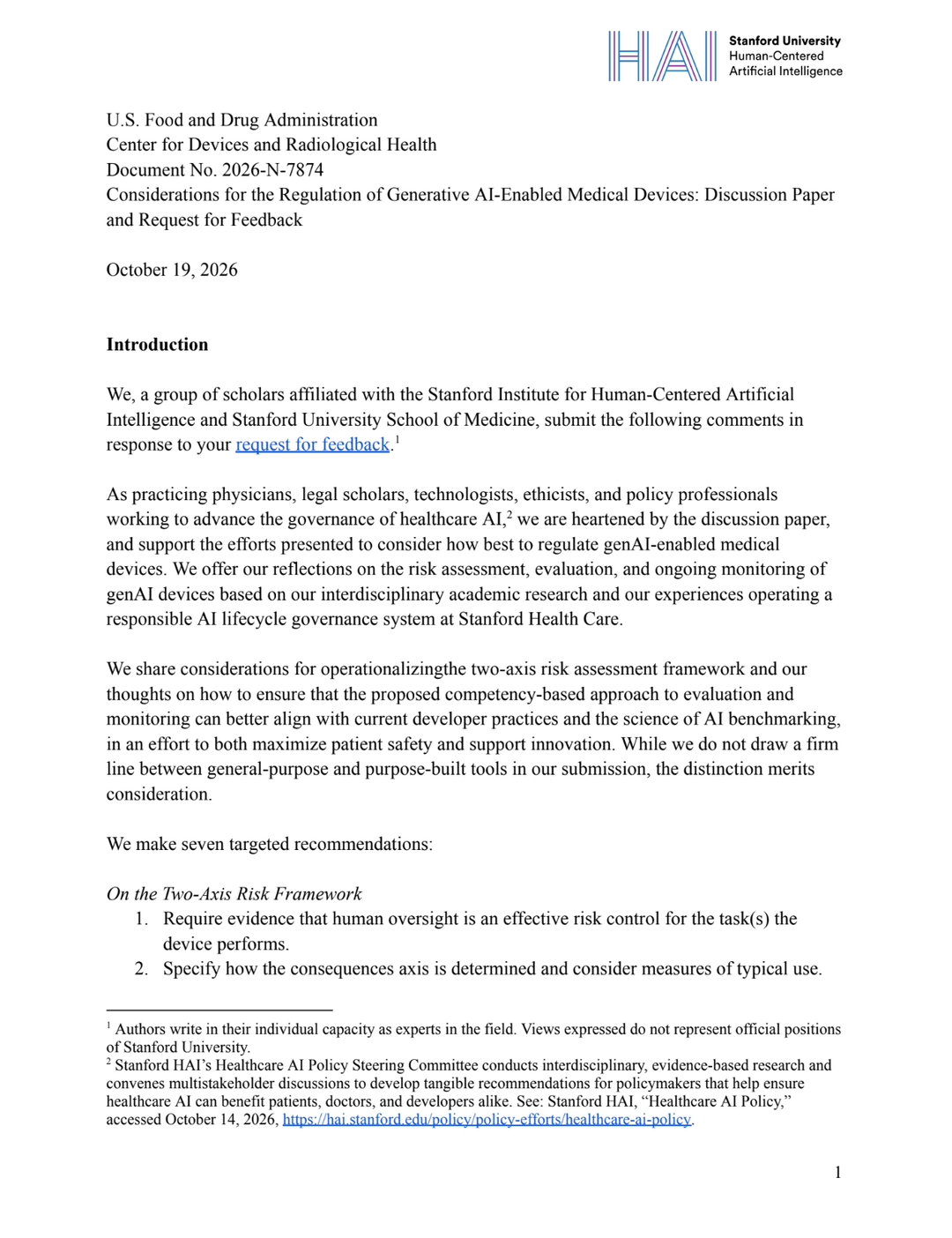
Stanford scholars respond to a federal request for feedback, offering policy recommendations for the regulation of generative AI-enabled medical devices.
Implementing the Transparency in Frontier AI Act Report for the California Department of Technology Multistakeholder Workshops
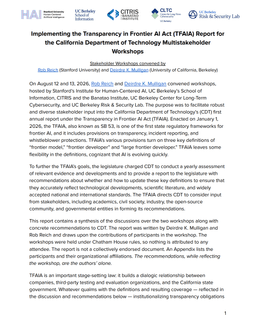
In this paper, HAI Associate Director and Senior Fellow Rob Reich and UC Berkeley School of Information Professor Deirdre K. Mulligan provide concrete recommendations to the California Department of Technology on the implementation of its frontier AI transparency requirements.
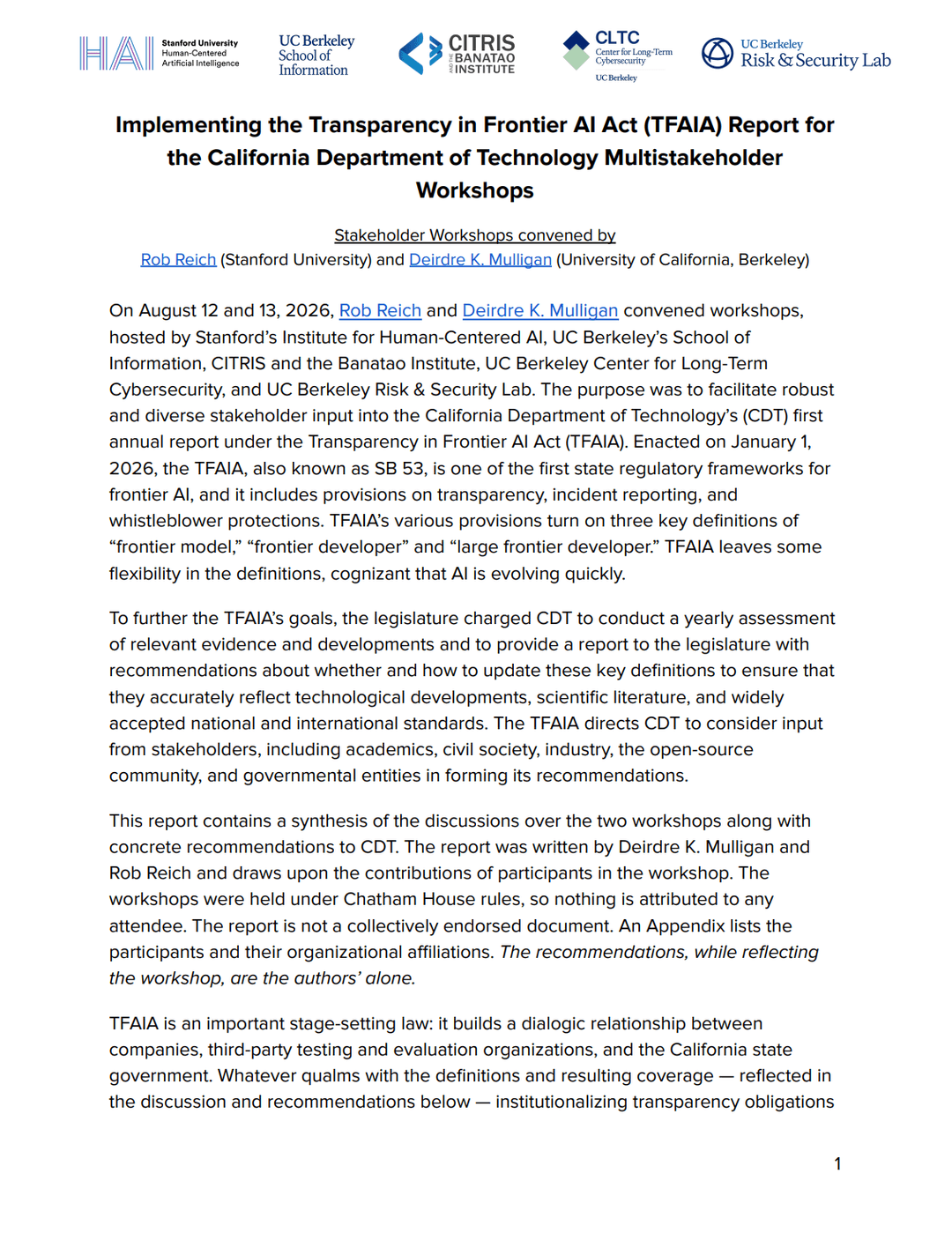
In this paper, HAI Associate Director and Senior Fellow Rob Reich and UC Berkeley School of Information Professor Deirdre K. Mulligan provide concrete recommendations to the California Department of Technology on the implementation of its frontier AI transparency requirements.
Designing Loyalty: AI Agents and Conflicts of Interest
This brief examines the conflict-of-interest risks posed by AI agents and calls for imposing a duty of loyalty on developers and deployers.
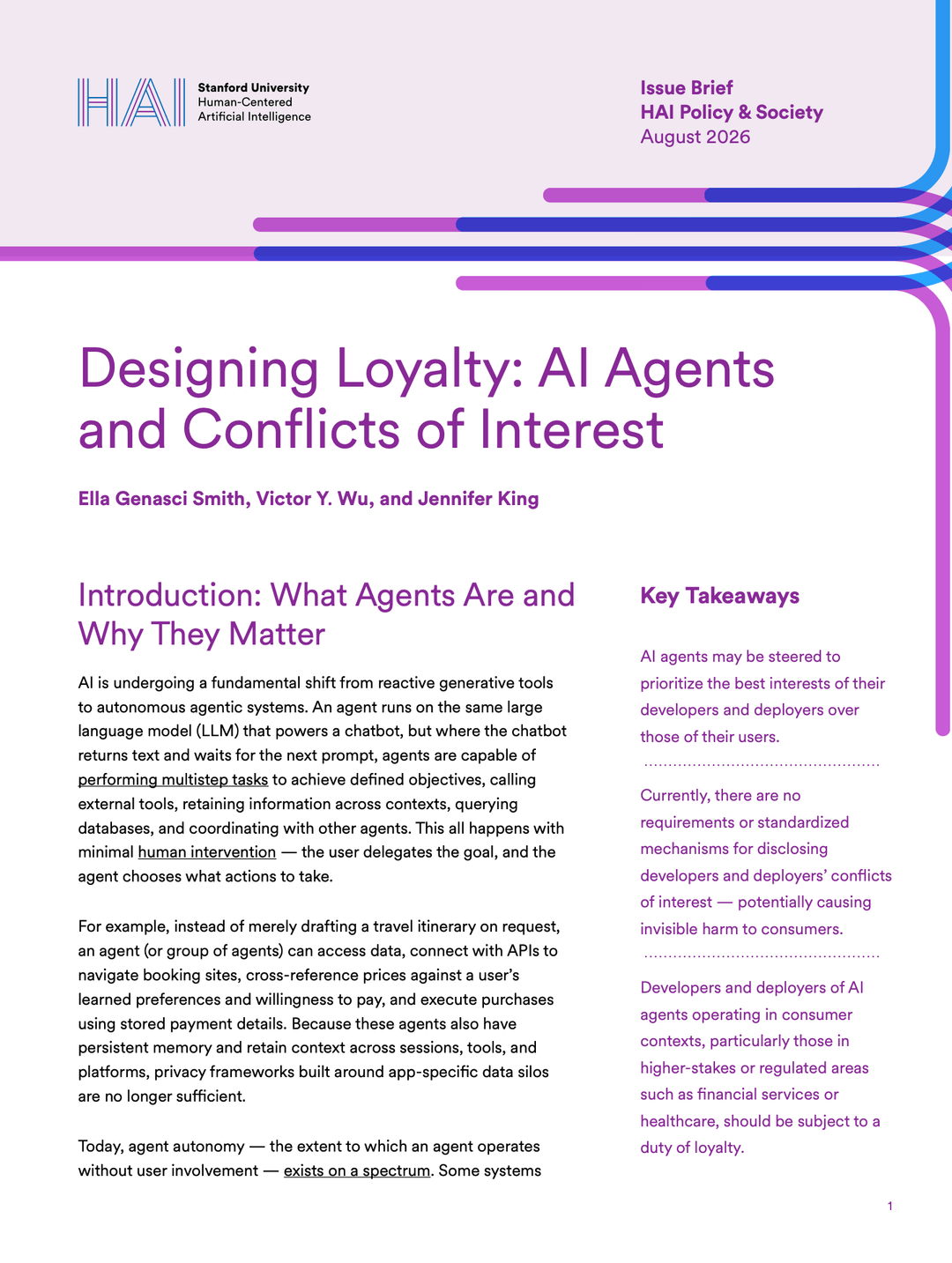
This brief examines the conflict-of-interest risks posed by AI agents and calls for imposing a duty of loyalty on developers and deployers.
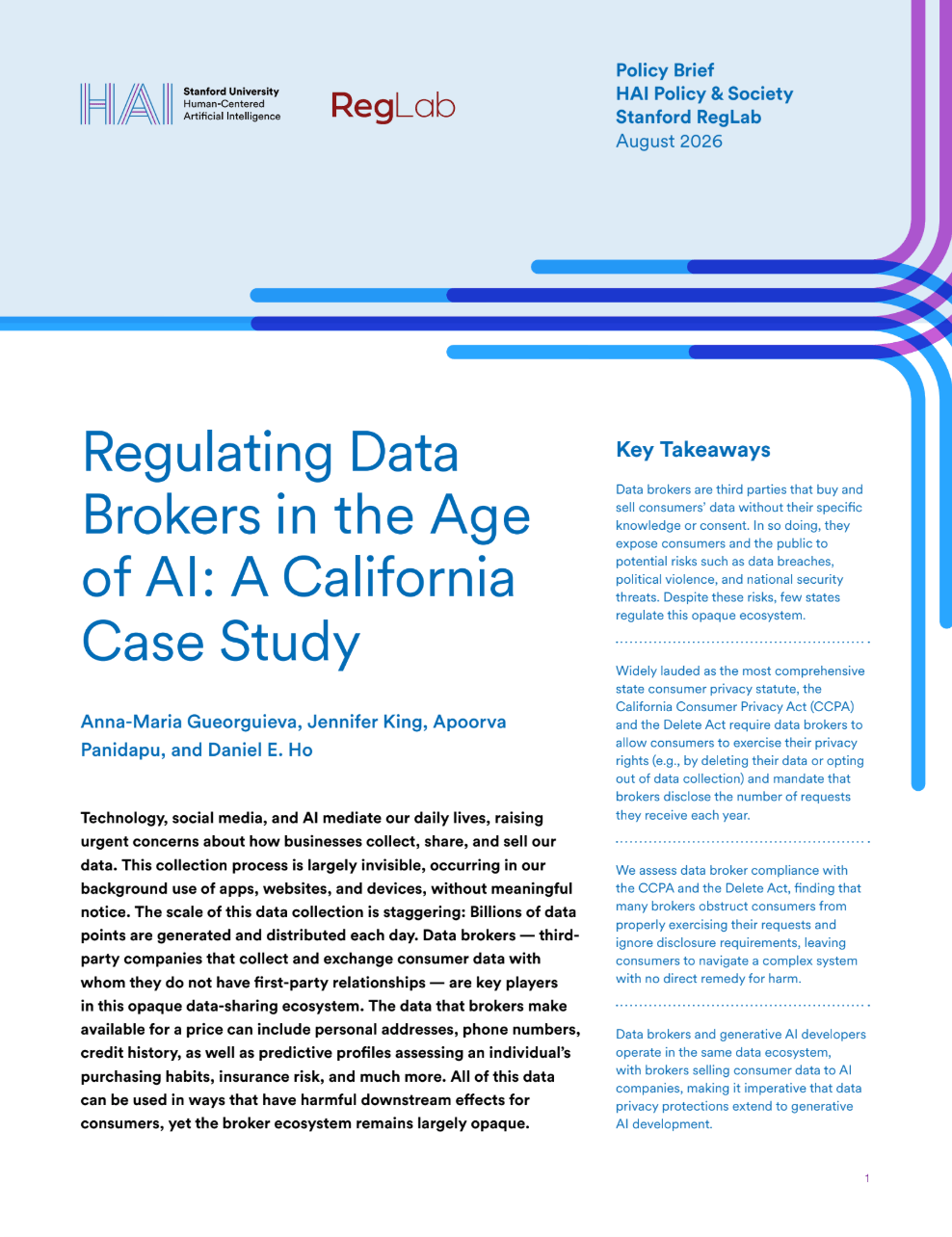
Regulating Data Brokers in the Age of AI: A California Case Study
This brief assesses data broker compliance with California privacy laws and calls for more stringent consumer protections.
This brief assesses data broker compliance with California privacy laws and calls for more stringent consumer protections.