Stanford HAI Artificial Intelligence Bill of Rights
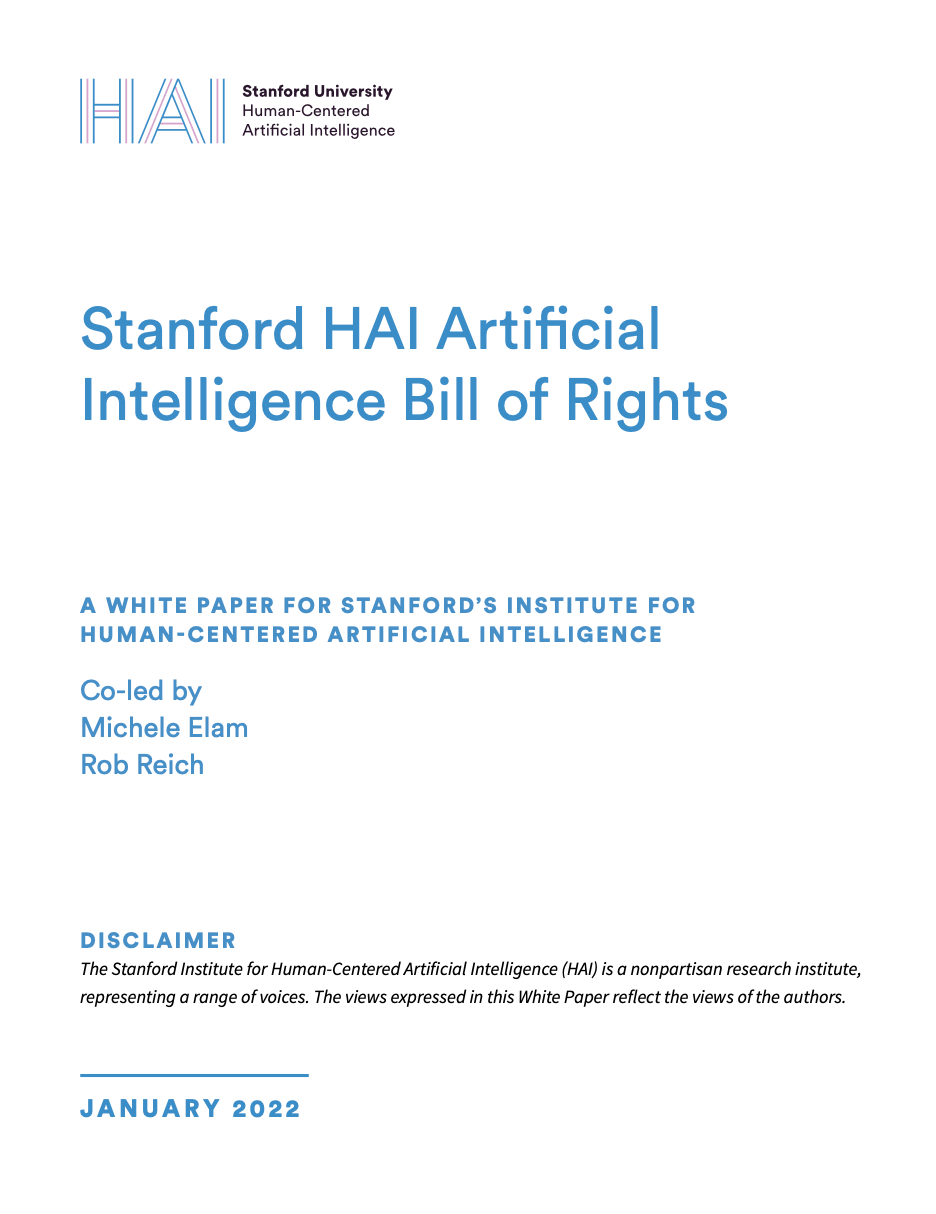
Stanford scholars respond to a federal RFI regarding public and private sector uses of biometric technologies, proposing six principles for the responsible use of biometrics and AI.
Executive Summary
In this response to a request for information by the White House Office of Science and Technology (OSTP) on public and private sector uses of biometric technologies, Stanford HAI scholars examine the uses of biometric technologies while also taking the implications of broader AI technologies into consideration. They argue that biometrics and AI are uniquely intertwined and that we must understand both the full impacts of AI and how the biometric paradigm disproportionately affects marginalized groups and exacerbates inequities. They propose a set of six principles:
Ensuring AI-powered biometric systems are developed and deployed in a manner that supports fundamental democratic values with respect to the rule of law, basic civil liberties, and universal human rights.
Safeguarding fairness and rights to nondiscrimination.
Ensuring transparency and explainability during development and due process rights in application.
Strengthening participation of civil society organizations in important AI use and governance conversations.
Embedding accountability measures into system design.
Enhancing citizen education in relation to AI and its impacts.
Related Publications
Response to FDA’s Request for Feedback on Considerations for the Regulation of GenAI-Enabled Medical Devices
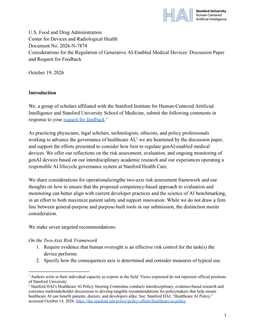
Stanford scholars respond to a federal request for feedback, offering policy recommendations for the regulation of generative AI-enabled medical devices.
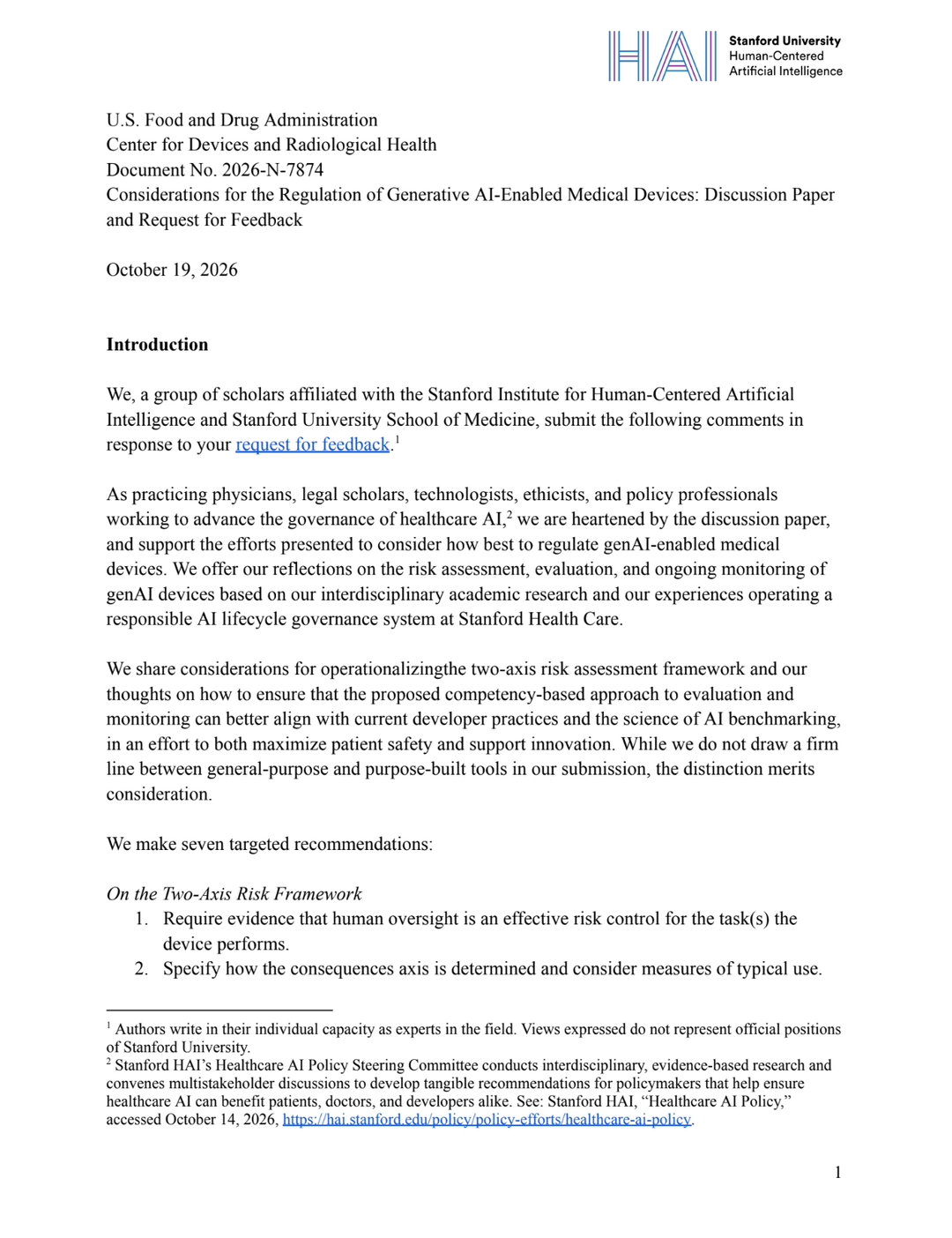
Stanford scholars respond to a federal request for feedback, offering policy recommendations for the regulation of generative AI-enabled medical devices.
Implementing the Transparency in Frontier AI Act Report for the California Department of Technology Multistakeholder Workshops
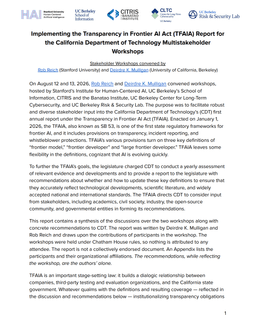
In this paper, HAI Associate Director and Senior Fellow Rob Reich and UC Berkeley School of Information Professor Deirdre K. Mulligan provide concrete recommendations to the California Department of Technology on the implementation of its frontier AI transparency requirements.
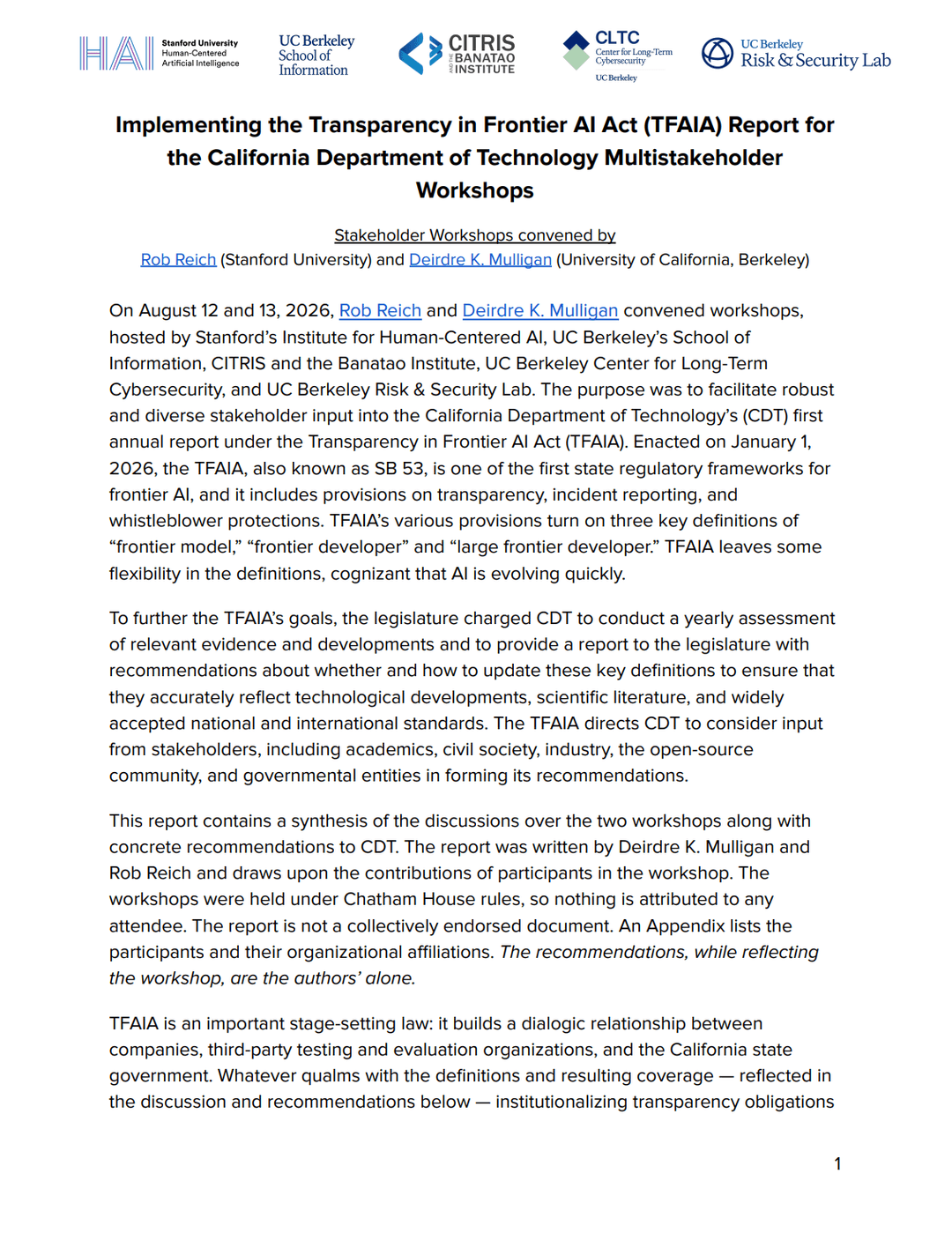
In this paper, HAI Associate Director and Senior Fellow Rob Reich and UC Berkeley School of Information Professor Deirdre K. Mulligan provide concrete recommendations to the California Department of Technology on the implementation of its frontier AI transparency requirements.
Making Local Law Legible: LLM-Assisted Detection of Discrimination
This brief demonstrates the potential of LLM-assisted review to accelerate legal reform.
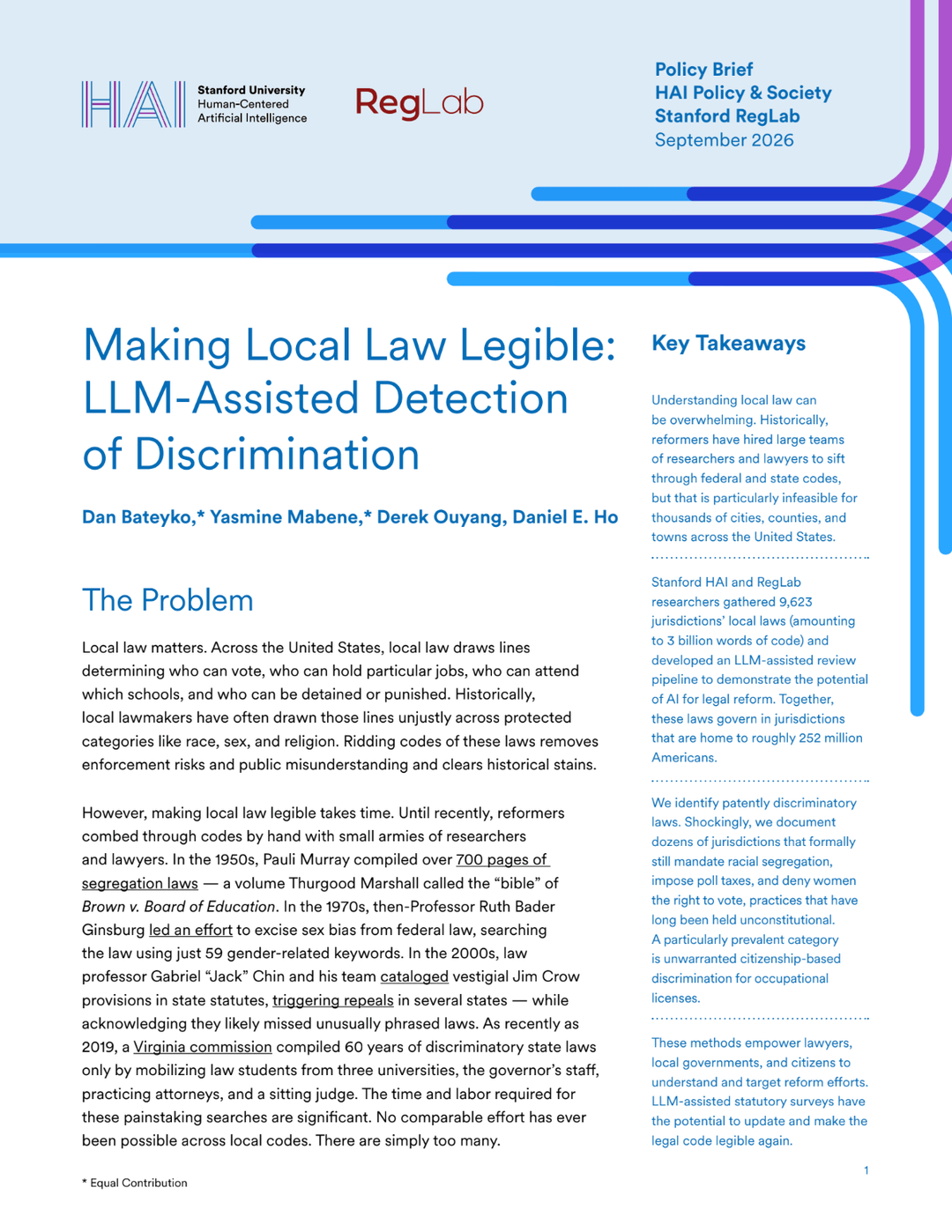
This brief demonstrates the potential of LLM-assisted review to accelerate legal reform.
Designing Loyalty: AI Agents and Conflicts of Interest
This brief examines the conflict-of-interest risks posed by AI agents and calls for imposing a duty of loyalty on developers and deployers.
This brief examines the conflict-of-interest risks posed by AI agents and calls for imposing a duty of loyalty on developers and deployers.