Upcoming Events
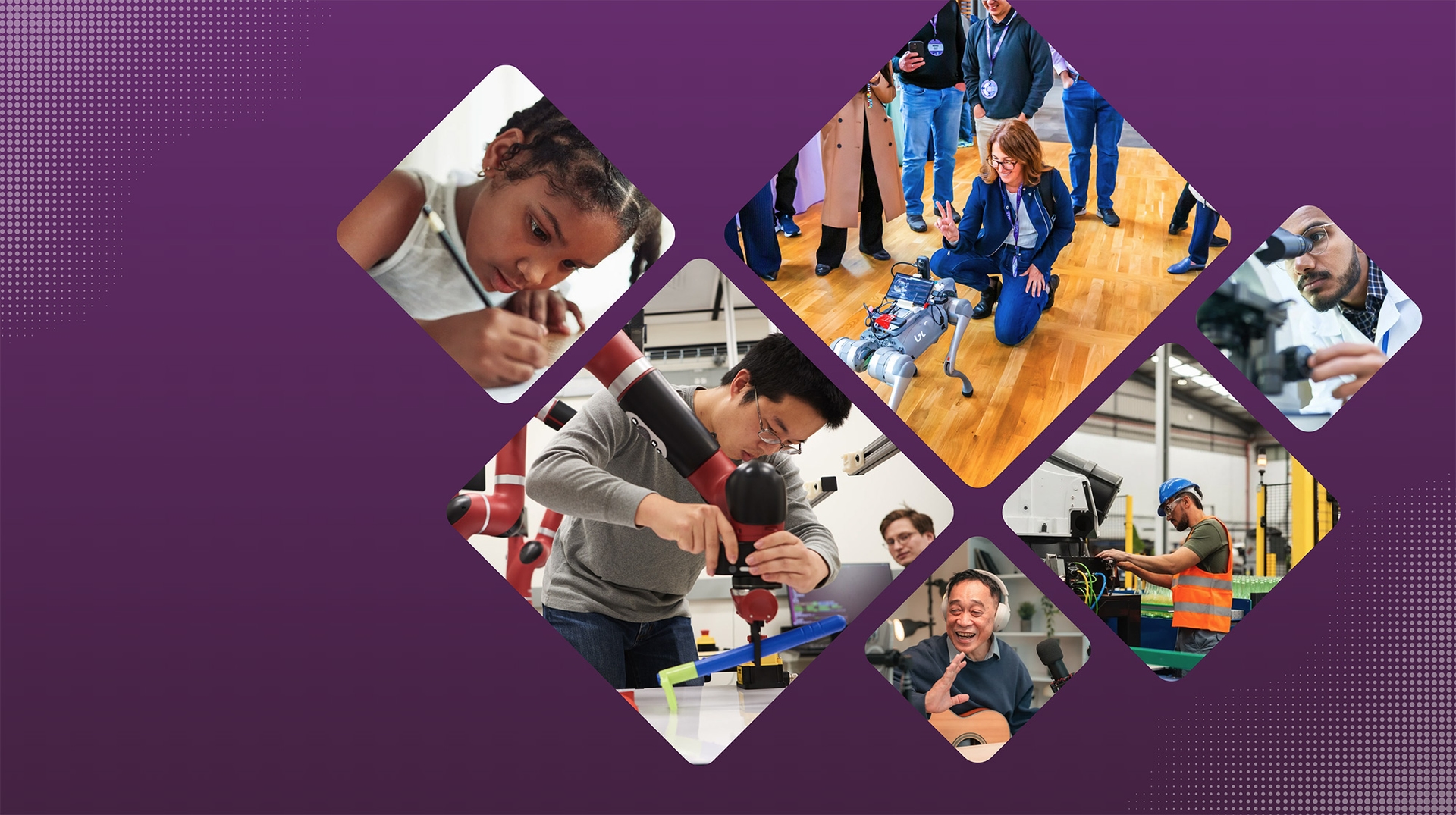
Confronting Our AI Future: Hope, Fear, and the Choices Ahead
The rapid acceleration of AI comes with a profound wave of anxiety. Across every sector of society, people are facing unsettling questions about their worth and their place in a shifting world.
Confronting Our AI Future: Hope, Fear, and the Choices Ahead
The rapid acceleration of AI comes with a profound wave of anxiety. Across every sector of society, people are facing unsettling questions about their worth and their place in a shifting world.
Featured Videos
Hear from speakers and attendees at recent Stanford HAI events across research, policy, and education.
Previous Events at HAI
AI+Education Summit: Advancing Human Learning with AI Technologies
Building on the success of its first edition in 2023, the 2024 summit was hosted again by the Stanford Institute for Human-Centered Artificial Intelligence (HAI) and the Stanford Accelerator for Learning. The summit brought together Stanford faculty and students along with leaders and participants from academia, industry, civic society, PK-12 education, and government.
AI+Education Summit: Advancing Human Learning with AI Technologies
Building on the success of its first edition in 2023, the 2024 summit was hosted again by the Stanford Institute for Human-Centered Artificial Intelligence (HAI) and the Stanford Accelerator for Learning. The summit brought together Stanford faculty and students along with leaders and participants from academia, industry, civic society, PK-12 education, and government.
Michelle Mello | Understanding Liability Risk from Healthcare AI Tools
When use of a healthcare AI tool harms patients, who is responsible? This session will examine how courts are grappling with the challenges of adjudicating liability for software-related injuries and how health systems and clinicians can assess and manage AI liability risk.
Michelle Mello | Understanding Liability Risk from Healthcare AI Tools
When use of a healthcare AI tool harms patients, who is responsible? This session will examine how courts are grappling with the challenges of adjudicating liability for software-related injuries and how health systems and clinicians can assess and manage AI liability risk.
OffScript with Ge Wang and Vanessa Parli | What Do We (Really) Want from AI in the Creative World?
OffScript with Ge Wang and Vanessa Parli | What Do We (Really) Want from AI in the Creative World?
Ellen Kuhl | Automated Model Discovery – A New Paradigm in Biomedical Simulations?
Constitutive modeling and parameter identification are the cornerstones of realistic biomedical simulations. For decades, the gold standard in biomedical modeling has been to select a model and then fit its parameters to data. However, the scientific criteria for model selection remain poorly understood, and the success of this approach depends largely on user experience and personal preference.
Ellen Kuhl | Automated Model Discovery – A New Paradigm in Biomedical Simulations?
Constitutive modeling and parameter identification are the cornerstones of realistic biomedical simulations. For decades, the gold standard in biomedical modeling has been to select a model and then fit its parameters to data. However, the scientific criteria for model selection remain poorly understood, and the success of this approach depends largely on user experience and personal preference.
Beyond Moderation: How Can We Use Technology to De-Escalate Political Conflict?
Experts from diverse fields convene to discuss what digital technologies can do to enhance civic debate and de-escalate political conflict.
Beyond Moderation: How Can We Use Technology to De-Escalate Political Conflict?
Experts from diverse fields convene to discuss what digital technologies can do to enhance civic debate and de-escalate political conflict.
In Conversation with Mustafa Suleyman & Marietje Schaake
The Coming Wave – Technology, Power and the 21st Century’s Greatest Dilemma
In Conversation with Mustafa Suleyman & Marietje Schaake
The Coming Wave – Technology, Power and the 21st Century’s Greatest Dilemma
Fei-Fei Li in Conversation with John Hennessy on Her New Book: The Worlds I See
This community book launch of The Worlds I See: Curiosity, Exploration, and Discovery at the Dawn of AI, by Fei-Fei Liwas on behalf of the Stanford Cyber Policy Center (CPC) and the Stanford Institute for Human-Centered Artificial Intelligence (HAI).
Fei-Fei Li in Conversation with John Hennessy on Her New Book: The Worlds I See
This community book launch of The Worlds I See: Curiosity, Exploration, and Discovery at the Dawn of AI, by Fei-Fei Liwas on behalf of the Stanford Cyber Policy Center (CPC) and the Stanford Institute for Human-Centered Artificial Intelligence (HAI).
OffScript with Ge Wang | What Do We (Really) Want from AI in the Research World?
What do we (really) want from artificial intelligence? We live in a time when advancements in AI technology is shaping our world, while critically outpacing our understanding of this technology in various humanistic contexts (cultural, social, ethical, historical).
OffScript with Ge Wang | What Do We (Really) Want from AI in the Research World?
What do we (really) want from artificial intelligence? We live in a time when advancements in AI technology is shaping our world, while critically outpacing our understanding of this technology in various humanistic contexts (cultural, social, ethical, historical).