New Center to Drive AI Innovation in PTSD Treatment
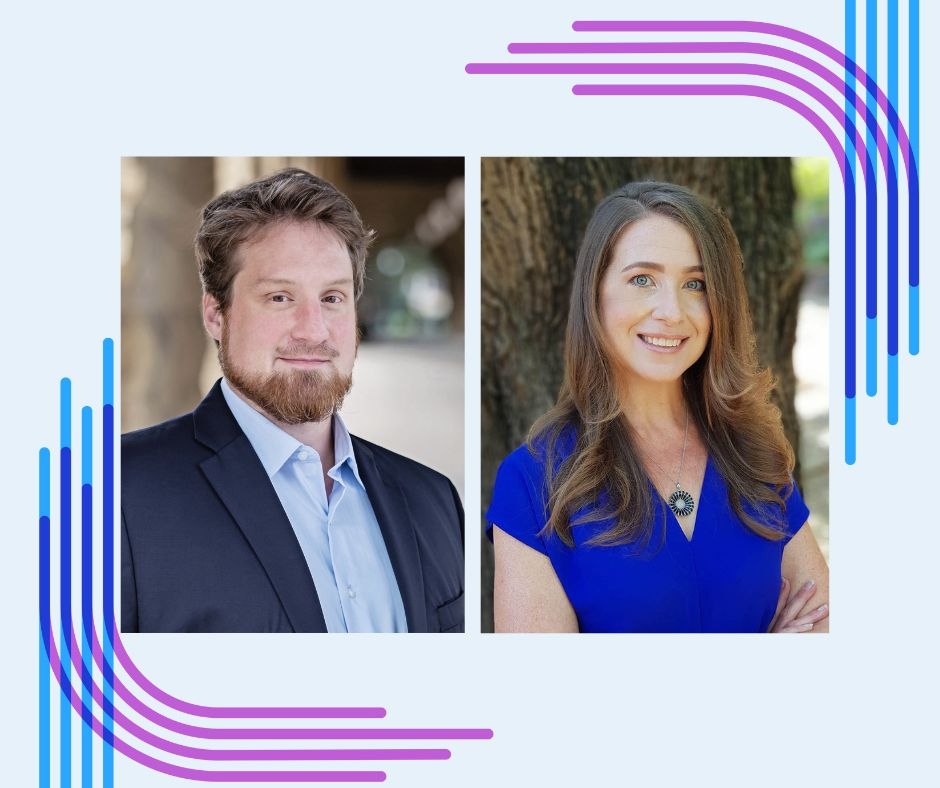
Stanford's Johannes Eichstaedt and Shannon Wiltsey Stirman will lead a new research center focused on using AI to improve PTSD treatment.
Funded by an $11.5 million NIH grant, the CREATE Center focuses on developing artificial intelligence to enhance the effectiveness and accessibility of evidence-based psychotherapies.
In an initiative aimed at improving mental health care, the newly launched Center for Responsible and Effective AI Technology Enhancement of Treatments for PTSD (CREATE) will leverage the power of artificial intelligence to address post-traumatic stress disorder treatment gaps in the United States. Co-directed by Shannon Wiltsey Stirman, a professor in the Stanford School of Medicine’s Department of Psychiatry and Behavioral Sciences, and Johannes Eichstaedt, a faculty fellow at the Institute for Human-Centered AI and assistant professor (research) of psychology in the School of Humanities and Sciences, the center will focus on developing innovative delivery methods for evidence-based psychotherapies.
PTSD affects nearly 7% of the U.S. population, significantly reducing individuals’ quality of life and physical health while imposing high societal costs. While several effective psychotherapies exist, many people with PTSD lack access to these treatments, especially in rural areas, and publicly funded mental health agencies have few resources and many patients.
“Many mental health agencies don’t have the resources to support their staff and get trained on new treatments, which means patients don’t have the help they need,” said Wiltsey Stirman. “We want to provide more support so that the reach and quality of care will meaningfully improve.”
Funded by an $11.5 million grant from the National Institutes of Health, the center intends to develop large language models (LLMs) that can assist clinicians while meeting specific criteria for patient safety, privacy, and effectiveness. Center projects include an LLM-based tool to support PTSD therapists as they learn new treatments; a tool to provide support for patients as they complete practice between sessions; a chatbot to help teams develop and execute implementation plans when they adopt new practices; and an LLM-based coach that provides on-demand consultation and support on especially challenging cases.
The center’s team includes researchers from Stanford, the Veterans Affairs National Center for PTSD and Palo Alto Veterans Institute for Research, Vanderbilt University, Rush University, University of Pennsylvania, University of Texas Health Sciences Center–San Antonio, New York University, and Dartmouth. The scholars’ expertise includes clinical psychology, implementation science, computer science, tailored PTSD treatments, ethics, biostatistics, and economics.
AI to Assist, Not Replace
Core to the work will be ensuring these tools are built and deployed responsibly. The research team has already designed frameworks for the development and evaluation of mental health LLMs. The AI systems will assist therapists and patients rather than replace human therapy.
“Large language models are not ready to act as stand-alone therapists, but there’s a lot of potential to provide support to humans to improve care for patients,” Eichstaedt said.
The scholars are also engaging with mental health professionals and PTSD survivors, working closely with colleagues in Veterans Affairs, a clinician training institute, and a veteran community initiative in Philadelphia to help test models and provide feedback and suggestions.
“We plan to have close involvement with people who live with PTSD or treat those with the disorder – their voices are essential to helping us develop effective models,” Wiltsey Stirman said.
“CREATE’s goal is to make it easier for patients to get more and better care, and reduce the societal burden of PTSD,” added Eichstaedt. “With the funding from NIH and our strong team of experts across fields, I expect CREATE to be the beginning of many efforts to improve mental health with AI, for many mental health conditions.”
Stanford faculty involved in CREATE:
Shannon Wiltsey Stirman: Professor of Psychiatry and Behavioral Sciences at Stanford School of Medicine and a psychologist at the National Center for PTSD’s Dissemination and Training Division
Johannes Eichstaedt: Assistant Professor (Research) of Psychology at Stanford School of Humanities and Sciences and the Shriram Faculty Fellow at Stanford HAI
Betsy Stade: Social Science Research Scholar, Stanford HAI
Debra Kaysen: Professor, University Medical Line, Psychiatry and Behavioral Sciences, and Chief, Division of Public Mental Health & Population Sciences, Department of Psychiatry and Behavioral Sciences
Craig Rosen: Professor, University Medical Line, Psychiatry and Behavioral Sciences
Jane Kim: Clinical Associate Professor of Psychiatry and Behavioral Sciences
Eric Kuhn: Associate Professor, University Medical Line, Psychiatry and Behavioral Sciences
Michael Bernstein: Professor of Computer Science at Stanford School of Engineering and Senior Fellow at Stanford HAI
Related News

It's one of AI policy's hardest unsolved problems. Expert Deb Raji joins Stanford HAI to find answers that move beyond principles and into practice.

It's one of AI policy's hardest unsolved problems. Expert Deb Raji joins Stanford HAI to find answers that move beyond principles and into practice.
Analyzing thousands of human-AI conversations, a new study shows that people are turning to chatbots for increasingly critical tasks – and that productive outcomes depend on how the collaboration unfolds.
Analyzing thousands of human-AI conversations, a new study shows that people are turning to chatbots for increasingly critical tasks – and that productive outcomes depend on how the collaboration unfolds.

How managers introduce and support AI determines whether workers engage with or resist the technology.

How managers introduce and support AI determines whether workers engage with or resist the technology.