Why Stanford Is Restructuring For AI’s Next Era
As artificial intelligence transforms society, Stanford HAI’s James Landay, Fei-Fei Li, and John Hennessy explain why they’re merging HAI with the Stanford Data Science initiative, mobilizing “team science at scale,” and betting that academic openness will shape AI’s future.
James Landay has spent three decades asking a deceptively simple question: How do we make technology actually work for people? As the newly appointed director of the new Stanford Institute for Human-Centered AI (HAI), he brings a rare combination of technical innovation and humanistic vision to AI and data science efforts.
A computer science professor who created design tools that foreshadowed today’s Figma and Fitbits, Landay has built his career on seeing where technology and human needs intersect – often years before the market catches up.
For Landay, the merger of HAI and Stanford Data Science represents an opportunity to create the infrastructure needed to accelerate breakthroughs across every discipline, while maintaining Stanford’s distinctive commitment to open research, public good, and putting human well-being at the center of technological development.
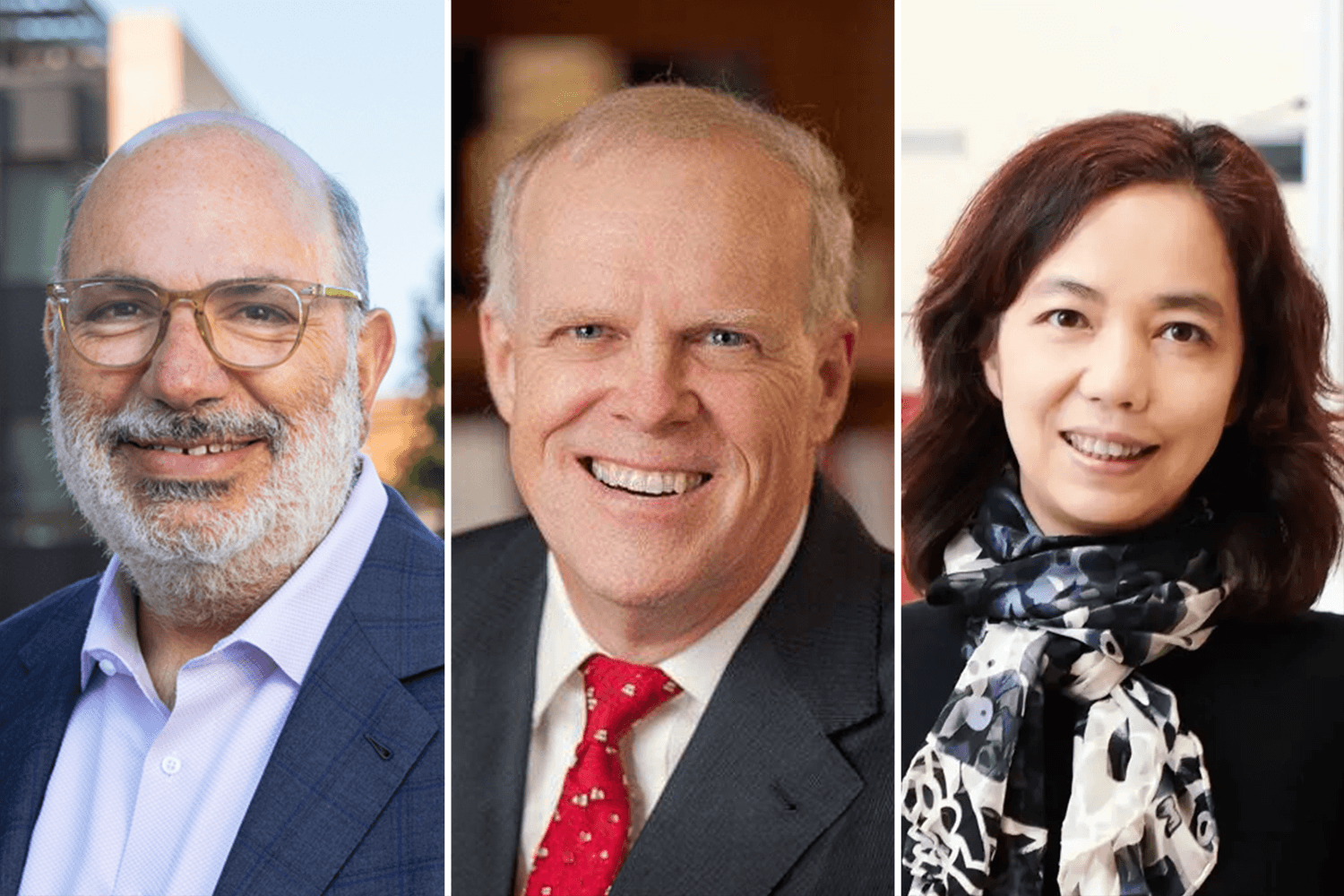
From left: James Landay will lead the Stanford Institute for Human-Centered AI, while John Hennessy and Fei-Fei Li will serve as co-chairs of the advisory council. | Andrew Brodhead, Linda A. Cicero, Drew Kelly
He’s not doing it alone. Fei-Fei Li, HAI’s founding director, is taking on a new university-wide role as senior advisor on AI to President Jonathan Levin, and Stanford’s past president John Hennessy is joining Li to co-chair HAI’s advisory council.
Together, the three sat down to discuss why this moment demands a fundamental rethinking of how universities organize around AI – and why academic institutions must lead in shaping society-transforming technology.
James, you’ve said we’re in a fundamentally different moment than when HAI was founded seven years ago. What’s changed?
Landay: When we founded HAI in 2019, we bet that AI would be so consequential that it would reverberate across society in profound ways, and we needed an interdisciplinary approach that would ensure this technology had a positive human impact. We brought together faculty and students from all seven schools at Stanford to represent the different societal viewpoints and help shape AI for societal good.
What we didn’t know then is how fast AI would transform life. The time we have left to shape this technology for the public good has gotten much, much shorter.
This merged institute is designed to meet that pace. It will speed and scale university research and education to match AI’s trajectory.
We can’t just layer a few initiatives on top of what we already do. We have to rethink how we organize, how we collaborate, and how we lead.
This merged institute is designed to meet (the pace of AI). It will speed and scale university research and education to match AI’s trajectory.
— James Landay
Stanford HAI Denning Director
Why was merging HAI with Stanford Data Science necessary?
Landay: Think about healthcare delivery, understanding how the cosmos formed, or optimizing education systems. These require access to large, often sensitive datasets and the ability to apply AI and machine learning at scale. That unification is essential.
HAI has always emphasized the human-centered perspective – building systems that augment people rather than replace them, ensuring technology reflects human values. Stanford Data Science brought deep expertise in large-scale data, a highly successful compute resource called Marlowe, and valuable centers doing cutting-edge research across disciplines. Bringing these together gives us the breadth and depth to tackle problems that single disciplines can’t solve alone.
And this merger wouldn’t have been possible without the vision and leadership of Emmanuel Candès, John Etchemendy, Guido Imbens, and, of course, Fei-Fei and John [Hennessy] here, who recognized the transformative potential of this technology and laid the foundation for this combined institute. And, also, the dedicated staff at both organizations who made that vision a reality.
The merged institute’s mission is “AI and Data Science to advance humanity through discovery, technological innovation, educational transformation, and societal impact.” What does that mean in practice?
Landay: It means three things. First, rethinking how discovery happens in the university. We need to help teams of researchers adopt new methodologies, support large-scale projects, and provide the infrastructure – computational resources, research engineers, data scientists – that enable what I call “team science at scale.” These aren’t traditional five-person labs. These are multidisciplinary teams of 20 to 30 people: faculty, postdocs and graduate students, professional-level research engineers, data scientists, program managers, and designers.
Second, partnering on education transformation. We’re working closely with the Stanford Accelerator for Learning and others on campus to understand what education will look like – at K-12, in the university, and lifelong learning. What are the new applications for how people learn and are evaluated? How do we design for this?
Third, understanding and shaping AI’s societal impact. That means economics research on how jobs are changing. Organizational behavior research on how roles and workflows are evolving inside companies. Fundamentally rethinking design methods – moving from user-centered design to community- and society-centered design with tools to implement that.
And critically, all of this has to happen openly – open science, open-source code, open data, open models, open courses. You can’t understand whether these AI systems are good or bad, safe or harmful, if you don’t know what’s in them. We need transparency.
Fei-Fei, you’re taking on a broader role at the university as an advisor on AI to President Levin. How do you see that role taking shape?
Li: I will work closely with President Levin to help Stanford think clearly and act strategically about AI as a university-wide priority.
AI is transforming not only technology but also, as James said, how we pursue scientific discovery, how we learn and educate, and how we serve society. My job is to help connect those changes across the university and contribute to a long-term vision equal to the scale of this moment.
I also see this as a role of stewardship and connection. Stanford has an unusual capacity to bring together leading thinkers across disciplines. I hope to help draw on that strength in a more integrated way.
What does Stanford need to do to maintain its leadership in AI research and education?
Li: We have to double down on what universities uniquely contribute: fundamental research, open science, and developing talent in service of the public good.
Some of the most important advances in AI were made possible by open datasets, shared benchmarks, open-source tools, and academic communities committed to building knowledge that others could use and improve. It’s more important than ever for universities to sustain that open ecosystem and ensure research remains connected to transparency, reproducibility, and broad human benefit.
But leadership also requires building new capacity – investing in interdisciplinary research, educating students and faculty across many fields to engage AI deeply, and providing the infrastructure that serious AI research now demands.
The goal isn’t simply to keep pace with industry. It’s to ensure that a university like Stanford remains a place where AI advances are pursued with rigor, openness, and purpose.
We have to double down on what universities uniquely contribute: fundamental research, open science, and developing talent in service of the public good.
— Fei-Fei Li
HAI Founding Director
John, you and Fei-Fei will be co-chairing the HAI advisory council. How do you see your and the council’s role in helping HAI achieve its mission?
Hennessy: HAI has the potential to be one of the most important initiatives the university has ever launched, impacting every school. The advisory council will support HAI by providing an experienced and diverse external perspective and helping identify and secure the resources this broadly impactful institute needs to succeed.
James, you’ve emphasized that “shaping AI for humanity” requires engaging beyond Stanford’s backyard. What does that look like?
Landay: When we say “for humanity,” we can’t mean just North America or the Western world. We need to collaborate with centers around the globe where values and cultures are different. Human-centered AI needs to be shaped with diverse communities, not imposed on them.
That means building partnerships internationally and ensuring the work we do reflects a genuinely global perspective – not just exporting a Silicon Valley worldview. We have already started building that global community, with some collaborations already launched and others in discussion at universities pursuing human-centered AI in Asia, the Middle East, and Europe.
What does success look like?
Landay: If we get this right, it’s not just a stronger institute. It’s demonstrating how a research university can organize around rapidly evolving, society-shaping technology to have real impact in the world.
Stanford is uniquely positioned for this. No other university has our combination of breadth and depth across AI, data science, and all the disciplines they touch – from engineering to medicine, business, and law, to social sciences like economics, to the humanities and arts.
The decisions we’re making today will allow us to adapt to meet this moment.
Related News

How managers introduce and support AI determines whether workers engage with or resist the technology.

How managers introduce and support AI determines whether workers engage with or resist the technology.
Director of the Stanford Digital Economy Lab and Senior Fellow at Stanford HAI Erik Brynjolfsson discusses the fallacy of thinking "the only way that you get productivity from A.I. is by removing labor costs,” arguing that business can return larger gains through AI use for employees' productivity, rather than replacing workers.
Director of the Stanford Digital Economy Lab and Senior Fellow at Stanford HAI Erik Brynjolfsson discusses the fallacy of thinking "the only way that you get productivity from A.I. is by removing labor costs,” arguing that business can return larger gains through AI use for employees' productivity, rather than replacing workers.

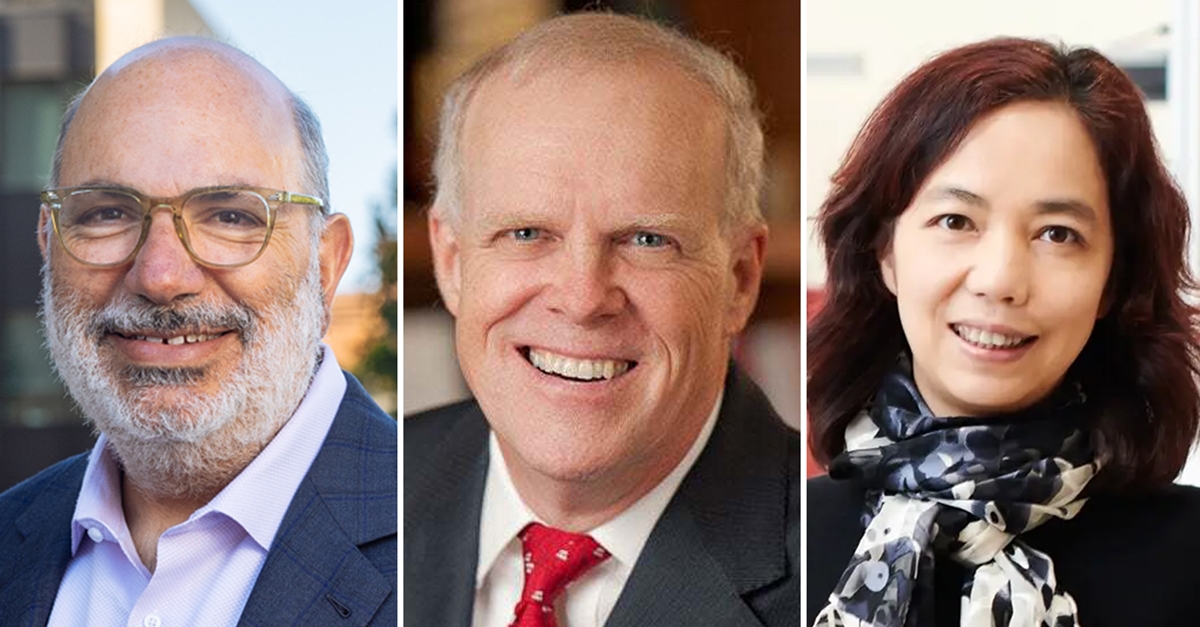
The combined institute will retain the Stanford HAI name and be helmed by computer scientist James Landay. Co-founder Fei-Fei Li takes on a new university-wide role as Special Advisor on AI and joins John Hennessy as co-chair of the advisory council.
The combined institute will retain the Stanford HAI name and be helmed by computer scientist James Landay. Co-founder Fei-Fei Li takes on a new university-wide role as Special Advisor on AI and joins John Hennessy as co-chair of the advisory council.