Fei-Fei Li Wins Queen Elizabeth Prize for Engineering
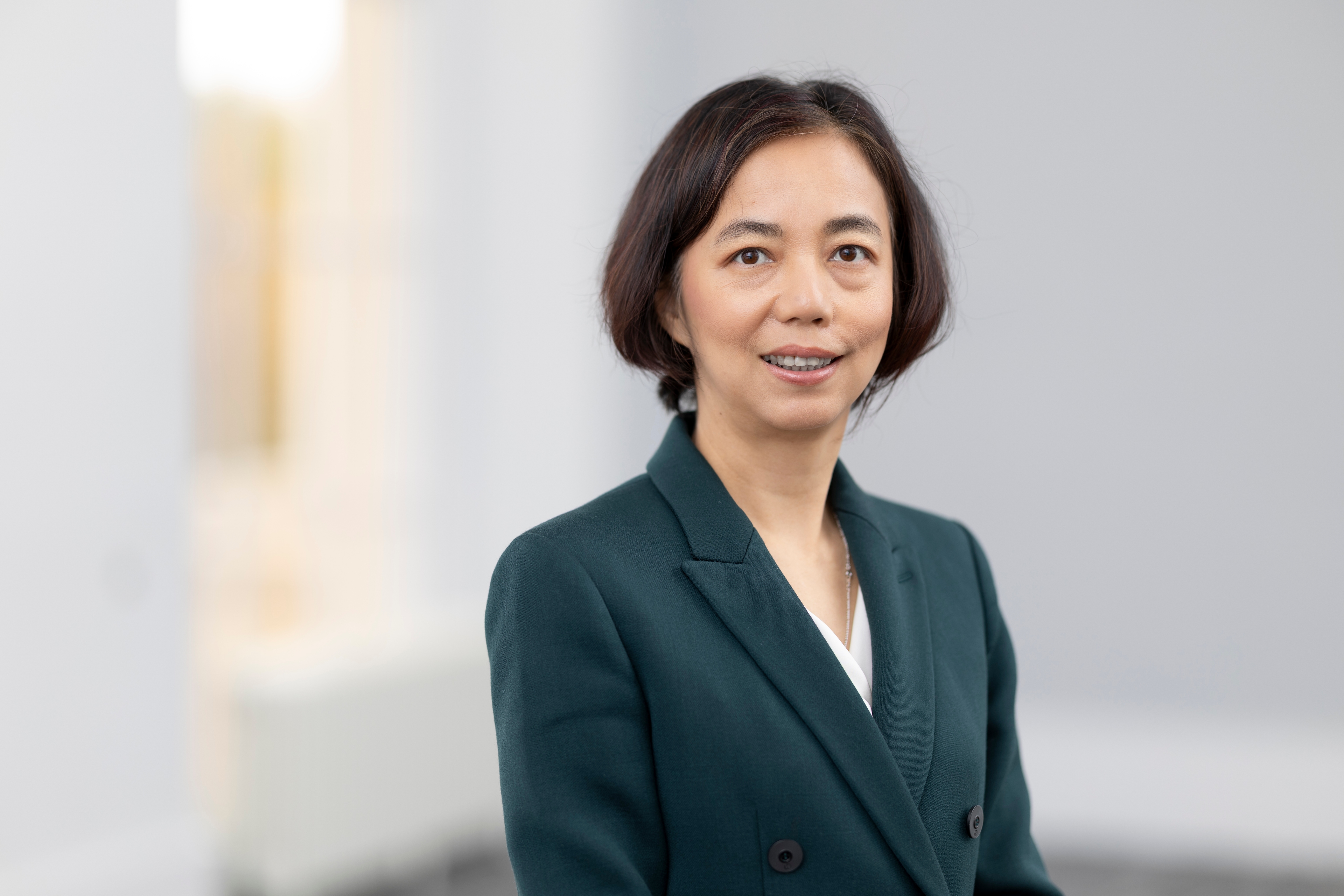
Stanford HAI Founding Co-Director Fei-Fei Li
The Stanford HAI co-founder is recognized for breakthroughs that propelled computer vision and deep learning, and for championing human-centered AI and industry innovation.
Fei-Fei Li, founding co-director of the Stanford Institute for Human-Centered AI (HAI) and a pioneering computer scientist whose work transformed modern artificial intelligence, was named a laureate of the Queen Elizabeth Prize for Engineering and received the award this week in London.
The QEPrize, widely regarded as a leading award for engineers and engineering, recognizes bold, groundbreaking innovation that delivers global benefit. This year’s honor, presented by His Majesty King Charles III at St James’s Palace, highlights the engineering foundations of modern machine learning and is shared by Li alongside a cohort of luminaries who helped propel AI from laboratory curiosity to a technology shaping daily life. Awardees include Stanford HAI Distinguished Fellows Geoffrey Hinton, Professor Emeritus at the University of Toronto, and Yoshua Bengio, University of Montreal professor, as well as Nvidia Chief Scientist and former Stanford University Professor Bill Dally, Princeton Emeritus Professor John Hopfield, Nvidia President and CEO Jensen Huang, and Meta AI Chief Scientist Yann LeCun.
 Awardees, from left: Yoshua Bengio, Bill Dally, Yann LeCun, Jensen Huang, Geoffrey Hinton, Fei-Fei Li. Not pictured: John Hopfield.
“Receiving the Queen Elizabeth Prize is an extraordinary honor,” Li said. “I share this recognition with my esteemed colleagues, and countless students and collaborators across the world who have contributed to advancing AI technology, and for the benefit of humanity.”
Li is well-known for ImageNet, the large-scale visual database and benchmark she created with students and collaborators in the late 2000s. At a time when progress in computer vision had stalled, ImageNet provided millions of carefully labeled images in a rich, hierarchical taxonomy—offering both a rigorous testbed and a shared foundation for researchers. Its annual challenge galvanized the field, enabling breakthroughs in deep learning that rapidly improved AI’s ability to recognize objects, interpret scenes, and understand visual context. The results reshaped AI research and industry alike, catalyzing advances in autonomous systems, medical imaging, accessibility tools, and countless everyday applications.
“ImageNet was about building a common language and a reliable yardstick for the community,” Li said. “We wanted to create a resource that could accelerate scientific discovery. The most gratifying part has been seeing how the work opened doors to innovations that make a real difference in people’s lives.”
Beyond technical leadership, Li has been a central voice in steering AI toward human values. In 2019, she co-founded Stanford HAI to focus research, education, and policy on AI that is responsible, inclusive, and aligned with societal needs. Under her guidance, HAI has helped shape national and international dialogue on AI safety, governance, and equity, while fostering interdisciplinary collaborations across medicine, education, climate science, law, and the humanities.
“Technology does not exist in a vacuum,” Li noted. “Human-centered AI is about bringing multi-disciplinary and multi-stakeholder perspectives to the table—engineers, social scientists, ethicists, communities—so we can build systems that are trustworthy and supportive of human flourishing.”
Li also continues to push the frontier from the startup world. Her new venture, World Labs, is a spatial intelligence company launched to translate cutting-edge AI research into platforms and tools designed for real-world impact.
The Queen Elizabeth Prize for Engineering champions engineering excellence and inspires future generations to consider engineering careers. Previous recipients include the architects of the Internet and World Wide Web (Robert Kahn, Vinton Cerf, Louis Pouzin, Marc Andreessen, Sir Tim Berners-Lee, 2013), innovators behind controlled-release drug delivery (Robert Langer, 2015), the GPS innovators (Bradford Parkinson, James Spilker Jr, Hugo Fruehauf, Richard Schwartz, 2019), the developer of the world’s strongest magnet (Masato Sagawa, 2022), and leaders in modern wind power (Andrew Garrad and Henrik Stiesdal, 2024).
 His Majesty King Charles III presents Fei-Fei Li with the QEPrize.
By recognizing modern machine learning in 2025, the QEPrize underscores AI’s profound and multifaceted impact—on health care, education, climate resilience, accessibility, and economic productivity—and the engineering achievements that made it possible: scalable algorithms, powerful computing hardware, robust datasets and benchmarks, and open collaboration across disciplines and continents.
“We’re at a pivotal moment,” Li said. “The next chapter of AI will depend on our ability to align innovation with human needs and values. I’m deeply grateful for this recognition, and I hope it inspires young people—especially those who don’t yet see themselves in technology—to join us in building AI that serves everyone.”
Related News
This conversation spans the evolution of AI, exploring the opportunities for AI to augment human capabilities, particularly in healthcare, education, and scientific discovery. Fei-Fei discusses the limits of today’s AI, the importance of preserving human agency, and why society, not just the technology industry, needs to play a role in shaping its future.
This conversation spans the evolution of AI, exploring the opportunities for AI to augment human capabilities, particularly in healthcare, education, and scientific discovery. Fei-Fei discusses the limits of today’s AI, the importance of preserving human agency, and why society, not just the technology industry, needs to play a role in shaping its future.

Two models working together perform worse than one alone, exposing a critical gap in artificial intelligence capabilities.

Two models working together perform worse than one alone, exposing a critical gap in artificial intelligence capabilities.
AI Hiring Tools Can Yield Racial Bias and Systemic Rejection

The first large-scale study of hiring algorithms in the wild finds concerning patterns to how systems reject candidates.

The first large-scale study of hiring algorithms in the wild finds concerning patterns to how systems reject candidates.