HAI Policy Fellow Riana Pfefferkorn comments on recent federal appeals court asking the Supreme Court to reconsider laws around AI generated CSAM.
HAI Policy Fellow Riana Pfefferkorn comments on recent federal appeals court asking the Supreme Court to reconsider laws around AI generated CSAM.

Building an AI pipeline to comb through millions of local statutes, researchers at Stanford Law School turn a spotlight on unsavory laws still on the books in communities across the country.

Building an AI pipeline to comb through millions of local statutes, researchers at Stanford Law School turn a spotlight on unsavory laws still on the books in communities across the country.
HAI Policy Fellow Jennifer King discusses privacy issues with AI chatbots, saying, “Unless you are having a chat with a service that has a temporary chat or, basically, an incognito version ... [and] you’re also having it within a browser that’s not tracking you, the answer is no. You can’t be sure that it’ll be totally private."
HAI Policy Fellow Jennifer King discusses privacy issues with AI chatbots, saying, “Unless you are having a chat with a service that has a temporary chat or, basically, an incognito version ... [and] you’re also having it within a browser that’s not tracking you, the answer is no. You can’t be sure that it’ll be totally private."
The state's Delete Act was supposed to give Californians a one-stop-shop to request their online information be deleted. But only a minority of registered data brokers are abiding by those laws, says Jennifer King, privacy and data policy fellow at the Stanford University Institute for Human-Centered AI.
The state's Delete Act was supposed to give Californians a one-stop-shop to request their online information be deleted. But only a minority of registered data brokers are abiding by those laws, says Jennifer King, privacy and data policy fellow at the Stanford University Institute for Human-Centered AI.

A new Stanford-led study finds that X’s “For You” algorithm mistakes outrage for interest – and fills your feed accordingly.

A new Stanford-led study finds that X’s “For You” algorithm mistakes outrage for interest – and fills your feed accordingly.
Podcast: CORES Director Russ Poldrack Discusses the Future of Neuroimaging
Companies That Buy and Sell Your Data Are Not Following California’s Strict Privacy Laws

A new Stanford study shows data brokers are making it difficult for consumers to submit privacy requests and failing to report how many privacy requests they receive.

A new Stanford study shows data brokers are making it difficult for consumers to submit privacy requests and failing to report how many privacy requests they receive.
New Stanford Grants Tackle AI's Impact on Global Security and Geopolitics
Stanford HAI and the Hoover Institution’s Technology Policy Accelerator back projects examining AI's role in detecting nuclear proliferation, U.S.-China competition, and political influence.
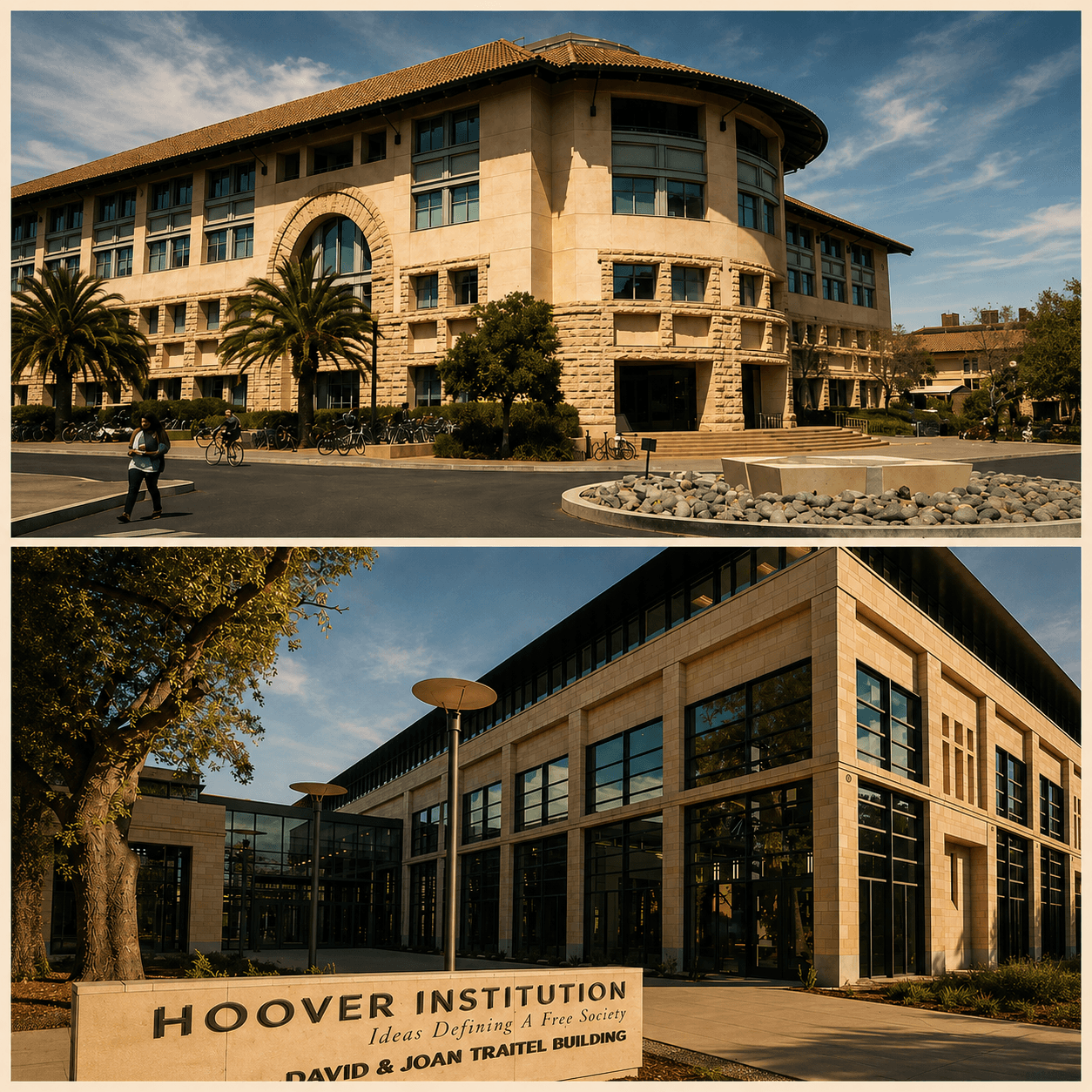
Stanford HAI and the Hoover Institution’s Technology Policy Accelerator back projects examining AI's role in detecting nuclear proliferation, U.S.-China competition, and political influence.
This conversation spans the evolution of AI, exploring the opportunities for AI to augment human capabilities, particularly in healthcare, education, and scientific discovery. Fei-Fei discusses the limits of today’s AI, the importance of preserving human agency, and why society, not just the technology industry, needs to play a role in shaping its future.
This conversation spans the evolution of AI, exploring the opportunities for AI to augment human capabilities, particularly in healthcare, education, and scientific discovery. Fei-Fei discusses the limits of today’s AI, the importance of preserving human agency, and why society, not just the technology industry, needs to play a role in shaping its future.
AI Companions May Worsen Loneliness for Vulnerable Users, Stanford Study Finds

Stanford research finds that users with limited social networks who seek emotional support from AI companions experience lower well-being.

Stanford research finds that users with limited social networks who seek emotional support from AI companions experience lower well-being.