Beyond DeepSeek: China's Diverse Open-Weight AI Ecosystem and Its Policy Implications
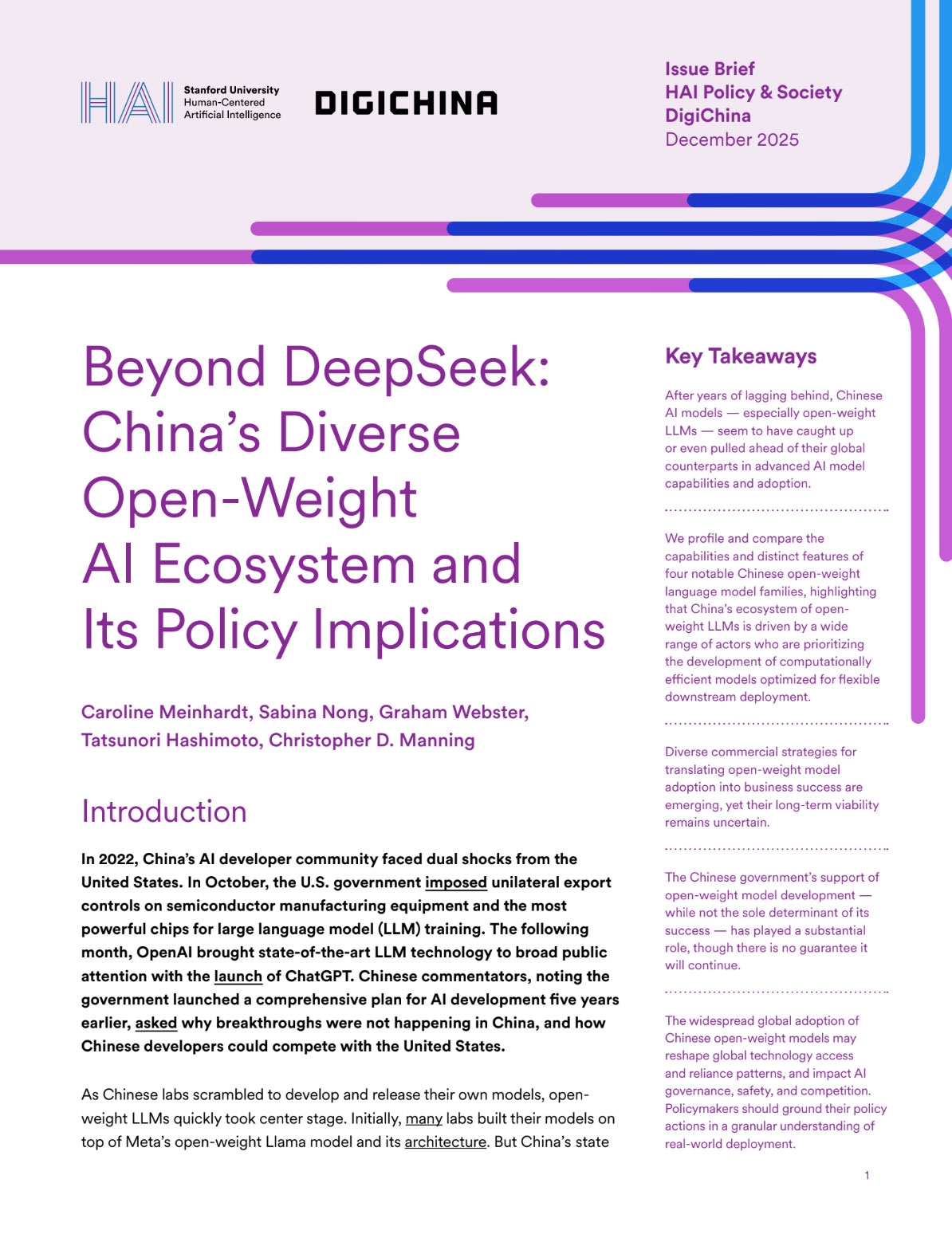
Almost one year after the “DeepSeek moment,” this brief analyzes China’s diverse open-model ecosystem and examines the policy implications of their widespread global diffusion.
In collaboration with

Executive Summary
After years of lagging behind, Chinese AI models — especially open-weight LLMs — seem to have caught up or even pulled ahead of their global counterparts in advanced AI model capabilities and adoption.
We profile and compare the capabilities and distinct features of four notable Chinese open-weight language model families, highlighting that China’s ecosystem of open-weight LLMs is driven by a wide range of actors who are prioritizing the development of computationally efficient models optimized for flexible downstream deployment.
Diverse commercial strategies for translating open-weight model adoption into business success are emerging, yet their long-term viability remains uncertain.
The Chinese government’s support of open-weight model development — while not the sole determinant of its success — has played a substantial role, though there is no guarantee it will continue.
The widespread global adoption of Chinese open-weight models may reshape global technology access and reliance patterns, and impact AI governance, safety, and competition. Policymakers should ground their policy actions in a granular understanding of real-world deployment.
Introduction
In 2022, China’s AI developer community faced dual shocks from the United States. In October, the U.S. government imposed unilateral export controls on semiconductor manufacturing equipment and the most powerful chips for large language model (LLM) training. The following month, OpenAI brought state-of-the-art LLM technology to broad public attention with the launch of ChatGPT. Chinese commentators, noting the government launched a comprehensive plan for AI development five years earlier, asked why breakthroughs were not happening in China, and how Chinese developers could compete with the United States.
As Chinese labs scrambled to develop and release their own models, open-weight LLMs quickly took center stage. Initially, many labs built their models on top of Meta’s open-weight Llama model and its architecture. But China’s state of the art would not be reliant on U.S.-trained models for long. A little more than two years after ChatGPT took many in China by surprise, a Hangzhou-based startup called DeepSeek released its R1 reasoning model, demonstrating capability and efficiency that shocked global investors and caused the AI chip leader Nvidia to suffer the biggest single-day loss of any company in U.S. stock market history. While keen analysts had monitored DeepSeek’s early development, and some of its methods were known to AI scientists around the world, the broader U.S. discourse did not see the lab’s success coming.
Now the strength of Chinese developers in open-weight language models is more widely recognized. DeepSeek has upgraded its models and promises further releases. Alibaba’s Qwen models, which were in development long before DeepSeek’s breakout moment, are widely used by developers around the world. Another Chinese tech giant, Baidu, which had been pursuing a closed-model strategy, has turned to releasing the weights of some of its flagship models openly. Today, Chinese-made open-weight models are unavoidable in the global competitive AI landscape.
This brief analyzes China’s diverse open-model ecosystem, looking beyond DeepSeek. At a moment when Chinese models are increasingly being adopted around the world, including in the United States, and when policymakers are weighing measures to restrict who can build at the AI cutting edge, we pause to give context to the technical and commercial realities of leading Chinese AI labs against a constantly evolving geopolitical backdrop. We then dive deeper into the implications of Chinese open-weight model diffusion for technological development and policy interests in China, the United States, and the rest of the world — implications that raise a series of policy issues that policymakers, scholars, and AI developers might consider going forward. We focus on language models but note the strong performance of other kinds of open-weight AI such as speech, visual, or video models, which some developers integrate with their leading language models.
Related Publications
The 2026 US Talent Report: Benchmarking America’s STEM Pipeline Amid the Great Talent Competition
This report assesses America's ability to develop, attract, and retain STEM talent and warns that its advantages over China are narrowing rapidly.
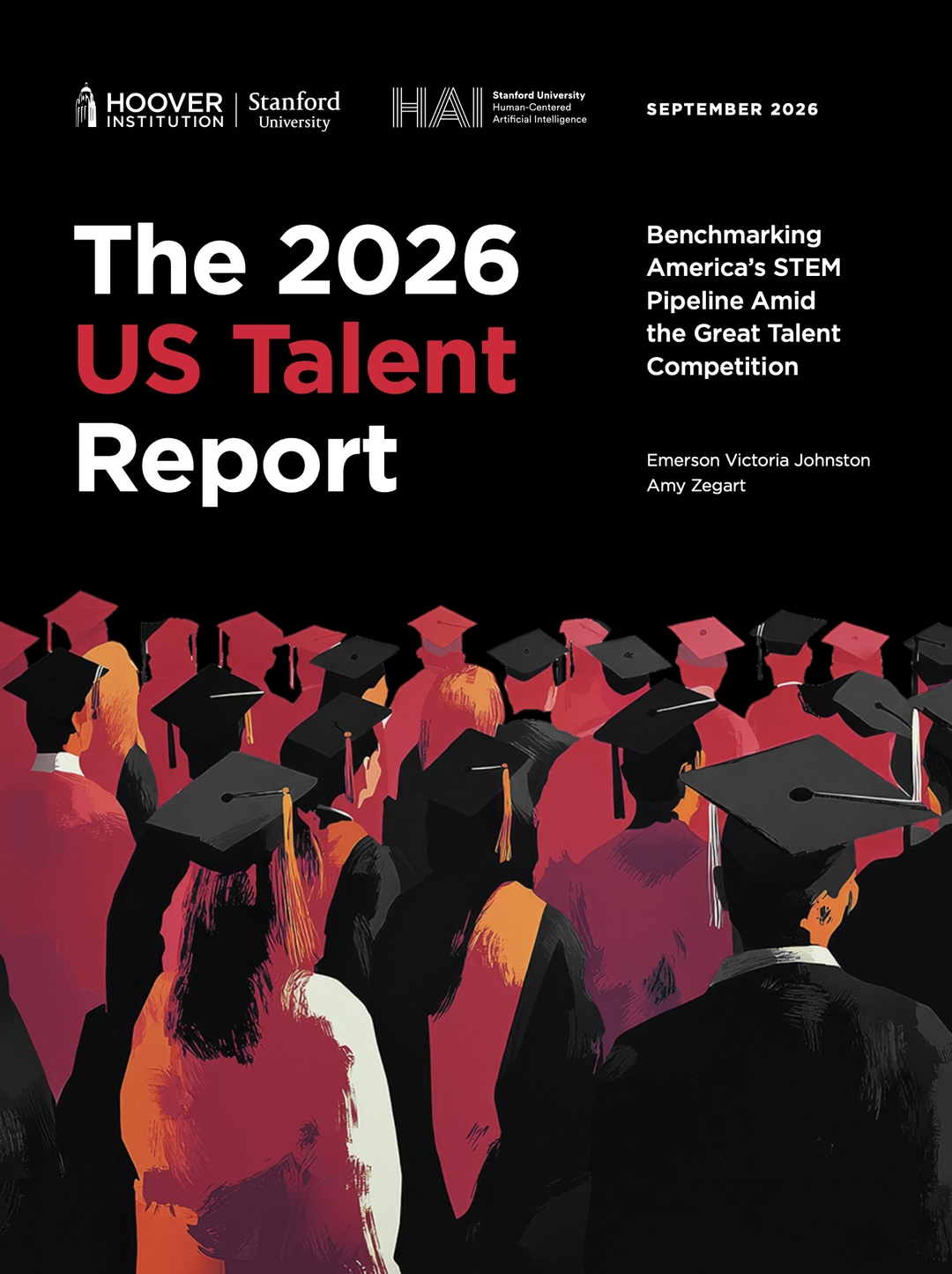
This report assesses America's ability to develop, attract, and retain STEM talent and warns that its advantages over China are narrowing rapidly.
Implementing the Transparency in Frontier AI Act Report for the California Department of Technology Multistakeholder Workshops
In this paper, HAI Associate Director and Senior Fellow Rob Reich and UC Berkeley School of Information Professor Deirdre K. Mulligan provide concrete recommendations to the California Department of Technology on the implementation of its frontier AI transparency requirements.
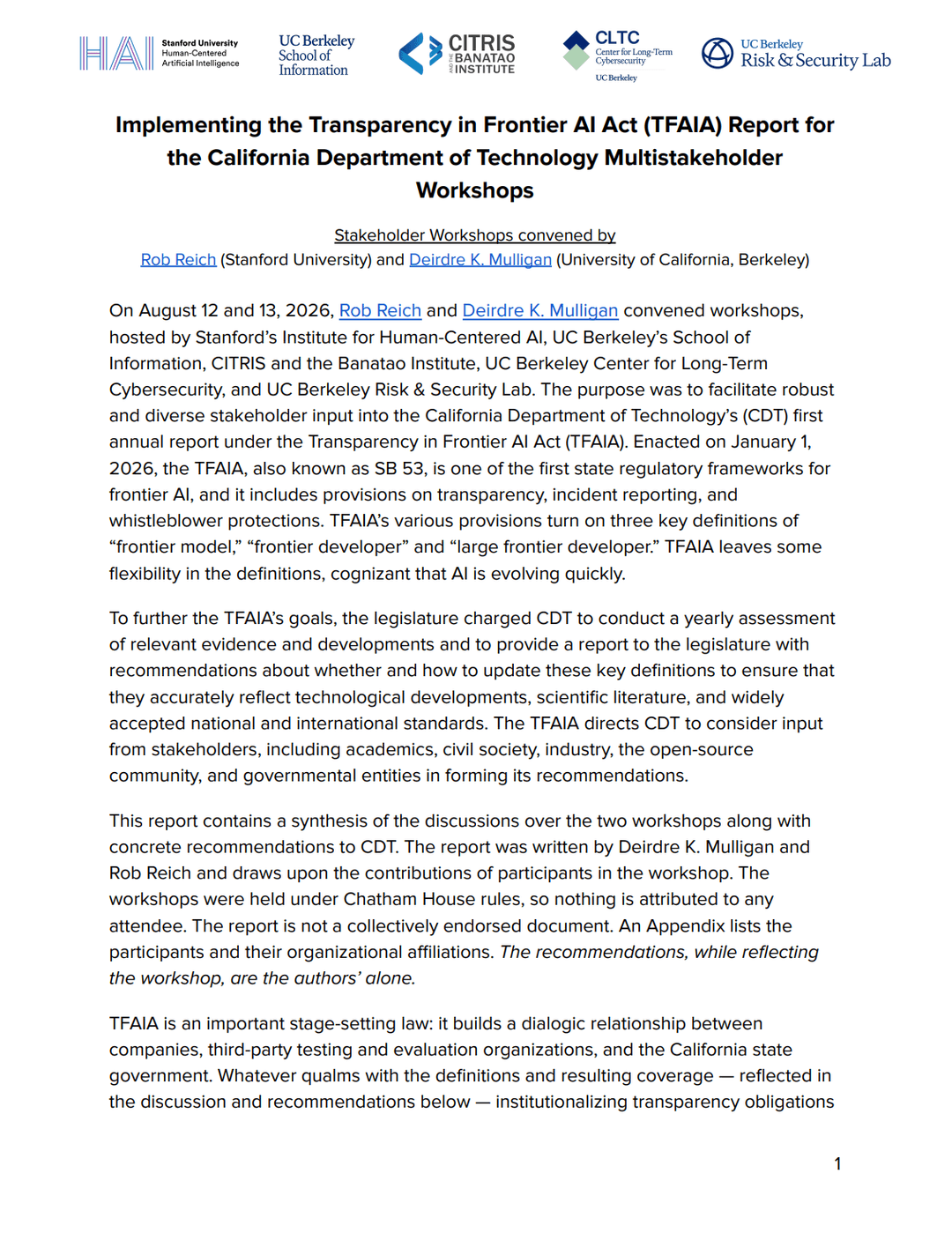
In this paper, HAI Associate Director and Senior Fellow Rob Reich and UC Berkeley School of Information Professor Deirdre K. Mulligan provide concrete recommendations to the California Department of Technology on the implementation of its frontier AI transparency requirements.
This brief highlights the emergence of world models and outlines a first-of-its-kind governance and policy agenda for the technology.
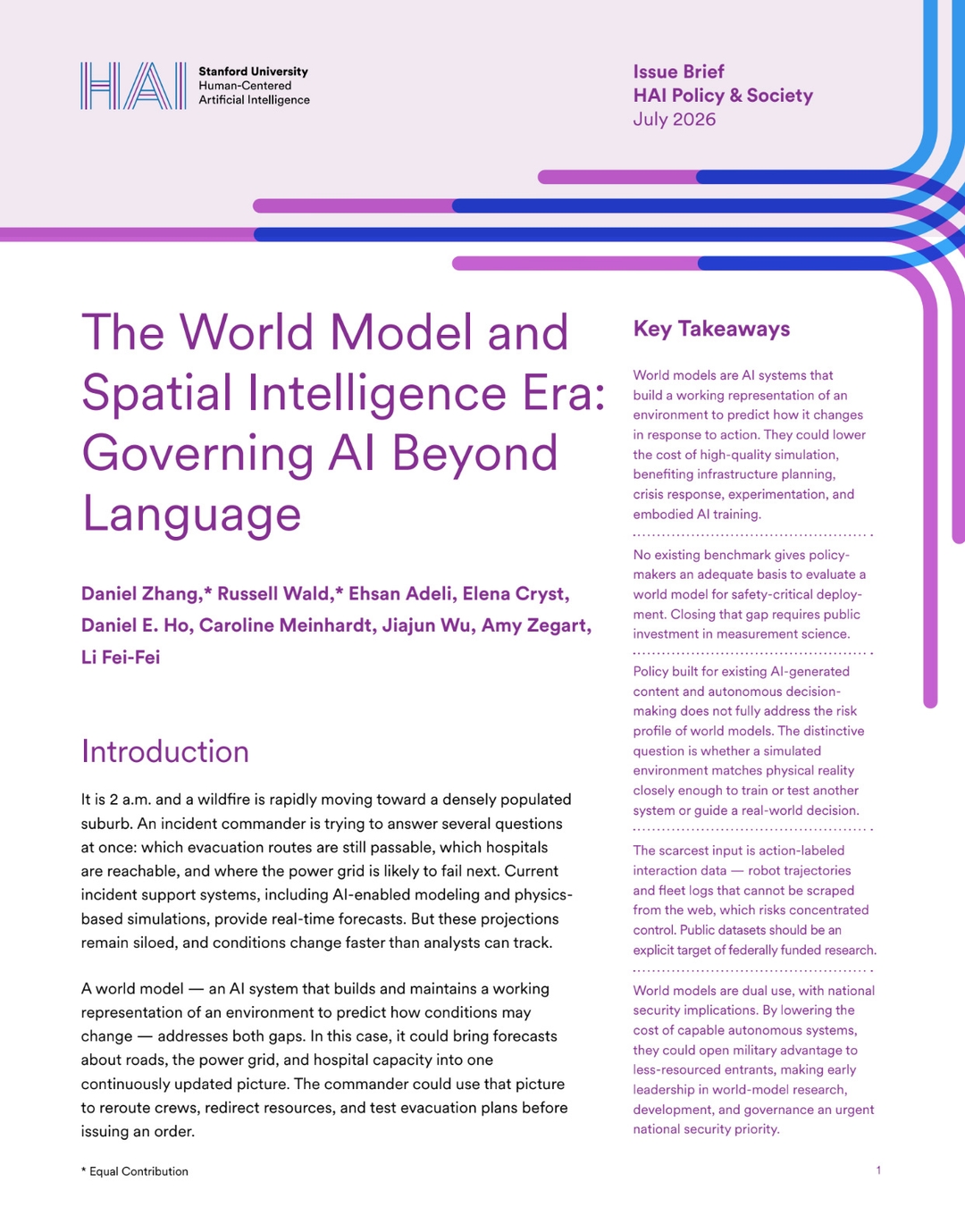
This brief highlights the emergence of world models and outlines a first-of-its-kind governance and policy agenda for the technology.
The Commercial Landscape of AI Sovereignty Offerings
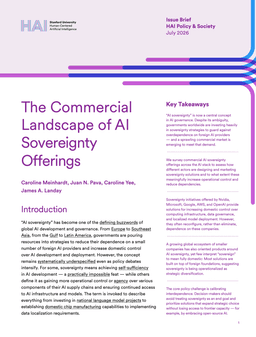
This brief surveys the commercial AI sovereignty market and argues that policymakers should focus on calibrating interdependence rather than pursuing full self-sufficiency.
This brief surveys the commercial AI sovereignty market and argues that policymakers should focus on calibrating interdependence rather than pursuing full self-sufficiency.