Moving Beyond the Term "Global South" in AI Ethics and Policy
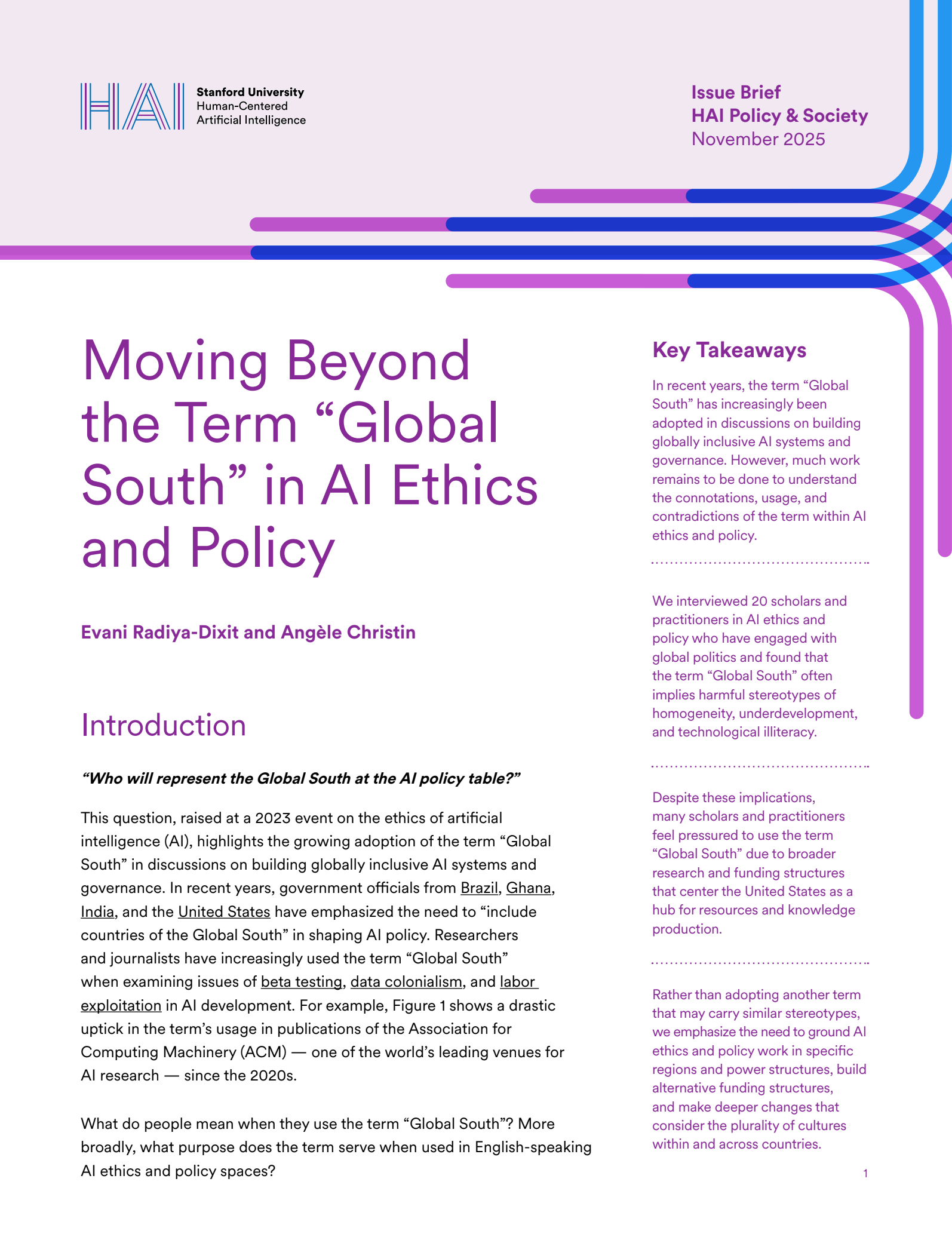
This brief examines the limitations of the term "Global South" in AI ethics and policy, and highlights the importance of grounding such work in specific regions and power structures.
Key Takeaways
In recent years, the term “Global South” has increasingly been adopted in discussions on building globally inclusive AI systems and governance. However, much work remains to be done to understand the connotations, usage, and contradictions of the term within AI ethics and policy.
We interviewed 20 scholars and practitioners in AI ethics and policy who have engaged with global politics and found that the term “Global South” often implies harmful stereotypes of homogeneity, underdevelopment, and technological illiteracy.
Despite these implications, many scholars and practitioners feel pressured to use the term “Global South” due to broader research and funding structures that center the United States as a hub for resources and knowledge production.
Rather than adopting another term that may carry similar stereotypes, we emphasize the need to ground AI policy work in specific regions and power structures, build alternative funding structures, and make deeper changes that consider the plurality of cultures within and across countries.
Introduction
“Who will represent the Global South at the AI policy table?”
This question, raised at a 2023 event on the ethics of artificial intelligence (AI), highlights the growing adoption of the term “Global South” in discussions on building globally inclusive AI systems and governance. In recent years, government officials from Brazil, Ghana, India, and the United States have emphasized the need to “include countries of the Global South” in shaping AI policy. Researchers and journalists have increasingly used the term “Global South” when examining issues of beta testing, data colonialism, and labor exploitation in AI development.
What do people mean when they use the term “Global South”? More broadly, what purpose does the term serve when used in English-speaking AI ethics and policy spaces?
Traditionally, the “Global South” refers to economically developing nations and includes Africa; Latin America and the Caribbean; the Middle East and Asia excluding Israel, Japan, and South Korea; and Oceania excluding Australia and New Zealand. The term is often regarded as less offensive than the terms “Third World” and “developing countries,” which assume a hierarchy of some nations as “first” or “developed” and others as less advanced. Researchers working in a variety of fields have understood the “Global South” not as a single, homogeneous region, but rather as reflecting different marginalized communities across the globe. This view of the “Global South” captures the many forms of technological exploitation beyond geographic boundaries: from the surveillance of immigrants by ICE in the United States to the surveillance of Muslim communities by the governing elite in India. In this way, the “Global South” can serve as a lens, rather than a region, that highlights shared experiences of colonialism, exploitation, and resistance across the globe.
Yet, as a term that is often used to encompass more than 70 countries, the “Global South” risks homogenizing diverse cultures and perpetuating harmful stereotypes around poverty and illiteracy often associated with developing economies. Despite vibrant political and theoretical discussions about the term, there has been little empirical research on how the term is concretely used in AI ethics and policy and how that aligns with these debates.
In our paper, “Same Stereotypes, Different Term? Understanding the ‘Global South’ in AI Ethics,” we empirically study the connotations, usage, contradictions, and power dynamics of the term within AI ethics and policy spaces. Our motivation stems from the large and rapidly growing use of the “Global South” in these spaces, and from a recognition of the power that language holds in shaping practices. Studying this term allows us to surface power dynamics embedded in practices around the term and to identify interventions that disrupt these dynamics.
The term “Global South” has many limitations and can perpetuate an imperial gaze in AI ethics and policy spaces — for example, by reinforcing the framing of U.S. and European AI regulations as the gold standard. Instead of adopting another broad term that may carry similar stereotypes, AI ethics and policy work should be grounded in specific regions, countries, and communities to focus on the power structures that are culturally and historically relevant.
Related Publications
The 2026 US Talent Report: Benchmarking America’s STEM Pipeline Amid the Great Talent Competition
This report assesses America's ability to develop, attract, and retain STEM talent and warns that its advantages over China are narrowing rapidly.
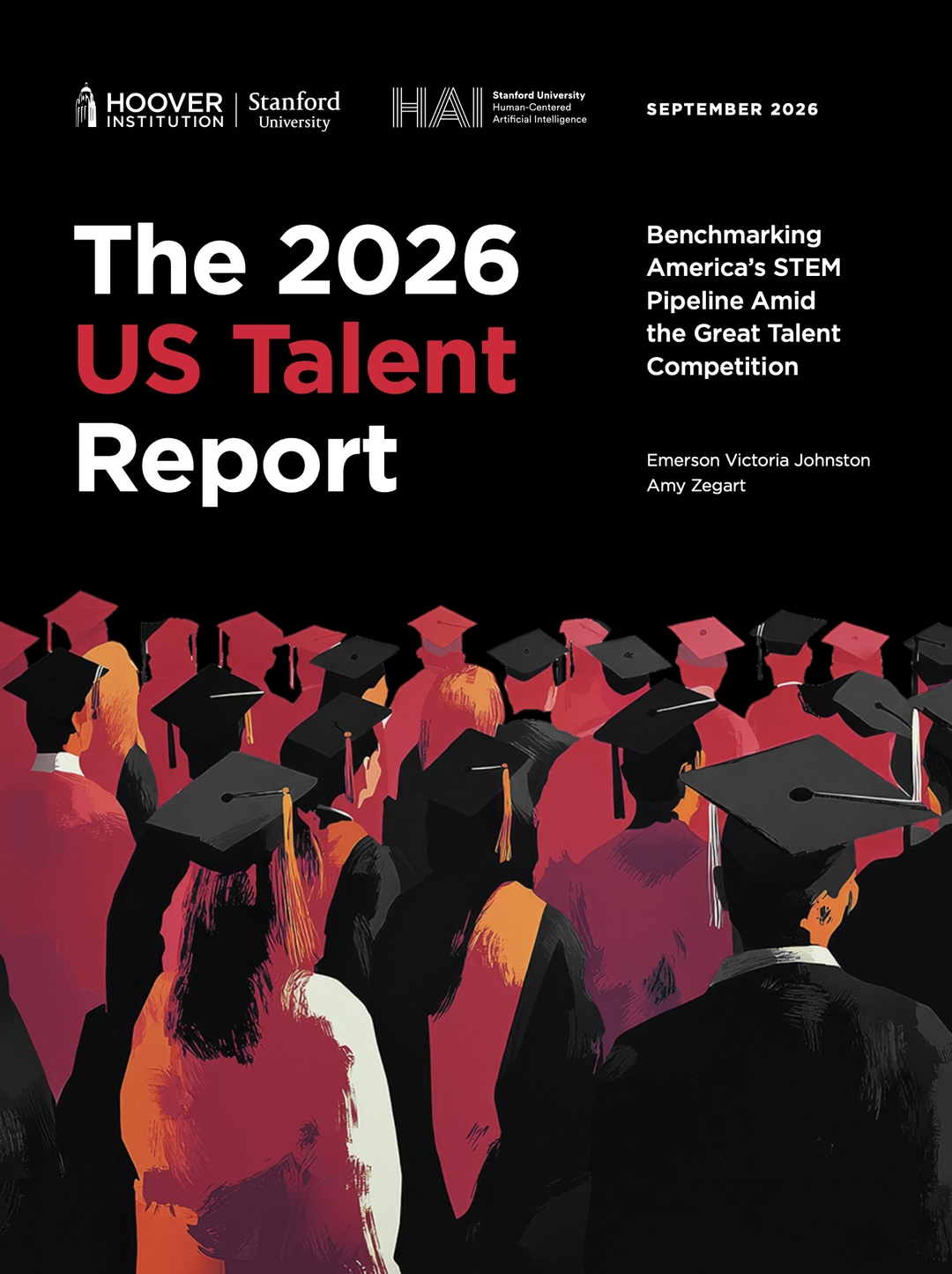
This report assesses America's ability to develop, attract, and retain STEM talent and warns that its advantages over China are narrowing rapidly.
Making Local Law Legible: LLM-Assisted Detection of Discrimination
This brief demonstrates the potential of LLM-assisted review to accelerate legal reform.
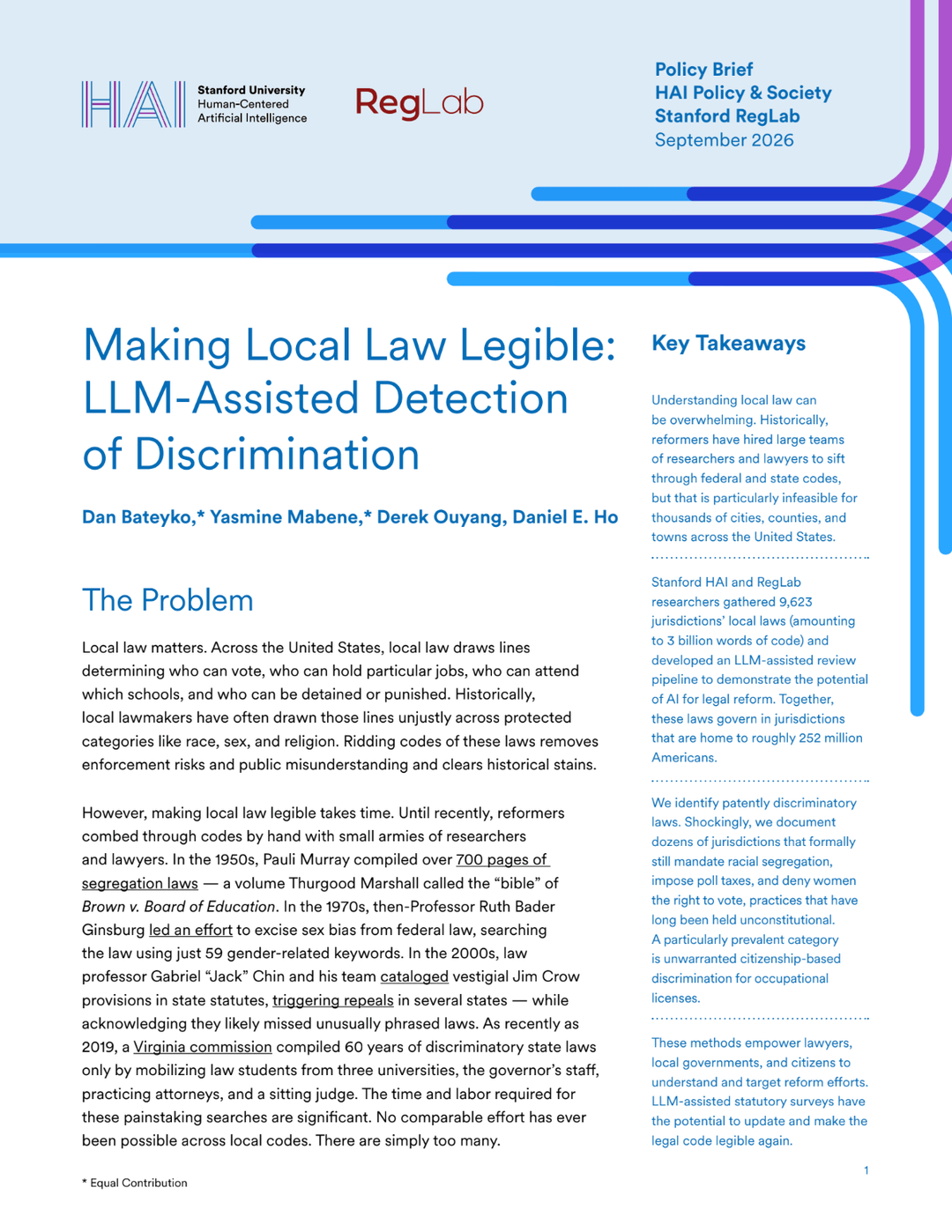
This brief demonstrates the potential of LLM-assisted review to accelerate legal reform.
The Commercial Landscape of AI Sovereignty Offerings
This brief surveys the commercial AI sovereignty market and argues that policymakers should focus on calibrating interdependence rather than pursuing full self-sufficiency.
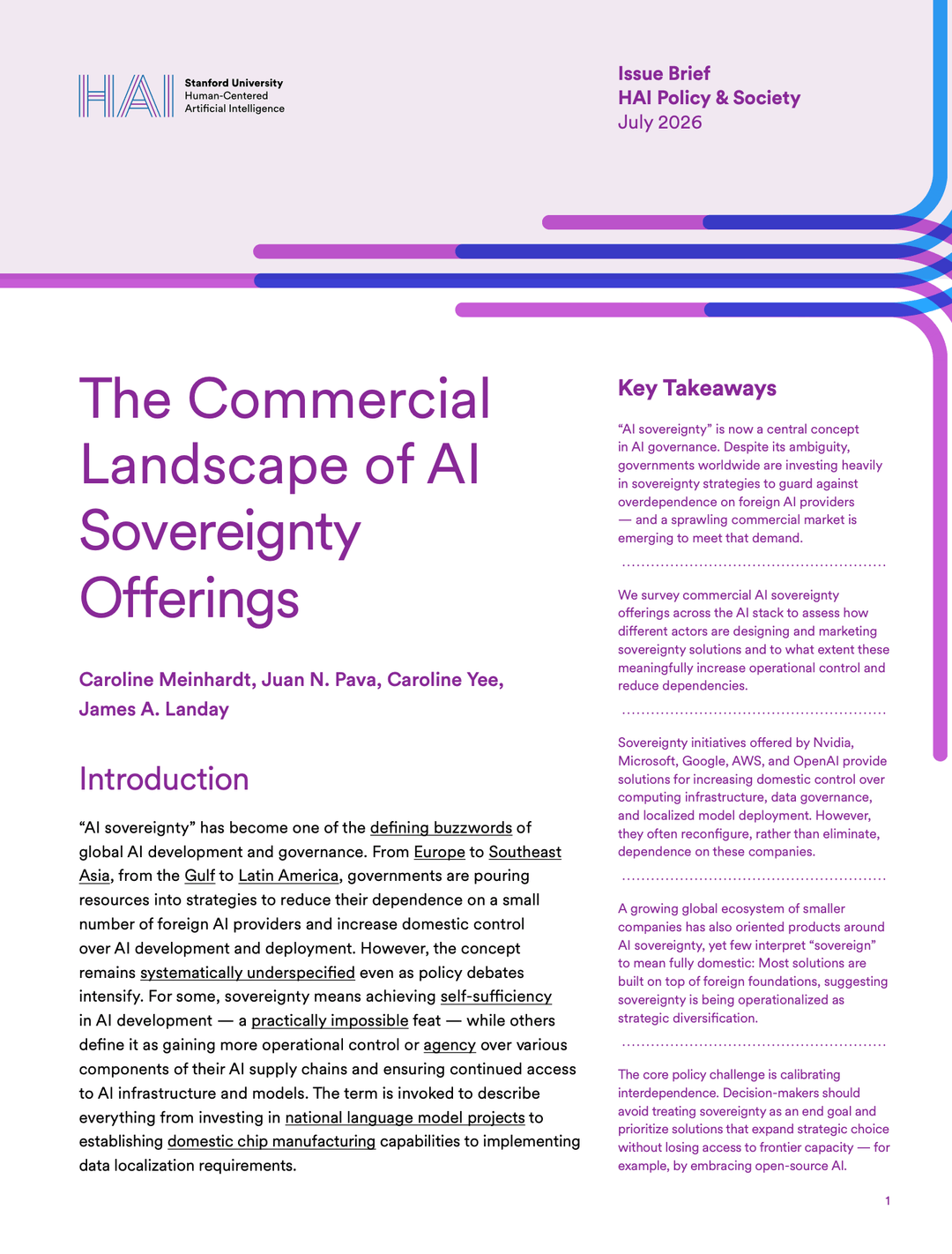
This brief surveys the commercial AI sovereignty market and argues that policymakers should focus on calibrating interdependence rather than pursuing full self-sufficiency.
How Can AI Support Language Digitization and Digital Inclusion?
This white paper analyzes the varying ways AI tools can advance language digitization work, and provides recommendations for responsibly realizing the potential of AI in supporting the digital inclusion of digitally disadvantaged languages.
This white paper analyzes the varying ways AI tools can advance language digitization work, and provides recommendations for responsibly realizing the potential of AI in supporting the digital inclusion of digitally disadvantaged languages.