Enhancing International Cooperation in AI Research: The Case for a Multilateral AI Research Institute
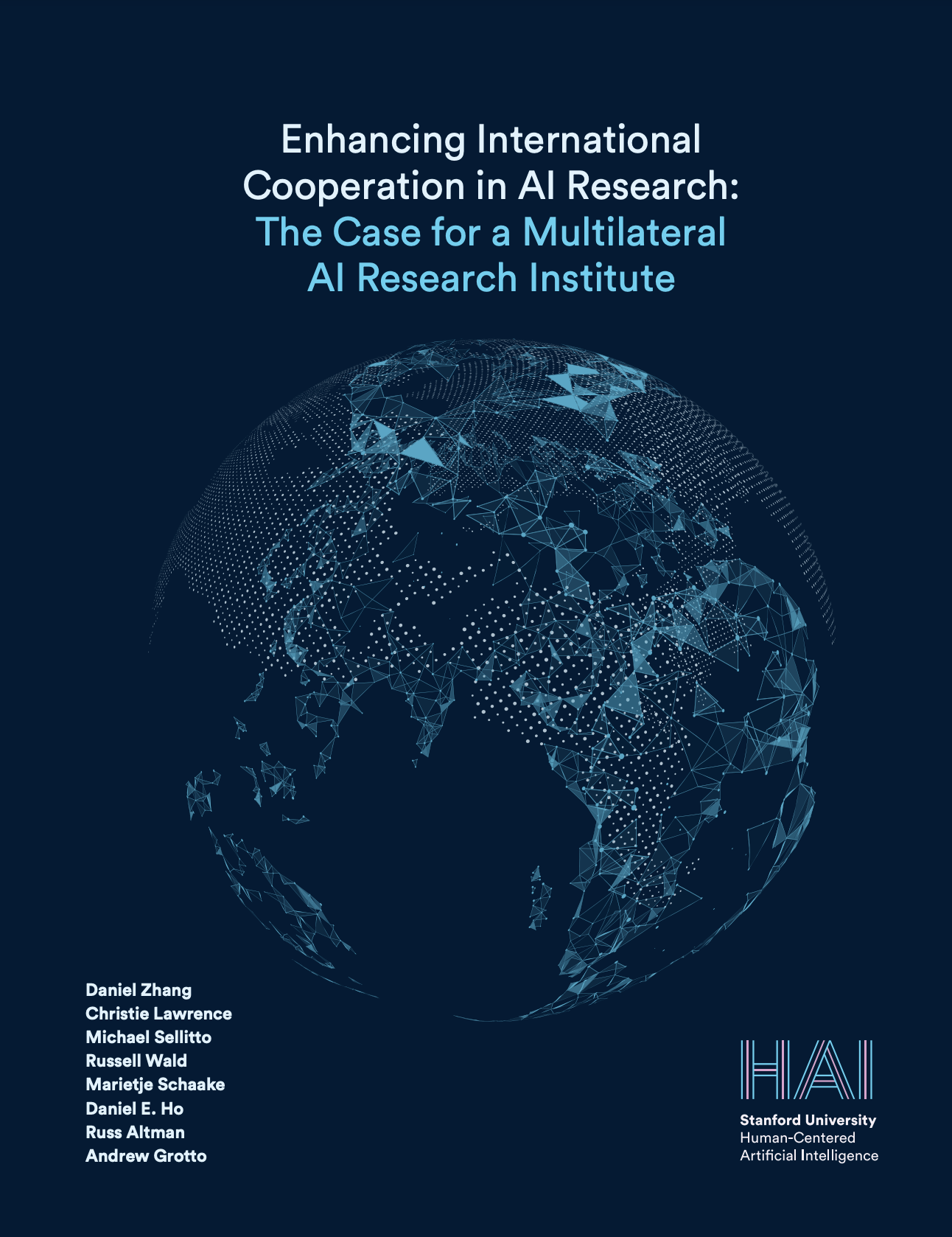
This white paper proposes a Multilateral AI Research Institute (MAIRI) that would provide a venue for force-multiplying AI research and development collaboration among like-minded countries.
Executive Summary
Developing responsible, human-centered artificial intelligence (AI) is a complex and resource-intensive task. As governments around the world race to meet the opportunities and challenges of developing AI, there remains an absence of deep, technical international cooperation that allows like-minded countries to leverage one another’s resources and competitive advantages to facilitate cutting-edge AI research in a manner that upholds and promotes democratic values. Establishing a Multilateral AI Research Institute (MAIRI) would provide such a venue for force-multiplying AI research and development collaboration. It would also reinforce the United States’ leadership as an international hub for basic and applied AI research, the development of AI governance models, and the fostering of AI norms that align with human-centric and democratic values.
In its final report published in March 2021, the National Security Commission on Artificial Intelligence (NSCAI) recommended that the United States work closely with key allies and partners to establish a MAIRI and called for congressional authorization and funding to allow the National Science Foundation (NSF) to lead the effort. Built upon these recommendations, this white paper outlines a blueprint for an AI research institute that can champion human-centered approaches to conducting AI research, promote multi-stakeholder international R&D cooperation to unleash innovation and economic prosperity, and cultivate AI talent. MAIRI can demonstrate to the world that AI-enabled technologies can benefit humanity, strengthen democracy, and support inclusive economic growth.
We recommend:
MAIRI should be established in the United States with a physical presence located in a recognized academic institution, potentially to include partnerships with satellite centers, such as NSF National AI Research Institutes. Partnering with an academic institution can expedite the establishment of MAIRI by leveraging existing administrative and research infrastructure and multidisciplinary research approaches while ensuring academic independence and integrity.
MAIRI should operate an on-site laboratory that conducts cutting-edge multidisciplinary AI research on basic and applied R&D as well as research on AI governance. It should also facilitate a series of research programs—such as conferences, seminars, workshops, residence programs, and fellowships.
MAIRI should be created as a cooperative agreement-based research institute, with the NSF as the primary anchor in coordination with the Department of State and other federal entities. In the long term, the U.S. government could explore adopting a mature and established MAIRI with developed functions, goals, and agendas as an FFRDC.
MAIRI should be jointly established, funded, and governed by the United States with like-minded allies and partners. Member governments will jointly fund MAIRI as well as negotiate and commit to a founding agreement that details MAIRI’s governance structure, values and guideposts, research security and integrity principles, and research agenda
Related Publications
The 2026 US Talent Report: Benchmarking America’s STEM Pipeline Amid the Great Talent Competition
This report assesses America's ability to develop, attract, and retain STEM talent and warns that its advantages over China are narrowing rapidly.
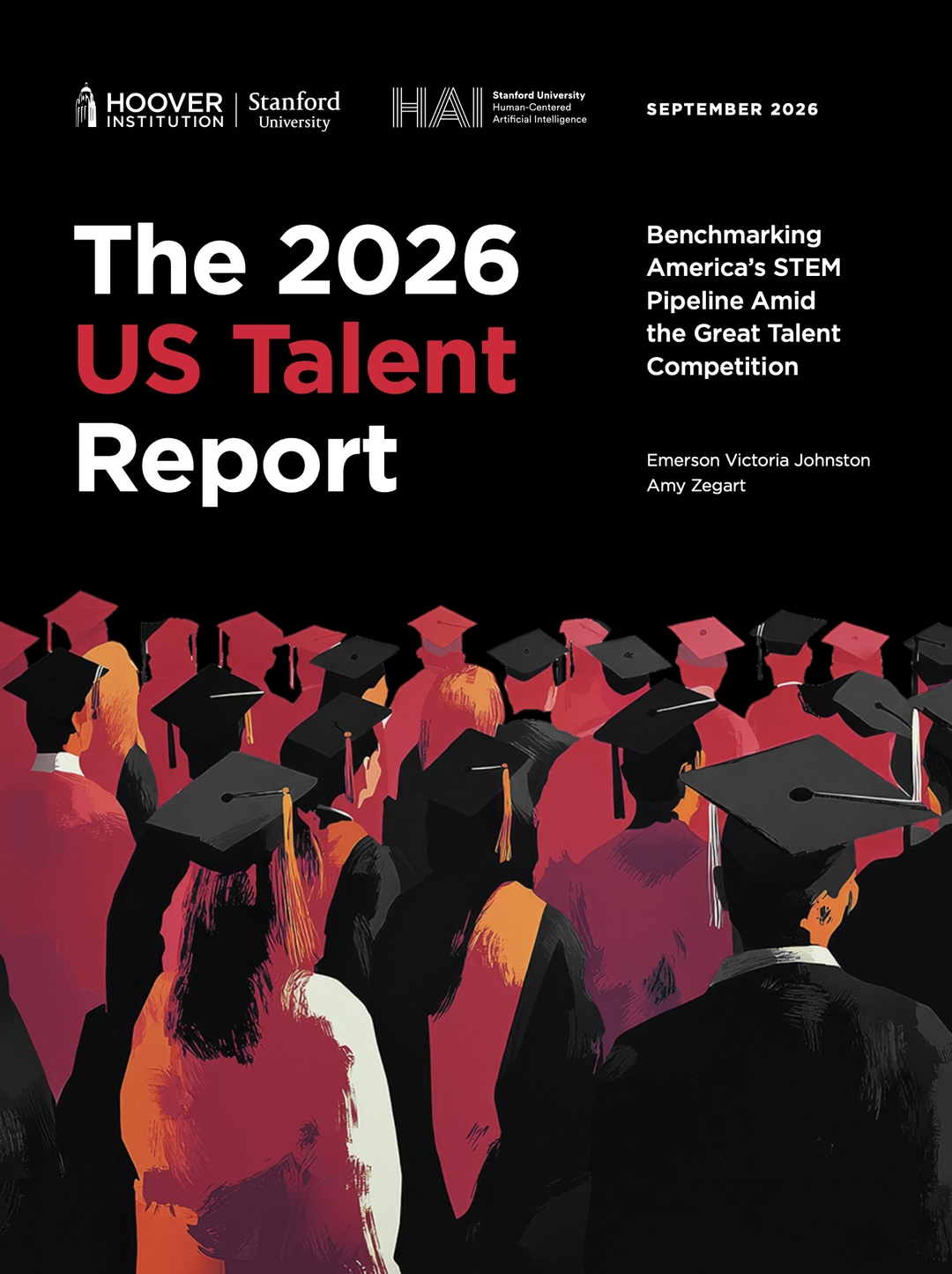
This report assesses America's ability to develop, attract, and retain STEM talent and warns that its advantages over China are narrowing rapidly.
The Commercial Landscape of AI Sovereignty Offerings
This brief surveys the commercial AI sovereignty market and argues that policymakers should focus on calibrating interdependence rather than pursuing full self-sufficiency.
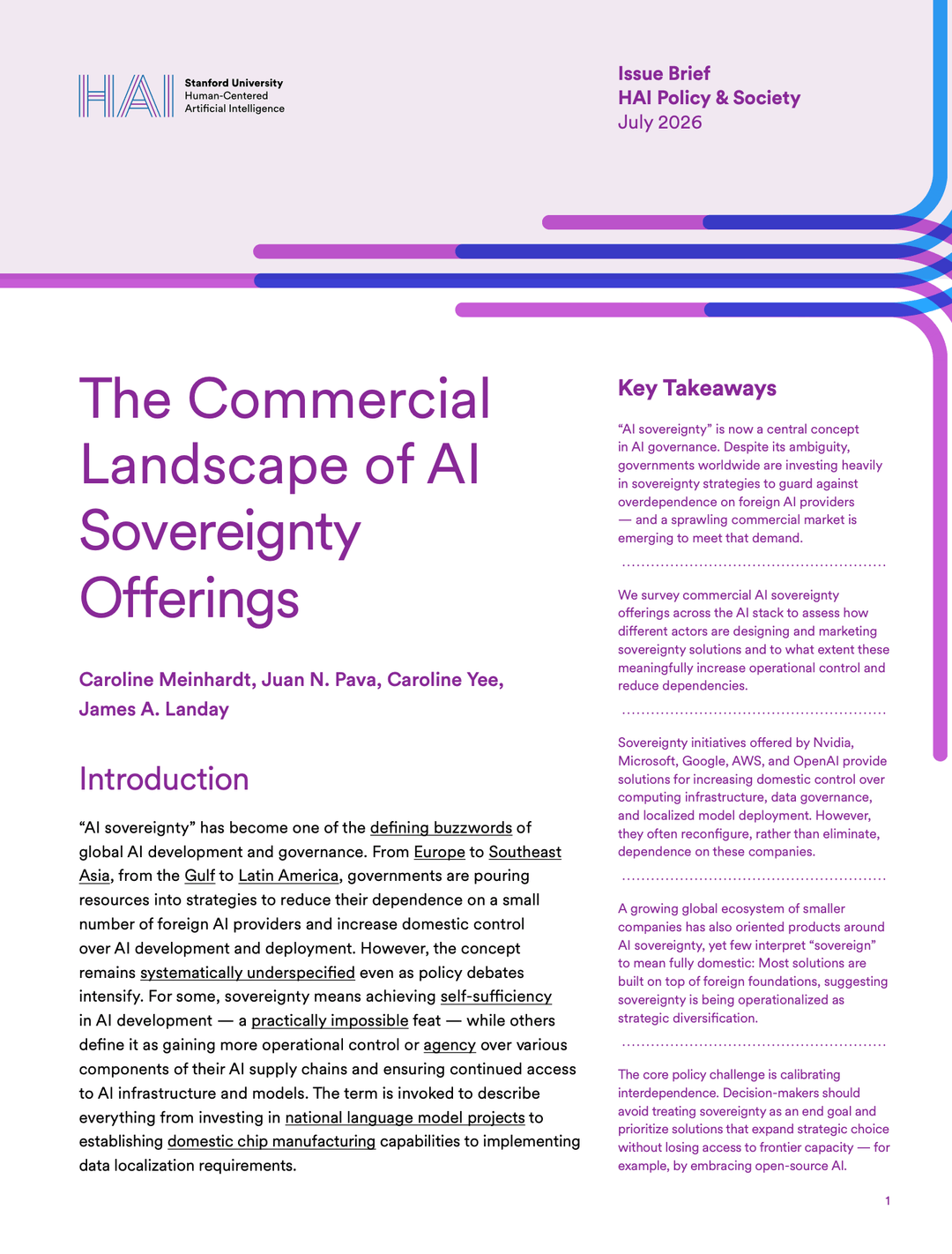
This brief surveys the commercial AI sovereignty market and argues that policymakers should focus on calibrating interdependence rather than pursuing full self-sufficiency.
How Can AI Support Language Digitization and Digital Inclusion?

This white paper analyzes the varying ways AI tools can advance language digitization work, and provides recommendations for responsibly realizing the potential of AI in supporting the digital inclusion of digitally disadvantaged languages.
This white paper analyzes the varying ways AI tools can advance language digitization work, and provides recommendations for responsibly realizing the potential of AI in supporting the digital inclusion of digitally disadvantaged languages.
Beyond DeepSeek: China's Diverse Open-Weight AI Ecosystem and Its Policy Implications
Almost one year after the “DeepSeek moment,” this brief analyzes China’s diverse open-model ecosystem and examines the policy implications of their widespread global diffusion.
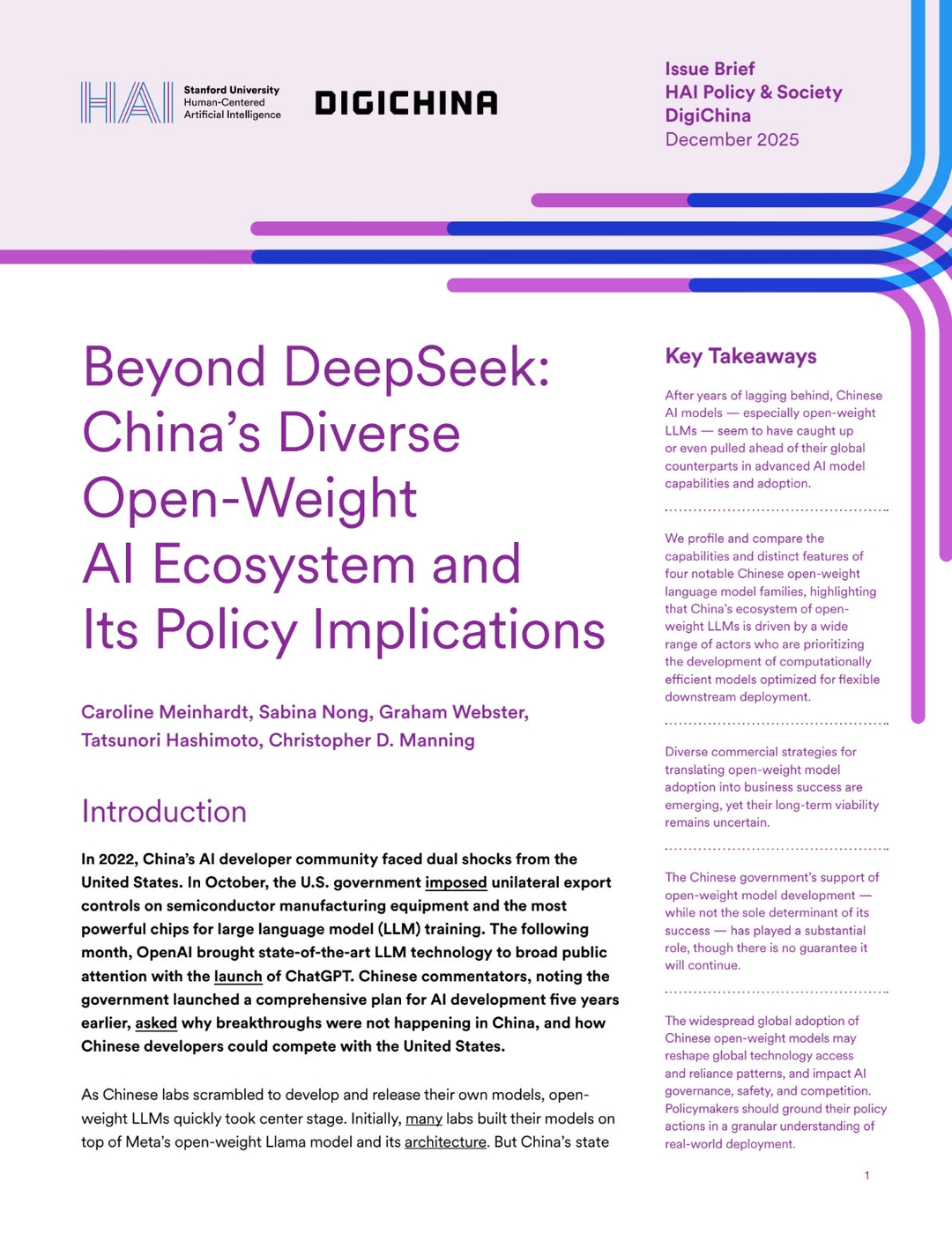
Almost one year after the “DeepSeek moment,” this brief analyzes China’s diverse open-model ecosystem and examines the policy implications of their widespread global diffusion.