Get the latest news, advances in research, policy work, and education program updates from HAI in your inbox weekly.
Sign Up For Latest News
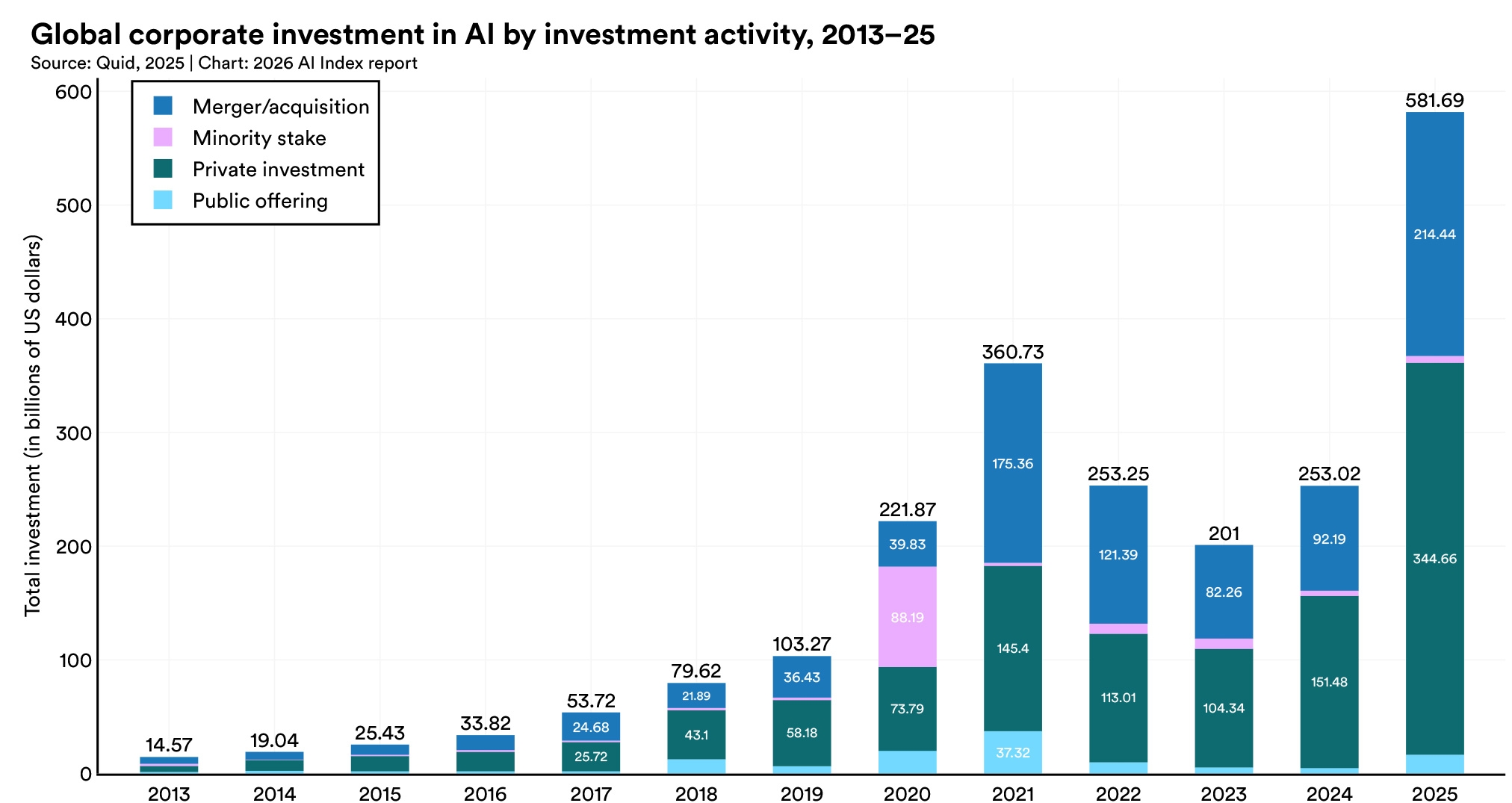
Private investment grew fastest at 127.5% and now accounts for 60% of the total. Generative AI led the surge, growing more than 200% and capturing nearly half of all private AI funding. Newly funded AI companies rose 71%, and billion-dollar funding events nearly doubled.
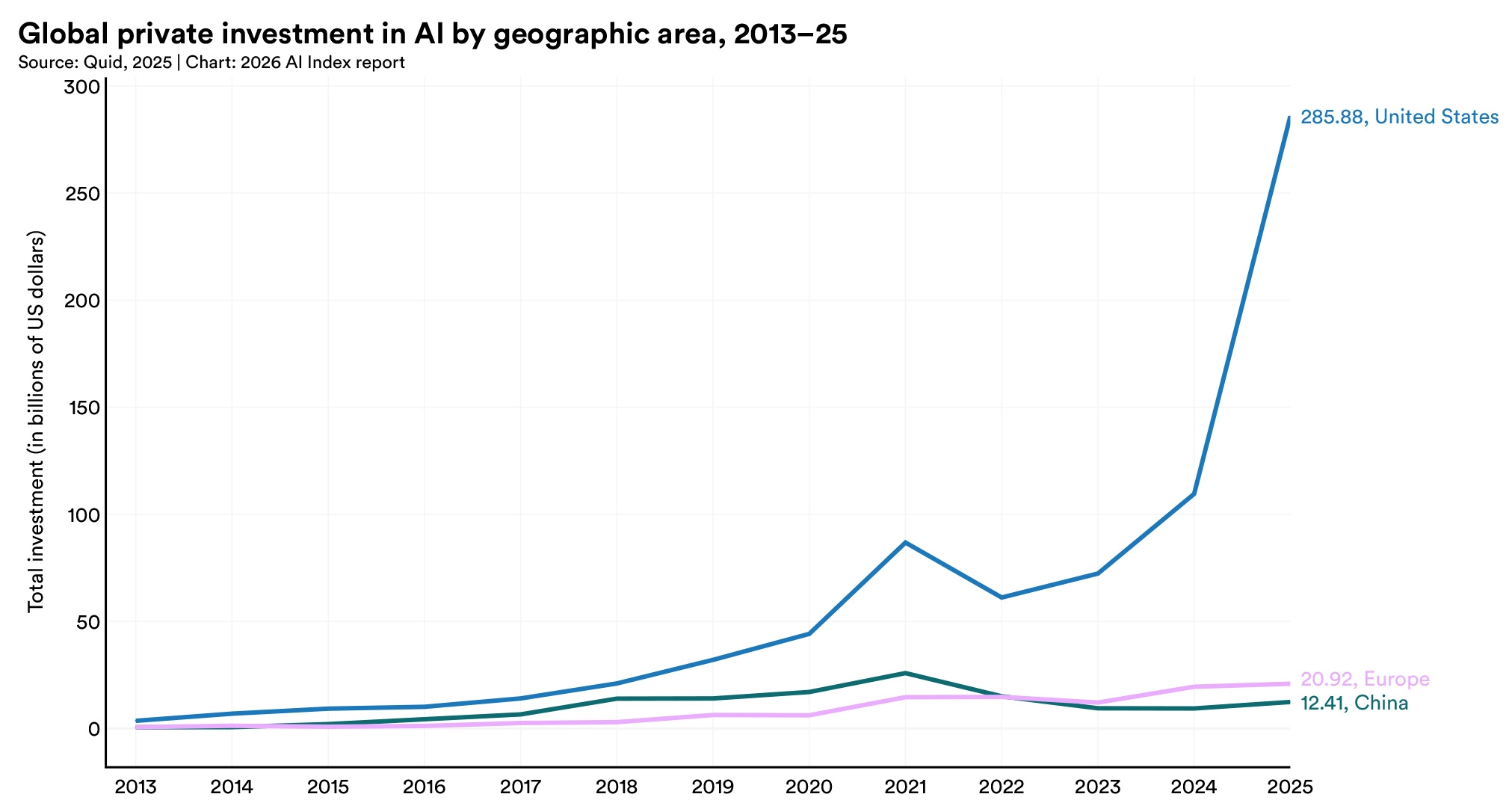
In generative AI, U.S. investment exceeded the combined total of China and Europe by a wide margin. However, private investment figures likely understate China’s total AI spending, as government guidance funds have deployed an estimated $184 billion into AI firms between 2000 and 2023.
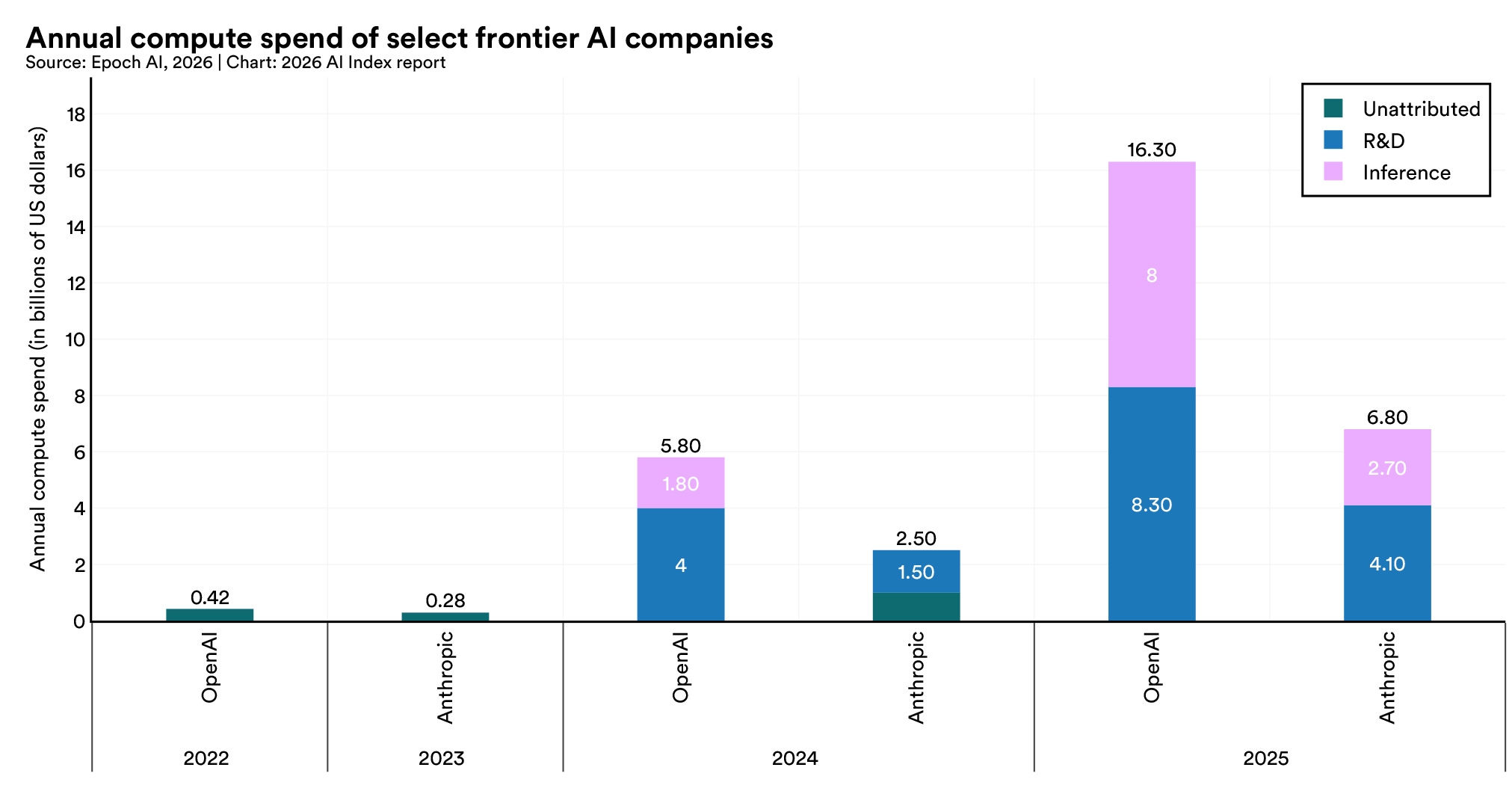
Leading frontier companies are reaching meaningful revenue scale in a short period of time, but compute spend has increased significantly year-over-year. Major cloud providers have accelerated capital expenditures, with Google reporting more than $150 billion in annual capex in 2025.
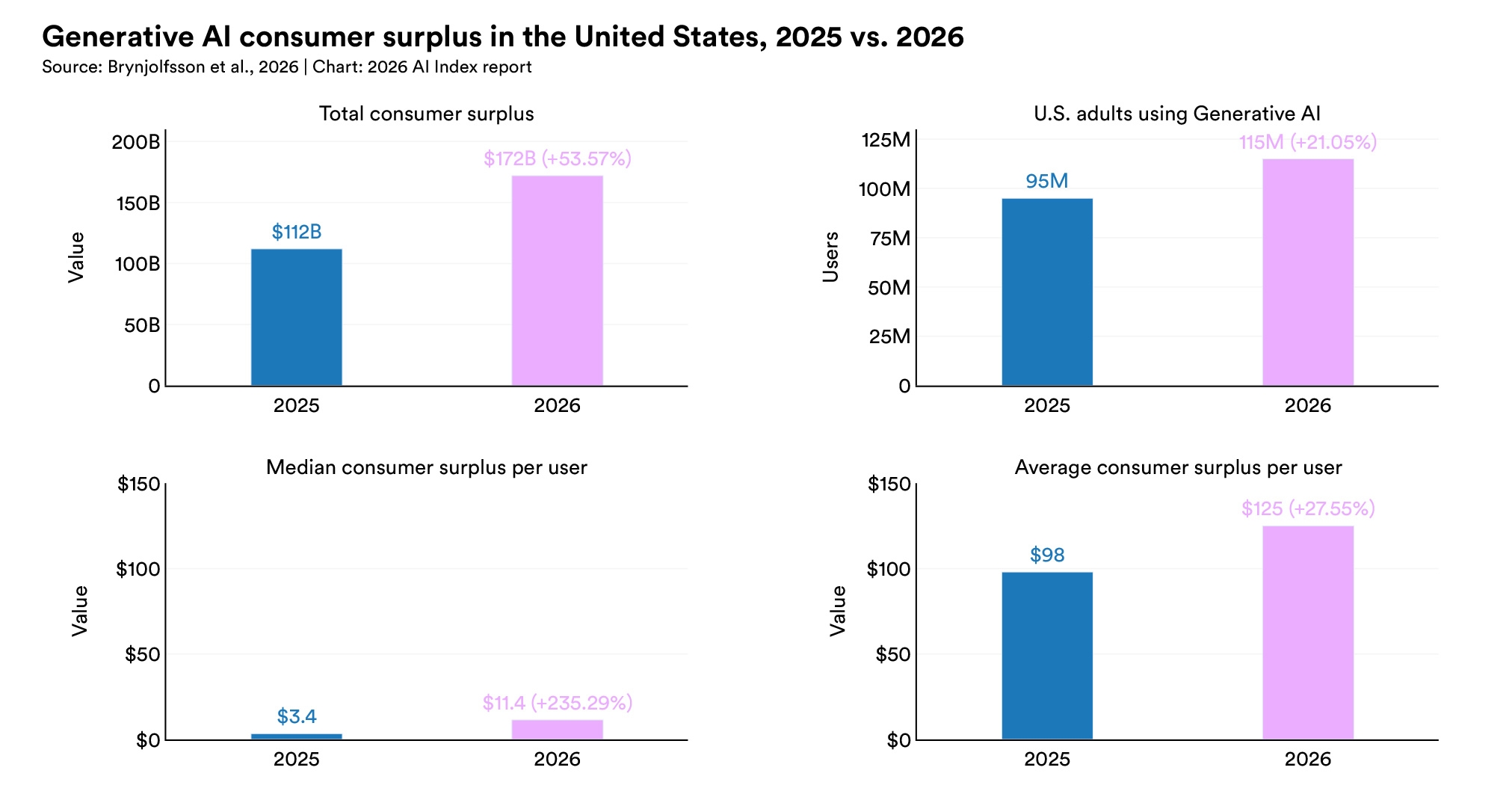
Estimated U.S. consumer surplus reached $172 billion annually by early 2026, up from $112 billion a year earlier, with the median value per user tripling over the same period. Most of these tools remain free or close to it.
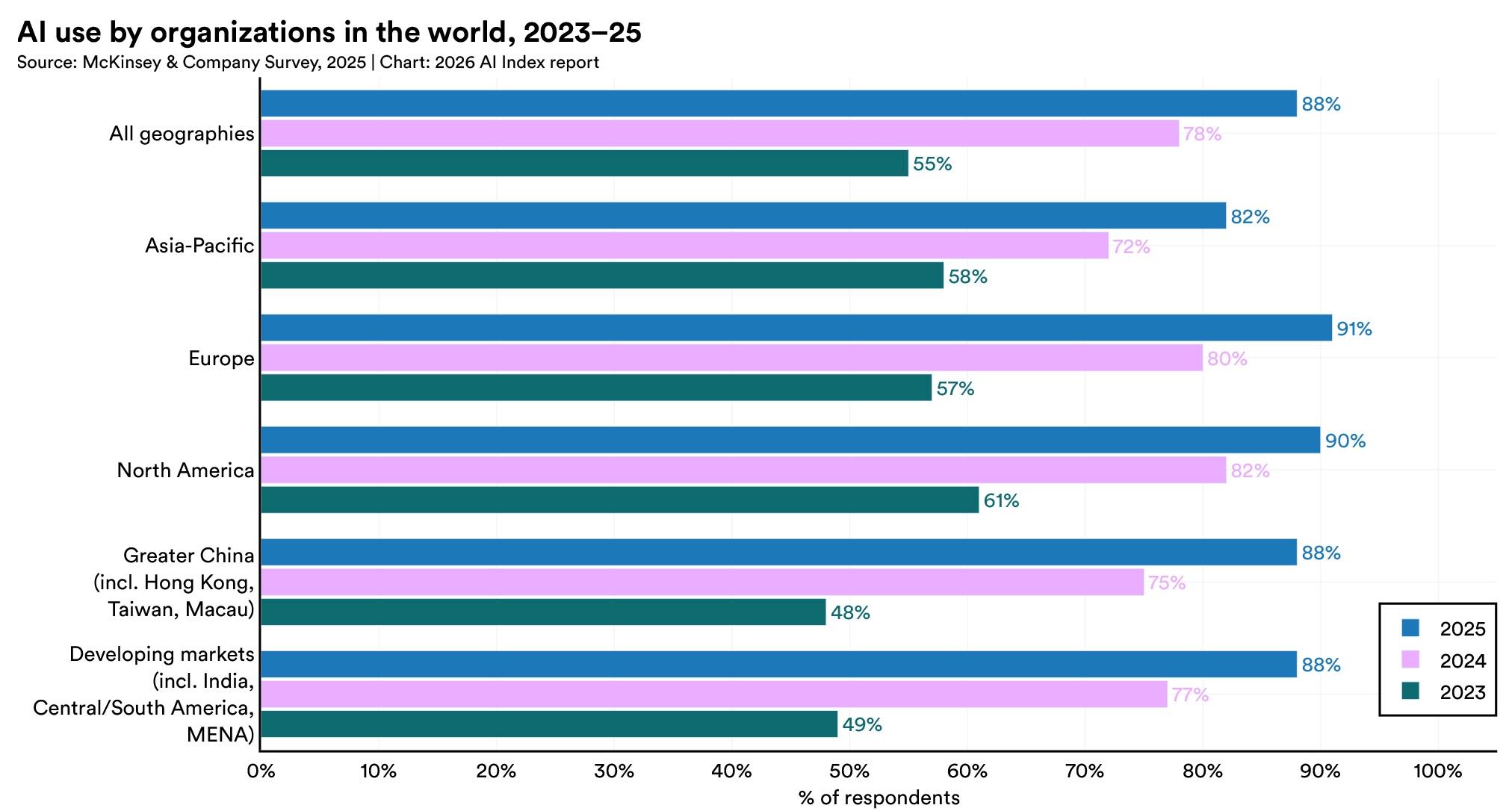
Generative AI is now used in at least one business function at 70% of organizations, and China and Europe posted the highest year-over-year increases. AI agent deployment was in the single digits across nearly all business functions.
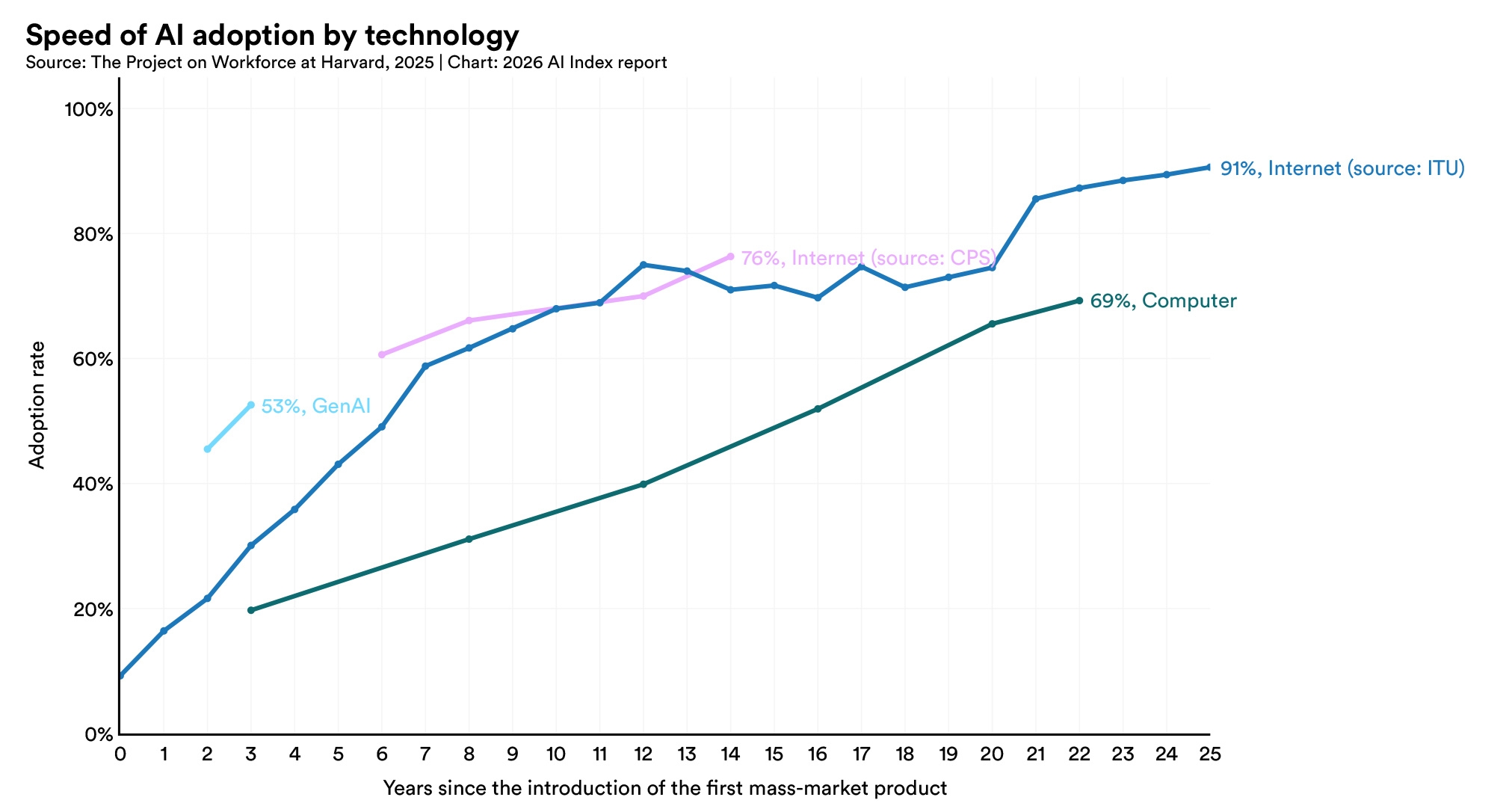
Adoption varies widely across countries and correlates strongly with GDP per capita, though some outpace what income would predict, including Singapore at 61% and the United Arab Emirates at 64%. Despite its lead in AI investment and model development, the United States ranks 24th at 28.3%.
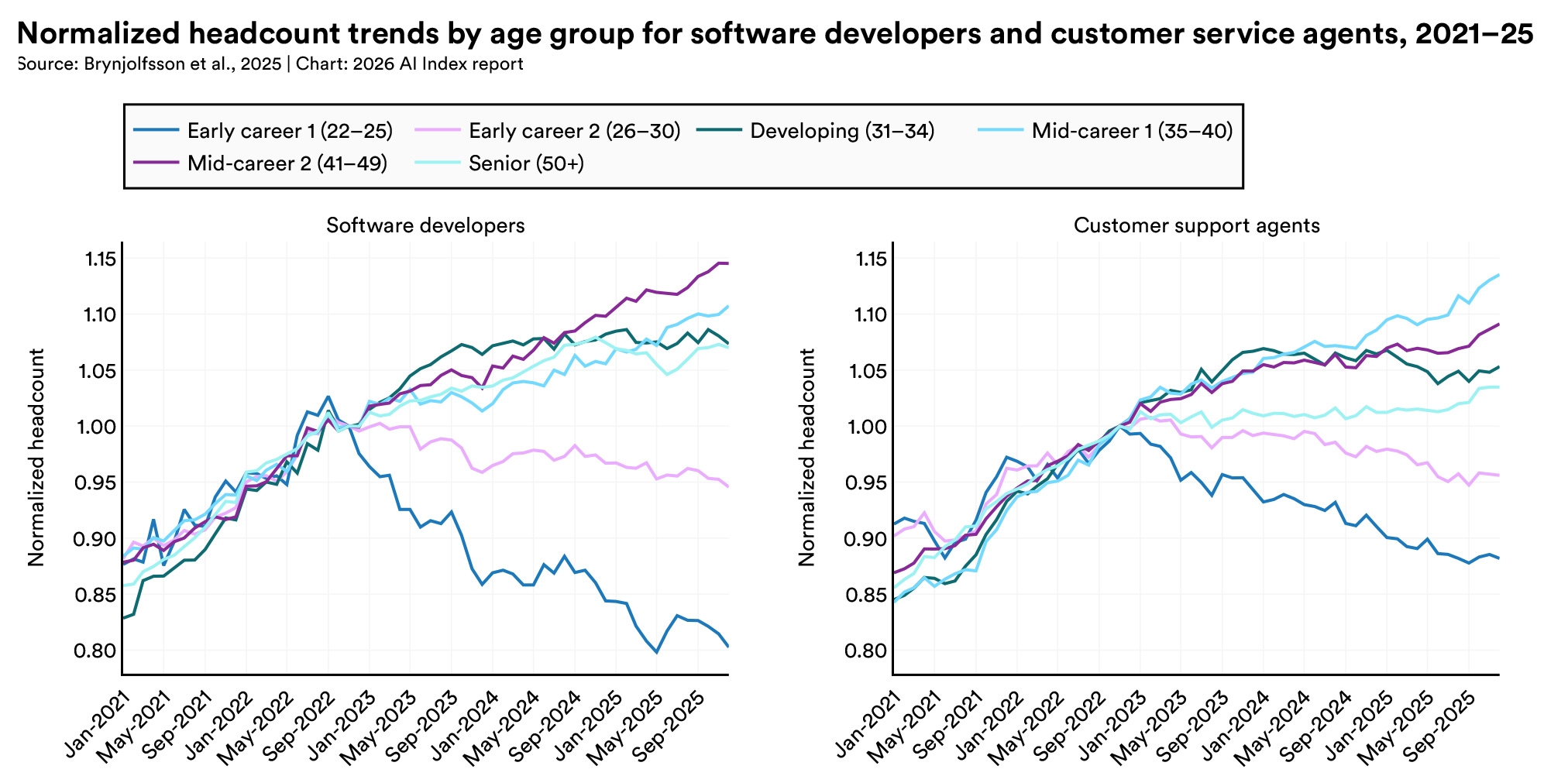
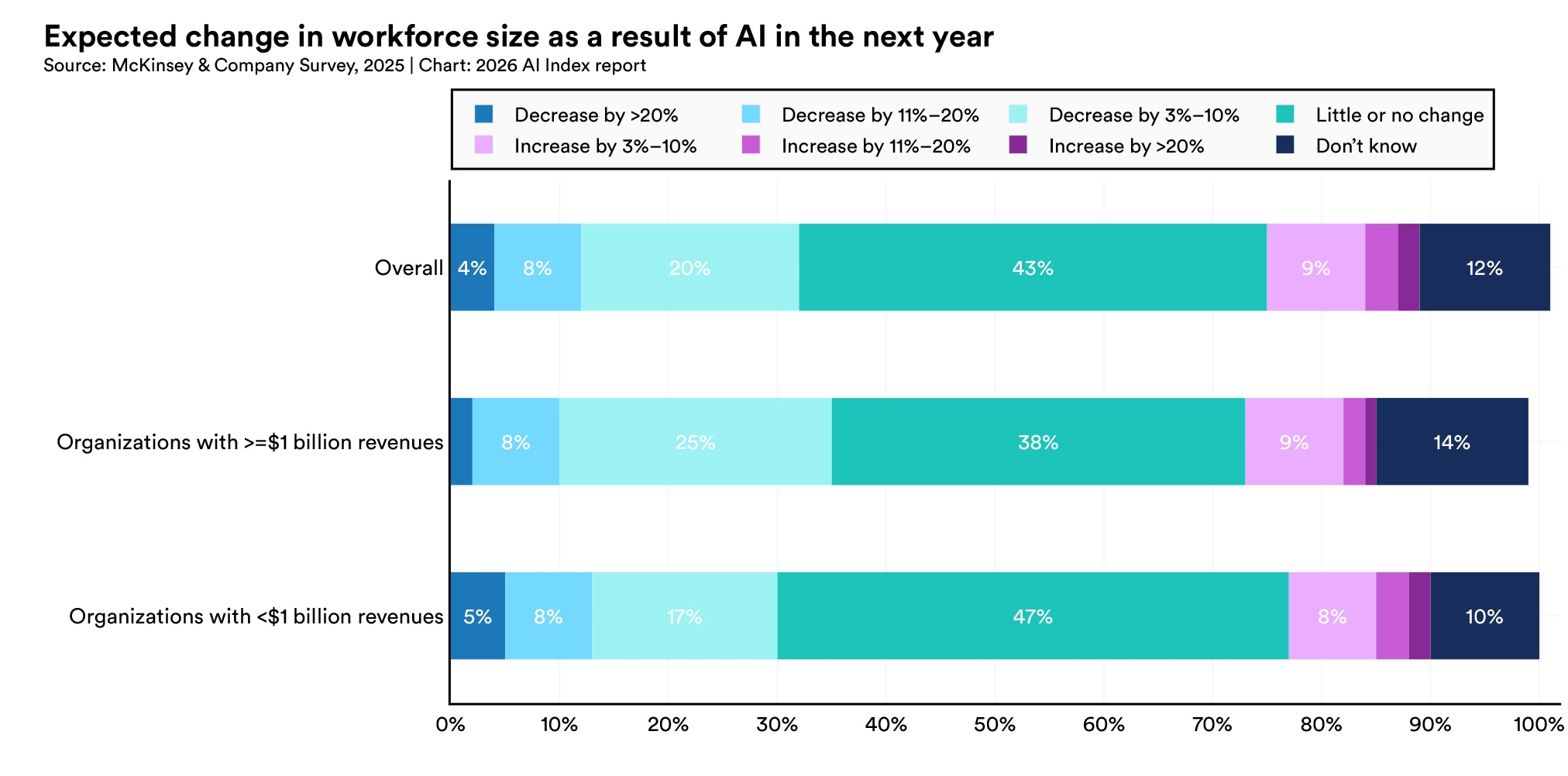
Employment for software developers ages 22 to 25 has fallen nearly 20% from 2024. Employer surveys point to further change ahead, with one-third of respondents expecting workforce reductions over the coming year.
Almost half of organizations surveyed expected little to no change. Anticipated reductions are highest in service operations, supply chain, and software engineering. Across nearly all functions, anticipated decreases outpaces those already observed.
Studies report gains of 14% to 15% in customer support, 26% in software development, and 50% in marketing output. Gains are smaller in tasks requiring deeper reasoning, and recent evidence raises concerns that heavy AI reliance may carry long-term learning penalties that slow skill development over time.

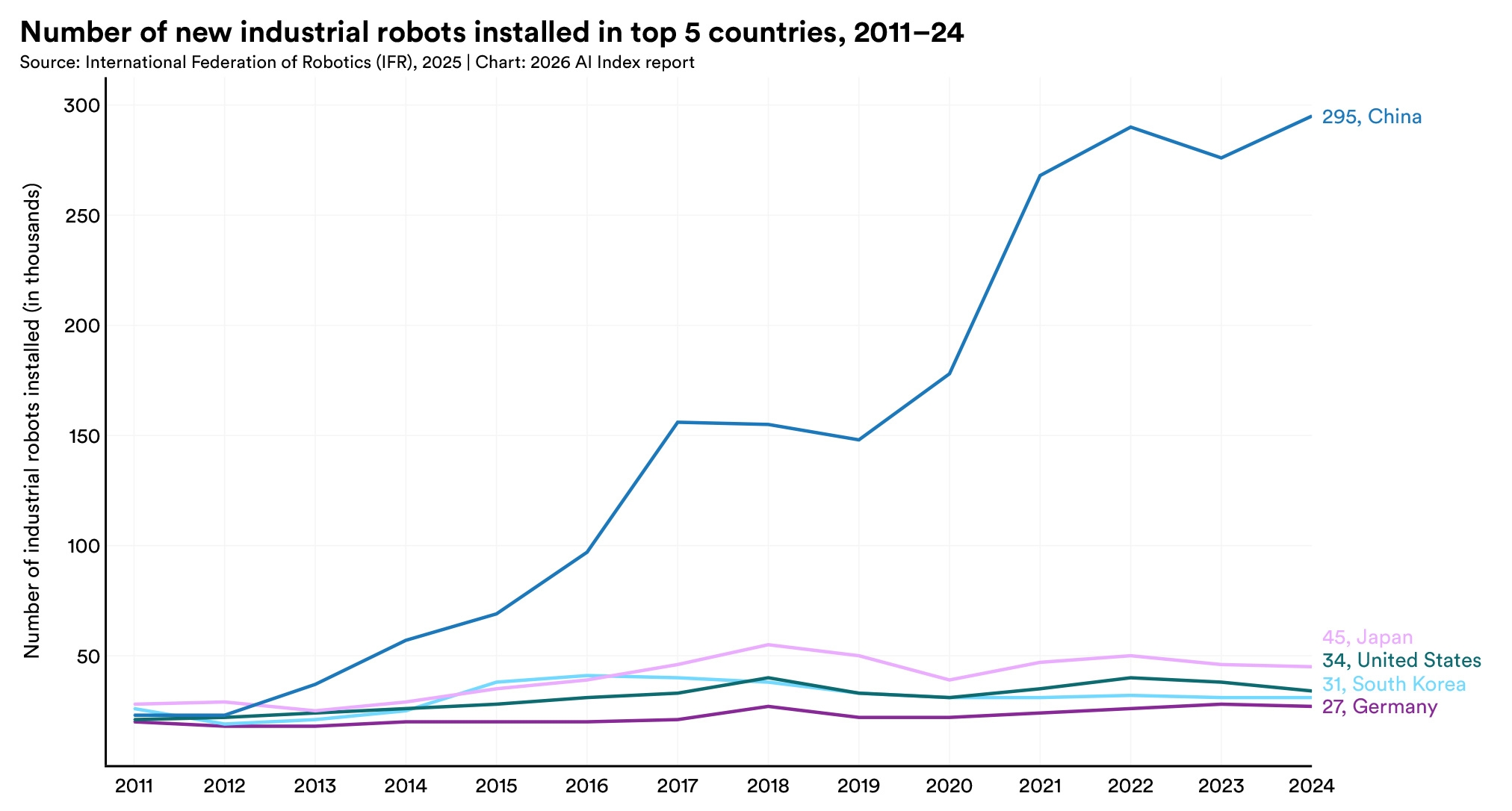
China accounted for 54% of industrial robots installed globally, up from 51.1% in 2023. Global year-over-year growth was flat, and several major markets, including the United States, Germany, and Italy saw declines. Taiwan was an exception, recording the highest year-over-year growth at 33%.
Support the AI Index in our mission to provide comprehensive, unbiased data on artificial intelligence worldwide. Your support sustains rigorous research, data collection, and analysis that informs policymakers, researchers, journalists, and business leaders—ensuring transparent AI metrics guide humanity toward a better future.
Make a Gift to AI Index