Education | The 2026 AI Index Report | Stanford HAI
Stanford
University
  • Stanford Home
  • Maps & Directions
  • Search Stanford
  • Emergency Info
  • Terms of Use
  • Privacy
  • Copyright
  • Trademarks
  • Non-Discrimination
  • Accessibility
© Stanford University.  Stanford, California 94305.
Skip to content
  • About

    • About
    • People
    • Get Involved with HAI
    • Support HAI
    • Subscribe to Email
  • Research

    • Research
    • Fellowship Programs
    • Grants
    • Student Affinity Groups
    • Centers & Labs
    • Research Publications
    • Research Partners
  • Education

    • Education
    • Executive and Professional Education
    • Government and Policymakers
    • K-12
    • Stanford Students
  • Policy

    • Policy
    • Policy Publications
    • Policymaker Education
    • Student Opportunities
  • AI Index

    • AI Index
    • AI Index Report
    • Global Vibrancy Tool
    • People
  • News
  • Events
  • Industry
  • Centers & Labs
Navigate
  • About
  • Events
  • AI Glossary
  • Careers
  • Search
Participate
  • Get Involved
  • Support HAI
  • Contact Us

Stay Up To Date

Get the latest news, advances in research, policy work, and education program updates from HAI in your inbox weekly.

Sign Up For Latest News

07

Education

Education, Skills

This chapter assesses how AI is reshaping education systems and what it means  for teaching, learning, and career readiness. 

See Chapter 8

All Chapters

  • Back to Overview
  • 01Research and Development
  • 02Technical Performance
  • 03Responsible AI
  • 04Economy
  • 05Science
  • 06Medicine
  • 07Education
  • 08Policy and Governance
  • 09Public Opinion

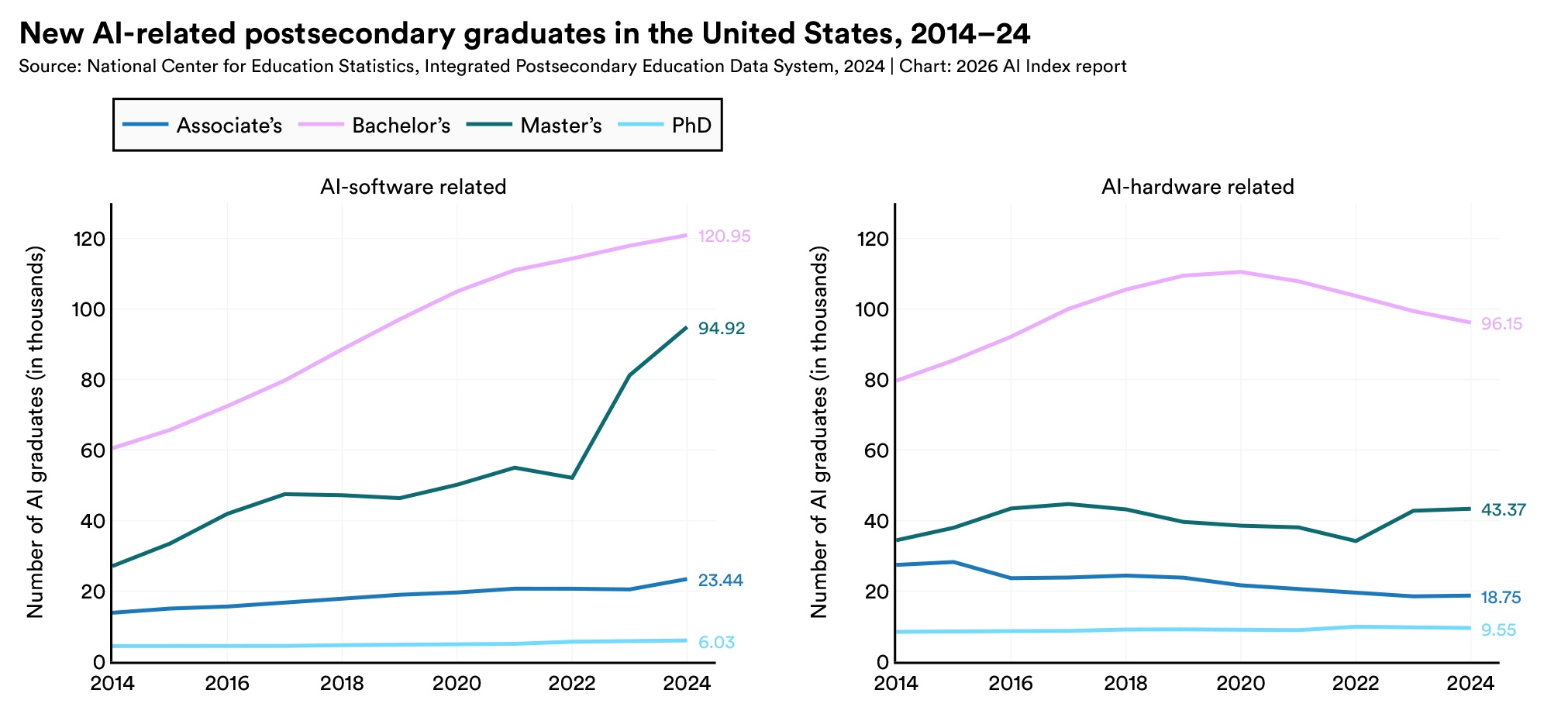
1. CS enrollment fell 11% at U.S. four-year universities between 2024 and 2025, but AI-related graduate programs continued to grow.

Master's graduates in AI software-related fields rose 17% from 2023 to 2024, suggesting that demand for AI specialization is holding up even as broader CS enrollment cools.

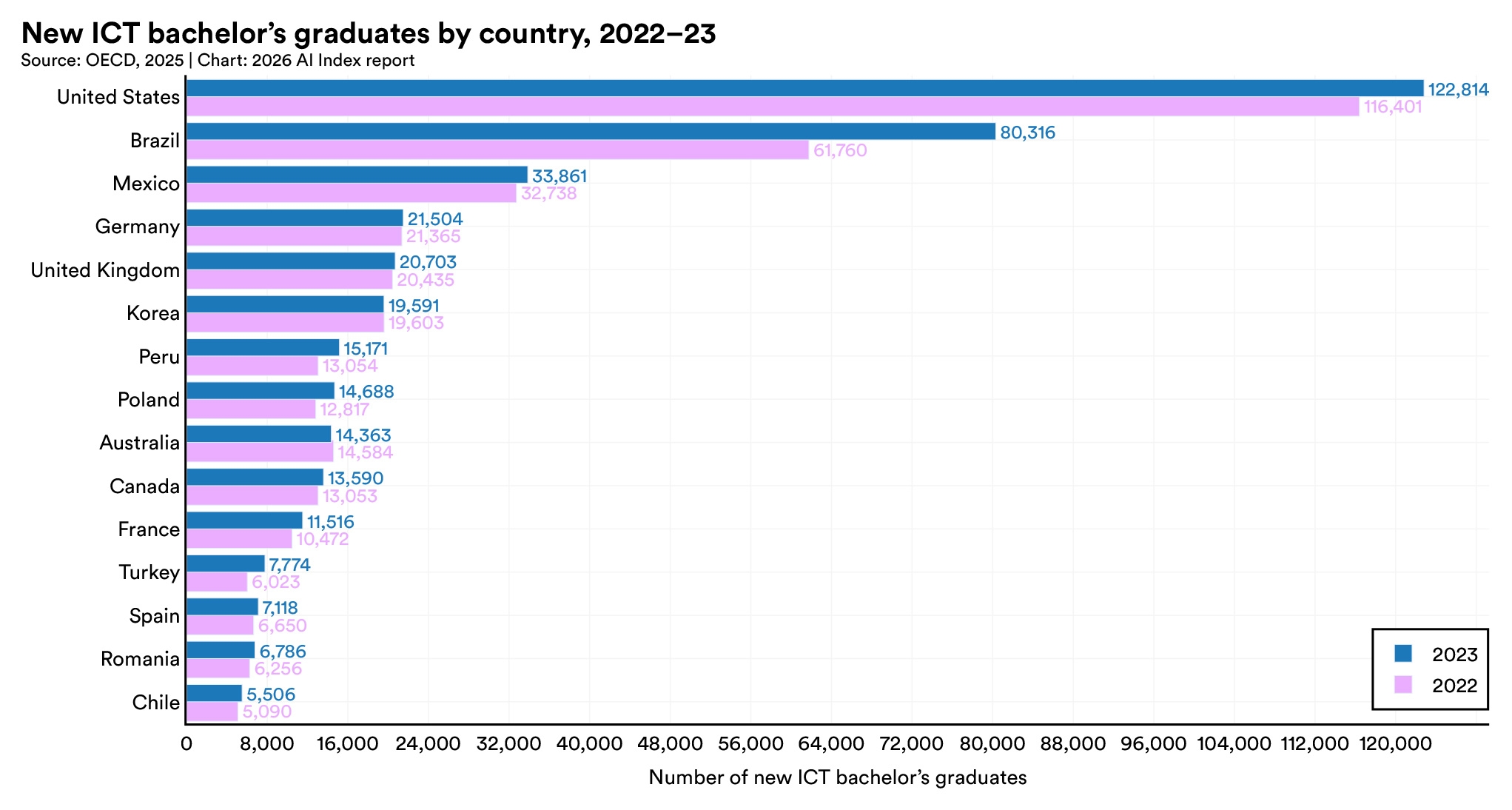
2. The U.S. remains a global leader in producing information, communications, and technology (ICT) graduates at all degree levels, but other countries are growing faster.

Turkey, Brazil, and Mexico have increased their ICT graduate output more rapidly in recent years.
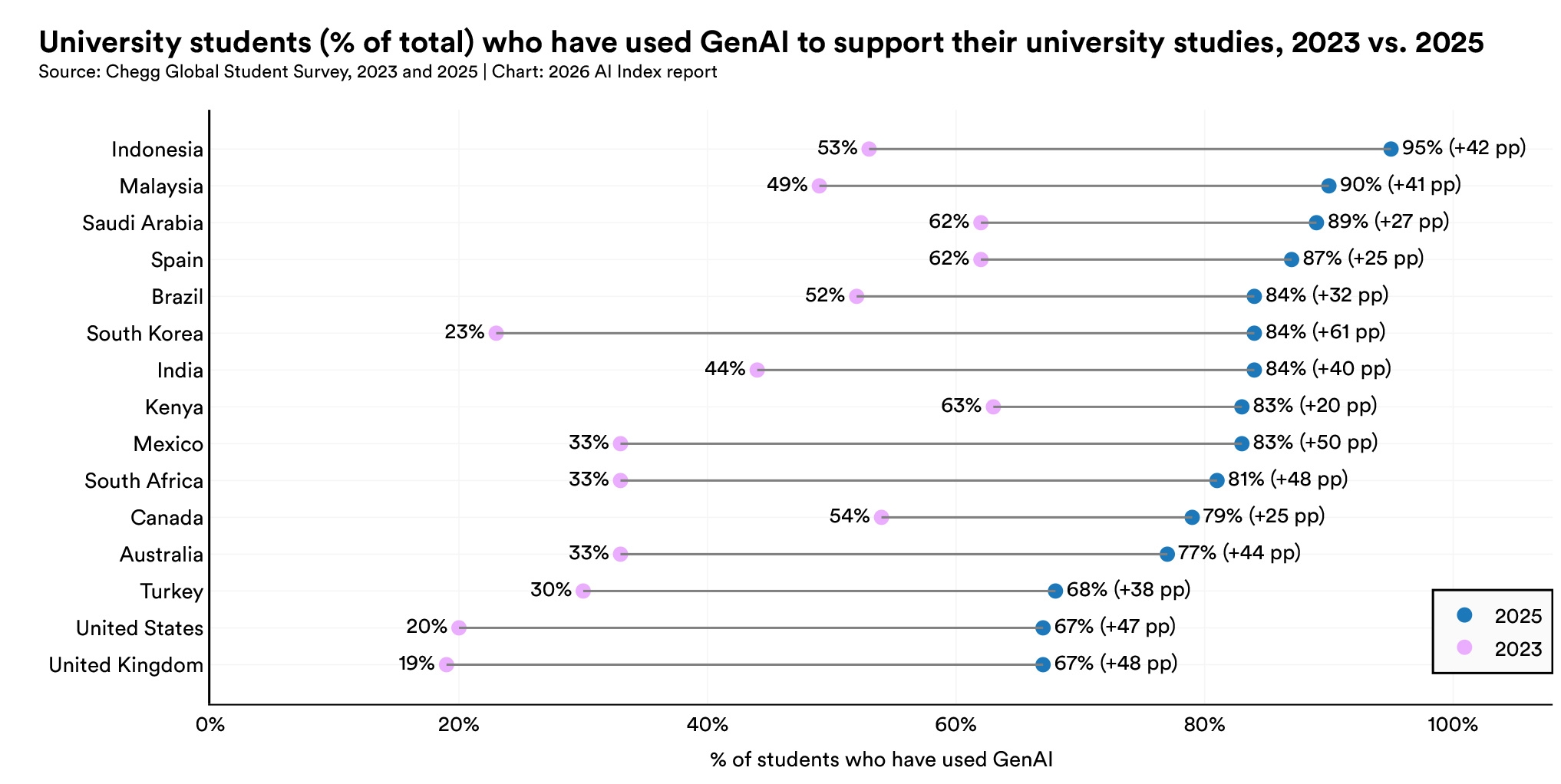
3. Four out of five U.S. high school and college students now use AI for schoolwork, while school policies have not kept pace.

Only half of middle and high schools have AI policies, and just 6% of teachers say those policies are clear. Students most commonly use generative AI for research, essay editing, and brainstorming.
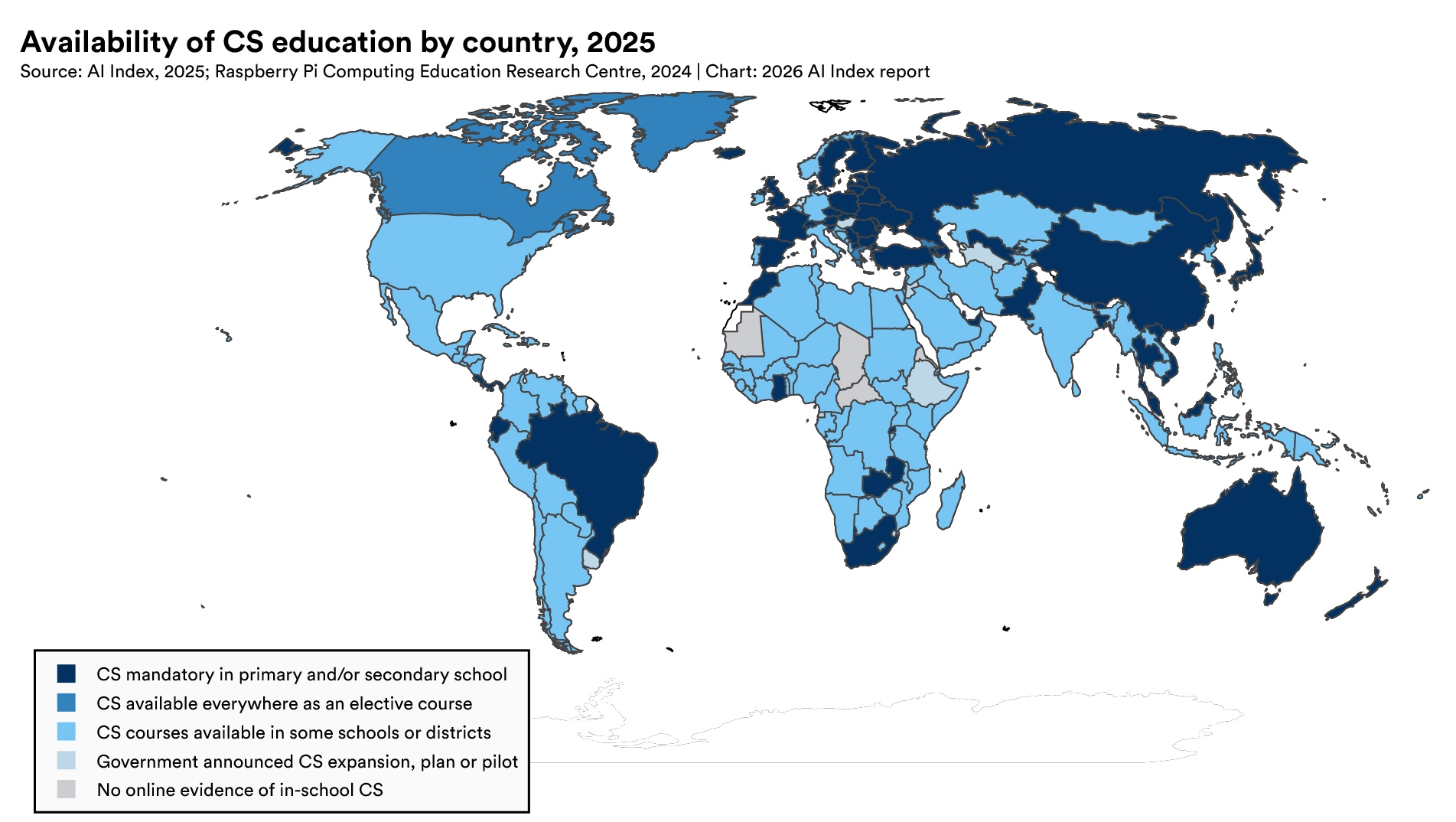
4. More than 90% of countries now offer computer science to primary or secondary students, but AI education has been slower to take hold.

China and the United Arab Emirates both mandated AI education starting with the 2025-26 school year, signaling a shift toward formal AI instruction at the national level.
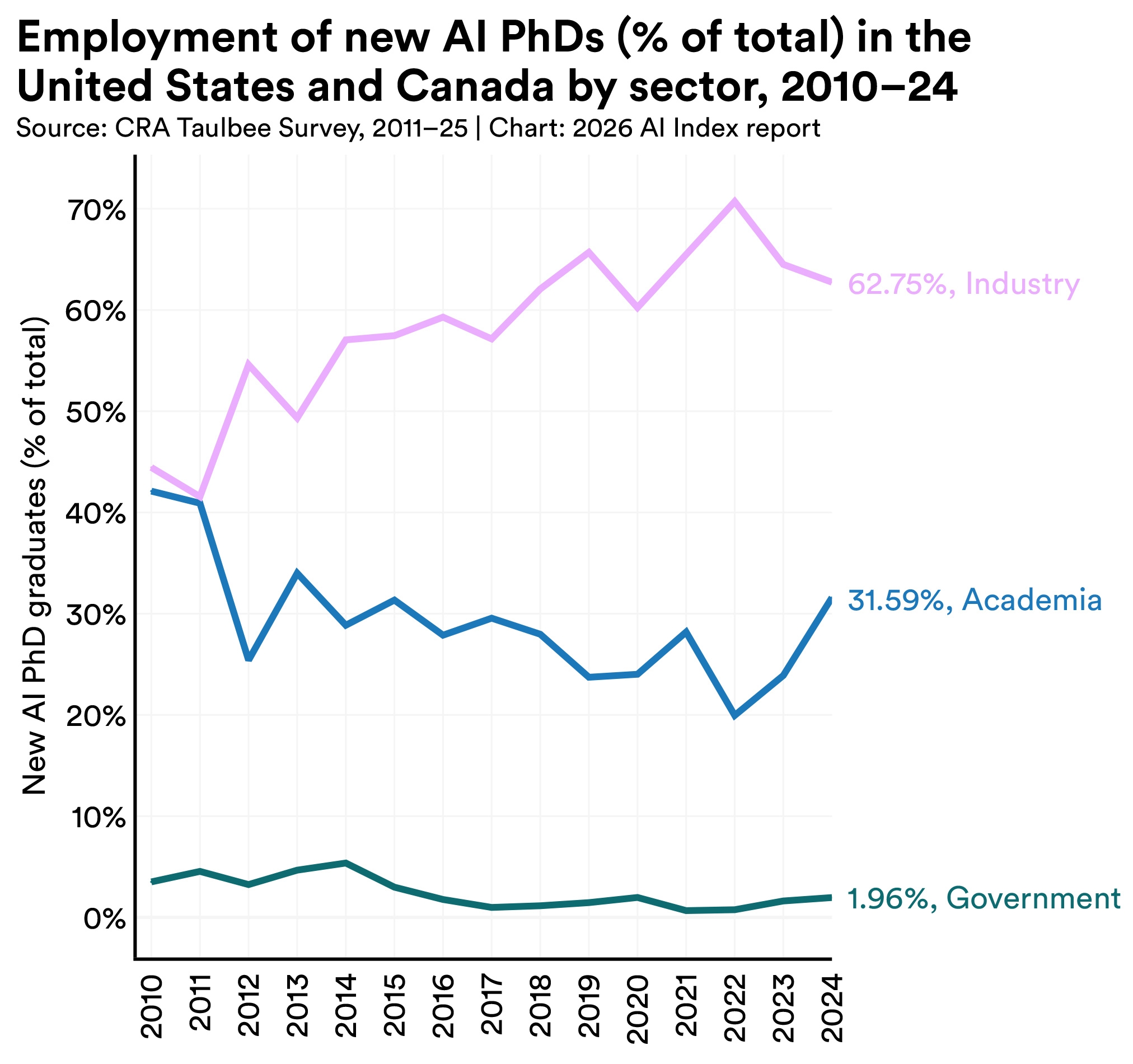
5. The number of new AI PhDs in the United States and Canada rose 22% from 2022 to 2024, but the share going to industry has stayed flat.

All of the growth has gone to academia, reversing a decade-long trend of new AI PhDs flowing primarily into industry roles.
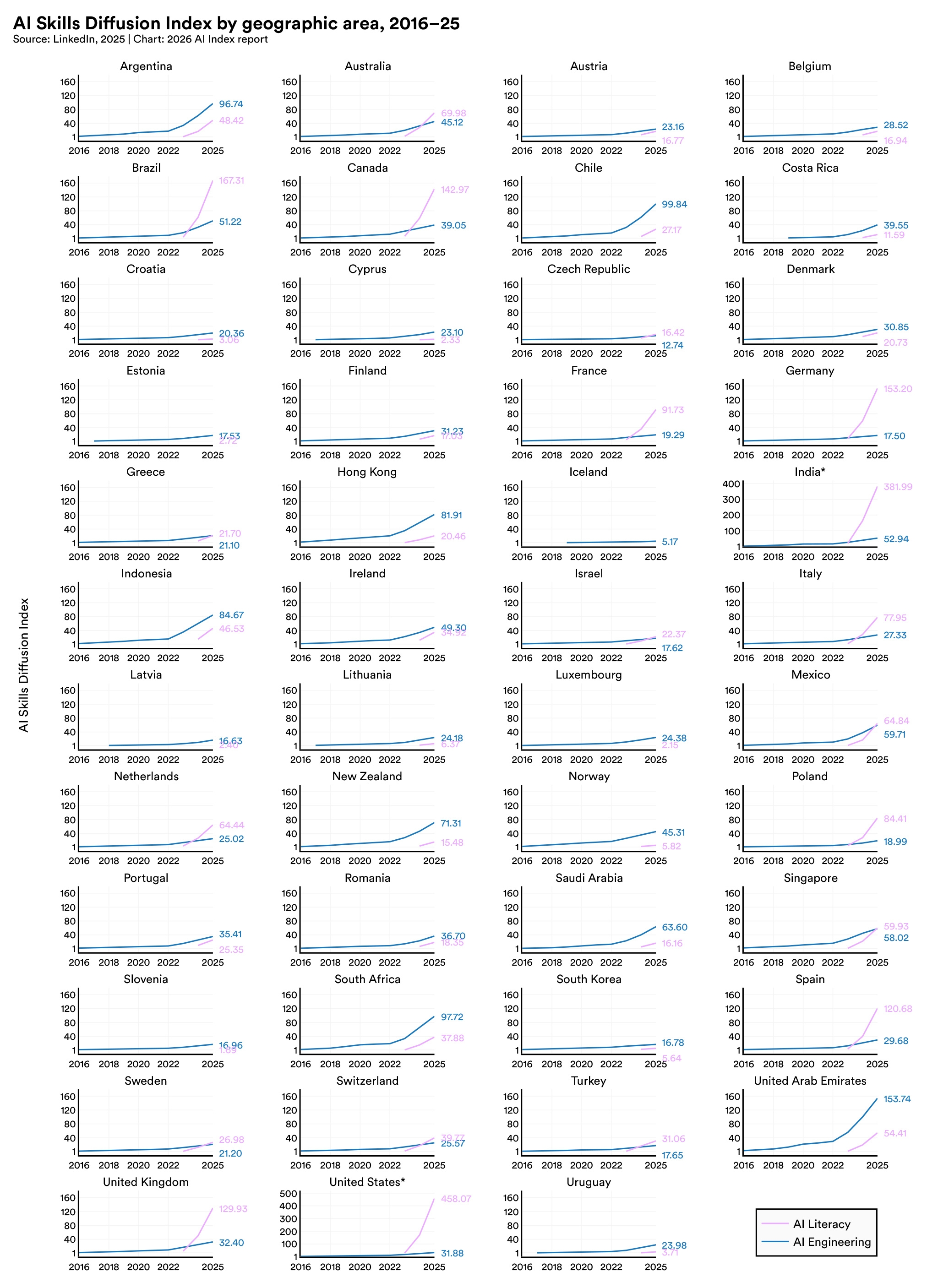
6. People are acquiring AI skills outside formal education, and advertising AI skills in their resumes.

AI literacy has grown faster than engineering-oriented AI skills in most countries. The United Arab Emirates, Chile, and South Africa are exceptions, where engineering skills show steeper growth since 2022.

Support the Stanford Institute for Human-Centered AI (HAI) in our mission to advance ethical and impactful advancements in artificial intelligence.

Your support helps foster research, education, policy, and collaboration across diverse fields. Whether you are an individual, a corporation, a foundation, or a family office, together we can ensure AI serves humanity’s best interests.

Make a Gift to AI Index