Get the latest news, advances in research, policy work, and education program updates from HAI in your inbox weekly.
Sign Up For Latest News
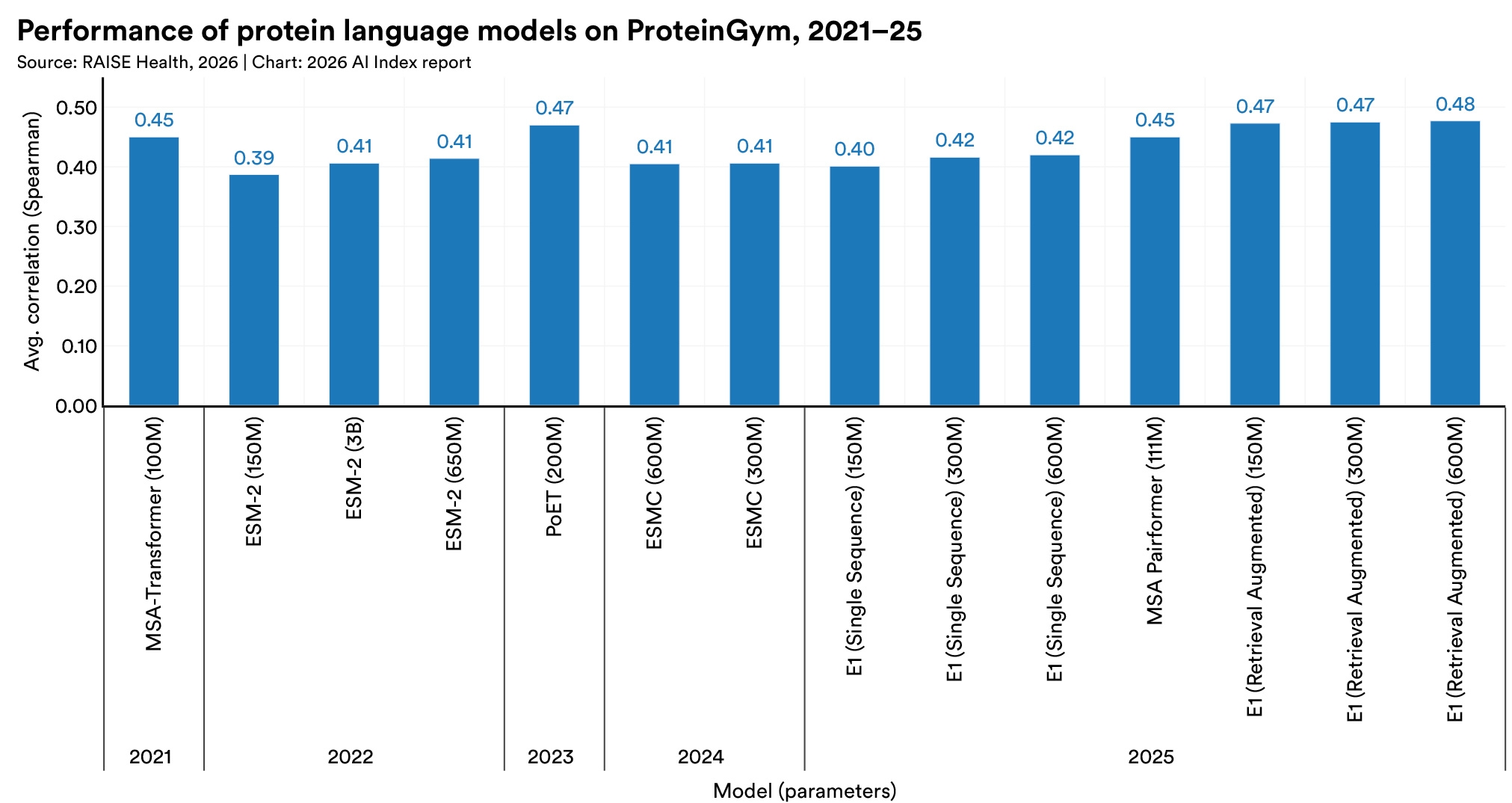
MSAPairformer, a 111-million-parameter protein language model, outperformed previous leading methods on the benchmark, ProteinGym; and GPN-Star, a 200-million-parameter genomics model, outperformed a model with 40 billion parameters.
These models aim to predict cellular responses to drugs and genetic perturbations without running wet-lab experiments, though current systems still require experimental validation.

With cofolding models now representing all structure types in the Protein Data Bank, 2025 saw a turn toward distilled datasets of AI-predicted structures and training on combined experimental data sources, expanding training sets from hundreds of thousands of entries to tens of millions.
Across multiple hospital systems, physicians reported they were spending up to 83% less time writing notes, experiencing significant reductions in burnout, with one hospital system reporting a 112% return on investment.

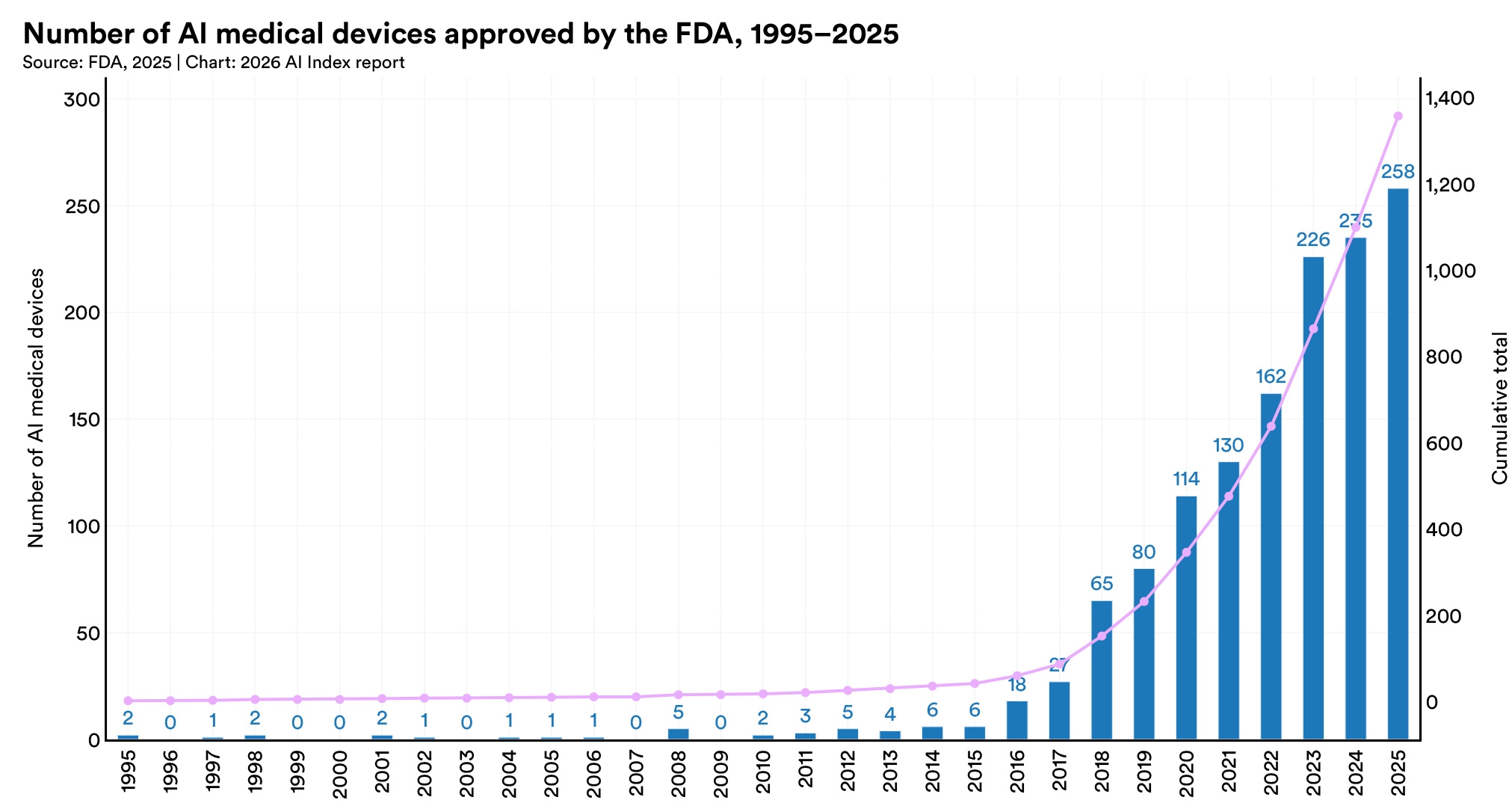
The vast majority entered the market via device-modification pathways that rely on existing safety and efficacy evidence rather than new randomized trials, with only 2.4% of devices with clinical studies supported by randomized trial data.
Microsoft's AI Diagnostic Orchestrator, paired with OpenAI's o3, was tested on challenging cases drawn from the medical literature against physicians working without their usual tools. Multi-agent frameworks more broadly have shown diagnostic accuracy gains of 7% to over 60% over single-agent baselines.

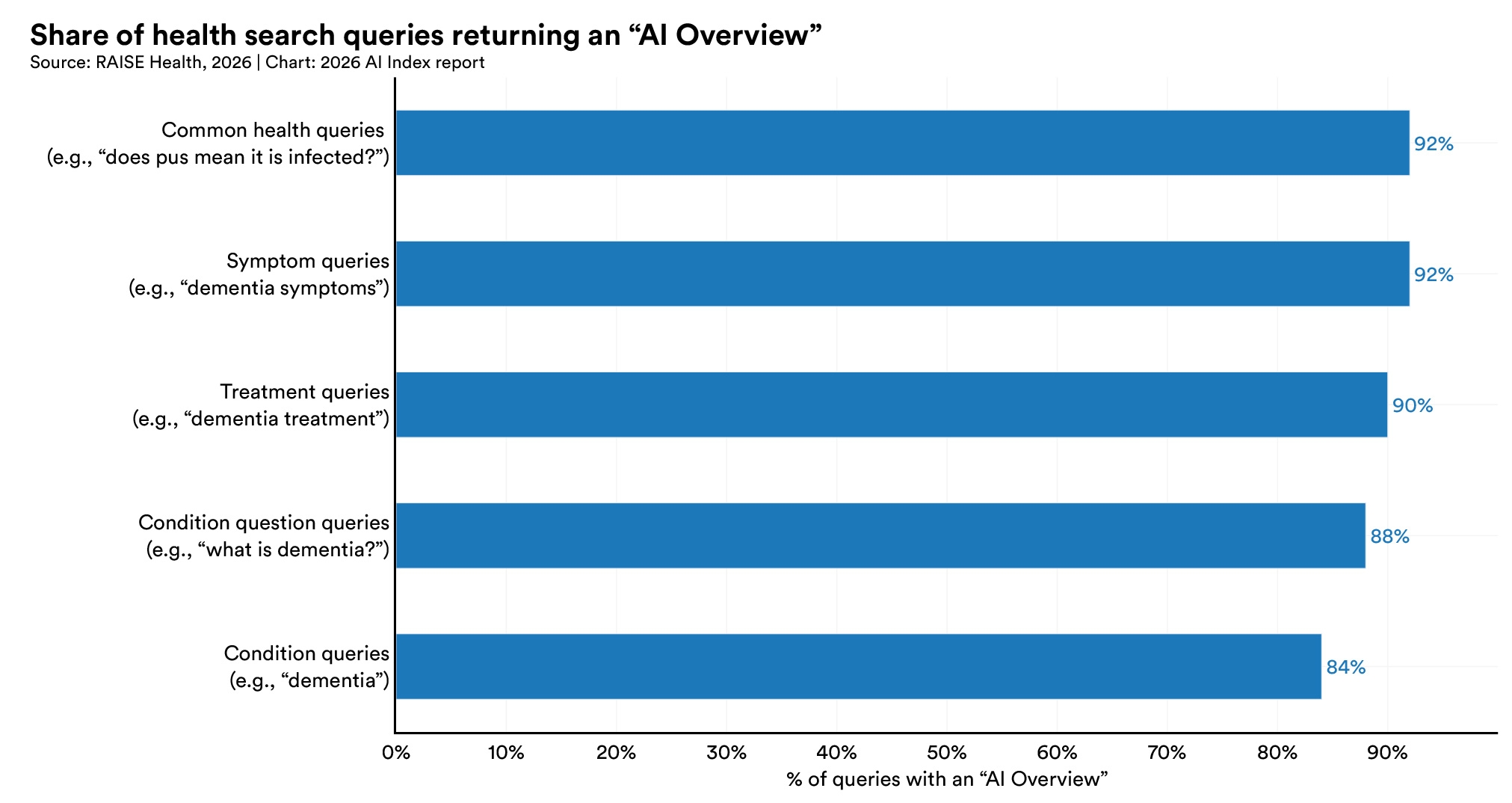
Symptom and common health questions trigger an AI Overview 92% of the time, followed by treatment and condition queries. These summaries are now a routine feature of health information searches, shaping the initial interpretation of users' questions.
Governance dominates the discourse, while algorithm accountability, biosecurity, and global health equity remain underexplored.
.jpg&w=3840&q=100)
In a randomized trial of 150 diabetes patients, 71% achieved healthy blood sugar levels over one year while safely reducing their medications.
Support the AI Index in our mission to provide comprehensive, unbiased data on artificial intelligence worldwide. Your support sustains rigorous research, data collection, and analysis that informs policymakers, researchers, journalists, and business leaders—ensuring transparent AI metrics guide humanity toward a better future.
Make a Gift to AI Index