Get the latest news, advances in research, policy work, and education program updates from HAI in your inbox weekly.
Sign Up For Latest News
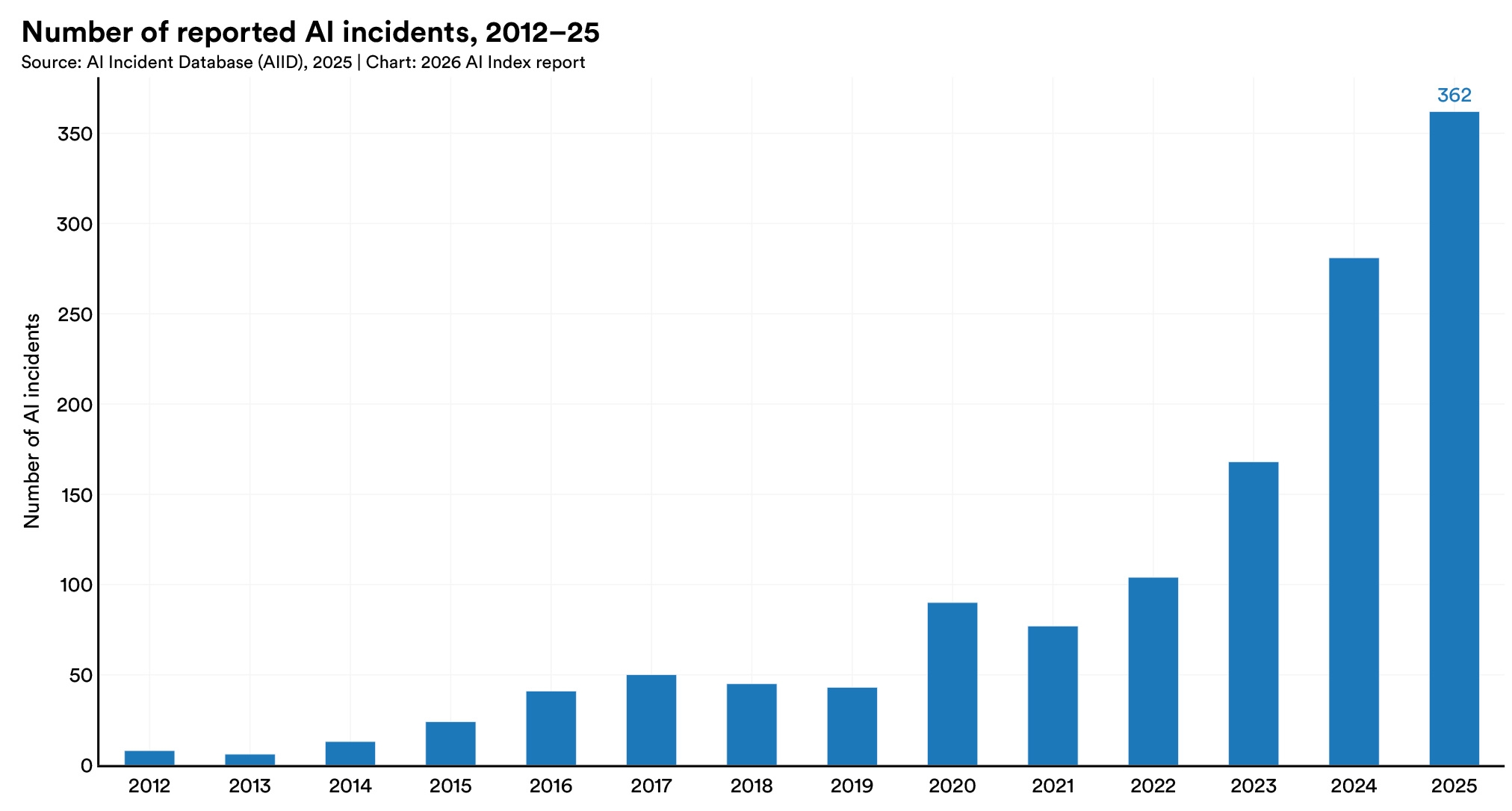
Almost all leading frontier model developers report results on capability benchmarks like MMLU and SWE-bench, but reporting on responsible AI benchmarks remains sparse. Documented AI incidents continued to rise, with the AI Incident Database recording 362 in 2025, up from 233 in 2024.
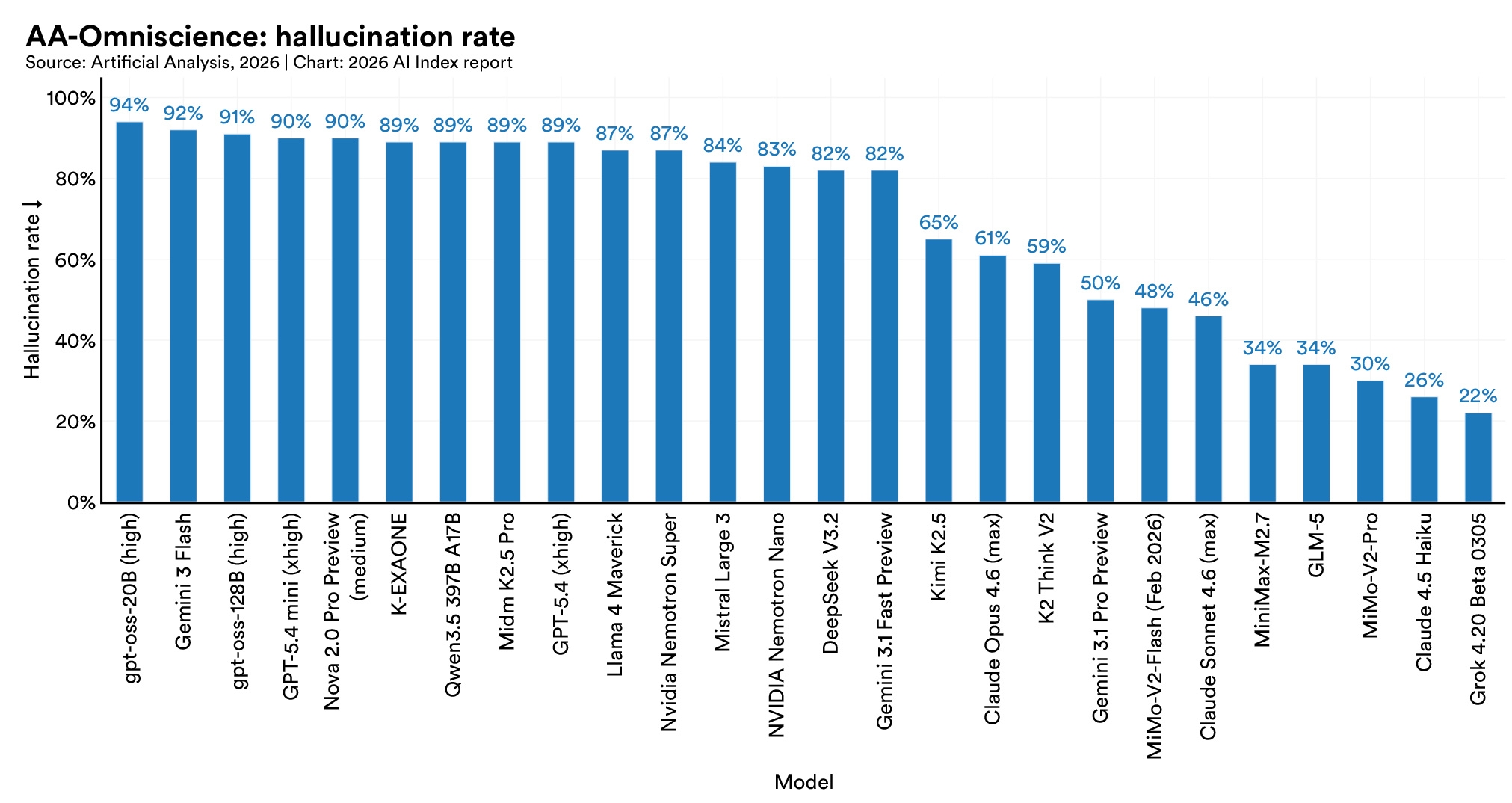
In a new accuracy benchmark, hallucination rates across 26 top models range from 22% to 94%. GPT-4o's accuracy dropped from 98.2% to 64.4%, and DeepSeek R1 fell from over 90% to 14.4%. When a false statement is presented as something another person believes, models handle it well. When the same false statement is presented as something a user believes, performance collapses.
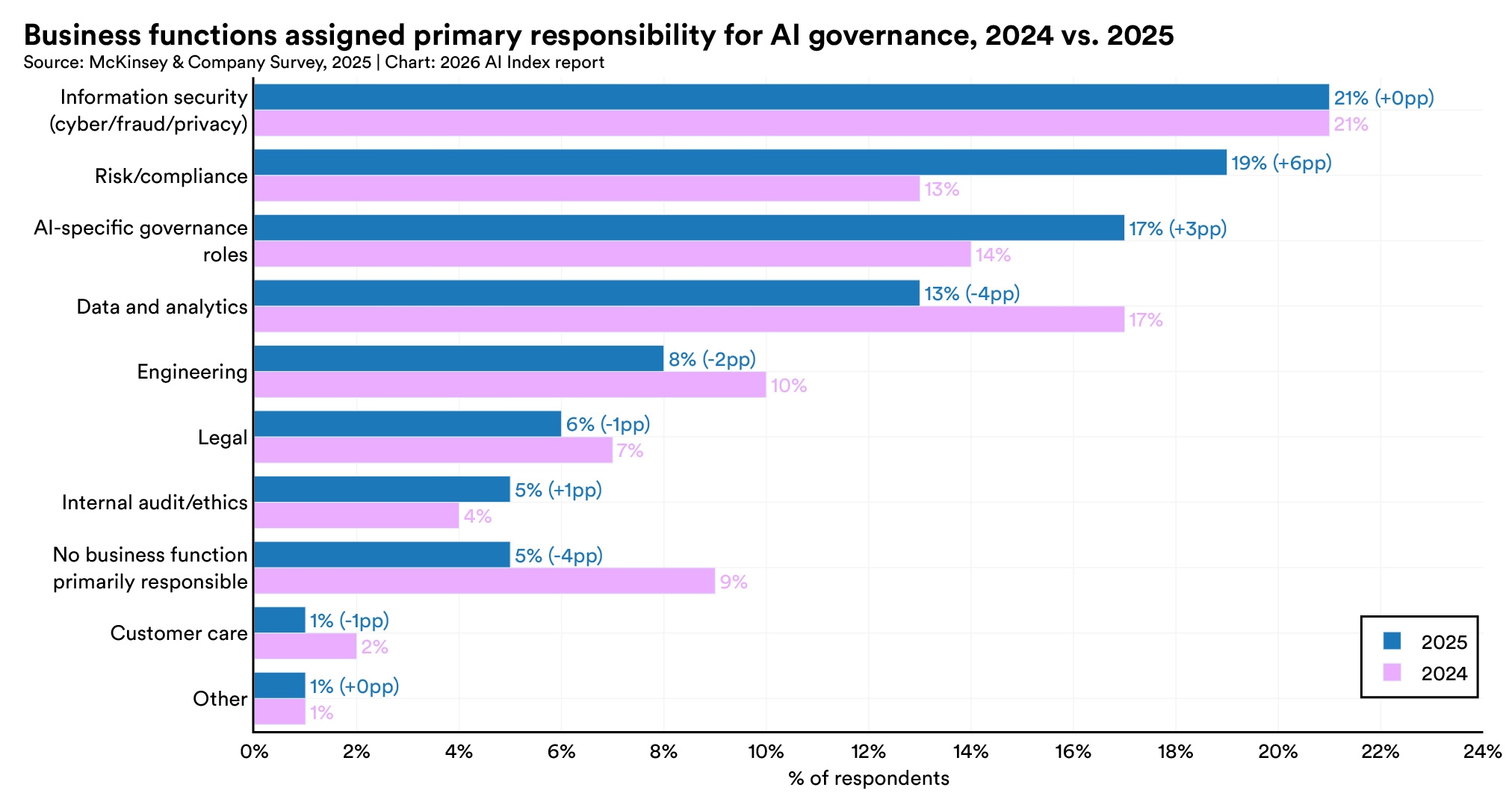
AI-specific governance roles grew 17% in 2025, and the share of businesses with no responsible AI policies in place fell sharply from 24% to 11%. The main obstacles to implementation remain gaps in knowledge (59%), budget constraints (48%), and regulatory uncertainty (41%).
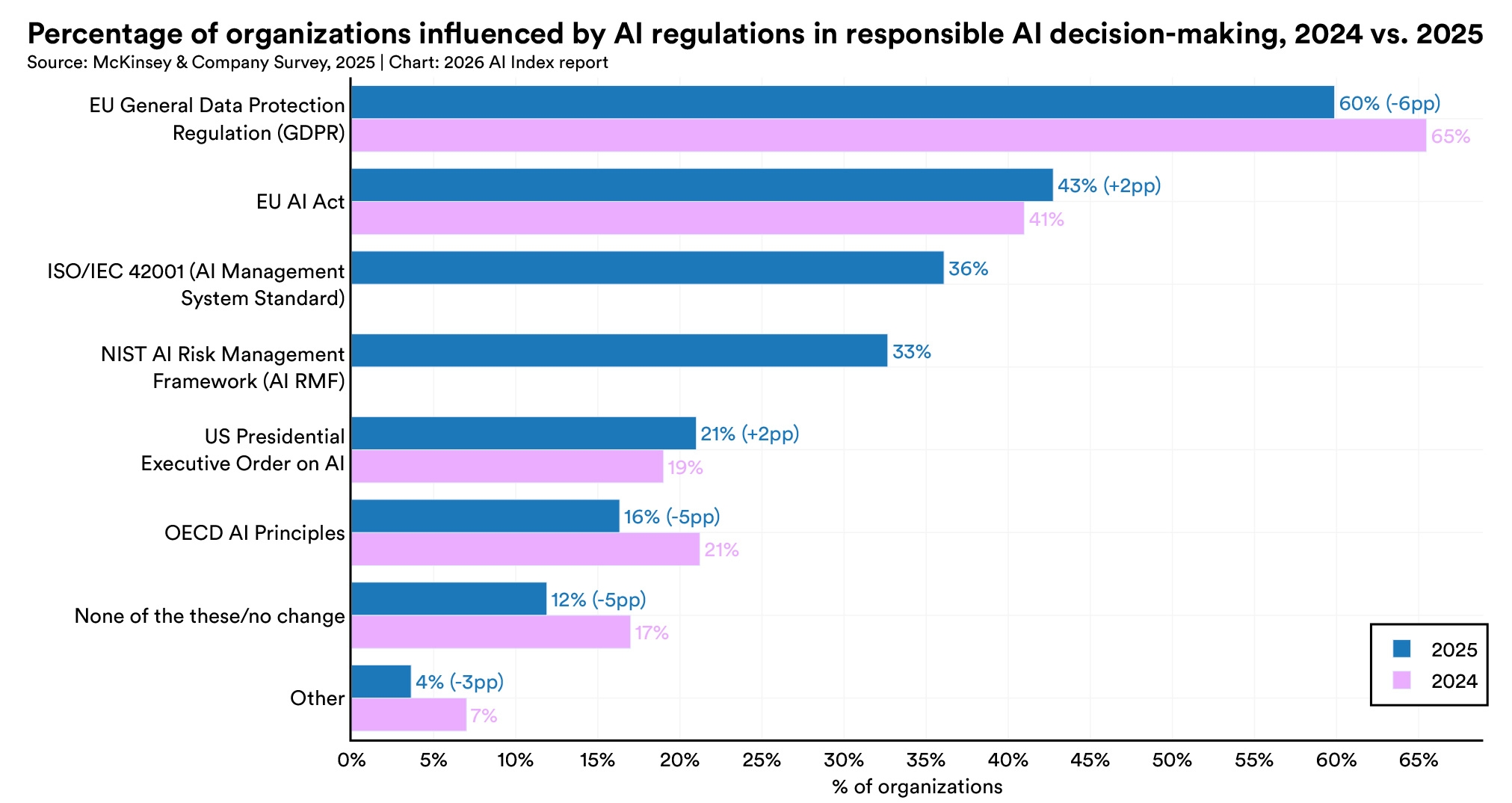
GDPR remains the most cited regulatory influence but slipped from 65% in 2024 to 60% in 2025. New entries in 2025 include ISO/IEC 42001, an AI management system standard, cited by 36% of respondents, and the NIST AI Risk Management Framework at 33%. The share of organizations reporting no regulatory influence at all fell from 17% to 12%.
On HELM Arabic, a regionally developed model for the Arabic language, outscored GPT-5.1 and Gemini 2.5 Flash. The gap widens at the dialect level. On a Slovenian commonsense reasoning test, several leading models lost close to half their accuracy when tested in a regional dialect rather than the standard language.
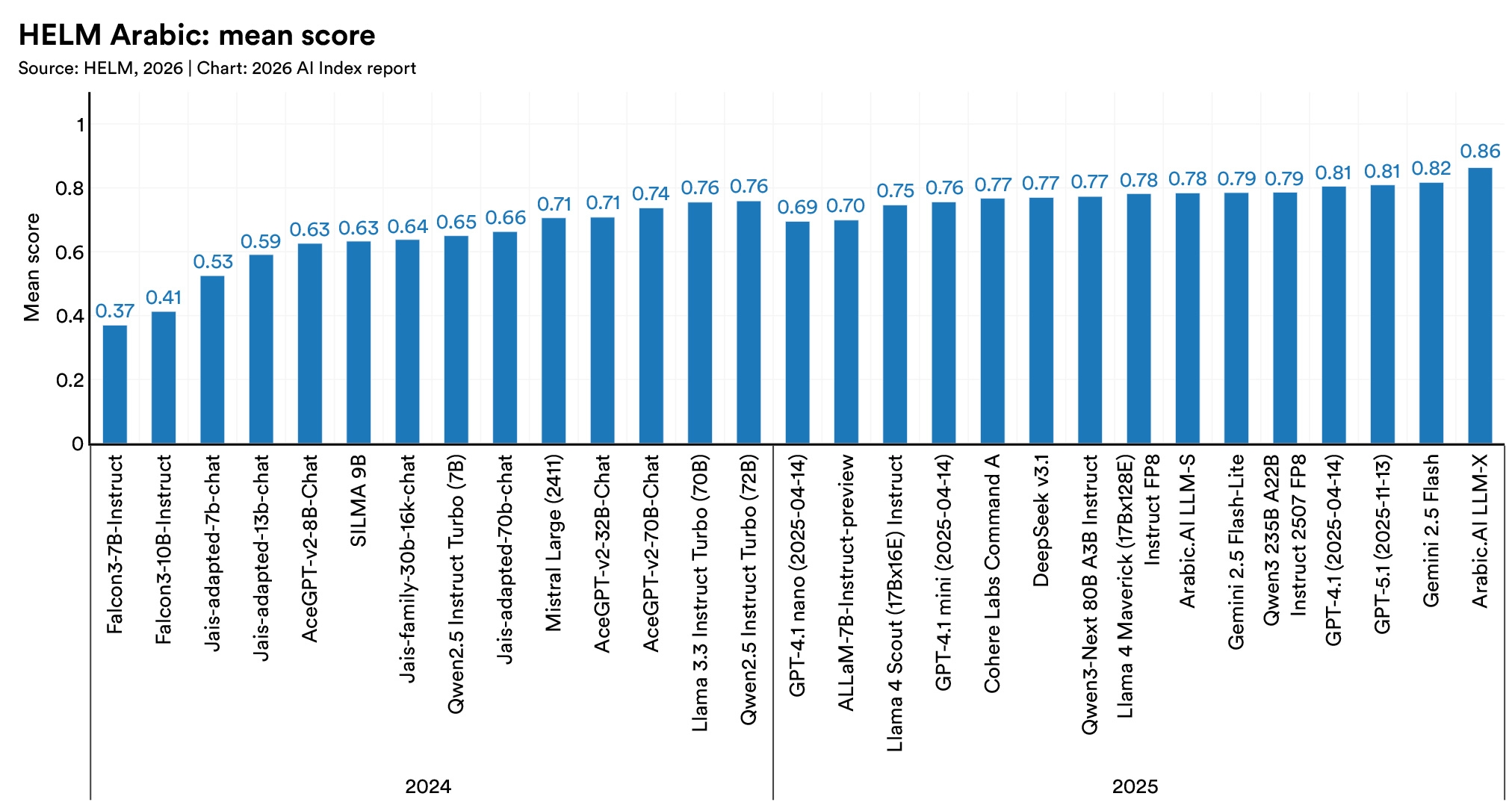
After rising on the Foundation Model Transparency Index from 37 to 58 between 2023 and 2024, the average score dropped to 40 in 2025. Major gaps persist in disclosure around training data, compute resources, and post-deployment impact.
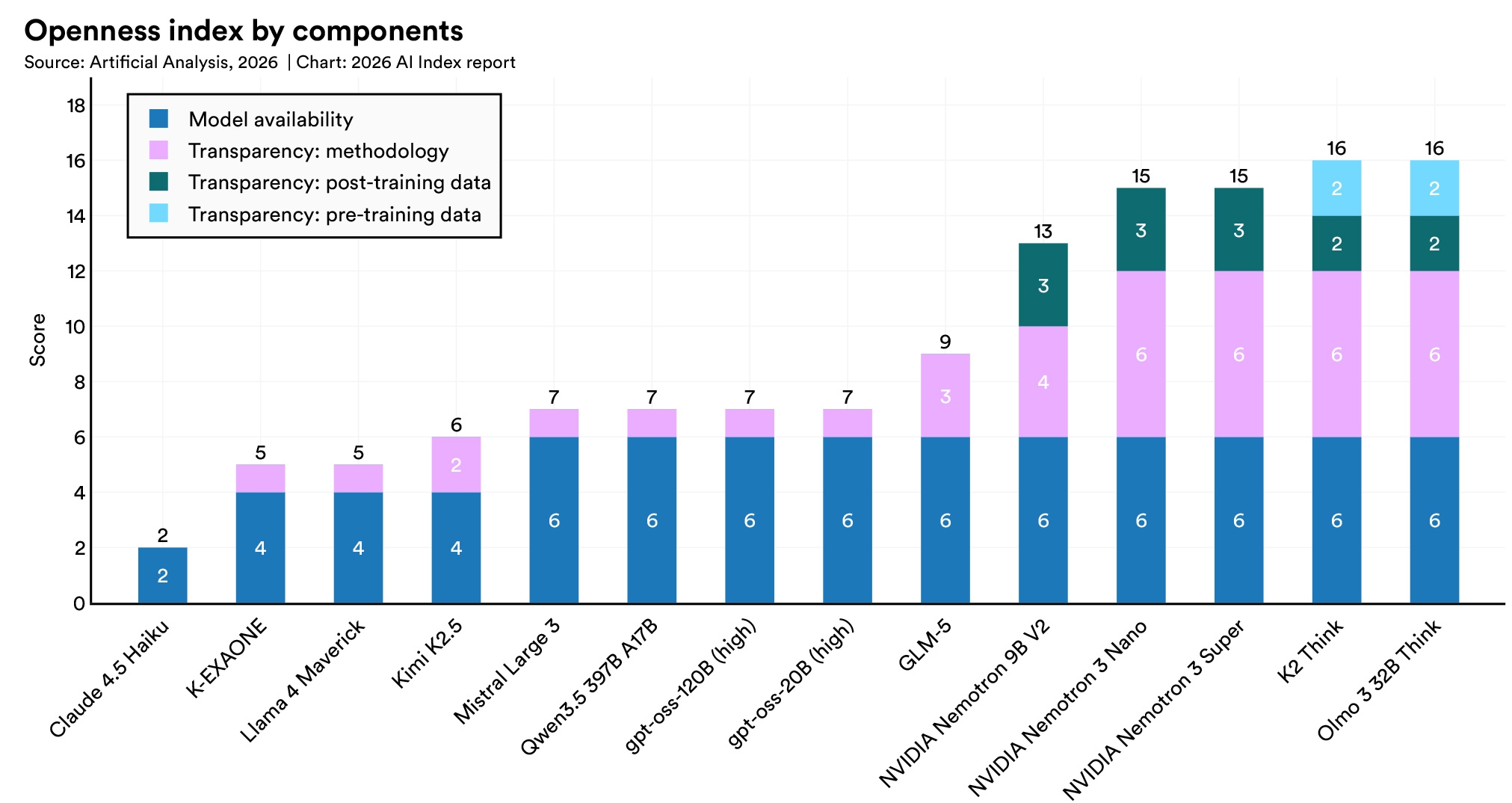
On the AILuminate benchmark, several frontier models received “Very Good” or “Good” safety ratings under standard use. When tested against jailbreak attempts using adversarial prompts, safety performance dropped across all models tested.
Recent empirical studies found that training techniques aimed at improving one responsible AI dimension consistently degraded others.
Support the AI Index in our mission to provide comprehensive, unbiased data on artificial intelligence worldwide. Your support sustains rigorous research, data collection, and analysis that informs policymakers, researchers, journalists, and business leaders—ensuring transparent AI metrics guide humanity toward a better future.
Make a Gift to AI Index