
Some countries have “flattened the curve,” but questions arise between privacy and public good.
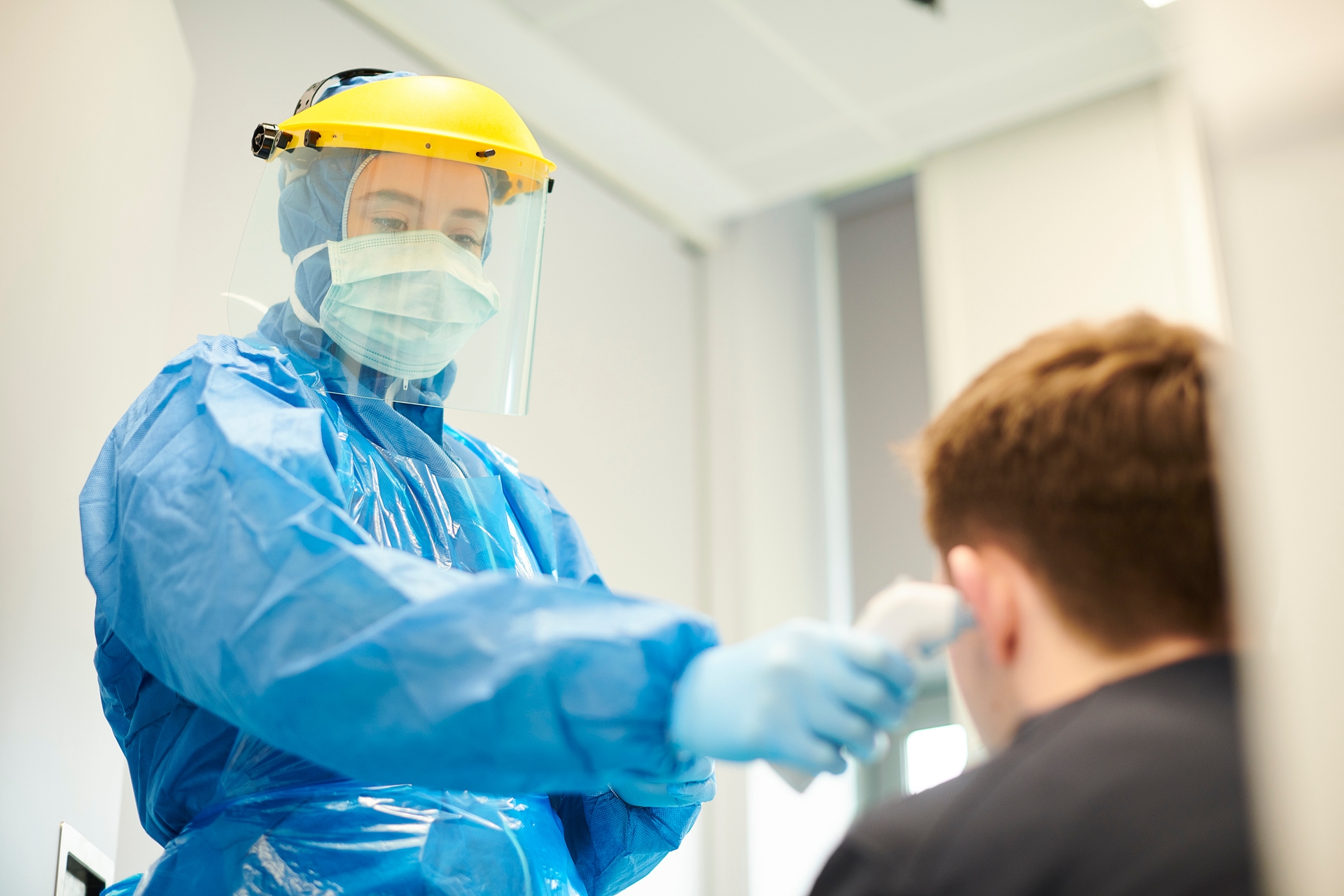
Some countries have “flattened the curve,” but questions arise between privacy and public good.
New technologies offer the elderly independence while still monitoring their illnesses.
New technologies offer the elderly independence while still monitoring their illnesses.
Treating COVID-19: How Researchers Are Using AI to Scale Care, Find Cures, and Crowdsource Solutions
Experts offer insights on combating the coronavirus during Stanford HAI's COVID-19 and AI Conference.
Treating COVID-19: How Researchers Are Using AI to Scale Care, Find Cures, and Crowdsource Solutions
Experts offer insights on combating the coronavirus during Stanford HAI's COVID-19 and AI Conference.
Experts offer insights on mapping and forecasting virus cases during Stanford HAI's COVID-19 and AI Conference.
Experts offer insights on mapping and forecasting virus cases during Stanford HAI's COVID-19 and AI Conference.
Mental health care must scale fast to handle this epidemic, says one researcher.
Mental health care must scale fast to handle this epidemic, says one researcher.
Artificial Intelligence and COVID-19: How Technology Can Understand, Track, and Improve Health Outcomes
Scholars, practitioners, and experts across disciplines share what’s working and where research can help during HAI's virtual conference.
Scholars, practitioners, and experts across disciplines share what’s working and where research can help during HAI's virtual conference.
One nonprofit uses novel approaches to improve infant mortality, agricultural disaster, and tuberculosis diagnoses.
One nonprofit uses novel approaches to improve infant mortality, agricultural disaster, and tuberculosis diagnoses.
Schistosomiasis is a tropical disease afflicting 220 million people worldwide. It is caused by a parasite with a complex life cycle that includes a stage inside a specific genus of freshwater snail and a stage inside human blood vessels. “The transmission is from people to snails and back from the snails to people,” says Giulio De Leo, professor of biology at Stanford University.
Schistosomiasis is a tropical disease afflicting 220 million people worldwide. It is caused by a parasite with a complex life cycle that includes a stage inside a specific genus of freshwater snail and a stage inside human blood vessels. “The transmission is from people to snails and back from the snails to people,” says Giulio De Leo, professor of biology at Stanford University.
The impact of the private sector’s use of artificial intelligence (AI) is already a pressing topic in the national conversation. Less known, but also highly significant and impactful, is the rapid proliferation of AI in government -- and its corresponding impact.
The impact of the private sector’s use of artificial intelligence (AI) is already a pressing topic in the national conversation. Less known, but also highly significant and impactful, is the rapid proliferation of AI in government -- and its corresponding impact.
HAI seed grant helps scale-up Stanford-designed deliberative discourse strategy to an online platform
HAI seed grant helps scale-up Stanford-designed deliberative discourse strategy to an online platform
HAI seed grant helps make Alzheimer’s disease imaging safer and more affordable
HAI seed grant helps make Alzheimer’s disease imaging safer and more affordable