All Work Published on Privacy, Safety, Security
Jen King's Testimony Before the U.S. House Committee on Energy and Commerce Oversight and Investigations Subcommittee
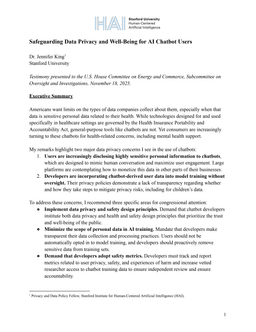
In this testimony presented to the U.S. House Committee on Energy and Commerce’s Subcommittee on Oversights and Investigations hearing titled “Innovation with Integrity: Examining the Risks and Benefits of AI Chatbots,” Jen King shares insights on data privacy concerns connected with the use of chatbots. She highlights opportunities for congressional action to protect chatbot users from related harms.
In this testimony presented to the U.S. House Committee on Energy and Commerce’s Subcommittee on Oversights and Investigations hearing titled “Innovation with Integrity: Examining the Risks and Benefits of AI Chatbots,” Jen King shares insights on data privacy concerns connected with the use of chatbots. She highlights opportunities for congressional action to protect chatbot users from related harms.
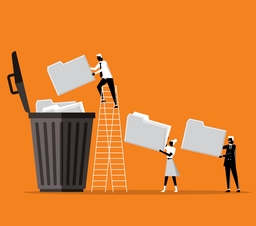
Companies That Buy and Sell Your Data Are Not Following California’s Strict Privacy Laws

A new Stanford study shows data brokers are making it difficult for consumers to submit privacy requests and failing to report how many privacy requests they receive.
A new Stanford study shows data brokers are making it difficult for consumers to submit privacy requests and failing to report how many privacy requests they receive.
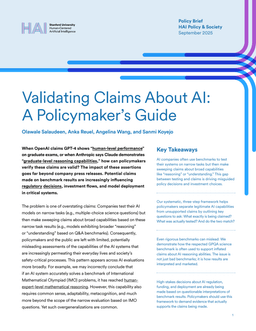
Validating Claims About AI: A Policymaker’s Guide

This brief proposes a practical validation framework to help policymakers separate legitimate claims about AI systems from unsupported claims.
This brief proposes a practical validation framework to help policymakers separate legitimate claims about AI systems from unsupported claims.
Open-Weight Models Aren’t Enough. We Need Truly Open Source AI Models for Science and Society.

As Chinese AI closes the capability gap, Washington and Silicon Valley debate open-weight models. Stanford HAI's James Landay says it's the right conversation framed the wrong way.
As Chinese AI closes the capability gap, Washington and Silicon Valley debate open-weight models. Stanford HAI's James Landay says it's the right conversation framed the wrong way.

Addressing AI-Generated Child Sexual Abuse Material: Opportunities for Educational Policy

This brief explores student misuse of AI-powered “nudify” apps to create child sexual abuse material and highlights gaps in school response and policy.
This brief explores student misuse of AI-powered “nudify” apps to create child sexual abuse material and highlights gaps in school response and policy.

The Complexities of Governing Mental Health AI

Policymakers, academics, healthcare providers, AI developers, and patient advocates convened by Stanford HAI identify critical gaps in how we regulate AI tools used for therapy and emotional support.
Policymakers, academics, healthcare providers, AI developers, and patient advocates convened by Stanford HAI identify critical gaps in how we regulate AI tools used for therapy and emotional support.